

Education
Remote Sole Proprietor registration in any city in Kazakhstan from 0 tenge per hour – register your business with one document and a bank account on the day of registration
We will professionally select General Classifier of Economic Activities codes, help you choose the optimal tax regime, and ensure the opening of a bank account on the day of your Sole Proprietor registration, so you can quickly and easily start your business

Select an Sole Proprietor registration package
Full
35 000 ₸
Determining the optimal taxation system
Selection of General Classifier of Economic Activities codes
Filling out an application online for registering as an Sole Proprietor
Premium
45 000 ₸
Determining the optimal taxation system
Selection of General Classifier of Economic Activities codes
Filling out an application online for registering as an Sole Proprietor
Documentary support for opening a bank account
Preparation of the print design and its production
Filing a notification of transition to the simplified tax system (SNR)
Analysis of the need to pay VAT + registration
Business professional
65 000 ₸
Determining the optimal taxation system
Selection of General Classifier of Economic Activities codes
Filling out an application online for registering as an Sole Proprietor
Documentary support for opening a bank account
Preparation of the print design and its production
Filing a notification of transition to the simplified tax system (SNR)
Analysis of the need to pay VAT + registration
Registration for the state IS ESF portal
Creating a database for your Sole Proprietor in 1C: Accounting
Accounting services for 1 month
Legal services for Sole Proprietors for 1 month
Professional LLP Registration and Support – We Are Always in Touch
We value teamwork and achieve the highest results by applying an individual approach to each client

Madina
Head of the Legal Department, expert in LLP registration and business support

Aneliya
The chief lawyer is a professional with deep knowledge of Kazakhstani legislation
Education
M. S. Narikbaev KAZGUU University, Master of Laws

Aniya
A lawyer is your reliable assistant in matters of business registration and management
Education
M. S. Narikbaev KAZGUU University, Master of Laws

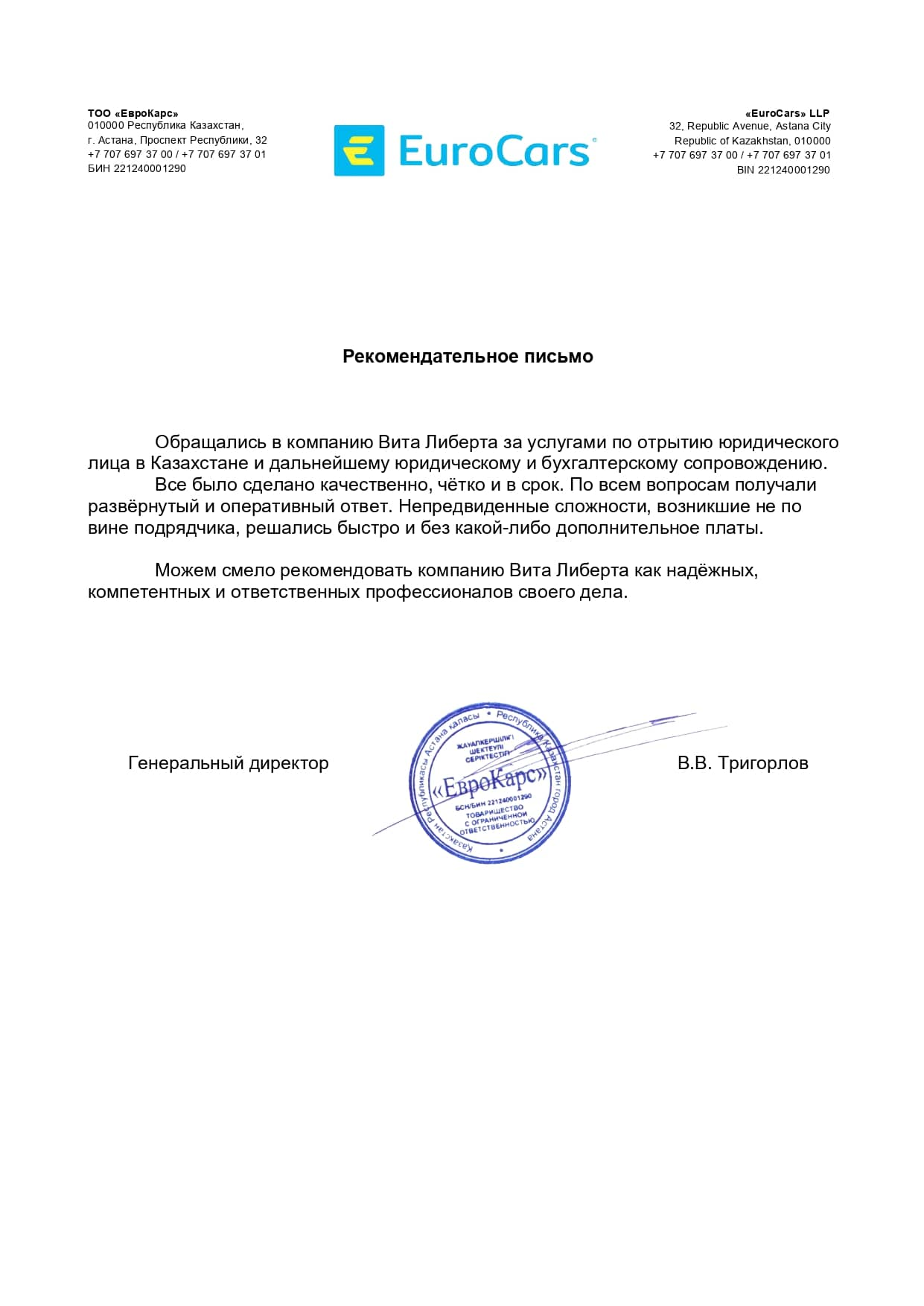
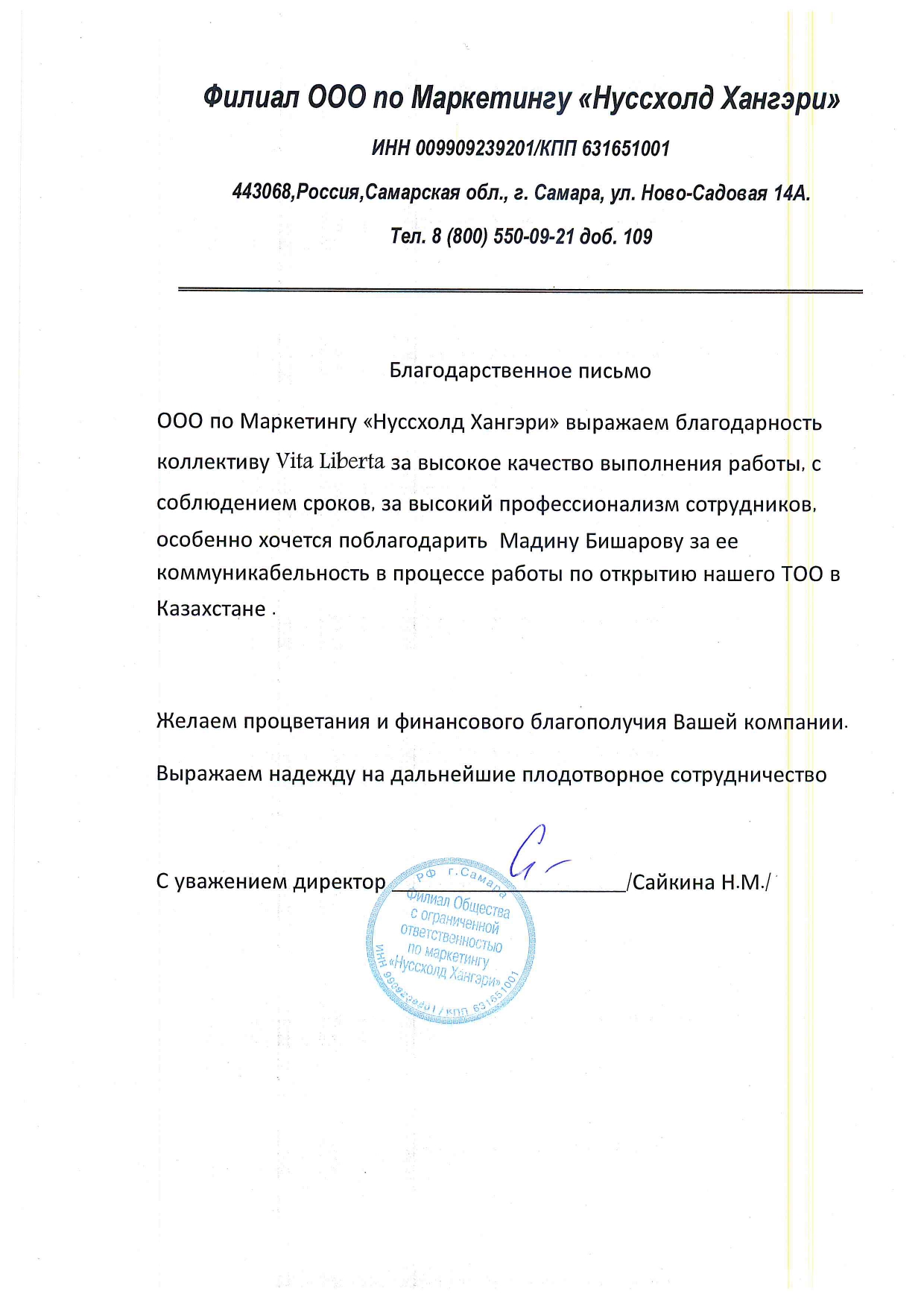
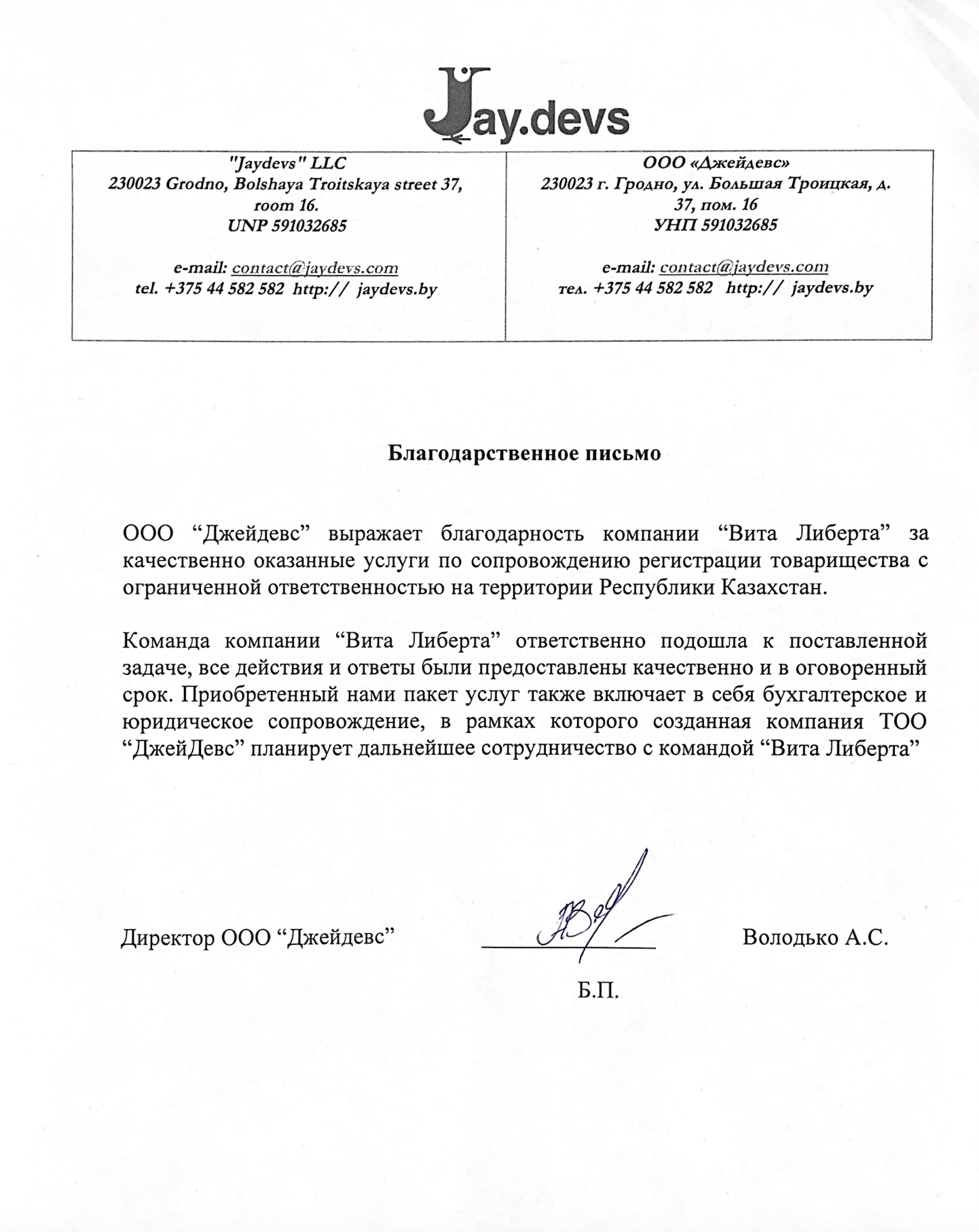
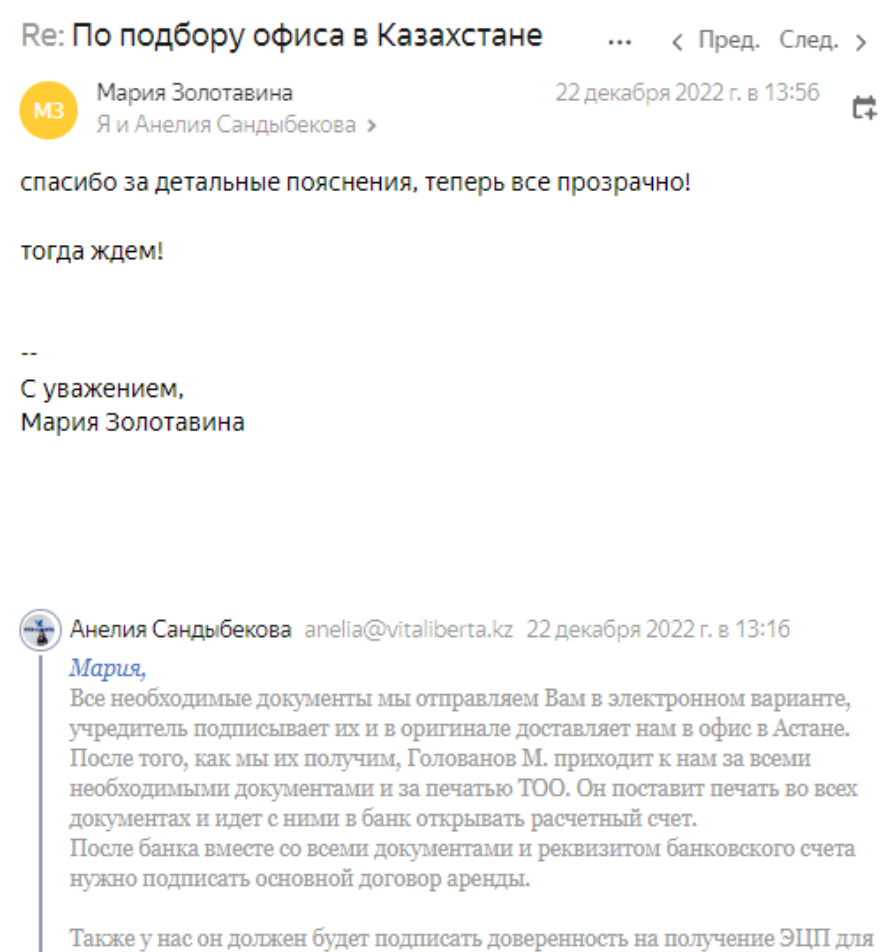
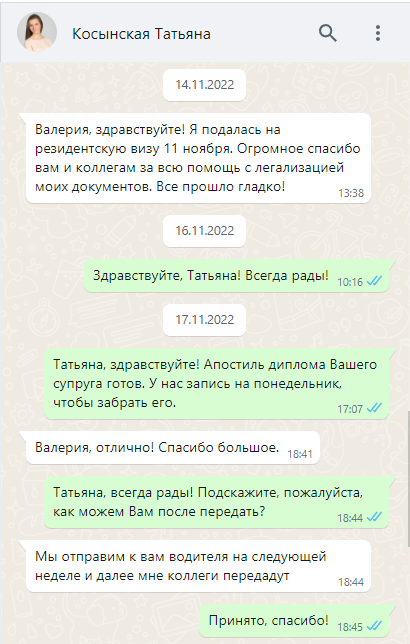
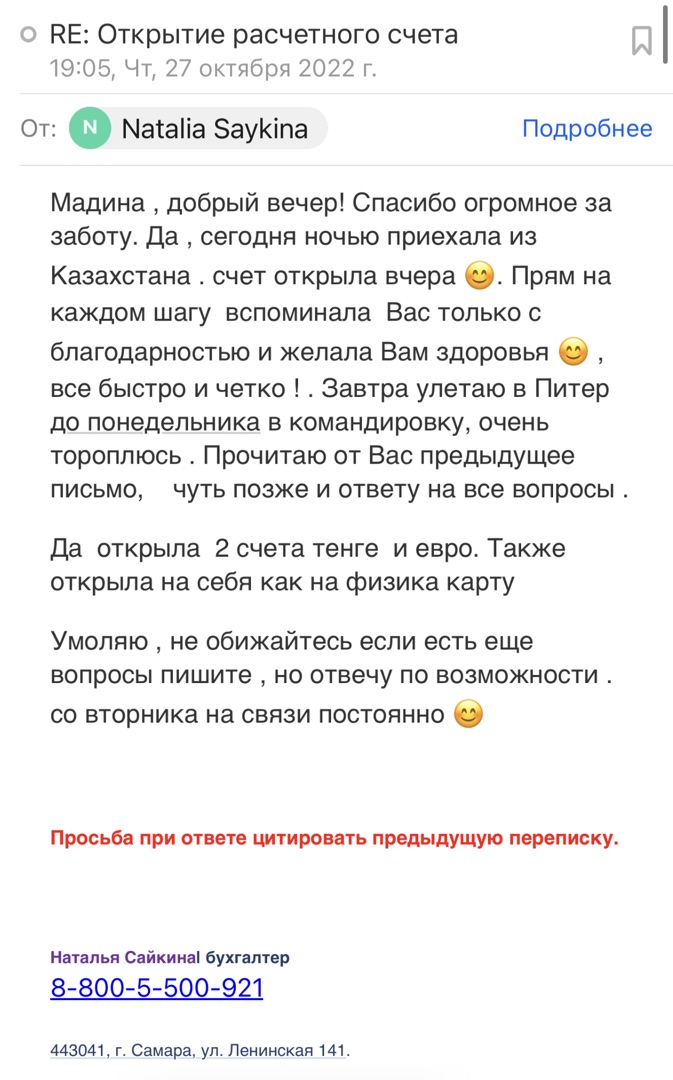
A Satisfied Client's Testimonial

Congratulations from Our Partner Bank

International Women's Day, March 7, 2025

International Women's Day, March 6, 2026

Legal Department Management

Accounting and Legal
Answers to frequently asked questions on the topic of operating an Sole Proprietor in Kazakhstan
Do I need to register as an Sole Proprietor in 2026?
If you've just started your business and aren't sure whether it's time to go to the tax office, this guide is designed especially for you. Below are four simple steps to help you make the right decision without getting lost in the new 2026 rules.
Step one: Test yourself against two key criteria
The law requires you to register as an Sole Proprietor if your business falls under at least one of the two criteria. There are no exceptions.
1. Sign number one: you have hired employees
If you hire someone permanently (salesperson, courier, foreman, administrator), Sole Proprietor status becomes mandatory. It doesn't matter how much you earn—a thousand tenge or a million. The very act of employing someone else's labor requires official registration.
2. Sign number two: your annual income has exceeded 1,557,000 tenge
If you work alone, keep track of your annual earnings. Effective January 1, 2026, the mandatory registration threshold is tied to the monthly calculation index. One monthly calculation index (MCI) in 2026 equals 4,325 tenge. Multiply by 360 (the legally established MCI) and you get exactly 1,557,000 tenge.
Here's how it works in practice:
Step two. If you don't need to be an Sole Proprietor, check if you qualify for self-employed status.
Since 2026, Kazakhstan has introduced a special regime for the self-employed. This is a legal way to work without registering as an Sole Proprietor or having to go through complex reporting procedures.
But it is not available to everyone, only to those who meet three conditions.
1. Condition one: you work strictly alone.
No hired workers. Only personal labor.
2. Condition two: your type of activity is on a special list.
Here are just a few examples of the 40 permitted directions:
3. Condition three: your monthly income does not exceed 300 MCI.
In 2026, that's just over 1.3 million tenge per month. If you earn more than that in any given month, you lose your right to self-employment and must register as an Sole Proprietor.
If all three conditions are met, you can breathe a sigh of relief. You have every right to work as a self-employed person. All you need to do is:
Step three. If you don't qualify for self-employment, choose one of the two modes for Sole Proprietors.
Let's say you don't meet the requirements for self-employment. For example, your type of activity isn't on the permitted list, you've already hired an assistant, or your income in some months exceeds 1.3 million rubles. In this case, you'll have to register as an Sole Proprietor. But you have two options.
1. Option A. Simplified declaration (for most beginners)
This is the most popular regime for small businesses. Here are its main features:
2. Option B. Generally established regime (for those with large expenses)
This regime is more complex, but in some cases it's more beneficial. The main difference is that tax is levied not on revenue, but on the difference between income and expenses. If, for example, you resell goods and spend a lot on purchasing, this option can save you money.
Step Four: Real-Life Examples to Reinforce
1. Story One: The Phone Repairman
Serik repairs phones from home. He works alone, and his average income is 200,000–250,000 tenge per month. His line of work is on the permitted list.
What should he do? Self-employed status suits him. No sole proprietorship, just an app and 4% of each order.
2. Story Two: A Tutor with an Unstable Income
Madina gives English lessons. In normal months, she earns 300,000 rubles, but in May and June, before exams, she has so many students that her income soars to 1.5 million.
What should I do? In May, the self-employed population exceeded the limit (1.3 million). This means I need to register as a sole proprietor. The optimal choice is a simplified tax return with its 4% rate.
3. Story Three. The Master and His Assistant
Bakhyt renovates apartments. The work is plentiful, so he hired two full-time assistants. The income is stable, but not prohibitive.
What to do? Having employees automatically requires registering as a sole proprietor. Bakhyt chooses the simplified tax return, as it's the easiest.
4. Story Four: Reselling Products at a High Markup
Dinara buys children's clothing wholesale and sells it retail through Instagram. Purchasing costs account for 70% of her revenue.
What should she do? If she chooses the simplified tax system, she'll pay 4% on all revenue. If she chooses the general tax system, she'll pay 10% only on profit (that is, 30% of revenue). The second option is more profitable for her, although it requires more accounting discipline.
An important warning for those already working
If you started a business in 2025 and already had an Sole Proprietor status (for example, you worked under a patent or the old simplified tax system ), you have until March 1, 2026 , to select the new regime and submit a notification.
If you don’t do this, the tax office will make a decision for you:
In short: three options for beginners
1. Option for those who work alone, income up to 1.3 million per month, and the case is on the permitted list
→ Self-employment through an app. Pay 4%, no declarations.
2. Option for those who work alone but do not qualify for self-employment
→ Sole Proprietors using a simplified tax return. Pay 4% and report twice a year.
3. An option for those who have hired employees or very high expenses→ Sole Proprietors with a choice between a simplified tax return and the general tax regime. The latter option is more complex, but can be more cost-effective if the costs are higher.
Step one: Test yourself against two key criteria
The law requires you to register as an Sole Proprietor if your business falls under at least one of the two criteria. There are no exceptions.
1. Sign number one: you have hired employees
If you hire someone permanently (salesperson, courier, foreman, administrator), Sole Proprietor status becomes mandatory. It doesn't matter how much you earn—a thousand tenge or a million. The very act of employing someone else's labor requires official registration.
2. Sign number two: your annual income has exceeded 1,557,000 tenge
If you work alone, keep track of your annual earnings. Effective January 1, 2026, the mandatory registration threshold is tied to the monthly calculation index. One monthly calculation index (MCI) in 2026 equals 4,325 tenge. Multiply by 360 (the legally established MCI) and you get exactly 1,557,000 tenge.
Here's how it works in practice:
- If you earned less than this amount for the entire year of 2026, you do not need to register as an Sole Proprietor.
- If your income exceeds 1,557,000 tenge, registering as an Sole Proprietor becomes your responsibility.
Step two. If you don't need to be an Sole Proprietor, check if you qualify for self-employed status.
Since 2026, Kazakhstan has introduced a special regime for the self-employed. This is a legal way to work without registering as an Sole Proprietor or having to go through complex reporting procedures.
But it is not available to everyone, only to those who meet three conditions.
1. Condition one: you work strictly alone.
No hired workers. Only personal labor.
2. Condition two: your type of activity is on a special list.
Here are just a few examples of the 40 permitted directions:
- taxi and courier delivery;
- hairdressing and beauty services at home;
- tutoring and private lessons;
- rental of housing;
- repair of shoes, clothes, household appliances;
- photography and video shooting;
- cleaning services.
3. Condition three: your monthly income does not exceed 300 MCI.
In 2026, that's just over 1.3 million tenge per month. If you earn more than that in any given month, you lose your right to self-employment and must register as an Sole Proprietor.
If all three conditions are met, you can breathe a sigh of relief. You have every right to work as a self-employed person. All you need to do is:
- install the e- Salyq Business application on your phone;
- register in it;
- when receiving money from clients, generate a check;
- pay 4% of your income monthly (this payment automatically covers pension contributions and health insurance).
Step three. If you don't qualify for self-employment, choose one of the two modes for Sole Proprietors.
Let's say you don't meet the requirements for self-employment. For example, your type of activity isn't on the permitted list, you've already hired an assistant, or your income in some months exceeds 1.3 million rubles. In this case, you'll have to register as an Sole Proprietor. But you have two options.
1. Option A. Simplified declaration (for most beginners)
This is the most popular regime for small businesses. Here are its main features:
- the tax is 4% of total income (regions can change the rate from 2% to 6%);
- You only need to report twice a year;
- annual income can reach 600,000 MCI - this is more than 2.5 billion tenge, so for the vast majority this limit does not matter;
- there is no need to pay social tax;
- There is no VAT (until the threshold is exceeded).
2. Option B. Generally established regime (for those with large expenses)
This regime is more complex, but in some cases it's more beneficial. The main difference is that tax is levied not on revenue, but on the difference between income and expenses. If, for example, you resell goods and spend a lot on purchasing, this option can save you money.
- tax rate - 10% of the amount of excess income over expenses;
- you need to carefully collect all documents confirming expenses;
- If the annual turnover exceeds 10,000 MCI (about 43 million tenge), you will have to register for VAT and pay an additional 16%.
Step Four: Real-Life Examples to Reinforce
1. Story One: The Phone Repairman
Serik repairs phones from home. He works alone, and his average income is 200,000–250,000 tenge per month. His line of work is on the permitted list.
What should he do? Self-employed status suits him. No sole proprietorship, just an app and 4% of each order.
2. Story Two: A Tutor with an Unstable Income
Madina gives English lessons. In normal months, she earns 300,000 rubles, but in May and June, before exams, she has so many students that her income soars to 1.5 million.
What should I do? In May, the self-employed population exceeded the limit (1.3 million). This means I need to register as a sole proprietor. The optimal choice is a simplified tax return with its 4% rate.
3. Story Three. The Master and His Assistant
Bakhyt renovates apartments. The work is plentiful, so he hired two full-time assistants. The income is stable, but not prohibitive.
What to do? Having employees automatically requires registering as a sole proprietor. Bakhyt chooses the simplified tax return, as it's the easiest.
4. Story Four: Reselling Products at a High Markup
Dinara buys children's clothing wholesale and sells it retail through Instagram. Purchasing costs account for 70% of her revenue.
What should she do? If she chooses the simplified tax system, she'll pay 4% on all revenue. If she chooses the general tax system, she'll pay 10% only on profit (that is, 30% of revenue). The second option is more profitable for her, although it requires more accounting discipline.
An important warning for those already working
If you started a business in 2025 and already had an Sole Proprietor status (for example, you worked under a patent or the old simplified tax system ), you have until March 1, 2026 , to select the new regime and submit a notification.
If you don’t do this, the tax office will make a decision for you:
- former patent users will be automatically transferred to the status of self-employed (and deregistered as Sole Proprietors);
- Former users of the simplified tax system will be transferred to the general tax regime, retroactively, starting from January 1, 2026.
In short: three options for beginners
1. Option for those who work alone, income up to 1.3 million per month, and the case is on the permitted list
→ Self-employment through an app. Pay 4%, no declarations.
2. Option for those who work alone but do not qualify for self-employment
→ Sole Proprietors using a simplified tax return. Pay 4% and report twice a year.
3. An option for those who have hired employees or very high expenses→ Sole Proprietors with a choice between a simplified tax return and the general tax regime. The latter option is more complex, but can be more cost-effective if the costs are higher.
Sole Proprietorship or Limited Liability Partnership in 2026: A Guide for Aspiring Entrepreneurs in Kazakhstan
The first and perhaps most important choice a future entrepreneur makes is whether to enter the business world as a sole proprietor or a founder of a partnership. In 2026, this question became more complex: a new Tax Code came into effect, changing the rules governing interactions between companies, and what worked yesterday may be a mistake today.
The essence of the phenomenon: Sole Proprietors and limited liability companies as two business philosophies
Before comparing, it is important to understand the nature of these forms.
Criterion one: what are you personally risking?
For aspiring entrepreneurs, this point often becomes decisive.
Imagine this: you took out a loan for development, but things didn't go as planned. As a sole proprietor, you're risking not only your equipment and inventory, but also your own apartment (if it's your only one and not mortgaged, it won't be touched, but a second car or your summer house could be seized).
The law protects only the minimum set of essential things.
But there's a caveat: subsidiary liability. If it's proven that the founder or director intentionally drove the company into bankruptcy (by siphoning off assets or entering into fictitious transactions), the debts can be collected from personal property. Also, if you personally guaranteed a loan to the LLP, the bank will come after you if you default.
Conclusion for beginners : If your business involves high risks, large loans, or complex contracts, an LLP provides a protective barrier. For smaller trades or services where the risks are minimal, a sole proprietorship is more suitable.
Criterion two: taxes and payment burden
In 2026, the tax system underwent changes that were particularly acute for those working in the corporate sector.
Tax regimes: choosing a rate. The simplified tax system is available to both Sole Proprietors and limited liability companies, but with important caveats. The income limit for the simplified tax system in 2026 is 600,000 MCI. The tax rate varies from 2% to 6% depending on the region.
The Generally Established Regime (GER) is a story about profit, not about all income.
As you can see, the Sole Proprietor wins the bets. But it's not that simple.
The main pitfall of 2026: working with corporate clients
The new Tax Code introduced a change that has revolutionized the B2B market: companies on the simplified tax system can no longer deduct expenses from transactions with simplified taxpayers.
Let's break it down into numbers. Let's say a limited liability partnership (LLP) on the simplified tax system orders a service from you (an Sole Proprietor on the simplified tax system) for 200,000 tenge. For the LLP, these 200,000 tenge no longer reduce taxable profit. As a result, the client's corporate income tax (CIT) increases by 40,000 tenge (20% of 200,000).
What does this mean in practice? In 2026, many limited liability companies began refusing to work with Sole Proprietors on the simplified tax system or demanding significant discounts to offset their tax losses.
Advice: If your main clients are large companies and limited liability companies (LLPs) on the OUR, you will either have to switch to the OUR yourself so that they can take your services into account, or open an LLP from the start.
Taxes for employees
There is an important difference in social tax here:
Criterion three: ease of management and accounting
Here, Sole Proprietorship gives aspiring entrepreneurs a huge advantage.
Accounting and reporting
Money: How to Use It
For a sole proprietor, all money deposited into their account is their personal funds. After paying taxes, they can spend it on whatever they want: groceries, their children's education, or vacation. There are no restrictions.
In a limited liability partnership (LLP), money is the company's property. To withdraw profits, the founders must hold a meeting, decide on the distribution of dividends, and pay taxes on them (personal income tax at source). Using a corporate card to pay for personal dinners is a serious violation.
Registration and bureaucracy
Comparison chart: a one-stop shop
To make it easier for you to navigate, here are the main differences, summarized in one place.
When the Choice is Obvious: Practical Scenarios
An Sole Proprietor is suitable for you if:
You need a limited liability company if:
Briefly about the main thing
Choosing between a sole proprietorship and a limited liability company isn't a battle of "good" and "bad." It's choosing the right tool for a specific task.
For a local business, a small workshop, a consulting service, or an online store, starting out as a sole proprietor remains an ideal scenario: little reporting, low taxes, and complete control over your finances.
If you're looking further ahead, planning to scale, attract partners, or enter the corporate market given the new 2026 regulations, it's best to lay the foundation as a limited liability partnership (LLP) right away. It's more complex and expensive to administer, but it offers protection, status, and growth opportunities that a sole proprietorship lacks.
The essence of the phenomenon: Sole Proprietors and limited liability companies as two business philosophies
Before comparing, it is important to understand the nature of these forms.
- A sole proprietor is someone who decides to earn money legally using their personal status. According to the law, a sole proprietor does not create a separate "legal entity." They remain the same citizen, but with the right to conduct commercial activities.
- A limited liability partnership is a fully-fledged legal entity. It's a company with its own name, charter, accounts, and assets separate from those of the people who created it.
Criterion one: what are you personally risking?
For aspiring entrepreneurs, this point often becomes decisive.
- Sole Proprietor Liability: Personal Injury is at Risk
Imagine this: you took out a loan for development, but things didn't go as planned. As a sole proprietor, you're risking not only your equipment and inventory, but also your own apartment (if it's your only one and not mortgaged, it won't be touched, but a second car or your summer house could be seized).
The law protects only the minimum set of essential things.
- Liability of LLP: risk is limited to the share
But there's a caveat: subsidiary liability. If it's proven that the founder or director intentionally drove the company into bankruptcy (by siphoning off assets or entering into fictitious transactions), the debts can be collected from personal property. Also, if you personally guaranteed a loan to the LLP, the bank will come after you if you default.
Conclusion for beginners : If your business involves high risks, large loans, or complex contracts, an LLP provides a protective barrier. For smaller trades or services where the risks are minimal, a sole proprietorship is more suitable.
Criterion two: taxes and payment burden
In 2026, the tax system underwent changes that were particularly acute for those working in the corporate sector.
Tax regimes: choosing a rate. The simplified tax system is available to both Sole Proprietors and limited liability companies, but with important caveats. The income limit for the simplified tax system in 2026 is 600,000 MCI. The tax rate varies from 2% to 6% depending on the region.
The Generally Established Regime (GER) is a story about profit, not about all income.
| Indicator | Sole Proprietor under the General Tax Regime | LLP under the General Tax Regime |
|---|---|---|
| Tax object | Personal income | Company profit |
| Bid | 10% or 15% (progression) | 20% |
| Progression | 10% for income up to 8,500 MCI, 15% on excess | No |
| Payment deadline | Until April 10th next year | Until April 10th next year |
The main pitfall of 2026: working with corporate clients
The new Tax Code introduced a change that has revolutionized the B2B market: companies on the simplified tax system can no longer deduct expenses from transactions with simplified taxpayers.
Let's break it down into numbers. Let's say a limited liability partnership (LLP) on the simplified tax system orders a service from you (an Sole Proprietor on the simplified tax system) for 200,000 tenge. For the LLP, these 200,000 tenge no longer reduce taxable profit. As a result, the client's corporate income tax (CIT) increases by 40,000 tenge (20% of 200,000).
What does this mean in practice? In 2026, many limited liability companies began refusing to work with Sole Proprietors on the simplified tax system or demanding significant discounts to offset their tax losses.
Advice: If your main clients are large companies and limited liability companies (LLPs) on the OUR, you will either have to switch to the OUR yourself so that they can take your services into account, or open an LLP from the start.
Taxes for employees
There is an important difference in social tax here:
- Sole Proprietors pay social tax for their employees in the amount of 1 MCI for each employee.
- The LLP pays social tax at a rate of 6% of the employee’s salary.
Criterion three: ease of management and accounting
Here, Sole Proprietorship gives aspiring entrepreneurs a huge advantage.
Accounting and reporting
- Sole Proprietors using the simplified tax system may not maintain accounting records at all if their annual income does not exceed 135,000 MCI. They only need to keep primary documents and submit tax reports. This allows them to save on accountants and handle the process independently.
- cash flow statements, a qualified accountant (either in-house or outsourced) is essential for this purpose.
Money: How to Use It
For a sole proprietor, all money deposited into their account is their personal funds. After paying taxes, they can spend it on whatever they want: groceries, their children's education, or vacation. There are no restrictions.
In a limited liability partnership (LLP), money is the company's property. To withdraw profits, the founders must hold a meeting, decide on the distribution of dividends, and pay taxes on them (personal income tax at source). Using a corporate card to pay for personal dinners is a serious violation.
Registration and bureaucracy
- Opening a sole proprietorship couldn't be easier: all you need is an electronic digital signature, and through the eGov portal you can become an entrepreneur in just one day.
- A limited liability partnership (LLP) requires preparing a set of documents: the charter, the establishment resolution, and a lease agreement for the legal address. Although the procedure is also electronic, it requires more time and attention.
Comparison chart: a one-stop shop
To make it easier for you to navigate, here are the main differences, summarized in one place.
| Criterion | Sole Proprietor | Limited Liability Partnership (LLP) |
|---|---|---|
| Responsibility | All personal property | Только имуществом компании (долей) |
| Taxes under General Regime | IIT: 10-15% | CIT: 20% |
| Accounting | Tax accounting only (if income < 135,000 MCI — bookkeeping not required) | Full bookkeeping + financial statements |
| Disposal of profit | Freely, after tax payment | Only dividends by decision of the meeting |
| Partners | Only one owner | From 1 to 30 or more founders |
| Selling a business | Cannot be sold, can only be closed | Can sell a share or the entire company |
| Prestige and contracts | Less trust from large customers | High level of trust, access to tenders |
When the Choice is Obvious: Practical Scenarios
An Sole Proprietor is suitable for you if:
- You start alone.
- Your clients are ordinary people (B2C) or similarly simplified ones.
- Your starting budget is minimal and you want to do everything yourself.
- Your business is not associated with major financial risks.
- The annual income is planned to be moderate (up to 135,000 MCI) in order not to complicate accounting.
You need a limited liability company if:
- Partners (even a husband or wife) are involved in the case.
- You plan to work with large companies and the government.
- There is a risk of large debts or you are attracting serious investments.
- In the future, the business may be sold.
- Your activities are related to licensing, where LLP is a mandatory requirement.
Briefly about the main thing
Choosing between a sole proprietorship and a limited liability company isn't a battle of "good" and "bad." It's choosing the right tool for a specific task.
For a local business, a small workshop, a consulting service, or an online store, starting out as a sole proprietor remains an ideal scenario: little reporting, low taxes, and complete control over your finances.
If you're looking further ahead, planning to scale, attract partners, or enter the corporate market given the new 2026 regulations, it's best to lay the foundation as a limited liability partnership (LLP) right away. It's more complex and expensive to administer, but it offers protection, status, and growth opportunities that a sole proprietorship lacks.
How to open a sole proprietorship in Kazakhstan in 2026
With the entry into force of the new Tax Code in 2026, the process of business legalization in Kazakhstan reached a fundamentally new level. Today, registering as an Sole Proprietor has become a routine digital procedure, requiring neither a visit to a public service center nor even a computer. The government has completely integrated its services into the apps used daily by millions of Kazakhstanis.
When does Sole Proprietor status become a mandatory condition for work?
The line between self-employment and entrepreneurship became clearer in 2026. Legislation now requires you to register as an Sole Proprietor if at least one of two conditions is met.
Digital Arsenal: What You Need to Have on Hand
Modern registration takes no more than ten minutes, but requires preliminary preparation of three key components.
Registration routes: from classics to mobile innovations
A future entrepreneur in 2026 has at least four independent digital channels at their disposal. Each leads to the same goal—obtaining sole proprietorship status—but each achieves this at different speeds and with varying degrees of bureaucratic complexity.
Registration denial is rare, but possible. Reasons for refusal may include attempting to open a second business while the first is already active, a court order prohibiting business activity, inclusion on lists of individuals involved in terrorist financing, or simple errors in completing the application. Refusal may also occur if you choose a type of activity prohibited by law for Sole Proprietors, such as weapons or narcotics production.
The age limit deserves special attention. The law allows individuals to start a sole proprietorship at the age of fourteen. In this case, notarized parental consent or a document confirming emancipation or marriage is mandatory.
Finally, after receiving the electronic registration notification, there's no need to visit the tax authorities in person. Registration is automatic, and from that moment on, you're considered a fully-fledged business entity with all rights and obligations, the most important of which is timely reporting and payment of taxes according to the chosen regime.
Resume
2026 has completely erased the boundaries between receiving government services and everyday use of digital services. Registering as an Sole Proprietor is now as easy as paying for a mobile phone bill or ordering a taxi. Whether it's the streamlined eGov interface, the highly specialized e- license portal, or the user-friendly Kaspi.kz and e- Salyq Business mobile apps, all roads lead to entrepreneur status in less than a day. The key is to approach this consciously, deciding on your business activities in advance and weighing the pros and cons of the available tax regimes.
When does Sole Proprietor status become a mandatory condition for work?
The line between self-employment and entrepreneurship became clearer in 2026. Legislation now requires you to register as an Sole Proprietor if at least one of two conditions is met.
- The first is the recruitment of permanent employees.
- The second is exceeding the annual income threshold, which is calculated in monthly invoices. If your income is less than the established limit and you work alone, you can remain a self-employed person paying the single aggregate tax. However, once your financial indicators or team development plans exceed this threshold, a visit to the government agencies' digital offices becomes inevitable.
Digital Arsenal: What You Need to Have on Hand
Modern registration takes no more than ten minutes, but requires preliminary preparation of three key components.
- First of all, you'll need a valid electronic digital signature, which serves as the equivalent of a handwritten signature in the digital world. You can obtain one remotely through the eGov portal or directly in bank mobile apps, where it's often already integrated into the basic functionality.
- Secondly, you need to determine the codes of the General Classifier of Economic Activities in advance. These are the digital designations of what exactly you plan to do. It's important to remember that, as of 2026, the list of permitted and prohibited activities for various tax regimes was revised, so it's best to check the current reference book before filling out the application.
- Third, prepare the exact physical address of your business and a contact telephone number.
Registration routes: from classics to mobile innovations
A future entrepreneur in 2026 has at least four independent digital channels at their disposal. Each leads to the same goal—obtaining sole proprietorship status—but each achieves this at different speeds and with varying degrees of bureaucratic complexity.
- Method One: The Traditional Approach via the eGov.kz Portal. This method is chosen by those accustomed to working with the full application form on a large computer screen. The process is extremely simple and logical. After logging in to the portal using your digital signature, search for the service called "Notification of Commencement of Activity as an Sole Proprietor." The system will automatically redirect you to the specialized e- license portal, where the actual registration process takes place. Completing the electronic form should be straightforward: basic personal information will be automatically retrieved from your digital signature. You will only need to enter the selected General Classifier of Economic Activities codes, indicate your legal address, and select your tax regime. The final step is signing the application using your digital signature. The government's response will arrive in your personal account within one business day. It's important to understand that the era of paper certificates is a thing of the past: the only legitimate confirmation of your status is the electronic notification.
- Option two: Direct access to the e-license.kz portal. Experienced users can access the portal directly, bypassing the eGov main page. The elicense.kz portal is designed specifically for managing permits and notifications. After logging in with a digital signature, select the similar option for starting a business as an Sole Proprietor in the service catalog. The form will be identical, and the process is just as intuitive. This option is suitable for those already familiar with the licensing portal interface and want to reduce the number of intermediate clicks.
- Path Three: Revolutionary Registration in the Kaspi.kz App. The key development of 2026 in the public services sector was the deep integration of banking super apps with government databases. Registering as an Sole Proprietor in Kaspi.kz has become a procedure that takes literally a couple of minutes and doesn't even require a separate digital signature on a flash drive. All the user needs to do is open the mobile app and go to the business section. The Sole Proprietor registration service is prominently displayed there. The app instantly retrieves all the data from the user's profile, and the user only needs to select the General Classifier of Economic Activities codes and the preferred tax regime. Signing occurs instantly using the app's built-in electronic digital signature, which can be activated with Face ID or a simple SMS code. Entrepreneur status is assigned automatically, and immediately afterward, the bank offers to open a business account and enable payment acceptance tools. This is a seamless experience, close to the "one-touch" formula.
- Option 4: The professional e- Salyq Business tool. Developed by the State Revenue Committee, the app was initially positioned as a tool for the self-employed, but in 2026, its functionality will also allow for full Sole Proprietor registration. The process begins with downloading the app and authorization, which is accomplished through a connection with eGov. Mobile. After entering the IIN and confirming the login, the system will ask a key question: continue working as a sole proprietor or as a self-employed individual. If you choose the first option, you fill in your business and address information and then submit your application for processing. This method is especially convenient for those planning to operate in areas closely related to tax reporting, as the app allows you to immediately process receipts and payments.
Registration denial is rare, but possible. Reasons for refusal may include attempting to open a second business while the first is already active, a court order prohibiting business activity, inclusion on lists of individuals involved in terrorist financing, or simple errors in completing the application. Refusal may also occur if you choose a type of activity prohibited by law for Sole Proprietors, such as weapons or narcotics production.
The age limit deserves special attention. The law allows individuals to start a sole proprietorship at the age of fourteen. In this case, notarized parental consent or a document confirming emancipation or marriage is mandatory.
Finally, after receiving the electronic registration notification, there's no need to visit the tax authorities in person. Registration is automatic, and from that moment on, you're considered a fully-fledged business entity with all rights and obligations, the most important of which is timely reporting and payment of taxes according to the chosen regime.
Resume
2026 has completely erased the boundaries between receiving government services and everyday use of digital services. Registering as an Sole Proprietor is now as easy as paying for a mobile phone bill or ordering a taxi. Whether it's the streamlined eGov interface, the highly specialized e- license portal, or the user-friendly Kaspi.kz and e- Salyq Business mobile apps, all roads lead to entrepreneur status in less than a day. The key is to approach this consciously, deciding on your business activities in advance and weighing the pros and cons of the available tax regimes.
Tax Regimes for Sole Proprietors in Kazakhstan from 2026
From January 1, 2026, the tax landscape for Kazakhstani entrepreneurs has changed dramatically. Instead of seven disparate regimes, there are now four clearly defined taxation options. Three of them are special (preferential) regimes, and one is the General Taxation Regime (GTR). The main task for entrepreneurs now is not just to choose a regime, but to understand which one works for their business model. And this must be done strictly before March 1, 2026, to avoid falling into an "automatic trap".
Special Tax Regimes (STR): Benefits with restrictions
The main principle here is "don't think about expenses, pay on turnover."
Regime for self-employed individuals: SP as an exception
This regime is unique because it does not require SP registration at all. It is created for individuals providing services from an approved list (40 types: taxi, tutoring, cleaning, hairdressing services, etc.).
STR based on simplified declaration: Successor to the "simplified regime" and retail tax
This is the most widespread regime for small businesses, which has "moved" into 2026 with new rules.
STR for peasant (farm) enterprises
Separated into a distinct block for agricultural workers.
General Taxation Regime (GTR): "Heavy artillery" for SP
Contrary to popular belief that GTR is "evil" and "complicated", for many entrepreneurs in 2026 it becomes the only reasonable or even profitable choice. This is a regime for mature businesses that know how to count money.
How does it work?
Unlike the "simplified regime", where tax is levied on "gross" revenue, under the GTR, tax is paid on the difference between income and confirmed expenses (essentially a profit tax).
Who and why might find GTR interesting (and profitable)?
Summary: How to make a choice? (Roadmap)
Here is a simplified algorithm for decision-making:
Step 1. Assess your sales market
Step 2. Assess the structure of income and expenses
Step 3. Assess the scale
The main risk of 2026:
If you worked in 2025 and do not submit a regime selection notification before March 1, 2026, the tax authorities will automatically:
Therefore, if you choose nothing, you risk ending up on the GTR unprepared, with the obligation to submit quarterly reports for the first quarter of 2026 retroactively.
Conclusion: The GTR is not a punishment, but a tool. It is more complex to administer, but for high-margin businesses or businesses with large corporate clients, it is the only way not only to survive but to grow effectively.
Special Tax Regimes (STR): Benefits with restrictions
The main principle here is "don't think about expenses, pay on turnover."
Regime for self-employed individuals: SP as an exception
This regime is unique because it does not require SP registration at all. It is created for individuals providing services from an approved list (40 types: taxi, tutoring, cleaning, hairdressing services, etc.).
- Rate and payments: Individual Income Tax (IIT) is zeroed. You pay only 4% of income as a single payment, which automatically covers pension contributions and health insurance.
- Limit: Income must not exceed 300 MCI per month (about 1.3 million tenge in 2026).
- Prohibition: You cannot hire employees.
- Who needs this: Those who work alone and want minimal reporting. Essentially, this is a legal status without SP status.
STR based on simplified declaration: Successor to the "simplified regime" and retail tax
This is the most widespread regime for small businesses, which has "moved" into 2026 with new rules.
- Rate: From 2% to 6% (base rate — 4%) of total income. Regions may adjust the rate.
- Limit: Up to 600,000 MCI per year (more than 2.6 billion tenge). For 99% of small businesses, this ceiling is unattainable.
- Feature: You are exempt from paying social tax and VAT (except for imports and VAT for non-residents). Reporting is submitted once every six months.
- Crucial nuance for 2026: If you work in the B2B sector (business to business), be careful. Your counterparties on the GTR will not be able to deduct your services when calculating their corporate income tax. For them, working with you will become economically unprofitable. This regime is now primarily oriented towards working with individuals (B2C).
STR for peasant (farm) enterprises
Separated into a distinct block for agricultural workers.
- Rate: 0.5% of income.
- Benefits: Exemption from paying social tax, VAT, as well as land and property taxes in respect of assets used for agricultural activities.
- Transition: For existing farms, the transition is automatic; no notification needs to be submitted.
General Taxation Regime (GTR): "Heavy artillery" for SP
Contrary to popular belief that GTR is "evil" and "complicated", for many entrepreneurs in 2026 it becomes the only reasonable or even profitable choice. This is a regime for mature businesses that know how to count money.
How does it work?
Unlike the "simplified regime", where tax is levied on "gross" revenue, under the GTR, tax is paid on the difference between income and confirmed expenses (essentially a profit tax).
- IIT rates under the GTR (progressive scale):
- 10% — for income up to 230,000 MCI (almost 1 billion tenge in 2026).
- 15% — for amounts exceeding this limit. That is, if you earn 1.2 billion, you will pay 10% on the first billion and 15% on the remaining 200 million.
- Social payments: In addition to IIT, you must pay social tax (2 MCI), mandatory pension contributions, mandatory professional pension contributions, social contributions, and health insurance contributions for yourself, with the base for these set by the SP independently (from 1 to 50 minimum wages).
- VAT: The GTR itself does not oblige you to pay VAT. However, if you import goods, you must pay VAT. Obligations to pay VAT may also arise if you purchase certain services from non-residents — you need to monitor taxable turnover to ensure it does not exceed the threshold of 10,000 MCI.
Who and why might find GTR interesting (and profitable)?
- You have high expenses. This is the main advantage of GTR. Imagine: you resell goods. You bought goods for 1 million, sold for 1.2 million.
- Under the simplified regime, you will pay 4% of 1.2 million = 48,000 tenge.
- Under the GTR, you will pay 10% of profit (1.2 million - 1 million) = 20,000 tenge. Savings of more than double! The higher the share of expenses in revenue, the more profitable the GTR.
- You work with corporate clients (B2B). Large and medium-sized businesses are almost always on the GTR and are VAT payers. They need invoices and the ability to deduct your services. If you are on the simplified regime, they lose this right, and the contract will likely go to a competitor on the GTR.
- Your business is agency or intermediary schemes. Large amounts pass through your accounts, but your remuneration is only a small part of them. Paying 4% on the entire turnover is suicidal. The GTR allows you to isolate your commission and pay tax only on it.
- You plan to scale beyond the limits. If you feel that you will soon exceed the threshold of 600,000 MCI (2.6 billion tenge), you will have to switch to the GTR anyway. It is better to do this consciously and in advance.
- You want to reclaim VAT. If you yourself pay a lot of VAT (for example, on imports or when renting from a large landlord), VAT payer status will allow you to claim this tax as a credit, reducing the final payment to the budget.
Summary: How to make a choice? (Roadmap)
Here is a simplified algorithm for decision-making:
Step 1. Assess your sales market
- Clients are individuals: Look at "Self-employment" (if no employees) or "Simplified declaration" (if you have employees or need SP status).
- Clients are legal entities on GTR: The choice is almost unequivocal — GTR. Otherwise, you will lose contracts.
Step 2. Assess the structure of income and expenses
- Expenses are minimal (services by your own hands, consulting). Profit = revenue. The "Simplified regime" (4%) is more profitable.
- Expenses amount to more than 50-60% of revenue (trade, production, services with costly materials). Calculate GTR (10-15% on profit). It is likely to be more profitable.
Step 3. Assess the scale
- Turnover less than 43 million tenge per year, no plans for rapid growth, working with individuals — you can choose the "Simplified regime" and sleep peacefully.
- Turnover approaching 40+ million tenge, working with legal entities, high share of expenses — it is time to sit down and calculate GTR.
The main risk of 2026:
If you worked in 2025 and do not submit a regime selection notification before March 1, 2026, the tax authorities will automatically:
- Transfer former "patent holders" and mobile app users to the self-employed regime.
- Transfer all others (simplified regime, retail tax, etc.) to the GTR.
Therefore, if you choose nothing, you risk ending up on the GTR unprepared, with the obligation to submit quarterly reports for the first quarter of 2026 retroactively.
Conclusion: The GTR is not a punishment, but a tool. It is more complex to administer, but for high-margin businesses or businesses with large corporate clients, it is the only way not only to survive but to grow effectively.
General Classifier of Economic Activities Guide for Sole Proprietors in Kazakhstan
When an entrepreneur sets up a sole proprietorship or decides to explore a new niche, one of the first official steps is to select a General Classifier of Economic Activities code. This isn't just a formality, but the foundation upon which tax accounting, reporting, and even the ability to engage in a specific business are built.
What does the abbreviation General Classifier of Economic Activities mean and why is it important?
General Classifier of Economic Activities is a digital identifier for a business line. Imagine the government maintaining a register in which each type of activity is assigned a number. Your task is to choose the one that most accurately reflects the nature of your business.
There are two types of codes:
An important detail for 2026: if you engage in activities not listed in the General Classifier of Economic Activities, this may result in licensing denial, blocked tender applications, or questions from government agencies.
How to Pick a Code Yourself: A Step-by-Step Strategy
The selection process isn't just a search for a similar name. It's a systematic analysis of what exactly you'll be doing.
Step 1: Study the classifier structure
General Classifier of Economic Activities are built on a hierarchical principle:
Step 2: Eliminate "closed" directions
Some activities require licenses or are incompatible with simplified tax regimes. For example, alcohol production, medical practice, and microfinance require special status and a different accounting system.
Tax compliance. If you operate under a simplified tax return or patent, not all codes are available to you. For example, real estate rental or consulting services are permitted, while insurance or trade in excisable goods are outside the scope of special tax regimes.
Example of code selection. You have decided to make handmade soap and sell it through Instagram.
Is it possible to add General Classifier of Economic Activities after opening an Sole Proprietor?
Yes, and this is a completely normal practice. As your business grows and new ideas emerge, you have the right to notify the government of any new developments at any time.
The procedure is free, requires notification, and takes from a few hours to one business day. The main thing is to use official channels and fill out the application correctly.
How to Expand Your Range of Activities: Three Proven Methods
All three methods are official, free, and work with an EDS (electronic digital signature).
Method 1. Via the statistics portal (for Sole Proprietors and limited liability companies) This option is convenient if you need to add or adjust additional codes.
Algorithm of actions:
Method 2. Via the elicense.kz portal (for sole proprietors only)
Suitable for more serious changes, including changing the underlying code.
Step by step:
Method 3. Via mobile apps
The fastest option for those used to solving problems from a smartphone:
Common mistakes and how to avoid them
What to do if you need more than four codes
If you need to specify 5, 6 or 10 additional directions:
Summary: An Algorithm for the Entrepreneur
What does the abbreviation General Classifier of Economic Activities mean and why is it important?
General Classifier of Economic Activities is a digital identifier for a business line. Imagine the government maintaining a register in which each type of activity is assigned a number. Your task is to choose the one that most accurately reflects the nature of your business.
There are two types of codes:
- The primary activity is the activity that generates the main income. This is what the tax authorities use when assessing the tax regime.
- Additional activities are anything you plan to do from time to time or alongside your main focus.
An important detail for 2026: if you engage in activities not listed in the General Classifier of Economic Activities, this may result in licensing denial, blocked tender applications, or questions from government agencies.
How to Pick a Code Yourself: A Step-by-Step Strategy
The selection process isn't just a search for a similar name. It's a systematic analysis of what exactly you'll be doing.
Step 1: Study the classifier structure
General Classifier of Economic Activities are built on a hierarchical principle:
- Section (letter) - for example, G - wholesale and retail trade.
- Group (two digits) - 47 - retail trade.
- Class (four digits) - 47.1 - in non-specialized stores.
- Subclass (five to six digits) - 47.11 - with a predominance of food products.
Step 2: Eliminate "closed" directions
Some activities require licenses or are incompatible with simplified tax regimes. For example, alcohol production, medical practice, and microfinance require special status and a different accounting system.
Tax compliance. If you operate under a simplified tax return or patent, not all codes are available to you. For example, real estate rental or consulting services are permitted, while insurance or trade in excisable goods are outside the scope of special tax regimes.
Example of code selection. You have decided to make handmade soap and sell it through Instagram.
- Section C - Manufacturing Industry.
- Group 20 — Manufacture of chemical products.
- Class 20.4 - Manufacture of soap and detergents.
- Subclass 20.41 - Manufacture of soap and detergents, cleaning and polishing preparations.
Is it possible to add General Classifier of Economic Activities after opening an Sole Proprietor?
Yes, and this is a completely normal practice. As your business grows and new ideas emerge, you have the right to notify the government of any new developments at any time.
The procedure is free, requires notification, and takes from a few hours to one business day. The main thing is to use official channels and fill out the application correctly.
How to Expand Your Range of Activities: Three Proven Methods
All three methods are official, free, and work with an EDS (electronic digital signature).
Method 1. Via the statistics portal (for Sole Proprietors and limited liability companies) This option is convenient if you need to add or adjust additional codes.
Algorithm of actions:
- Log in to your Respondent Account at stat.gov.kz.
- Go to the "Company Data" section.
- Click "Edit".
- Find the “Secondary General Classifier of Economic Activities” block and select “Add”.
- Please indicate the code and, if necessary, the volume of the product.
- Save the changes by confirming the email and IIN of the contact person.
Method 2. Via the elicense.kz portal (for sole proprietors only)
Suitable for more serious changes, including changing the underlying code.
Step by step:
- Log in with your digital signature.
- In the “Maintenance” section, select “Notification procedure” → “Notification of changes in Sole Proprietor registration data”.
- Click "Order service online" and select the tax authority.
- Create an application and enter the new code in the appropriate field.
- Sign and send.
Method 3. Via mobile apps
The fastest option for those used to solving problems from a smartphone:
- Kaspi.kz → Public Services → Changing Sole Proprietor data.
- e- Salyq Business → Details → Editing activities.
Common mistakes and how to avoid them
- Choosing a code that's too broad. For example, "retail" instead of "cosmetics sales." This could raise questions during audits.
- Ignoring licensing. By adding the "medical services" code without the appropriate license, you are automatically breaking the law.
- Tax regime incompatibility. Before adding a new General Classifier of Economic Activities code, make sure it is permitted under your tax system.
- Technical input errors. If the statistics portal returns an error, check your email and IIN information—this is often the problem.
What to do if you need more than four codes
If you need to specify 5, 6 or 10 additional directions:
- Apply for the first four.
- Wait for the "Accepted" status (usually within a day).
- Repeat the procedure and add the following codes.
Summary: An Algorithm for the Entrepreneur
- When opening a sole proprietorship, carefully consider all possible business areas and include them in your application.
- When launching a new business, don't delay adding the code. It's best to do it before you begin.
- Before adding code, check for tax compliance and licensing requirements.
- To add your license, use stat.gov.kz, elicense.kz, or the mobile app. It's free and takes no more than 10 minutes.
Can a non-resident open an Sole Proprietorship in Kazakhstan?
Obtaining sole proprietorship status in Kazakhstan is entirely possible for a foreigner, but only after obtaining a residence permit. Without this document, it is impossible to legally conduct business. Moreover, this isn't just a matter of registration, but of full inclusion in the country's economic life on an equal basis with Kazakhstani citizens. Citizens of Russia, Belarus, Armenia, Kyrgyzstan, Tajikistan, and other countries can undergo this procedure, but it's important to clearly understand the difference between temporary and permanent residence—this is where mistakes most often occur.
Why an employment contract doesn't grant a residence permit and what are the differences between the statuses?
Foreigners often mistakenly believe that by taking a job under an employment contract, they can immediately apply for a residence permit. In fact, an employment contract is only the basis for a temporary residence permit (TRP). A TRP is issued for the duration of the contract (maximum one year) and grants the right to legally reside in the country, but does not allow the holder to set up a private enterprise. This is a temporary residence status.
To set up a sole proprietorship, you must become a permanent resident — that is, obtain a permanent residence permit, and then obtain a temporary residence permit. Only the temporary residence permit confirms the status of a permanent resident and grants the full scope of rights, including entrepreneurial rights.
Legal grounds for obtaining a residence permit
The list of grounds for eligibility is limited and does not simply include employment. Here are the main options:
Step-by-step procedure: from entry to Sole Proprietor registration
Step 1. Legalization through a temporary residence permit (if necessary)
If you entered the country without permanent resident status and wish to stay longer than 90 days, you must obtain a temporary residence permit (TRP). For EAEU citizens, the basis for this is an employment contract. The employer submits documents to the Public Service Center (PSC) or through Egov.kz. The TRP is issued for the duration of the contract, but no more than one year. At this stage, you receive an individual identification number (IIN), but not the right to operate as a sole proprietor.
Step 2. Obtaining a permanent residence permit (PRP)
When a legal basis for permanent residence arises (e.g., marriage, investment, obtaining candidate status), you must submit an application for a permanent residence permit to the Police Department at your place of residence.
Required documents:
Step 3. Obtaining a residence permit (RP)
After a positive decision on the temporary residence permit (RPP), you must apply to the Public Service Center within 30 days to receive a permanent residence permit (PRP) card. You will need your passport, proof of payment of the state fee (an additional 0.2 MCI), and the PRP issuance decision. The PRP is issued for up to 10 years (but no longer than the validity of your passport). It is at this stage that the foreigner is assigned an Individual Identification Number (IIN) (if one has not already been received) and officially becomes a permanent resident.
Step 4. Registration of Sole Proprietor
Now, having a residence permit and an individual identification number, a foreigner has full equal rights with citizens of Kazakhstan.
Summary: A Checklist for a Foreigner
By following this algorithm, a foreigner can legally establish a sole proprietorship in Kazakhstan and enjoy all the benefits of entrepreneurship on an equal basis with Kazakh citizens. The key is to distinguish between temporary and permanent status and prepare all necessary documents in advance.
Why an employment contract doesn't grant a residence permit and what are the differences between the statuses?
Foreigners often mistakenly believe that by taking a job under an employment contract, they can immediately apply for a residence permit. In fact, an employment contract is only the basis for a temporary residence permit (TRP). A TRP is issued for the duration of the contract (maximum one year) and grants the right to legally reside in the country, but does not allow the holder to set up a private enterprise. This is a temporary residence status.
To set up a sole proprietorship, you must become a permanent resident — that is, obtain a permanent residence permit, and then obtain a temporary residence permit. Only the temporary residence permit confirms the status of a permanent resident and grants the full scope of rights, including entrepreneurial rights.
Legal grounds for obtaining a residence permit
The list of grounds for eligibility is limited and does not simply include employment. Here are the main options:
- Family reunification – if the spouse, parents or children already permanently reside in Kazakhstan (have a residence permit or citizenship).
- Marriage to a citizen of the Republic of Kazakhstan – however, some sources mention the need to be married for at least three years.
- Investments in the economy – a “golden visa” program has been in effect since 2026: investments of at least $300,000 in the authorized capital of Kazakhstani companies, securities, or real estate entitle one to a residence permit for up to 10 years.
- Ethnic Kazakh status (kandasa) – individuals of Kazakh nationality and their families may apply for simplified status.
- Having previous citizenship or being born in the Republic of Kazakhstan/Kazakh SSR – those who were born in Kazakhstan or previously had citizenship can restore it or apply for a temporary residence permit.
- Particularly in-demand professions – the government periodically approves a list of specialties whose specialists can apply for simplified procedures for obtaining a temporary residence permit/residence permit.
Step-by-step procedure: from entry to Sole Proprietor registration
Step 1. Legalization through a temporary residence permit (if necessary)
If you entered the country without permanent resident status and wish to stay longer than 90 days, you must obtain a temporary residence permit (TRP). For EAEU citizens, the basis for this is an employment contract. The employer submits documents to the Public Service Center (PSC) or through Egov.kz. The TRP is issued for the duration of the contract, but no more than one year. At this stage, you receive an individual identification number (IIN), but not the right to operate as a sole proprietor.
Step 2. Obtaining a permanent residence permit (PRP)
When a legal basis for permanent residence arises (e.g., marriage, investment, obtaining candidate status), you must submit an application for a permanent residence permit to the Police Department at your place of residence.
Required documents:
- Application form of the established form.
- International passport (valid for at least 180 days).
- Notarized translation of passport (if required).
- A document confirming the basis (marriage certificate, investment document, etc.).
- Proof of solvency: a certificate from a Kazakhstani bank confirming the availability of at least 1,320 monthly calculation indices per person (in 2026, 1 monthly calculation index is approximately 4,345 tenge, for a total of approximately 5.7 million tenge). This requirement is exempt for Kandasy citizens, former citizens of the Republic of Kazakhstan, as well as citizens of the Russian Federation, Belarus, and Kyrgyzstan under agreements on simplified citizenship acquisition.
- Certificate of no criminal record from the country of origin (with apostille and notarized translation, valid for 180 days).
- Medical certificate form 028/u (absence of dangerous diseases).
- Proof of ownership of housing: lease agreement, title deed or written consent of the owner.
- Certificate of completion of fingerprint registration.
- Two photographs 35×45 mm.
- Receipt for payment of state duty (0.2 MCI ≈ 870 tenge).
Step 3. Obtaining a residence permit (RP)
After a positive decision on the temporary residence permit (RPP), you must apply to the Public Service Center within 30 days to receive a permanent residence permit (PRP) card. You will need your passport, proof of payment of the state fee (an additional 0.2 MCI), and the PRP issuance decision. The PRP is issued for up to 10 years (but no longer than the validity of your passport). It is at this stage that the foreigner is assigned an Individual Identification Number (IIN) (if one has not already been received) and officially becomes a permanent resident.
Step 4. Registration of Sole Proprietor
Now, having a residence permit and an individual identification number, a foreigner has full equal rights with citizens of Kazakhstan.
- Get an EDS – an electronic digital signature can be obtained free of charge at any Public Service Center in person.
- Submit your application online through the Elicense.kz portal, the E- Salyq Business mobile app, or through banking apps (e.g., Bank CenterCredit , Halyk Bank). Select your General Classifier of Economic Activities codes and tax regime. The service is free.
- Wait for the registration notification – it will arrive in your personal account on the portal within one business day.
- Open a current account at any bank and start doing business.
Summary: A Checklist for a Foreigner
- Select the legal basis for obtaining permanent residence status (family, marriage, investment, repatriation, in-demand profession).
- Obtaining a permanent residence permit (PRP) involves collecting documents, confirming solvency (if there are no benefits), filing a police report, and waiting up to 45 days.
- Apply for a residence permit (RP) at the Public Service Center (obtain an IIN).
- Obtain an electronic digital signature and register as an Sole Proprietor online (free).
By following this algorithm, a foreigner can legally establish a sole proprietorship in Kazakhstan and enjoy all the benefits of entrepreneurship on an equal basis with Kazakh citizens. The key is to distinguish between temporary and permanent status and prepare all necessary documents in advance.
Taxes and wages in Kazakhstan in 2026
If you're a sole proprietor planning to hire employees or already doing so, taxes are a key issue. Updated regulations will take effect in Kazakhstan on January 1, 2026. Let's break down the taxes and deductions you need to pay, how to calculate them correctly, and what's changed this year.
The entire tax burden is divided into two large groups: what you withhold from the employee's pocket (and transfer for him), and what you pay out of your own pocket as an employer.
What is deducted from an employee's salary?
The employee doesn't actually receive these amounts in cash. Your job is to calculate them, deduct them from their salary, and transfer them to the appropriate funds and budget.
The current formula for calculating IIT for 2026 is: (Salary – MPC – CSHI – Deduction of 30 MCI) × 10% = IIT
Where:
Example calculation for 2026 (corrected):
For a salary of 200,000 tenge:
According to Article 437 of the new Tax Code, the standard tax deduction is applied on the basis of an individual's application. Therefore, an employee must submit a written application to the employer in order to have this deduction applied.
What an Sole Proprietor Pays for an Employee on Top of the Salary
These are your expenses as an employer. You must remit these amounts to the budget "on top," regardless of how much the employee receives in hand.
- If SC is less than 1 MCI, the difference is paid.
Since SC typically exceeds 1 MCI as salaries rise, for most employers social tax in 2026 is zero. For IEs under the simplified tax regime, different rules apply where taxes are combined into a single payment.
Example Calculation: From Salary to Net Pay and to the Budget
Let's consider a specific scenario. A manager has a salary of 200,000 tenge. What would the calculations look like for January 2026?
First, calculate what the employee receives in hand:
Now calculate how much the SP pays additionally from their own pocket:
Monthly Total:
Three Important Reminders for SPs in 2026
P.S.
MW stands for minimum wage. In simple terms, it is the lower threshold of remuneration guaranteed by the state.
Here are the key facts about the MW in 2026:
Brief distinction between MW and MCI: If MW is a guarantee for an employee's salary, then MCI (Monthly Calculation Index, in 2026 — 4,325 tenge) is a conventional unit for calculating taxes, fines, benefits, and other payments.
The entire tax burden is divided into two large groups: what you withhold from the employee's pocket (and transfer for him), and what you pay out of your own pocket as an employer.
What is deducted from an employee's salary?
The employee doesn't actually receive these amounts in cash. Your job is to calculate them, deduct them from their salary, and transfer them to the appropriate funds and budget.
- Pension Contributions (MPC). Every officially employed Kazakh citizen is required to save for their future pension. The contribution rate has remained unchanged for many years and stands at 10% of the salary. These funds go directly to the Unified Accumulative Pension Fund (UAPF).
- Compulsory Social Health Insurance (CSHI). In 2026, employee contributions for mandatory social health insurance are 2% of income. These funds provide the employee with access to free healthcare (within the CSHI package). The contribution ceiling has increased to 20 minimum wages (MW).
- Individual Income Tax (IIT). This is the most complex but important aspect. Since January 1, 2026, Kazakhstan has introduced a progressive tax scale, but for most employees with standard salaries, the rate remains effectively at 10%. However, the tax is not calculated on the full salary, but on the difference after deductions.
The current formula for calculating IIT for 2026 is: (Salary – MPC – CSHI – Deduction of 30 MCI) × 10% = IIT
Where:
- MPC — 10% of salary
- CSHI — 2% of salary
- 30 MCI = 30 × 4,325 = 129,750 tenge
Example calculation for 2026 (corrected):
For a salary of 200,000 tenge:
- MPC = 20,000 tenge
- CSHI = 4,000 tenge
- Tax base: 200,000 – 20,000 – 4,000 – 129,750 = 46,250 tenge
- IIT = 46,250 × 10% = 4,625 tenge (not 11,545, as it was previously indicated)
- Take-home pay: 200,000 – 20,000 – 4,000 – 4,625 = 171,375 tenge
According to Article 437 of the new Tax Code, the standard tax deduction is applied on the basis of an individual's application. Therefore, an employee must submit a written application to the employer in order to have this deduction applied.
What an Sole Proprietor Pays for an Employee on Top of the Salary
These are your expenses as an employer. You must remit these amounts to the budget "on top," regardless of how much the employee receives in hand.
- Employer Pension Contributions (EPC). As of 2026, the rate has increased to 3.5% of the employee's salary. This is a relatively new type of payment, introduced several years ago to form the notional-funded component of the pension.
- Employer Health Contributions (EHC). Unlike employee contributions, employer contributions for healthcare amount to 3%. These funds also go to the MSHI fund. Important: The maximum income from which contributions are calculated is now tied to 40 MW.
- Social Contributions (SC). The social contribution rate in 2026 is 5%. However, there is a nuance: they are calculated not on the full salary, but on the amount after deducting the employee's pension contributions (MPC). That is, the base for calculating SC = Salary – MPC.
- Social Tax (ST). Here the situation for IEs under the standard tax regime (STR) is very favorable. Social tax is calculated as 1 MCI (4,325 tenge) minus the amount of social contributions (SC) paid for that employee in the current month.
- If SC is less than 1 MCI, the difference is paid.
Since SC typically exceeds 1 MCI as salaries rise, for most employers social tax in 2026 is zero. For IEs under the simplified tax regime, different rules apply where taxes are combined into a single payment.
Example Calculation: From Salary to Net Pay and to the Budget
Let's consider a specific scenario. A manager has a salary of 200,000 tenge. What would the calculations look like for January 2026?
First, calculate what the employee receives in hand:
- Pension (MPC): 200,000 × 10% = 20,000 tenge.
- Healthcare (CSHI): 200,000 × 2% = 4,000 tenge.
- Tax (IIT): Calculate the base using the new deduction:
- 30 MCI in 2026 = 30 × 4,325 = 129,750 tenge.
- Base = 200,000 – 20,000 – 4,000 – 129,750 = 46,250 tenge.
- IIT = 46,250 × 10% = 4,625 tenge.
- Total deductions: 20,000 + 4,000 + 4,625 = 28,625 tenge.
- Employee's take-home pay: 200,000 – 28,625 = 171,375 tenge.
Now calculate how much the SP pays additionally from their own pocket:
- Employer Pension Contributions (EPC): 200,000 × 3.5% = 7,000 tenge.
- Employer Health Contributions (EHC): 200,000 × 3% = 6,000 tenge.
- Social Contributions (SC): Base = 200,000 – 20,000 = 180,000 tenge. 180,000 × 5% = 9,000 tenge.
- Social Tax (ST): Compare: SC (9,000) is greater than 1 MCI (4,325). Therefore, social tax = 0 tenge.
- Total IE expenses on top of salary: 7,000 + 6,000 + 9,000 = 22,000 tenge.
Monthly Total:
- Actual cost of the employee for your business: 200,000 (salary) + 22,000 (SP taxes) = 222,000 tenge.
- Total amount going to the budget and funds: 28,625 (deducted from employee) + 22,000 (paid by SP ) = 50,625 tenge.
Three Important Reminders for SPs in 2026
- Limits matter. If you pay an employee a high salary, keep track of the maximum thresholds. For example, MSHI employee contributions are calculated only on income up to 20 MW (approximately 1.7 million tenge). Anything above this amount is not subject to healthcare contributions. For employer contributions (EHC), the limit is higher — 40 MW.
- Payment deadlines. All taxes and contributions for employees must be paid monthly. The deadline is the 25th day of the month following the reporting period. For example, taxes for January must be paid by February 25.
- Remember deductions. An employee can submit an application to apply the deduction of 30 MCI. In this case, their IIT becomes even lower, meaning they receive slightly more in hand. Always check if the employee is eligible for such a deduction.
P.S.
MW stands for minimum wage. In simple terms, it is the lower threshold of remuneration guaranteed by the state.
Here are the key facts about the MW in 2026:
- Amount: As of January 1, 2026, the MW in Kazakhstan is 85,000 tenge per month.
- Essence: This means that an employer is not entitled to pay an employee less than this amount if the employee has worked the full standard working hours (e.g., 8 hours a day, 5 days a week). This is a guaranteed minimum, which does not include bonuses, allowances, or other additional payments.
- Purpose: MW is used not only to set the lower wage threshold but also to calculate social benefits, allowances, and, in your case, to determine the maximum limits from which certain taxes and contributions are calculated (e.g., MSHI contributions).
Brief distinction between MW and MCI: If MW is a guarantee for an employee's salary, then MCI (Monthly Calculation Index, in 2026 — 4,325 tenge) is a conventional unit for calculating taxes, fines, benefits, and other payments.
What should an Sole Proprietor in Kazakhstan pay in 2026 if they have no income at all?
If your business is temporarily unprofitable, the tax burden is significantly reduced, but it doesn't become zero. Kazakhstani legislation in 2026 preserves the right for entrepreneurs to waive most taxes and deductions if they have no revenue, but one fixed payment remains mandatory at all times.
Below is a detailed breakdown of all the components you should pay attention to.
1. Unconditional mandatory payment – contributions to the compulsory health insurance system
Regardless of whether you're employed or not, you remain a participant in the compulsory social health insurance system. To ensure access to medical care, the law requires you to make monthly contributions to the compulsory social health insurance system in a fixed amount. The Sole Proprietor's income doesn't play a role here—the calculation is based on the minimum wage.
In 2026, the minimum wage in Kazakhstan was set at 85,000 tenge. The contribution amount is calculated as 5% of one and a half times the minimum wage, which yields the following result:
P.S. The coefficient of 1.4 is the statutory standard for calculating compulsory social health insurance contributions for employed Sole Proprietors. It is enshrined in Article 28 of the Law of the Republic of Kazakhstan "On Compulsory Social Health Insurance."
2. Payments that can be waived if there is no income
If an Sole Proprietor did not receive any cash during the reporting period, the state does not require the payment of the following taxes and deductions for the entrepreneur:
3. Don't Forget About Reporting!
Lack of income does not relieve you from filing tax returns. Even if you earned nothing and paid no taxes (other than CSHI), you are required to notify the tax authorities.
Summary
To summarize, there are two main obligations for an IE in Kazakhstan when there is a complete absence of income in 2026:
If you plan to resume operations later in the year, it is worth considering whether you need to maintain your pension record for the "inactive" months. In some cases, voluntary payment of MPC may be justified if you are close to retirement or want to receive higher social benefits in the future. But if your main goal is to minimize expenses, you can safely limit yourself to MSHI only.
P.S. Commentary on "Zero Income"
When assessing whether you have income during a reporting period in order to determine whether you need to pay taxes and contributions, ask yourself one question:
"Did I ship goods or sign work completion certificates with clients this month?"
Below is a detailed breakdown of all the components you should pay attention to.
1. Unconditional mandatory payment – contributions to the compulsory health insurance system
Regardless of whether you're employed or not, you remain a participant in the compulsory social health insurance system. To ensure access to medical care, the law requires you to make monthly contributions to the compulsory social health insurance system in a fixed amount. The Sole Proprietor's income doesn't play a role here—the calculation is based on the minimum wage.
In 2026, the minimum wage in Kazakhstan was set at 85,000 tenge. The contribution amount is calculated as 5% of one and a half times the minimum wage, which yields the following result:
- 1.4 × 85,000 = 119,000 tenge (calculation base)
- 119,000 × 5% = 5,950 tenge
P.S. The coefficient of 1.4 is the statutory standard for calculating compulsory social health insurance contributions for employed Sole Proprietors. It is enshrined in Article 28 of the Law of the Republic of Kazakhstan "On Compulsory Social Health Insurance."
2. Payments that can be waived if there is no income
If an Sole Proprietor did not receive any cash during the reporting period, the state does not require the payment of the following taxes and deductions for the entrepreneur:
- Individual Income Tax (IIT). Since the tax is calculated only if there is taxable income, PIT is not assessed if there is no taxable income.
- Social tax. For entrepreneurs operating under the general tax regime (GTR), this tax is also tied to income. No income means no social tax liability.
- Mandatory pension contributions (MPC). Sole Proprietors have a right, not an obligation, to contribute 10% of their income (but no less than 8,500 tenge) to the pension system. If you haven't earned anything, you don't have to pay MPC for yourself. Please note: if you have no income, you are also exempt from paying MPC (mandatory employer pension contributions), since they are based on the same income.
- Social contributions (SC). Similar to pension contributions, social contributions (5% of income) are calculated only if the taxable object is income. A zero income automatically qualifies you for non-payment of SC to the State Social Insurance Fund.
3. Don't Forget About Reporting!
Lack of income does not relieve you from filing tax returns. Even if you earned nothing and paid no taxes (other than CSHI), you are required to notify the tax authorities.
- Zero declaration. You must file a declaration with zero indicators (a so-called "zero return") within the deadlines established by your tax regime (usually the 15th day of the month following the reporting period).
- Automatic "zero." In some cases, the State Revenue Committee may automatically generate a zero return if you have specified the required forms in advance in your taxpayer account. However, relying solely on automation is risky — it is safer to file reports yourself or through an accountant.
Summary
To summarize, there are two main obligations for an IE in Kazakhstan when there is a complete absence of income in 2026:
- Mandatory monthly payment: only CSHI contributions — 5,950 tenge.
- Mandatory reporting: timely submission of a zero declaration.
If you plan to resume operations later in the year, it is worth considering whether you need to maintain your pension record for the "inactive" months. In some cases, voluntary payment of MPC may be justified if you are close to retirement or want to receive higher social benefits in the future. But if your main goal is to minimize expenses, you can safely limit yourself to MSHI only.
P.S. Commentary on "Zero Income"
When assessing whether you have income during a reporting period in order to determine whether you need to pay taxes and contributions, ask yourself one question:
"Did I ship goods or sign work completion certificates with clients this month?"
- If YES (there was a shipment or a signed certificate), then there is income, and you have obligations for taxes on that income (IIT, possibly VAT), as well as the right (or obligation) to pay MPC and SC.
- If NO (no shipments, even if there is a prepayment in the account or you are simply waiting for orders), then there is no income. In this case, you owe nothing except the fixed CSHI contribution mentioned earlier.
Unified Payment from salary in Kazakhstan
Since 2023, Kazakhstani micro and small businesses have had access to a mechanism that allows them to replace several mandatory payments with a single one. This mechanism is called the Unified Payment (UP) on employee income. This tool has been amended by 2026: the rate has increased and the shares within the payment have been redistributed, but the main advantage—time savings and simplified reporting—has remained. Let's review the current rules.
Why was the Unified Payment introduced?
Before the introduction of the UP (Unified Payment), employers would process up to six different payment orders each month: IIT, MPC, social contributions, Compulsory Social Health Insurance (CSHI) employee contributions, and CSHI employer contributions. In 2024, mandatory pension contributions (MPC) were added to this list. To reduce the administrative burden on businesses and lower the total volume of payroll-related deductions (which previously reached up to 34%), the Unified Payment was introduced.
Now, the entrepreneur transfers a single amount, and the State Corporation "Government for Citizens" independently distributes the funds according to their intended purpose. This minimizes the risk of errors in the details and saves the accountant's time.
Who can switch to the UP in 2026?
The ability to pay in the Unified Payment is a right, not an obligation. Only those who simultaneously meet three criteria can take advantage of it:
How has the rate and structure of the UP changed in 2026?
Effective January 1, 2026, the Unified Payment amount will be 24.8% of the employee's accrued income. Within this amount, the shares are distributed as follows:
Let us explain with an example. Suppose an employee is accrued a salary of 200,000 tenge. The employer is required to pay a Unified Payment in the amount of 49,600 tenge (200,000 × 24.8%). From this amount:
Payment Procedure: Deadlines and Recipient
The procedure for transferring the UP is as maximally unified as possible:
Summary
The Unified Payment is a real way to reduce the time spent on settlements with the budget and slightly lower the financial burden (thanks to the optimized rate). The main thing is to ensure that your business meets the criteria regarding size and tax regime, and not to miss the transfer deadlines. As of 2026, the UP structure has been fully balanced to account for all employer social obligations.
Why was the Unified Payment introduced?
Before the introduction of the UP (Unified Payment), employers would process up to six different payment orders each month: IIT, MPC, social contributions, Compulsory Social Health Insurance (CSHI) employee contributions, and CSHI employer contributions. In 2024, mandatory pension contributions (MPC) were added to this list. To reduce the administrative burden on businesses and lower the total volume of payroll-related deductions (which previously reached up to 34%), the Unified Payment was introduced.
Now, the entrepreneur transfers a single amount, and the State Corporation "Government for Citizens" independently distributes the funds according to their intended purpose. This minimizes the risk of errors in the details and saves the accountant's time.
Who can switch to the UP in 2026?
The ability to pay in the Unified Payment is a right, not an obligation. Only those who simultaneously meet three criteria can take advantage of it:
- Status: Sole Proprietor or legal entity.
- Business size: official classification as micro or small business.
- Tax regime: application of special tax regimes (STR) – either on the basis of a simplified declaration or STR for peasant/farm households.
How has the rate and structure of the UP changed in 2026?
Effective January 1, 2026, the Unified Payment amount will be 24.8% of the employee's accrued income. Within this amount, the shares are distributed as follows:
| Allocation of Funds | Percentage of UP Amount | Actual Percentage of Employee's Salary |
|---|---|---|
| MPC (employer pension contributions) | 14,1% | 3,5% |
| MPC (employee pension contributions) | 40,3% | 10,0% |
| Employee CSHI contributions | 8,1% | 2,0% |
| Employer CSHI contributions | 12,1% | 3,0% |
| Social contributions (SC) | 18,1% | 4,5% |
| Individual Income Tax (IIT) | 7,3% | 1,8% |
| Total | 100% | 24,8% |
Let us explain with an example. Suppose an employee is accrued a salary of 200,000 tenge. The employer is required to pay a Unified Payment in the amount of 49,600 tenge (200,000 × 24.8%). From this amount:
- approximately 6,994 tenge (14.1%) will go to MPC (employer contributions);
- about 19,989 tenge (40.3%) — to the employee's pension savings;
- the remaining portion will be distributed among social insurance, healthcare, and tax.
Payment Procedure: Deadlines and Recipient
The procedure for transferring the UP is as maximally unified as possible:
- Deadline: monthly, by the 25th day of the month following the reporting period. For example, salary for March must be paid by April 25.
- Recipient: the bank account of the NJSC "State Corporation 'Government for Citizens'." Current payment details can be obtained from your bank or found on the official website of the state corporation.
Summary
The Unified Payment is a real way to reduce the time spent on settlements with the budget and slightly lower the financial burden (thanks to the optimized rate). The main thing is to ensure that your business meets the criteria regarding size and tax regime, and not to miss the transfer deadlines. As of 2026, the UP structure has been fully balanced to account for all employer social obligations.
How to close an Sole Proprietor in Kazakhstan?
Deciding to terminate a business requires not only mental preparedness but also a clear understanding of bureaucratic procedures. In 2026, the process of liquidating an Sole Proprietor in Kazakhstan has its own specifics, dictated by the updated Tax Code.
The key nuance of 2026: why simply "closing" an Sole Proprietor won't work
Many entrepreneurs operating under a simplified tax system or a patent in 2025 are falling into a trap. Directly filing a liquidation application is now impossible. The system will simply reject the request. This is because the old tax regimes ceased to be effective as of January 1, 2026, and reporting under them is no longer accepted.
To initiate closure, you must first legalize your position in 2026. Here is the mandatory sequence of steps prior to liquidation:
Step 1: Preparatory activities: what you need to do before submitting your application
The process of closing a sole proprietorship begins only when all financial and documentary records are in order. If any outstanding balances remain, the tax authorities will either deny the liquidation order or the process will be delayed indefinitely.
Step 2. Online procedure: instructions for using the account
Simplified liquidation is available to the vast majority of sole proprietors. This means the tax authorities will not conduct an in-depth desk audit, limiting themselves to a formal review. This is the fastest and most convenient way to close a business.
All actions are performed remotely, on the Taxpayer's Account portal (cabinet.kgd.gov.kz) using an electronic digital signature.
Algorithm of actions on the portal:
Step 3. Monitoring the status and obtaining the result
After submitting your application, track its progress in the "Documents" -> "My Documents " section.
How can I make sure that my sole proprietorship no longer exists?
You can check the fact of liquidation in several simple ways:
The key nuance of 2026: why simply "closing" an Sole Proprietor won't work
Many entrepreneurs operating under a simplified tax system or a patent in 2025 are falling into a trap. Directly filing a liquidation application is now impossible. The system will simply reject the request. This is because the old tax regimes ceased to be effective as of January 1, 2026, and reporting under them is no longer accepted.
To initiate closure, you must first legalize your position in 2026. Here is the mandatory sequence of steps prior to liquidation:
- Complete the old period: Ensure that the final reporting for 2025 (e.g., for the second half of the year or the fourth quarter) is submitted and accepted. The deadline for this was February 15.
- Select a new tax status: Decide on your tax regime for 2026. This could be, for example, an updated version of the simplified tax return or the general tax regime.
- Notify tax authorities: Submit an application to switch to the selected tax regime. This must be done by February 28 (or March 1), 2026, to avoid automatic transfer to the general tax regime.
- Begin the closure process: Only after completing the first three steps can you submit documents for liquidation, generating reports for the period of operation in 2026.
Step 1: Preparatory activities: what you need to do before submitting your application
The process of closing a sole proprietorship begins only when all financial and documentary records are in order. If any outstanding balances remain, the tax authorities will either deny the liquidation order or the process will be delayed indefinitely.
- Debt settlement: You must reconcile your budget through your personal account. Any outstanding taxes or social security payments must be paid before submitting your application.
- Calculation for the final period: Taxes and deductions for the period of work in 2026 (up to the date of filing the application) must be paid within ten days after the submission of the liquidation report.
- Termination of Employment: All employees must be officially terminated in accordance with the Labor Code before you initiate the closure of your sole proprietorship.
- Deregistering a cash register: If you used a cash register, you must deregister it. Electronic confirmation of this action (a fiscal report) will need to be attached to the deregistration application.
- Bank account closure: The sole proprietor's bank account details must be cancelled. It's also best to do this well in advance.
- Deregistration from VAT: For VAT payers, this is a mandatory procedure before filing a simplified liquidation application. It is completed through the same taxpayer account.
Step 2. Online procedure: instructions for using the account
Simplified liquidation is available to the vast majority of sole proprietors. This means the tax authorities will not conduct an in-depth desk audit, limiting themselves to a formal review. This is the fastest and most convenient way to close a business.
All actions are performed remotely, on the Taxpayer's Account portal (cabinet.kgd.gov.kz) using an electronic digital signature.
Algorithm of actions on the portal:
- Logging into the system: Log in using your electronic digital signature (EDS).
- Initiating the document: On the main page, find and click the "Submit Document" button.
- Selecting the required form: In the list that appears or via search, locate the document called "Tax Application for Cessation of Activity."
- Selecting the basis for closure: This is the most critical step. You must choose the option corresponding to the simplified procedure. In the interface, it is designated as: "E. Individual entrepreneur ceasing activity under the simplified procedure without undergoing desk audit."
- Filling in details and attaching files: The system will prompt you to indicate the necessary budget classification codes (BCC). If you had a cash register, attach a file confirming its deregistration.
- Confirming data and selecting the tax authority: In the "Taxpayer Consent" section, check the appropriate boxes and enter the code of your territorial tax office.
- Generating, signing, and submitting: Click "Generate," carefully review the created PDF document. If there are no errors, sign it with your EDS and submit.
Step 3. Monitoring the status and obtaining the result
After submitting your application, track its progress in the "Documents" -> "My Documents " section.
- Status "Accepted" or "Processing": The document has been delivered and is being processed. If you selected option "E," there will be no detailed review of your past activities.
- "Rejected" or "Not Accepted" status: Indicates errors or failure to meet the closing conditions. The reason for the rejection will be detailed in the email notification sent to your account.
How can I make sure that my sole proprietorship no longer exists?
You can check the fact of liquidation in several simple ways:
- In your taxpayer account: Your registration status will change to "terminated."
- Salyq app Azamat: Information about the Sole Proprietor's status is also displayed there.
- On the official State Revenue Committee website (kgd.gov.kz): Use the "Taxpayer Search" service. Enter your IIN. If there is no mention of an active Sole Proprietor next to your information, the process was successful.
Cash Control 2026: New Rules of the Game for Kazakhstani Sole Proprietors
The digitalization of tax administration in Kazakhstan has entered its final phase. With the entry into force of the updated Tax Code in 2026, the requirements for fiscalization of payments have not only become stricter – they have changed the very philosophy of working with a cash register. It is now not just a device, but a unified ecosystem linking goods, payments, and the state in real time.
Who will need an online cash register in 2026?
The basic principle remains unchanged: any transaction involving the acceptance of money from a customer must be accompanied by a valid receipt, which is immediately entered into the tax service database. This applies to both cash and non-cash payments processed through terminals.
However, the law still left a loophole for those who operate exclusively through "pure" cashless payments. If your client transfers money directly from their current account to your bank account (bypassing any cash registers or terminals), you are not required to use a cash register machine. However, as soon as you install a POS terminal for your clients' convenience or enable QR code payments through a banking app, you automatically fall under the law on online cash registers.
For entrepreneurs operating under special tax regimes, a convenient solution has been introduced in the form of a mobile app that automatically generates tax reports based on receipts. In this case, the taxable base is comprised of three sources: data from your online cash register, receipts from the mobile app, and bank account receipts (if you have consented to this).
New reality: what has changed since January 1, 2026
The New Year brought more than just cosmetic changes, but a complete overhaul of the rules governing cash register operations. These changes affect literally every receipt issued across the country.
The main innovation is the "personalized" receipt. The traditional receipt with the amount is a thing of the past. Now, every receipt must contain the specific name of the product or service, strictly in accordance with the National Product Catalog. If you sell apples, the receipt must say "Apples," not "Grocery." If you repair shoes, it must say "Shoe Repair," not "Services." This requirement is intended to clean up the market and protect consumers from counterfeits and poor service.
Cancellation of "cancellations." Previously, if a cashier made a mistake, you could simply void the receipt. Since 2026, this option has disappeared. Any correction is processed only as a refund. This is a significant change, eliminating the possibility of manipulating turnover by retroactively voiding inconvenient receipts.
Receipt labeling. For products subject to mandatory labeling, a unique identification code (Data Matrix) must now be included on the receipt. This means the cash register must not only scan the total but also read this code from the product, so the government can verify that legitimate products have left the counter.
Banks as allies of business. To ensure the transition to new regulations is not costly, the government has required second-tier banks to provide entrepreneurs with POS terminals integrated with cash registers free of charge. This means either a stationary device or a mobile app for smartphones that turns the phone into a fully functional cash register with a scanner. This option is already available to customers of Kaspi Bank and Halyk Bank, and will soon be available to Freedom Bank and Bank CenterCredit.
Three-Component Integrated System (TCIS): Not Just a Cash Register, but a Business Management Hub
In 2026, the term TIS became key to understanding small business development. It's not just another device, but a comprehensive solution that combines three essential elements that work together as a single entity.
1. The first element is the fiscal core. This is one or more online cash registers registered in the state registry, which record the sale and send the information to the tax authority via a fiscal data operator. This core also includes modules for managing marked goods and verifying their authenticity through state databases.
2. The second element is the payment gateway. This is everything that allows the buyer to pay cashlessly: a card terminal, a payment link, or a QR code in mobile banking. The main requirement is that funds must be credited to the merchant instantly, and payment information must be automatically transferred to the accounting system.
3. The third element is the digital manager. This is software that manages inventory, calculates payroll, generates tax registers, and manages customer relationships. This component transforms the cash register from a simple sales recorder into a fully-fledged management tool.
What TCIS Provided Before (Until 2026) and What After 2026?
To understand the scale of the losses, we need to recall why entrepreneurs valued TCIS in 2025 and earlier. It was not just a cash register, but a powerful tax optimization tool that offered two key benefits:
What Has Changed Since 2026?
With the introduction of the new Tax Code, the rules of the game have fundamentally changed. Legislators removed the very foundation on which these benefits rested.
The Cost of Mistakes: Fines for Cash Violations in 2026
Administrative penalties not only remained in place in 2026, but were also expanded with new provisions. Fines remain tied to the minimum wage and are categorized by business size, but new offenses have also been introduced.
Adaptation Guide: How to Get Your Cash Register in Order
To operate without fines in 2026, a minor upgrade is required. Cash register manufacturers have already released firmware updates to protocol version 2.0.3. If you have a modern cash register software (for example, based on a smartphone or tablet), it most likely updated automatically. Owners of the trusty Mercury or Mini models will need to visit a service center.
To comply with the new product naming requirement, you'll need a scanner. There are several options: use your smartphone's built-in camera (if you have a mobile cash register), purchase a separate scanner for your existing cash register, or use a modern bank POS terminal with a built-in scanner.
Finally, fiscal data operators now track not only your receipts but also your location. They are required to monitor your cash register's geolocation daily to prevent attempts to use the same device at two different locations.
Questions and Answers: Briefly about the Main Points
I only accept cashless payments to a bank account. Do you need a cash register?
If the money comes via direct transfer from account to account without using a POS terminal, no, a cash register is not required.
I have a card terminal, but no cash register. Is this legal?
No. If you accept payments through a terminal, you must have an online cash register and issue a receipt. The terminal and cash register must work together.
Can a regular smartphone be used as a cash register?
Yes, if it has a specialized app installed and registered as a cash register machine. A receipt from such an app has full legal force.
What is the penalty for a first offense—selling without a cash register?
Warning: A fine will only be issued for a repeat violation within a year. However, it's best not to let it get to that point.
Is TCIS expensive and complicated?
For small businesses, entry into TCIS is often free through banking apps. For example, the Kaspi terminal is already part of TCIS. The complexity depends on whether you need an advanced inventory management program or if basic accounting will suffice.
Who will need an online cash register in 2026?
The basic principle remains unchanged: any transaction involving the acceptance of money from a customer must be accompanied by a valid receipt, which is immediately entered into the tax service database. This applies to both cash and non-cash payments processed through terminals.
However, the law still left a loophole for those who operate exclusively through "pure" cashless payments. If your client transfers money directly from their current account to your bank account (bypassing any cash registers or terminals), you are not required to use a cash register machine. However, as soon as you install a POS terminal for your clients' convenience or enable QR code payments through a banking app, you automatically fall under the law on online cash registers.
For entrepreneurs operating under special tax regimes, a convenient solution has been introduced in the form of a mobile app that automatically generates tax reports based on receipts. In this case, the taxable base is comprised of three sources: data from your online cash register, receipts from the mobile app, and bank account receipts (if you have consented to this).
New reality: what has changed since January 1, 2026
The New Year brought more than just cosmetic changes, but a complete overhaul of the rules governing cash register operations. These changes affect literally every receipt issued across the country.
The main innovation is the "personalized" receipt. The traditional receipt with the amount is a thing of the past. Now, every receipt must contain the specific name of the product or service, strictly in accordance with the National Product Catalog. If you sell apples, the receipt must say "Apples," not "Grocery." If you repair shoes, it must say "Shoe Repair," not "Services." This requirement is intended to clean up the market and protect consumers from counterfeits and poor service.
Cancellation of "cancellations." Previously, if a cashier made a mistake, you could simply void the receipt. Since 2026, this option has disappeared. Any correction is processed only as a refund. This is a significant change, eliminating the possibility of manipulating turnover by retroactively voiding inconvenient receipts.
Receipt labeling. For products subject to mandatory labeling, a unique identification code (Data Matrix) must now be included on the receipt. This means the cash register must not only scan the total but also read this code from the product, so the government can verify that legitimate products have left the counter.
Banks as allies of business. To ensure the transition to new regulations is not costly, the government has required second-tier banks to provide entrepreneurs with POS terminals integrated with cash registers free of charge. This means either a stationary device or a mobile app for smartphones that turns the phone into a fully functional cash register with a scanner. This option is already available to customers of Kaspi Bank and Halyk Bank, and will soon be available to Freedom Bank and Bank CenterCredit.
Three-Component Integrated System (TCIS): Not Just a Cash Register, but a Business Management Hub
In 2026, the term TIS became key to understanding small business development. It's not just another device, but a comprehensive solution that combines three essential elements that work together as a single entity.
1. The first element is the fiscal core. This is one or more online cash registers registered in the state registry, which record the sale and send the information to the tax authority via a fiscal data operator. This core also includes modules for managing marked goods and verifying their authenticity through state databases.
2. The second element is the payment gateway. This is everything that allows the buyer to pay cashlessly: a card terminal, a payment link, or a QR code in mobile banking. The main requirement is that funds must be credited to the merchant instantly, and payment information must be automatically transferred to the accounting system.
3. The third element is the digital manager. This is software that manages inventory, calculates payroll, generates tax registers, and manages customer relationships. This component transforms the cash register from a simple sales recorder into a fully-fledged management tool.
What TCIS Provided Before (Until 2026) and What After 2026?
To understand the scale of the losses, we need to recall why entrepreneurs valued TCIS in 2025 and earlier. It was not just a cash register, but a powerful tax optimization tool that offered two key benefits:
- Increasing the income threshold for the SR (Special Tax Regime): The standard limit for operating under the simplified declaration was 24,038 MCI per six months. Using TCIS allowed this threshold to be increased to 94,086 MCI for the same period. This enabled businesses to grow without losing the low 3% rate.
- Protection from VAT: The most valuable bonus. The standard threshold for VAT registration was 20,000 MCI per year. For TCIS users, this limit rose to 144,184 MCI. This meant you could have a large non-cash turnover (processed through TCIS) and not pay VAT until that enormous threshold was exceeded.
What Has Changed Since 2026?
With the introduction of the new Tax Code, the rules of the game have fundamentally changed. Legislators removed the very foundation on which these benefits rested.
- A single high threshold for all: The main change — the maximum income for applying the SR based on the simplified declaration is now set at 600,000 MCI per year (approximately 2.6 billion tenge in 2026). Note: this is more than six times higher than the old "preferential" TCIS threshold. Since the base limit has become so high, the need to artificially expand it with TCIS has simply disappeared.
- Elimination of the VAT benefit: The most painful blow. As of 2026, taxpayers under the simplified regime are not recognized as VAT payers on their sales turnover. Currently, VAT for "simplified regime" taxpayers is an exception rather than a rule, and TCIS no longer plays the role of a protective shield.
- TCIS as an obligation, not a privilege: Now the three-component integrated system is simply a requirement for working with certain types of goods (especially excisable/labeled products) and for increasing business transparency. Its incentive function (tax benefit) has been removed.
The Cost of Mistakes: Fines for Cash Violations in 2026
Administrative penalties not only remained in place in 2026, but were also expanded with new provisions. Fines remain tied to the minimum wage and are categorized by business size, but new offenses have also been introduced.
- The first offense of selling without a cash register (accepting payment but not issuing a receipt) is punishable by a warning. If caught again within a year, small businesses will be fined 15 MCI.
- The penalties for failure to issue a receipt (there's a cash register, but the customer isn't given one) are more severe. A first offense results in a warning; a repeat offense results in a fine of 20 MCI for small businesses.
- New this season: a fine for not including a marking code on the receipt. If you sold a marked product but failed to include its unique code (or included the wrong one), you'll first receive a warning. For repeat violations, small businesses will pay 20 MCI.
Adaptation Guide: How to Get Your Cash Register in Order
To operate without fines in 2026, a minor upgrade is required. Cash register manufacturers have already released firmware updates to protocol version 2.0.3. If you have a modern cash register software (for example, based on a smartphone or tablet), it most likely updated automatically. Owners of the trusty Mercury or Mini models will need to visit a service center.
To comply with the new product naming requirement, you'll need a scanner. There are several options: use your smartphone's built-in camera (if you have a mobile cash register), purchase a separate scanner for your existing cash register, or use a modern bank POS terminal with a built-in scanner.
Finally, fiscal data operators now track not only your receipts but also your location. They are required to monitor your cash register's geolocation daily to prevent attempts to use the same device at two different locations.
Questions and Answers: Briefly about the Main Points
I only accept cashless payments to a bank account. Do you need a cash register?
If the money comes via direct transfer from account to account without using a POS terminal, no, a cash register is not required.
I have a card terminal, but no cash register. Is this legal?
No. If you accept payments through a terminal, you must have an online cash register and issue a receipt. The terminal and cash register must work together.
Can a regular smartphone be used as a cash register?
Yes, if it has a specialized app installed and registered as a cash register machine. A receipt from such an app has full legal force.
What is the penalty for a first offense—selling without a cash register?
Warning: A fine will only be issued for a repeat violation within a year. However, it's best not to let it get to that point.
Is TCIS expensive and complicated?
For small businesses, entry into TCIS is often free through banking apps. For example, the Kaspi terminal is already part of TCIS. The complexity depends on whether you need an advanced inventory management program or if basic accounting will suffice.
An employer is asking to register as a sole proprietor: an "optimization" trap or a path to losing everything?
The situation where an employer offers "mountains of gold" in exchange for switching from an employment contract to a contract with a sole proprietor (SP) has become a widespread phenomenon in Kazakhstan. They convince you that this way you will receive more "in hand," become your own boss, and enter the world of business. It sounds tempting, especially amid discussions about increasing tax burdens.
But behind this "optimization" lies one of the most dangerous schemes — both for the employee's wallet today and for their future. You do not become a businessperson — you become a "buffer" and the "fall guy" in the employer's gray schemes. Let's break down point by point what exactly this threatens and why the tax authorities will ultimately come after you, not your boss.
1. The Illusion of Benefit: How You Are Being Deceived
The employer paints a beautiful picture: "You'll receive 300,000 tenge in hand, not 240,000 like now." The trick is that they shift onto your shoulders not only the taxes but also the role of a "buffer" between them and the state.
How it works according to the employer's scheme:
Why is the benefit illusory?
Your boss offers you to pay taxes "at the minimum" as an SP. But to do this, you will have to pay contributions not on the actual 300,000 tenge, but on the minimum wage (MW) — for example, on 85,000 tenge.
You will save a little money now, but you are planting a bomb under your future.
2. Legal trap: you are liable with your property
The worst thing for an employee is the legal aspect. When you become an Sole Proprietor, you cease to be an "employee" in the eyes of the law. Article 24 of the Labor Code of the Republic of Kazakhstan no longer protects you.
3. Financial responsibility: debts and taxes are yours
Even if your employer promises to do your accounting (and this is often the case, taking your EDS for themselves), the tax authorities demand that you submit the reports.
4. Conflict with the employer: you are left alone
While your "friends" with your employer, they'll help you with your accounting. But experts warn: as soon as you fall out or quit, access to your accounting will be cut off.
5. "Business fragmentation": the myth that it is not punishable
Your employer is participating in a "business fragmentation" scheme. This is when one large business (which already owes VAT or high taxes) is split into many smaller sole proprietorships (often employees or relatives) to remain on preferential tax regimes and avoid paying VAT.
Kazakhstan doesn't yet have a separate article on "Business Splitting," but that doesn't mean it's legal.
Final verdict
Registering as a sole proprietor at the employer's request is a deal with the devil. The employer reduces their risks and saves money, while you retain:
What to do?Demand registration in accordance with the Labor Code. If your employer insists on using sole proprietorship, consider them asking you to quit and become a "stranger" with all the risks but without the privileges of a businessman. Avoid such offers, otherwise you may one day wake up with debts that you'll have to pay off by selling your apartment.
But behind this "optimization" lies one of the most dangerous schemes — both for the employee's wallet today and for their future. You do not become a businessperson — you become a "buffer" and the "fall guy" in the employer's gray schemes. Let's break down point by point what exactly this threatens and why the tax authorities will ultimately come after you, not your boss.
1. The Illusion of Benefit: How You Are Being Deceived
The employer paints a beautiful picture: "You'll receive 300,000 tenge in hand, not 240,000 like now." The trick is that they shift onto your shoulders not only the taxes but also the role of a "buffer" between them and the state.
How it works according to the employer's scheme:
- You are dismissed under an official employment contract.
- You register an SP (often right in the company's office with their help).
- You are paid the same 300,000 tenge, but now as "payment for SP services."
- The employer does not pay social tax, employer pension contributions (MPC), or full social contributions on this amount.
Why is the benefit illusory?
Your boss offers you to pay taxes "at the minimum" as an SP. But to do this, you will have to pay contributions not on the actual 300,000 tenge, but on the minimum wage (MW) — for example, on 85,000 tenge.
You will save a little money now, but you are planting a bomb under your future.
- Pension: Pension contributions (MPC) will accumulate pennies. Instead of a decent pension, you will face minimum payments from the state.
- Sick leave and maternity benefits: If you get sick or go on maternity leave, you will not receive payments proportional to your actual income, since social contributions were made based on the "minimum wage."
- No paid vacation: Forget about paid leave. As an SP, if you do not work — you do not get paid. The employer may simply send you away during their downtime without a penny.
2. Legal trap: you are liable with your property
The worst thing for an employee is the legal aspect. When you become an Sole Proprietor, you cease to be an "employee" in the eyes of the law. Article 24 of the Labor Code of the Republic of Kazakhstan no longer protects you.
- Liability with all assets. Unlike a limited liability partnership (LLP), a sole proprietor is liable for debts with ALL of their personal assets. If the tax authorities or creditors file claims, they can seize not only the sole proprietor's bank account but also your apartment, car, or summer house. You are an individual, and your personal assets are not separated from those of the sole proprietor.
- An employer is not a boss. For the company, you are now a contractor, just like any other supplier. Labor guarantees (impeccable working conditions, protection from dismissal) do not apply to you.
3. Financial responsibility: debts and taxes are yours
Even if your employer promises to do your accounting (and this is often the case, taking your EDS for themselves), the tax authorities demand that you submit the reports.
- Administrative seizure of accounts. If your "employer" forgets to file your reports or does so incorrectly, the tax authorities have every right to seize your bank accounts.
- You need to know everything. Let's say the tax authorities discover that your sole proprietorship has been operating under the "unreliable supplier" label or has been involved in cash-out schemes (which you may not even be aware of). Fines and penalties will be assessed against you. And if the sole proprietorship's accounts are insufficient, the levy will be directed at your personal property.
4. Conflict with the employer: you are left alone
While your "friends" with your employer, they'll help you with your accounting. But experts warn: as soon as you fall out or quit, access to your accounting will be cut off.
- You will be left with an open sole proprietorship in your hands.
- You will have to deal with the liquidation of the Sole Proprietor and the filing of tax returns for past periods on your own.
- You may discover that there have been questionable transactions made through your account that you were unaware of, and now the IRS is charging you millions in additional fees.
5. "Business fragmentation": the myth that it is not punishable
Your employer is participating in a "business fragmentation" scheme. This is when one large business (which already owes VAT or high taxes) is split into many smaller sole proprietorships (often employees or relatives) to remain on preferential tax regimes and avoid paying VAT.
Kazakhstan doesn't yet have a separate article on "Business Splitting," but that doesn't mean it's legal.
- Signs of fragmentation: Tax authorities are already able to detect such schemes. If all Sole Proprietors (you and your colleagues) are located in the same office, work for the same database, submit reports from the same IP address, and share a staff of cleaners and security guards, this is a clear sign of tax evasion.
- Reclassification of the contract. If the tax authorities prove that the relationship was employment-based rather than civil (you were subject to their rules, worked on their equipment, and received a fixed salary), they may reclassify the contract.
- Consequences of reclassification: Companies will charge additional taxes (as if they were from wages), and you will be declared illegally self-employed. You will be required to pay all taxes and social security contributions as an individual engaged in illegal entrepreneurial activity. Moreover, you will pay not on the "minimum wage," but on your actual turnover.
Final verdict
Registering as a sole proprietor at the employer's request is a deal with the devil. The employer reduces their risks and saves money, while you retain:
- Minimum pension and social benefits.
- Full property liability for the debts of this Sole Proprietor.
- The risk of being left with huge fines and blocked accounts after a quarrel with your boss.
- Possibility of being prosecuted for participating in tax evasion schemes (if intent is detected).
What to do?Demand registration in accordance with the Labor Code. If your employer insists on using sole proprietorship, consider them asking you to quit and become a "stranger" with all the risks but without the privileges of a businessman. Avoid such offers, otherwise you may one day wake up with debts that you'll have to pay off by selling your apartment.
Disclaimer
All service pricing and information provided on vitaliberta.kz are for informational purposes only and do not constitute a public offer under Article 395 of the Civil Code of the Republic of Kazakhstan.
While the website has been prepared with due regard to current legislation and relevant case law, LLP “Vita Liberta” does not guarantee the absolute accuracy, completeness, or timeliness of the content. For definitive guidance, please consult with our team directly.
All service pricing and information provided on vitaliberta.kz are for informational purposes only and do not constitute a public offer under Article 395 of the Civil Code of the Republic of Kazakhstan.
While the website has been prepared with due regard to current legislation and relevant case law, LLP “Vita Liberta” does not guarantee the absolute accuracy, completeness, or timeliness of the content. For definitive guidance, please consult with our team directly.