

Education
Accounting Registration of a Branch and Representative Office of a Foreign Company in Kazakhstan – A Quick and Reliable Solution for Entering the Market

Get a free consultation from an expert on opening branches and representative offices in Kazakhstan. We will consider your unique situation in detail and guide you step-by-step through the entire process of creating a separate subdivision - from preparing the constituent documents of the parent company to opening a settlement account in a Kazakhstani bank and properly organizing tax accounting.
Cost of Accounting Registration of a Branch
You can choose one of three business registration packages based on your personal preferences
Full
97 500 ₽
Payment in ₸, ₽, €, $, ¥
Verification of foreign legal entity documents
Preparation of the decision / minutes on the establishment of the branch
Preparation of the regulations on the branch of a foreign company
Preparation of the order appointing the branch head
Preparation of the power of attorney for the director of the foreign company's branch
Submission of the application to obtain an Individual Identification Number (IIN) for an individual
Submission of the application to obtain Electronic Digital Signature (EDS) keys for an individual
Verification of the Proposed Name of the Branch of a Foreign Company Submitted by the Client
Assistance in selecting General Classifier of Economic Activities (OKED) codes
Preparation of the application for state registration of the branch of a foreign company
Премиум
147 500 ₽
Payment in ₸, ₽, €, $, ¥
Verification of foreign legal entity documents
Preparation of the decision / minutes on the establishment of the branch
Preparation of the regulations on the branch of a foreign company
Preparation of the order appointing the branch head
Preparation of the power of attorney for the director of the foreign company's branch
Submission of the application to obtain an Individual Identification Number (IIN) for an individual
Submission of the application to obtain Electronic Digital Signature (EDS) keys for an individual
Verification of the Proposed Name of the Branch of a Foreign Company Submitted by the Client
Preparation of the application for state registration of the branch of a foreign company
Selection of office premises for subsequent lease
Assistance in the production of the seal for the registered branch of the foreign company
Submission of the application to obtain the registration certificate (public key certificate) of the EDS for the branch's head
Assistance in opening a current account for the branch of the foreign company with a bank
Registration of one employment contract between the branch of the foreign company and its director
Preparation and submission of Form 1-NP report
Бизнес-профессионал
167 500 ₽
Payment in ₸, ₽, €, $, ¥
Verification of foreign legal entity documents
Preparation of the decision / minutes on the establishment of the branch
Preparation of the regulations on the branch of a foreign company
Preparation of the order appointing the branch head
Preparation of the power of attorney for the director of the foreign company's branch
Submission of the application to obtain an Individual Identification Number (IIN) for an individual
Submission of the application to obtain Electronic Digital Signature (EDS) keys for an individual
Verification of the Proposed Name of the Branch of a Foreign Company Submitted by the Client
Assistance in selecting General Classifier of Economic Activities (OKED) codes
Preparation of the application for state registration of the branch of a foreign company
Selection of office premises for subsequent lease
Assistance in the production of the seal for the registered branch of the foreign company
Submission of the application to obtain the registration certificate (public key certificate) of the EDS for the branch's head
Assistance in opening a current account for the branch of the foreign company with a bank
Registration of one employment contract between the branch of the foreign company and its director
Preparation and submission of Form 1-NP report
Setup of the 1С database for the branch of the foreign company
Accounting services for the registered branch of the foreign company — 1 month
Legal services for the registered branch of the foreign company — 1 month
Professional Registration and Support of LLPs - We Are Always in Touch
We value teamwork and achieve the highest results by applying an individual approach to each client.

Madina
Head of the Legal Department, expert in LLP registration and business support

Aneliya
The chief lawyer is a professional with deep knowledge of Kazakhstani legislation
Education
M. S. Narikbaev KAZGUU University, Master of Laws

Aniya
A lawyer is your reliable assistant in matters of business registration and management
Education
M. S. Narikbaev KAZGUU University, Master of Laws

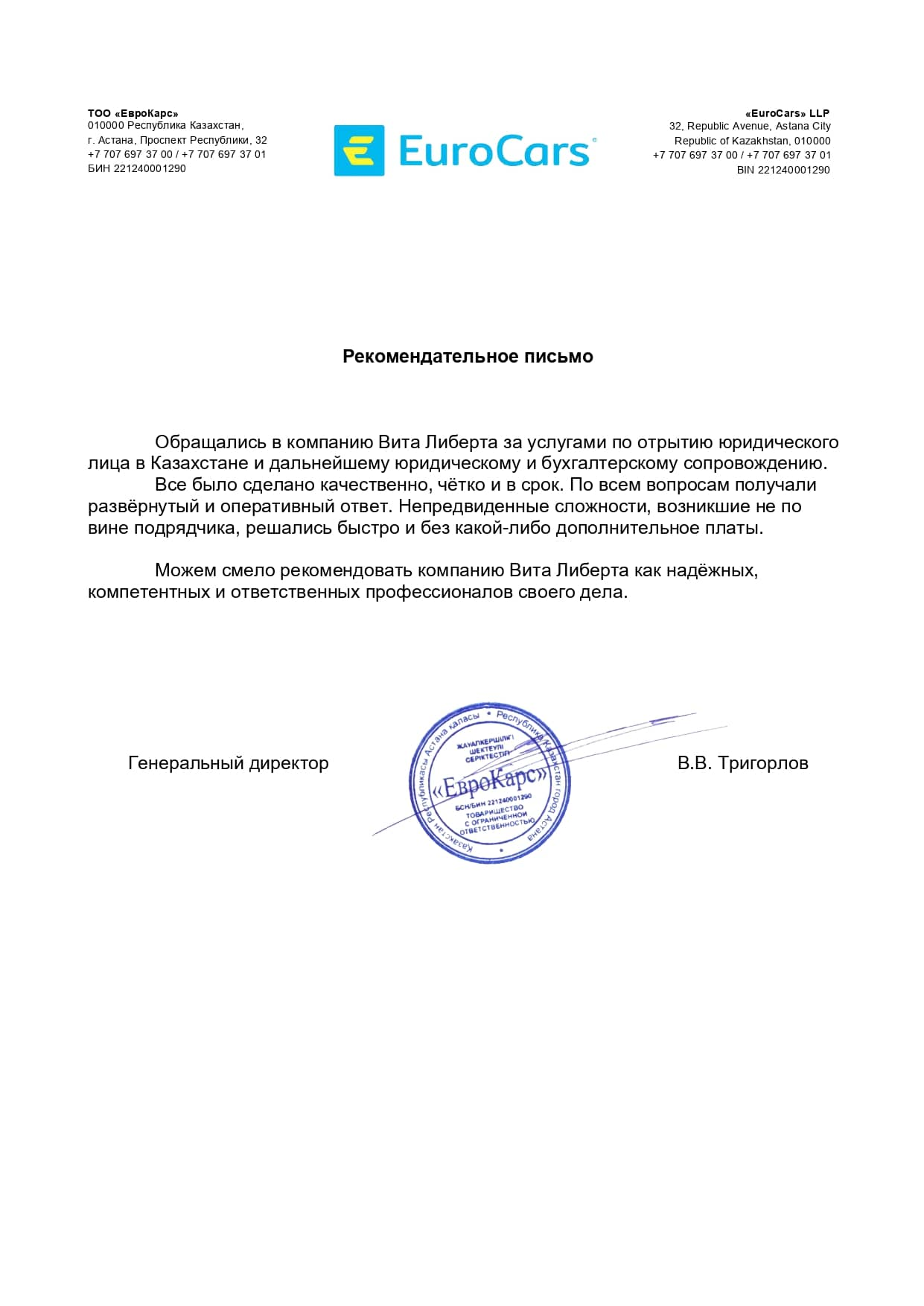
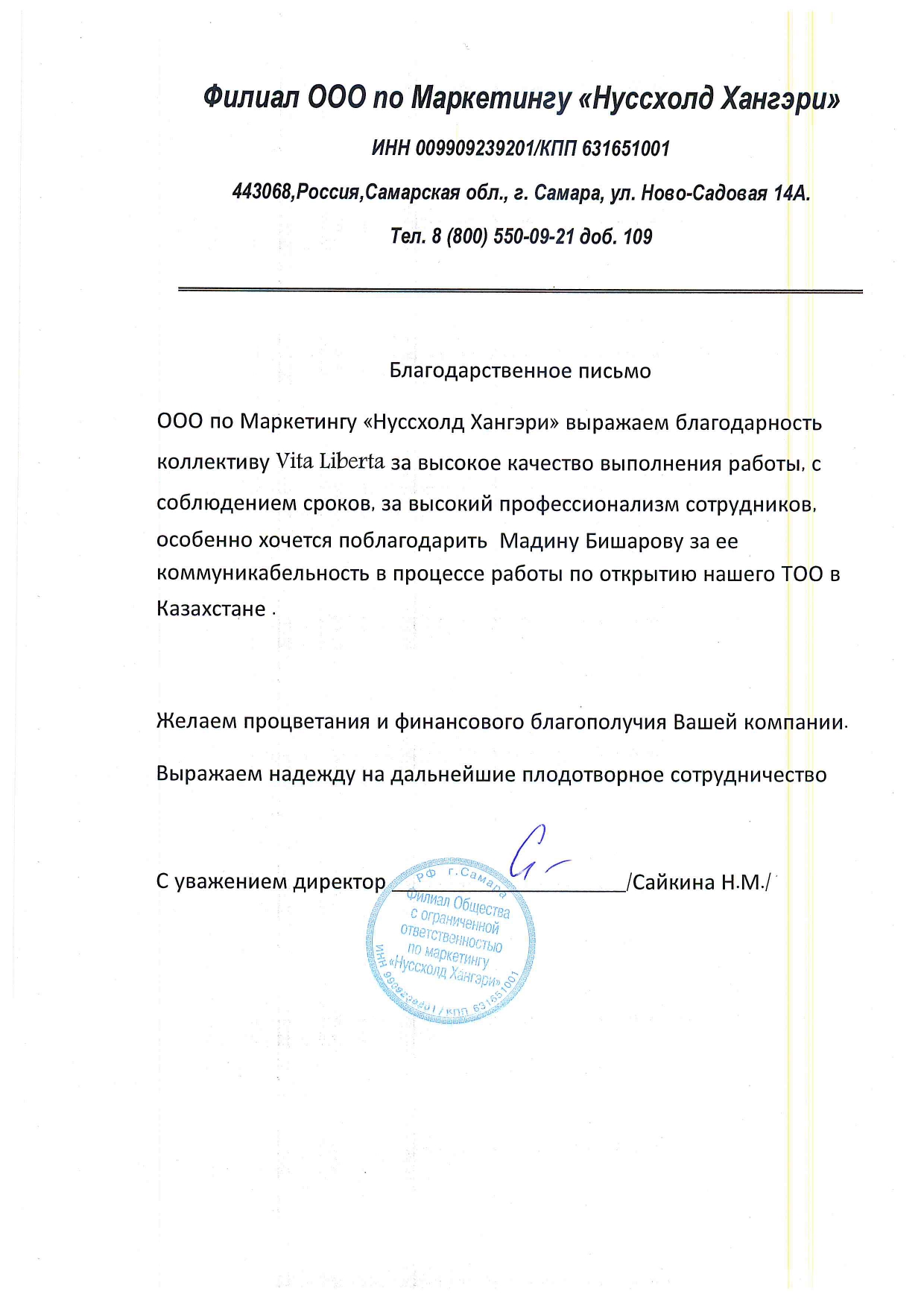
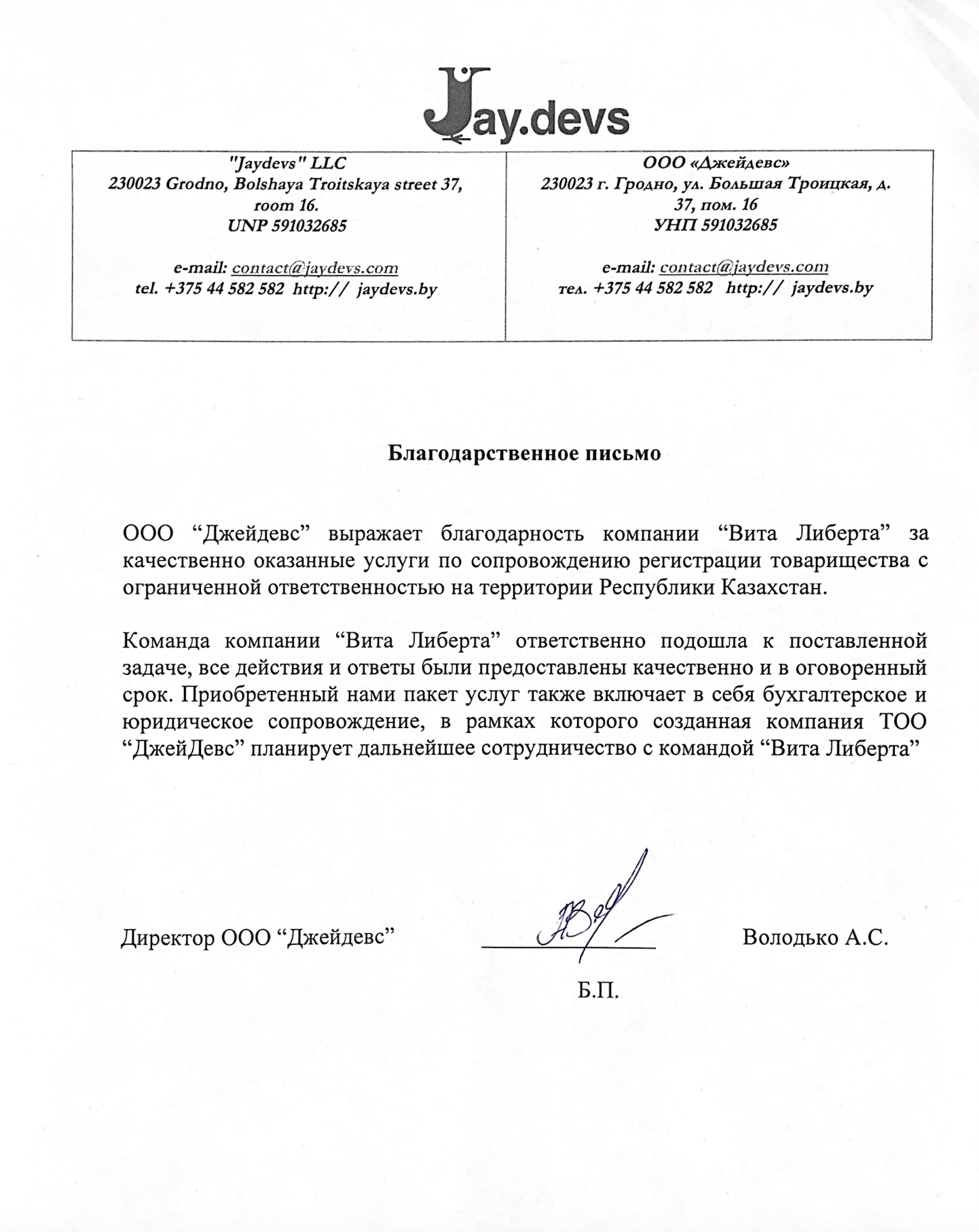
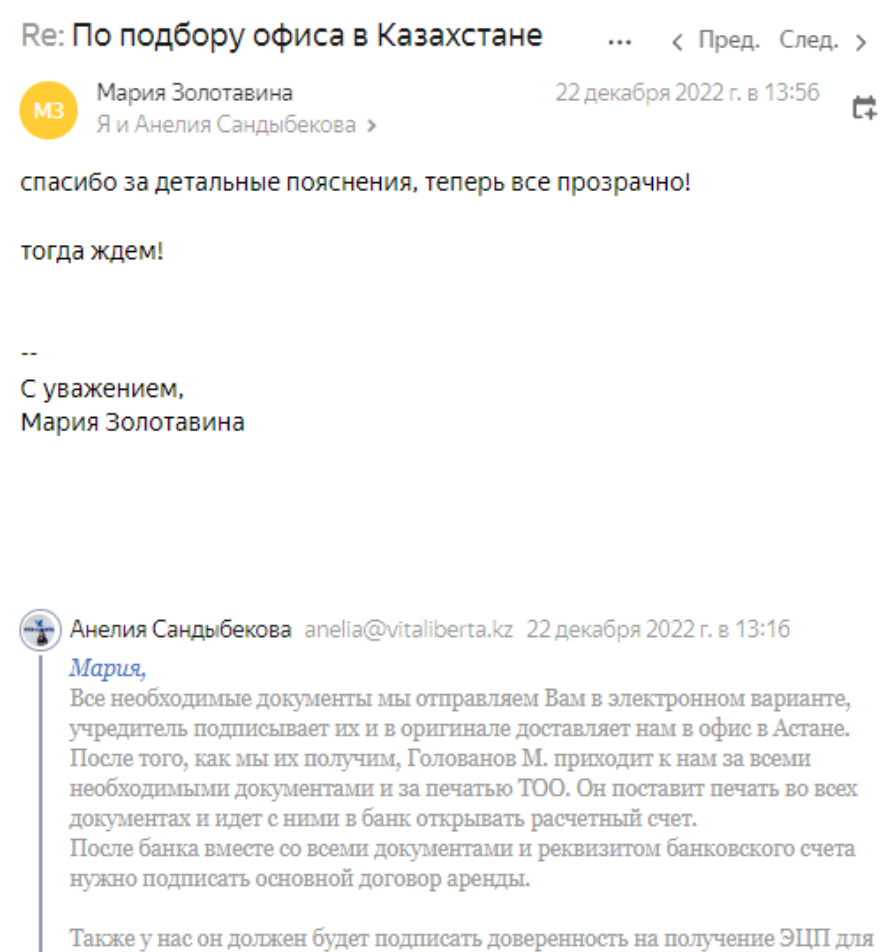
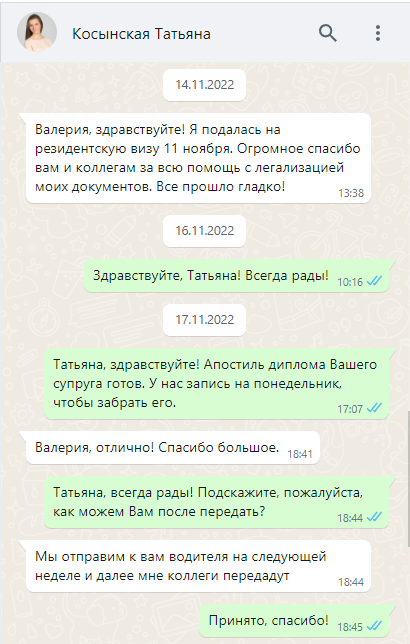
Testimonial from a Satisfied Client

Congratulations from Our Partner Bank

"Vita Liberta" LLP and the March 8 Holiday
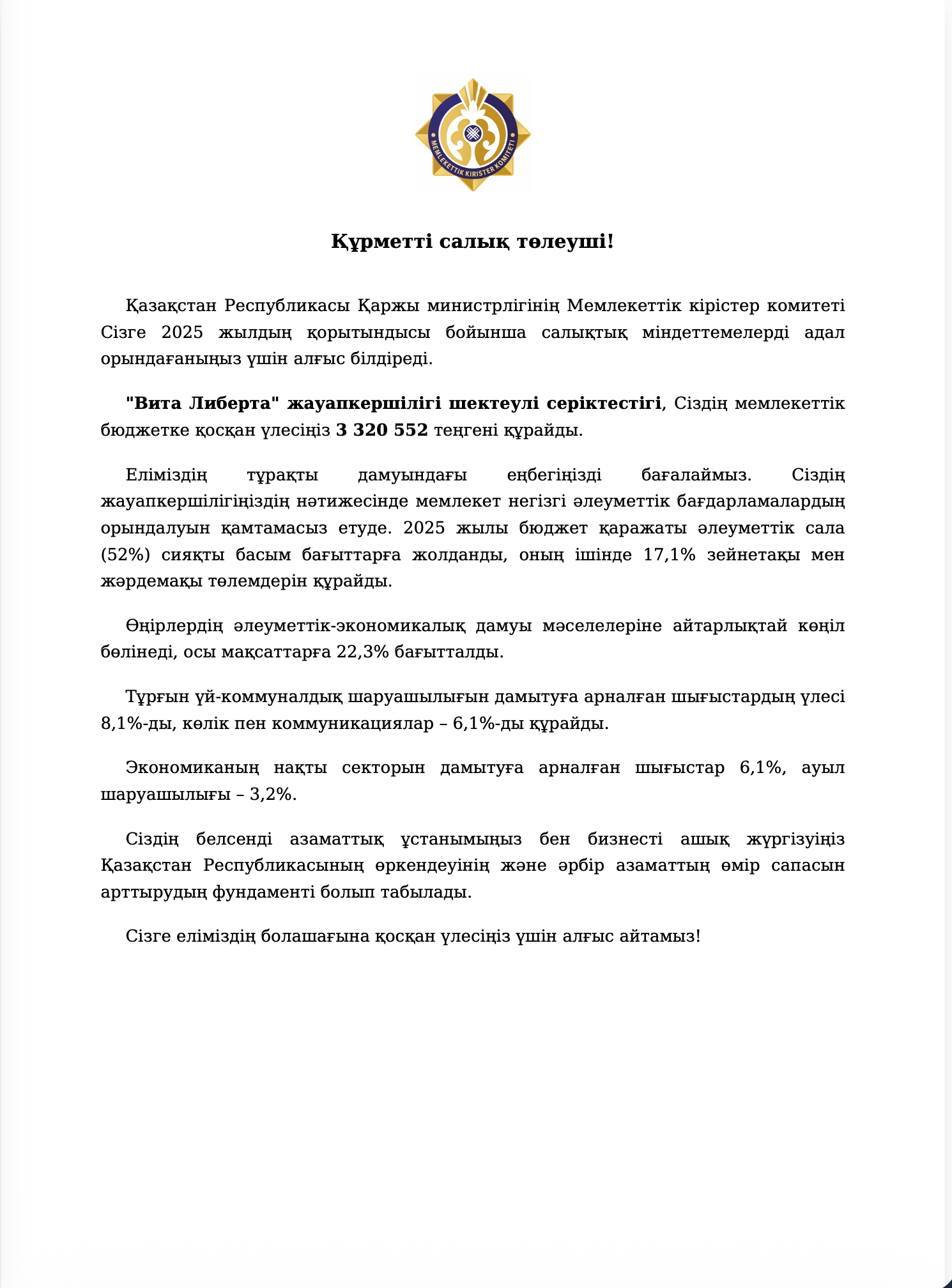
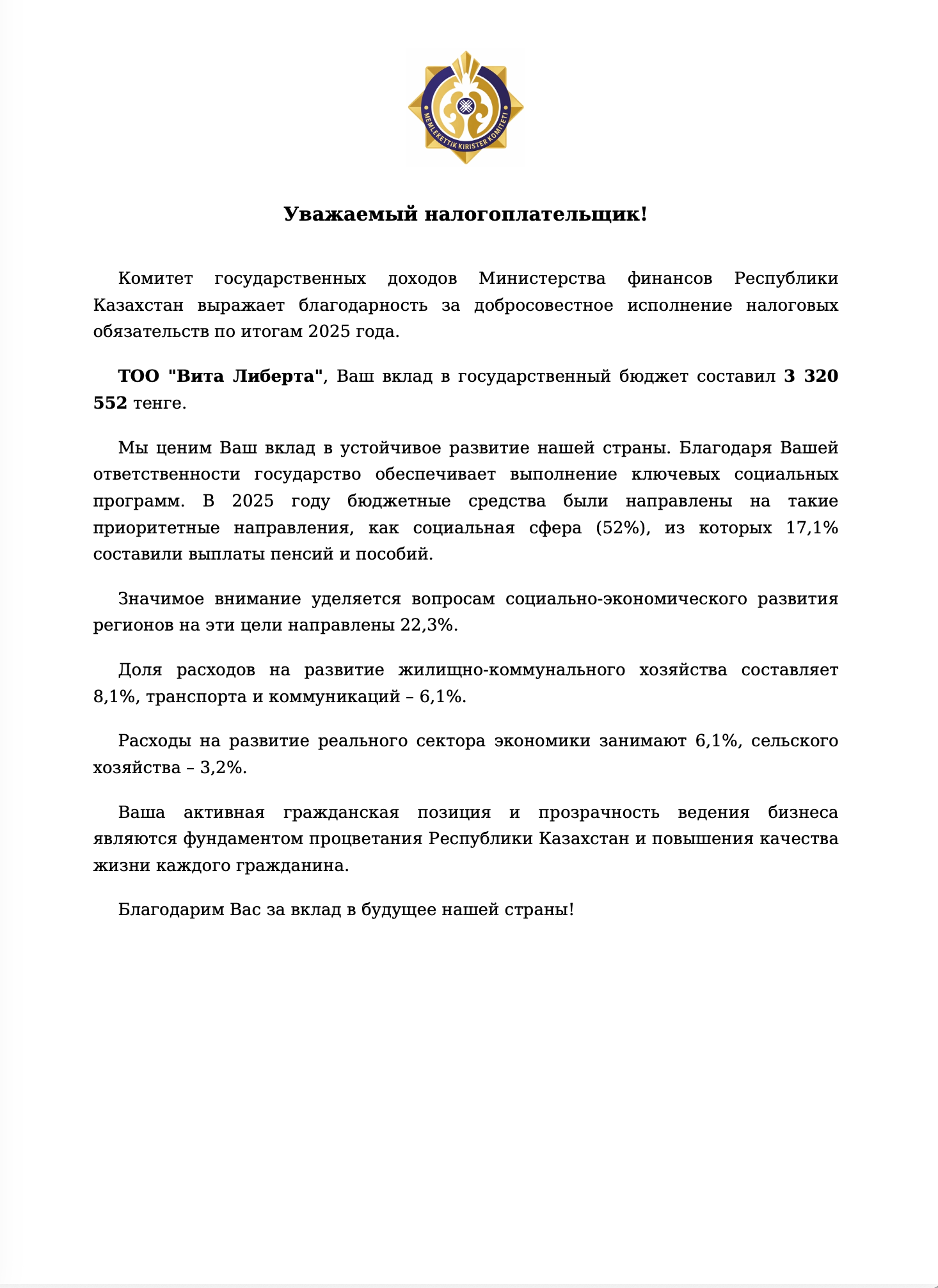
The Moment When Paying Taxes Brings Joy
Usually, the words "tax," "State Revenue Committee," and "payment" cause a slight headache for an entrepreneur. But this document is one of those rare exceptions. Seeing it makes you want to take a screenshot and send it to the chat with the caption "Just pleasant!"
The 3,320,552 tenge our company paid to the budget for 2025 is not just a number.
It is 52% going to the social sphere. It is pensions, benefits, schools.
It is 22% going to the regions, 8% to housing and communal services, 6% to roads and communications.
Even 3% to agriculture — perhaps somewhere a new tractor was bought or a water pipe was repaired.
Of course, we understand: tax is not charity, it's an obligation.
But when you see that the fruit of your labor turns into someone's payment, someone's asphalt, someone's housing - something inside resonates.
Thank you for noticing! Being among those who don't hide but contribute to the common cause is gratifying.
The 3,320,552 tenge our company paid to the budget for 2025 is not just a number.
It is 52% going to the social sphere. It is pensions, benefits, schools.
It is 22% going to the regions, 8% to housing and communal services, 6% to roads and communications.
Even 3% to agriculture — perhaps somewhere a new tractor was bought or a water pipe was repaired.
Of course, we understand: tax is not charity, it's an obligation.
But when you see that the fruit of your labor turns into someone's payment, someone's asphalt, someone's housing - something inside resonates.
Thank you for noticing! Being among those who don't hide but contribute to the common cause is gratifying.
Professional Liability Insurance
Our professional liability is insured by JSC IC "NOMAD Insurance"
(Contract No. 207-25-14142055/811884DS).
Insurance coverage includes:
The insurance applies during the provision of professional services requiring special knowledge and qualifications.
(Contract No. 207-25-14142055/811884DS).
Insurance coverage includes:
- Compensation for harm caused to life and/or health
- Compensation for damage caused to the property of third parties
The insurance applies during the provision of professional services requiring special knowledge and qualifications.

Insurance Policy
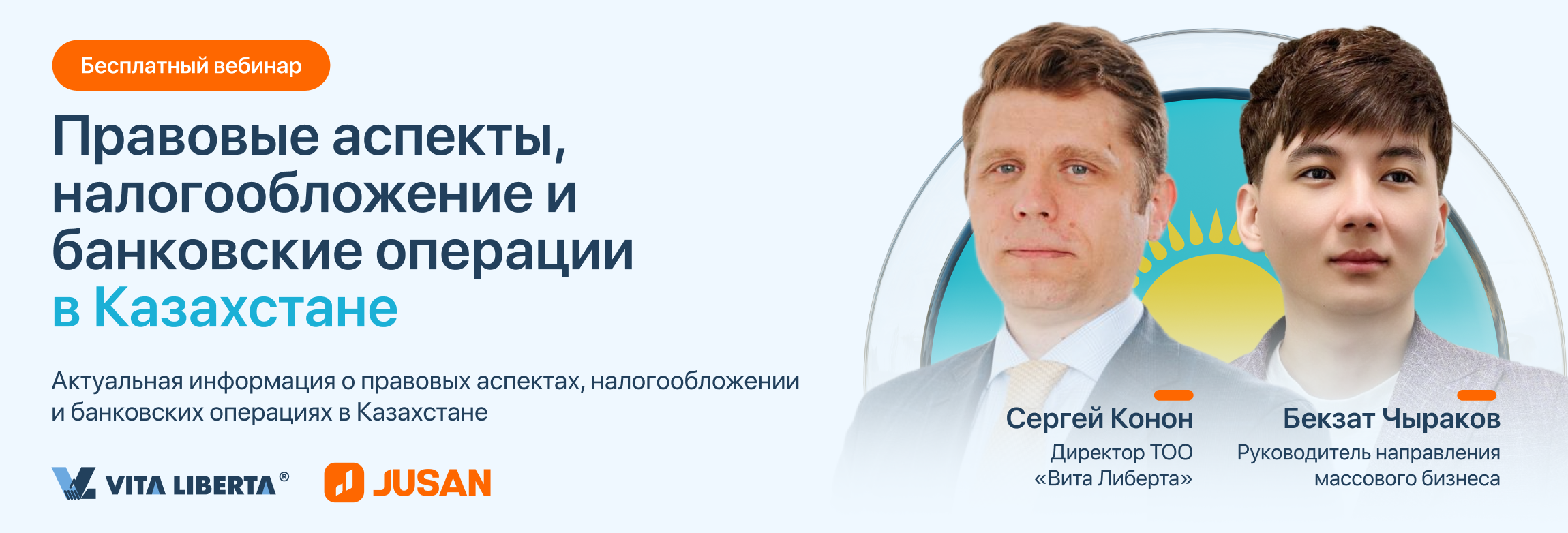
Webinar: A Comprehensive Guide to Legal Aspects, Taxation, and Banking Operations in Kazakhstan
Join our webinar "Legal Aspects, Taxation, and Banking Operations in Kazakhstan" and get comprehensive information from experts at Vita Liberta and Jusan Bank. Learn all the important nuances of successfully doing business in Kazakhstan and ask your questions live! Don't miss the opportunity to increase your competence and confidence in your affairs.
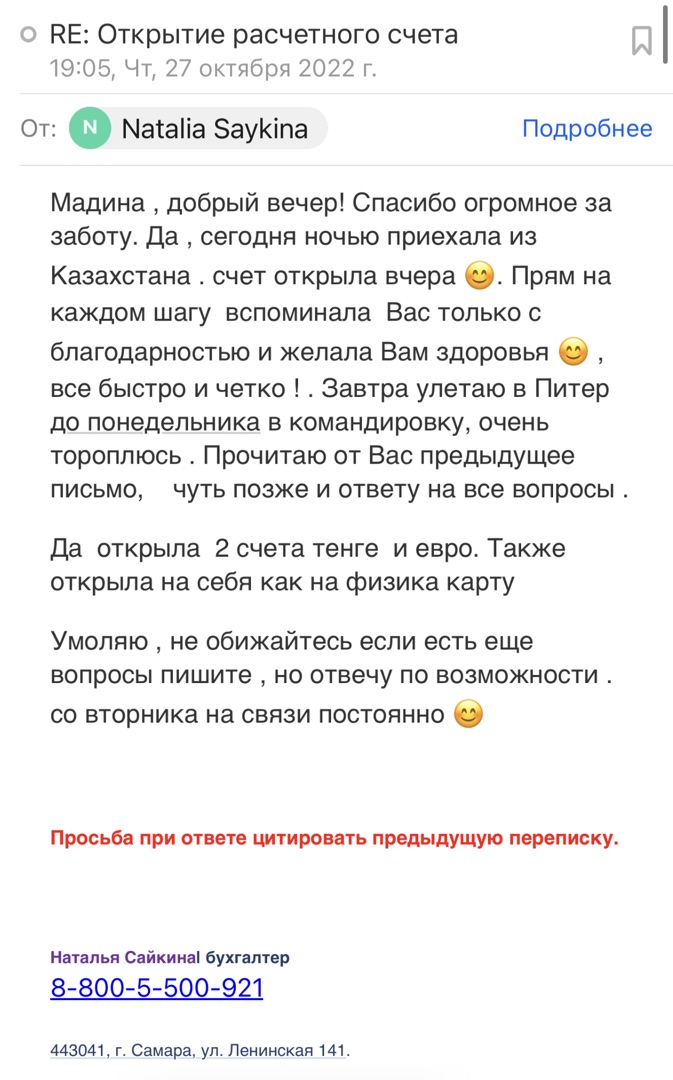
Advantages of Doing Business in Kazakhstan
Stages of Registering a Non-Profit Organization (NPO)
1. Collection of documents
Gathering the necessary documents and preparing a power of attorney (if necessary)
2. Choosing an address
Selecting the most suitable address/office for your company
3. Preparation of documents
Preparing a complete set of constituent documents
4. Name verification
Checking the availability of your company's chosen name
5. IIN/BIN, EDS
Obtaining and processing IIN/BIN and electronic digital signature
6. Choosing a bank
Selecting the most suitable bank based on terms and services
7. Bank account
Preparing documents for opening a bank account
8. Accounting
Setting up online accounting and reporting submission
9. Legal support
Full legal support for your company





Answers to Frequently Asked Questions
Concepts of Branch and Representative Office in Kazakhstan
When a business outgrows the boundaries of a single office and begins to develop new territories, the company faces the question: in what format should this presence be organized? Kazakhstani law offers several options, each with its own legal nature, scope of authority, and establishment procedure.
Branch: An Authorized Representative with a Broad Mandate
What is a branch from a legal perspective?
A branch is the most universal form of territorial separation. The law defines it as a subdivision located outside the location of the parent company, which assumes the performance of all or part of its functions, including the functions of a representative office. The concept of "functions" here includes representative activities.
The key characteristic of a branch is its multifunctionality. Unlike other forms, a branch is not limited to a single task. It can simultaneously:
Practical significance of the branch form
For business, a branch is convenient because it allows transferring the entire spectrum of activity to a new territory. A production workshop, a trading house, a service center - all of this can be organized in the form of a branch. The head of the branch has broad powers defined in the regulations and the power of attorney, allowing for prompt resolution of issues without constant coordination with the head office.
Representative Office: Focus on Legal Presence
Legal nature of a representative office
A representative office is a more specialized form of separation. It is also established outside the location of the parent company, but its tasks are concentrated in the legal and communications spheres.
The law defines a representative office as a subdivision intended for:
Limitations on the activities of a representative office
Legislative acts may establish cases where a representative office is not entitled to perform certain legal actions. These are exceptions that confirm the general rule: in all other respects, a representative office has all the necessary powers to perform its functions.In practice, representative offices are often established by large foreign companies for which permanent presence in Kazakhstan is important for coordinating projects, but which do not plan to open full-fledged production or trade facilities here.
Branch: An Authorized Representative with a Broad Mandate
What is a branch from a legal perspective?
A branch is the most universal form of territorial separation. The law defines it as a subdivision located outside the location of the parent company, which assumes the performance of all or part of its functions, including the functions of a representative office. The concept of "functions" here includes representative activities.
The key characteristic of a branch is its multifunctionality. Unlike other forms, a branch is not limited to a single task. It can simultaneously:
- conduct production activities;
- engage in trade or services;
- represent the interests of the parent company;
- enter into transactions on its behalf;
- carry out any other actions within the competence of the organization that created it.
Practical significance of the branch form
For business, a branch is convenient because it allows transferring the entire spectrum of activity to a new territory. A production workshop, a trading house, a service center - all of this can be organized in the form of a branch. The head of the branch has broad powers defined in the regulations and the power of attorney, allowing for prompt resolution of issues without constant coordination with the head office.
Representative Office: Focus on Legal Presence
Legal nature of a representative office
A representative office is a more specialized form of separation. It is also established outside the location of the parent company, but its tasks are concentrated in the legal and communications spheres.
The law defines a representative office as a subdivision intended for:
- protecting the interests of the organization that created it;
- representing these interests before third parties;
- carrying out transactions and other legally significant actions on behalf of the company.
Limitations on the activities of a representative office
Legislative acts may establish cases where a representative office is not entitled to perform certain legal actions. These are exceptions that confirm the general rule: in all other respects, a representative office has all the necessary powers to perform its functions.In practice, representative offices are often established by large foreign companies for which permanent presence in Kazakhstan is important for coordinating projects, but which do not plan to open full-fledged production or trade facilities here.
The Concept of Accounting Registration of Branches and Representative Offices in Kazakhstan
A branch or representative office does not have the status of an independent organization. They do not have their own charter capital, cannot be founders of other companies, and do not own property. All rights and obligations arising from their activities belong directly to the parent company. However, to operate legally, open bank accounts, hire employees, and interact with government bodies, a branch or representative office must undergo accounting registration and receive official recognition from the state.
What Does the Accounting Registration Procedure Include?
Accounting registration is not limited to simply making an entry in a register. The legislator has included several sequential stages in it, each with independent significance.
Verification of documents' compliance with the law
The first and most important stage is the analysis of the materials submitted by the applicant. The registering body is obliged to check how well the documents submitted for accounting registration comply with the requirements of Kazakhstani legislation.
This verification concerns not only the formal completeness of the package but also its content. It is assessed whether the regulations on the branch or representative office are correctly executed, whether the head is vested with the necessary powers, and whether the constituent documents of the parent company are properly legalized. If foreign documents require an apostille or consular legalization, the presence of these marks is checked.
The purpose of the verification is to prevent the registration of subdivisions that are established in violation of the established procedure or whose activities may contradict the law. This is a filter that screens out unscrupulous or unprepared applicants.
Issuance of a Business Identification Number
If the verification is successful, the branch or representative office is issued a certificate of accounting registration. Simultaneously, the structure is assigned a business identification number — the BIN, which the subdivision will indicate in all official documents.
For a branch or representative office, the BIN serves the same function as for a legal entity. It is a unique digital code that allows identifying the structure when paying taxes, opening bank accounts, including contracts, and interacting with government bodies. Without a BIN, a branch is not considered to be operating legally, even if the parent company has existed for many years and has an impeccable reputation.
Entering data into the National Register
The final stage of the procedure is entering information about the registered subdivision into the National Register of Business Identification Numbers. This is a unified state database where information is collected on all operating subjects on the territory of Kazakhstan that have a BIN.
Entry into the register has important public significance. Any interested counterparty can use open sources to check whether this subdivision actually exists, when it was registered, who its head is, and whether it is in the process of liquidation. This increases the transparency of business transactions and reduces the risks of fraud.
Legal Status of a Registered Subdivision
After undergoing accounting registration, a branch or representative office acquires official status, but this status has its limitations.
Operating without the status of a legal entity
The law specifically emphasizes: branches and representative offices are subject to accounting registration without the rights of a legal entity. This means they do not become independent participants in civil transactions.
A branch cannot acquire property in its own name, be a plaintiff or defendant in court, or issue powers of attorney in its own name. All transactions concluded by the head of the branch are considered transactions of the parent company. All claims arising from the branch's activities are directed to the parent organization. All assets used by the branch belong to the parent company.
Such a structure creates certain risks for counterparties, as they have to assess the solvency not of the branch itself, but of its parent structure, which may be located in another country. At the same time, this gives advantages to the parent company, allowing it to manage risks and assets centrally.
Scope of authority of a registered subdivision
Despite the lack of legal entity status, a registered branch or representative office has a certain set of powers necessary for its functioning.
Practical Aspects of Accounting Registration
The moment the obligation arises
The obligation to undergo accounting registration for a branch or representative office arises from the moment activities actually begin on the territory of Kazakhstan. The law does not require preliminary registration before the subdivision starts operating. However, delaying registration is also not allowed — carrying out the functions of a branch or representative office without registration entails administrative liability.
Consequences of non-registration
If a branch or representative office operates without accounting registration, its entire activity is considered illegal. Contracts concluded on behalf of such a subdivision may be declared invalid. The head risks being held administratively liable. Additionally, the tax service may make additional tax assessments based on the assumption that activities were conducted but taxes were not paid.
Difference from registering legal entities
It is important to understand the difference between the accounting registration of a branch and the registration of a subsidiary company (LLP). A subsidiary company is an independent legal entity with its own charter capital, its own balance sheet, and its own responsibility. Its registration is subject to the general rules for creating legal entities. A branch, on the other hand, is simply a separate subdivision, and the procedure for legalizing it is significantly simpler, but its legal status is also narrower.
Conclusion
Accounting registration of branches and representative offices in Kazakhstan is a mandatory administrative procedure that includes checking documents, issuing a BIN, and entering information into the National Register. A registered subdivision is not a legal entity but receives official recognition and the opportunity to operate legally.For a business, this means that when opening a branch or representative office, one cannot limit oneself to internal corporate procedures. It is necessary to follow the path of interaction with the state established by law, gather a properly executed package of documents, and obtain a certificate of accounting registration. Only after this can the subdivision be considered legally operating and begin to perform its functions.
What Does the Accounting Registration Procedure Include?
Accounting registration is not limited to simply making an entry in a register. The legislator has included several sequential stages in it, each with independent significance.
Verification of documents' compliance with the law
The first and most important stage is the analysis of the materials submitted by the applicant. The registering body is obliged to check how well the documents submitted for accounting registration comply with the requirements of Kazakhstani legislation.
This verification concerns not only the formal completeness of the package but also its content. It is assessed whether the regulations on the branch or representative office are correctly executed, whether the head is vested with the necessary powers, and whether the constituent documents of the parent company are properly legalized. If foreign documents require an apostille or consular legalization, the presence of these marks is checked.
The purpose of the verification is to prevent the registration of subdivisions that are established in violation of the established procedure or whose activities may contradict the law. This is a filter that screens out unscrupulous or unprepared applicants.
Issuance of a Business Identification Number
If the verification is successful, the branch or representative office is issued a certificate of accounting registration. Simultaneously, the structure is assigned a business identification number — the BIN, which the subdivision will indicate in all official documents.
For a branch or representative office, the BIN serves the same function as for a legal entity. It is a unique digital code that allows identifying the structure when paying taxes, opening bank accounts, including contracts, and interacting with government bodies. Without a BIN, a branch is not considered to be operating legally, even if the parent company has existed for many years and has an impeccable reputation.
Entering data into the National Register
The final stage of the procedure is entering information about the registered subdivision into the National Register of Business Identification Numbers. This is a unified state database where information is collected on all operating subjects on the territory of Kazakhstan that have a BIN.
Entry into the register has important public significance. Any interested counterparty can use open sources to check whether this subdivision actually exists, when it was registered, who its head is, and whether it is in the process of liquidation. This increases the transparency of business transactions and reduces the risks of fraud.
Legal Status of a Registered Subdivision
After undergoing accounting registration, a branch or representative office acquires official status, but this status has its limitations.
Operating without the status of a legal entity
The law specifically emphasizes: branches and representative offices are subject to accounting registration without the rights of a legal entity. This means they do not become independent participants in civil transactions.
A branch cannot acquire property in its own name, be a plaintiff or defendant in court, or issue powers of attorney in its own name. All transactions concluded by the head of the branch are considered transactions of the parent company. All claims arising from the branch's activities are directed to the parent organization. All assets used by the branch belong to the parent company.
Such a structure creates certain risks for counterparties, as they have to assess the solvency not of the branch itself, but of its parent structure, which may be located in another country. At the same time, this gives advantages to the parent company, allowing it to manage risks and assets centrally.
Scope of authority of a registered subdivision
Despite the lack of legal entity status, a registered branch or representative office has a certain set of powers necessary for its functioning.
- It can open bank accounts in its own name (but disposing of funds is carried out within the limits of the authority granted to the head).
- It can conclude employment contracts with employees, acting as an employer on behalf of the parent company.
- It can obtain licenses and permits for certain types of activities, where provided by law.
- It can have its own seal and company letterheads.
Practical Aspects of Accounting Registration
The moment the obligation arises
The obligation to undergo accounting registration for a branch or representative office arises from the moment activities actually begin on the territory of Kazakhstan. The law does not require preliminary registration before the subdivision starts operating. However, delaying registration is also not allowed — carrying out the functions of a branch or representative office without registration entails administrative liability.
Consequences of non-registration
If a branch or representative office operates without accounting registration, its entire activity is considered illegal. Contracts concluded on behalf of such a subdivision may be declared invalid. The head risks being held administratively liable. Additionally, the tax service may make additional tax assessments based on the assumption that activities were conducted but taxes were not paid.
Difference from registering legal entities
It is important to understand the difference between the accounting registration of a branch and the registration of a subsidiary company (LLP). A subsidiary company is an independent legal entity with its own charter capital, its own balance sheet, and its own responsibility. Its registration is subject to the general rules for creating legal entities. A branch, on the other hand, is simply a separate subdivision, and the procedure for legalizing it is significantly simpler, but its legal status is also narrower.
Conclusion
Accounting registration of branches and representative offices in Kazakhstan is a mandatory administrative procedure that includes checking documents, issuing a BIN, and entering information into the National Register. A registered subdivision is not a legal entity but receives official recognition and the opportunity to operate legally.For a business, this means that when opening a branch or representative office, one cannot limit oneself to internal corporate procedures. It is necessary to follow the path of interaction with the state established by law, gather a properly executed package of documents, and obtain a certificate of accounting registration. Only after this can the subdivision be considered legally operating and begin to perform its functions.
Bodies Carrying Out Accounting Registration of Branches and Representative Offices
The choice of authority depends on the status of the parent organization - whether it is commercial or non-commercial.
Two Streams, Two Systems, Two Registrars
Kazakhstani law draws a strict line between the commercial and non-commercial sectors. This line runs not only through tax rules or reporting requirements but also through the procedures for registering separate subdivisions. Branches and representative offices established by different types of organizations fall under the purview of different state mechanisms.
For the applicant, this means the need to correctly identify themselves. A mistake at this stage leads to loss of time and nerves: documents submitted to the wrong address simply will not be accepted for consideration, and the entire procedure will have to be started over.
Justice Authorities: Registration Hub for the Non-Commercial Sector
Who is specifically authorized to register?
If the parent company belongs to the category of non-commercial organizations, its branches and representative offices undergo accounting registration in the structures of the Ministry of Justice of the Republic of Kazakhstan. Depending on the scale and geography of the subdivision's activities, these may be:
Who falls into the category of non-commercial organizations?
Organizations for which profit-making is not the main purpose of their activities are recognized as non-commercial. Even if profit is generated, it is not distributed among participants but is spent to achieve the statutory goals. This category includes:
State Corporation "Government for Citizens": Universal Registrar for Business
Legal nature and functions of the State Corporation
The State Corporation "Government for Citizens" is a unique institution created to implement the "one-stop shop" principle. In everyday life, it is often simply called PSCs (Public Service Centers). This structure aggregates the functions of many departments, allowing citizens and businesses to receive services in one place without endless visits to offices.
Those opening a branch or representative office on behalf of a commercial organization should apply here.
Which organizations are considered commercial?
Organizations for which profit-making is the main purpose of their activity are considered commercial. The profit received is distributed among the participants (shareholders, founders). This sector includes:
Two Streams, Two Systems, Two Registrars
Kazakhstani law draws a strict line between the commercial and non-commercial sectors. This line runs not only through tax rules or reporting requirements but also through the procedures for registering separate subdivisions. Branches and representative offices established by different types of organizations fall under the purview of different state mechanisms.
For the applicant, this means the need to correctly identify themselves. A mistake at this stage leads to loss of time and nerves: documents submitted to the wrong address simply will not be accepted for consideration, and the entire procedure will have to be started over.
Justice Authorities: Registration Hub for the Non-Commercial Sector
Who is specifically authorized to register?
If the parent company belongs to the category of non-commercial organizations, its branches and representative offices undergo accounting registration in the structures of the Ministry of Justice of the Republic of Kazakhstan. Depending on the scale and geography of the subdivision's activities, these may be:
- the central apparatus - the Registration Service Committee of the Ministry of Justice located in the capital;
- territorial divisions - justice departments of regions, cities of republican significance (Almaty, Shymkent), and the capital.
Who falls into the category of non-commercial organizations?
Organizations for which profit-making is not the main purpose of their activities are recognized as non-commercial. Even if profit is generated, it is not distributed among participants but is spent to achieve the statutory goals. This category includes:
- public associations of various types;
- charitable and other foundations;
- associations and unions uniting legal entities;
- non-commercial joint-stock companies;
- institutions established to carry out social, cultural, educational, or scientific tasks;
- religious structures.
State Corporation "Government for Citizens": Universal Registrar for Business
Legal nature and functions of the State Corporation
The State Corporation "Government for Citizens" is a unique institution created to implement the "one-stop shop" principle. In everyday life, it is often simply called PSCs (Public Service Centers). This structure aggregates the functions of many departments, allowing citizens and businesses to receive services in one place without endless visits to offices.
Those opening a branch or representative office on behalf of a commercial organization should apply here.
Which organizations are considered commercial?
Organizations for which profit-making is the main purpose of their activity are considered commercial. The profit received is distributed among the participants (shareholders, founders). This sector includes:
- limited liability partnerships (LLPs) - the most common form of business;
- open and closed joint-stock companies;
- production cooperatives;
- general and limited partnerships;
- state enterprises operating on a commercial basis;
- any other structures created for conducting entrepreneurial activities.
Accreditation of a Foreign Company Branch in Kazakhstan: A Clear Guide to the Procedure
The process can be divided into five main steps:
Step 1. Preparation of Constituent Documents (the most important stage)
The head office needs to prepare a package of corporate documents:
Step 2. Preparation of Local Documents in Kazakhstan
In parallel with legalization, or after it, it is necessary to resolve "local" issues in Kazakhstan itself:
Step 3. Submitting the Application
The collected package of documents is submitted to the justice authorities (registering body). This can be done either directly or through PSCs, which act as intermediaries.
Step 4. The Finale of the Procedure - Receiving Documents
After verification (usually taking several working days) and payment of the state fee, the branch is officially born:
Change of legal address (actual location).
Making amendments to the constituent documents of the head company.
Change of the name of the head company.In these cases, an application is submitted to make changes to the registration data, but it is not required to go through the entire accreditation procedure again.
Step 1. Preparation of Constituent Documents (the most important stage)
The head office needs to prepare a package of corporate documents:
- The company's charter (or similar constituent document).
- The decision of the company's management to establish a branch in Kazakhstan and to approve the Regulations on it.
- The Regulations on the Branch itself (the local document regulating its work).
- A power of attorney issued in the name of the branch head.
- Be translated into Kazakh and Russian.
- Be notarized at the location of the parent company.
- Be legalized for use abroad (apostille or consular legalization procedure, depending on the country where the parent structure is registered).
Step 2. Preparation of Local Documents in Kazakhstan
In parallel with legalization, or after it, it is necessary to resolve "local" issues in Kazakhstan itself:
- Choose a legal address (conclude a preliminary lease agreement for premises or obtain a guarantee letter from the owner).
- Prepare a copy of the passport of the future branch head.
Step 3. Submitting the Application
The collected package of documents is submitted to the justice authorities (registering body). This can be done either directly or through PSCs, which act as intermediaries.
Step 4. The Finale of the Procedure - Receiving Documents
After verification (usually taking several working days) and payment of the state fee, the branch is officially born:
- A certificate of accreditation is issued.
- A BIN is assigned.
- Registration with the Tax Committee is carried out automatically (or upon separate application).
- Validity period: Accreditation in Kazakhstan is indefinite. It is no longer necessary to redo it every 5 years, as before.
- When to update data: Although accreditation is indefinite, changes must be made to the register in the following cases:
Change of legal address (actual location).
Making amendments to the constituent documents of the head company.
Change of the name of the head company.In these cases, an application is submitted to make changes to the registration data, but it is not required to go through the entire accreditation procedure again.
Document Requirements for a Foreign Founder When Opening a Branch in Kazakhstan
The procedure for registering a non-resident's separate subdivision on the territory of the Republic of Kazakhstan requires submitting a package of official papers confirming the legal capacity of the parent structure. The list of necessary materials and the algorithm for confirming their authenticity are determined by the jurisdiction in which the founder is registered.
Comprehensive List of Documentation
To open a branch or representative office, the following materials originating from the head office must be submitted to the authorized authorities:
2. Confirmation of fiscal status:
3. Internal corporate acts and powers of attorney:
4. Personal data of managing persons:
Variability of Legalization Procedures
Granting legal significance to the above documents on the territory of the Republic of Kazakhstan is carried out according to one of three schemes, depending on whether the founder's country is party to international agreements:
2. Standard regime for countries parties to the Hague Convention of 1961
For firms from states that have signed the Convention abolishing diplomatic legalization, a procedure for affixing a special stamp is provided.
3. Full cycle for other states
Companies from countries not party to the above-mentioned agreements must undergo multi-stage consular legalization.
Translation and Formatting Requirements
All documents originally drafted in languages other than Kazakh or Russian are subject to translation.
Comprehensive List of Documentation
To open a branch or representative office, the following materials originating from the head office must be submitted to the authorized authorities:
- Set of registration and constituent data:
- Official extract obtained from the state register of the country of incorporation (confirms the existence of the legal entity).
- Basic regulatory acts of the company - the charter, memorandum, incorporation agreement, or other documents serving their function.
2. Confirmation of fiscal status:
- Certificate of registration with the tax authority of the state of registration, containing a unique taxpayer identification code (or its national equivalent).
3. Internal corporate acts and powers of attorney:
- Official decision of the competent body of the foreign company to establish a branch (representative office) on Kazakhstani territory. Note: the date of such decision must not exceed 12 months prior to the submission of documents for registration.
- Power of attorney issued in the name of the head of the branch being established, granting them the right to represent the interests of the parent company in the Republic of Kazakhstan.
- Separate power of attorney for the person directly handling the registration process.
4. Personal data of managing persons:
- Notarized copy of the identity document of the director (head) of the parent company.
- Notarized copy of the passport of the candidate for the position of head of the branch in Kazakhstan.
Variability of Legalization Procedures
Granting legal significance to the above documents on the territory of the Republic of Kazakhstan is carried out according to one of three schemes, depending on whether the founder's country is party to international agreements:
- Preferential regime for EAEU entities
- Required action: It is sufficient to notarize the authenticity of the head's signature and the company's seal at the location of the head office.
- Result: Documents are accepted by Kazakhstani registrars in this form without additional formalities.
2. Standard regime for countries parties to the Hague Convention of 1961
For firms from states that have signed the Convention abolishing diplomatic legalization, a procedure for affixing a special stamp is provided.
- Required action: The competent authority of the country of origin of the document (Ministry of Justice, Chamber of Commerce, etc.) affixes an "Apostille" stamp to the document.
- Result: This stamp certifies the authenticity of the signature and the status of the person who issued the document, after which it acquires full legal force in Kazakhstan.
3. Full cycle for other states
Companies from countries not party to the above-mentioned agreements must undergo multi-stage consular legalization.
- Required action: The document is sequentially certified by the justice authorities and the Ministry of Foreign Affairs of the country of origin, and then sent to the diplomatic mission (consulate) of Kazakhstan abroad for final endorsement.
Translation and Formatting Requirements
All documents originally drafted in languages other than Kazakh or Russian are subject to translation.
- Language aspect: The translation must be made into both languages that have official status in the Republic of Kazakhstan - Kazakh (state) and Russian.
- Legal confirmation of translation: The conformity of the translated text to the original must be certified by a notary operating on the territory of Kazakhstan.
- Compliance with validity periods. Some documents (eg, extracts from registers) are valid only for a limited period. This period must not expire by the time of the visit to the registering authority.
- Uniformity of name spelling. The transliteration of the name of the parent organization must be identical in all translations and cover letters. Any discrepancies may be interpreted as false information.
- Consequences of errors. Neglecting legalization rules (lack of an apostille where required) or submitting documents without a notarized translation entails a formal refusal. The entire set is returned to the applicant, and the procedure must be started anew after eliminating the shortcomings.
Appointment of the Head of a Branch or Representative Office
The Institution of the Head of a Separate Subdivision in the Republic of Kazakhstan: Corporate Procedures and Law Enforcement Practice
The Nature of Authority: Not a Position, but a Function
In Kazakhstani legal reality, branches and representative offices occupy a special place. They are not independent subjects of law, but merely territorially separated instruments for implementing the will of the legal entity that created them. Hence the main feature of the status of their heads: the scope of rights and obligations of such a manager is determined not so much by the position held, but by the document delegating to them the authority to act on behalf of the company externally.
When we talk about appointing a branch director, it is important to understand the two-level nature of this process.
The Corporate Basis: How the Decision is Made
The initiation of the appointment of a head of a structural subdivision always originates in the head office. The specific body authorized to make such a decision depends on the company's organizational architecture:
The Power of Attorney as a Key Document
If the corporate decision is the internal will of the company, then the power of attorney is the instrument that brings this will to the outside. Without it, even an officially appointed director cannot sign a single legally significant document.
Essential Details Without Which a Power of Attorney is Invalid
Kazakhstani civil legislation imposes a number of mandatory requirements on powers of attorney. Ignoring even one of them entails the nullity of the document:
What Exactly Can Be Entrusted to the Branch Head
The law does not contain a closed list of actions that the head of a separate subdivision can perform. The scope of authority is the result of an agreement between the parent company and its local representative. However, many years of law enforcement practice have developed an optimal set of rights that it is advisable to include in the power of attorney:
Terms and Limits of Validity
A power of attorney cannot be perpetual. The maximum period for which Kazakhstani legislation allows issuing powers of attorney is three years. If the term is not specified in the text of the document, a dispositive norm applies — the power of attorney will be valid for one year from the date of its signing.
It is important to remember that a power of attorney terminates not only upon expiration of its term. It can be revoked at any time by the parent company. The liquidation of the branch itself or the refusal of the head from the granted powers also serve as grounds for termination.
The Institution of Sub-delegation: When Further Delegation is Possible
The branch head is obliged to personally perform the actions for which they are authorized. However, life makes adjustments - business trips, illness, vacation. The law provides for the possibility of sub-delegation: the head can transfer part of their powers to another person (eg, a deputy), but only if such a right is explicitly stated in the original power of attorney.
There is an important procedural rule here: a power of attorney issued by way of sub-delegation must be certified by a notary. The notary checks whether the term of the new power of attorney does not exceed the term of the main one, and whether the sub-delegation expands the scope of authority initially granted to the head.
Specifics of Appointing the Head of a Branch of a Foreign Company
For non-residents opening their structures in Kazakhstan, the procedure for appointing a head acquires an additional dimension — legalization of documents confirming their status.
At the stage of registering the branch with the Ministry of Justice, two key documents related to the head must be submitted:
Both documents must undergo a legalization procedure, the type of which depends on the investor's country of origin.
If the head office is registered in a member state of the Eurasian Economic Union, simple notarization of signatures is sufficient. An apostille or consular certification is not required. For companies from countries that have signed the Hague Convention of 1961, affixing an apostille stamp by the competent authority of the country of origin is mandatory. For residents of other states, full consular legalization is required, including certification by the Ministry of Foreign Affairs of the country of origin and subsequent endorsement at the consulate of Kazakhstan abroad.
Furthermore, all documents drawn up in a foreign language must be translated into Kazakh and Russian. The accuracy of the translation is certified by a notary operating on the territory of the Republic of Kazakhstan.
Responsibility and Risks of Exceeding Authority
In practice, situations often arise where the branch head exceeds the limits of the granted rights. For example, concluding a lease agreement for an amount exceeding the limit set in the power of attorney, or selling property without the sanction of the head office.
In such cases, the mechanism established in Article 167 of the Civil Code applies. A transaction made by a representative exceeding their authority is considered to be made on behalf of the representative themselves. This means that the parent company is not obliged to fulfill it. Moreover, it can apply to the court to declare such a transaction invalid.
For the head themselves, exceeding authority entails financial liability. If their actions caused losses to the company (for example, had to pay a penalty to a counterparty under a disputed transaction), these losses can be recovered from them in court.
Summing up the analysis, several key recommendations can be formulated:
The Nature of Authority: Not a Position, but a Function
In Kazakhstani legal reality, branches and representative offices occupy a special place. They are not independent subjects of law, but merely territorially separated instruments for implementing the will of the legal entity that created them. Hence the main feature of the status of their heads: the scope of rights and obligations of such a manager is determined not so much by the position held, but by the document delegating to them the authority to act on behalf of the company externally.
When we talk about appointing a branch director, it is important to understand the two-level nature of this process.
- The first level is intra-corporate, where the personnel decision is made.
- The second level is external, where the head legitimizes themselves before counterparties and the state.
The Corporate Basis: How the Decision is Made
The initiation of the appointment of a head of a structural subdivision always originates in the head office. The specific body authorized to make such a decision depends on the company's organizational architecture:
- In limited liability partnerships (companies, LTD, LLP, Limited - the most common form in different countries), this is the prerogative of the general meeting of participants or the sole participant, if the business belongs to one person.
- In joint-stock companies, personnel issues of this level are often delegated to the board of directors, unless the charter assigns them to the exclusive competence of the general meeting.
The Power of Attorney as a Key Document
If the corporate decision is the internal will of the company, then the power of attorney is the instrument that brings this will to the outside. Without it, even an officially appointed director cannot sign a single legally significant document.
Essential Details Without Which a Power of Attorney is Invalid
Kazakhstani civil legislation imposes a number of mandatory requirements on powers of attorney. Ignoring even one of them entails the nullity of the document:
- Date of issue. This is an absolute requirement of paragraph 2 of Article 168 of the Civil Code. If the power of attorney does not specify when it was issued, it does not create any legal consequences. The term begins to run from this date.
- Signature of the head. The document is signed by the first person of the company or another employee whom the constituent documents have granted such a right.
- Seal. The requirement for a seal is not universal today. For most commercial structures, the seal has become an optional attribute. However, in practice, many companies retain it in circulation, and if the power of attorney is affixed with a seal, it increases trust from banks and large counterparties.
- Signature of the chief accountant. This requisite appears only in one case — if the power of attorney grants authority to receive or issue inventory items and funds. This requirement comes from accounting rules and is aimed at ensuring double control over the movement of assets.
What Exactly Can Be Entrusted to the Branch Head
The law does not contain a closed list of actions that the head of a separate subdivision can perform. The scope of authority is the result of an agreement between the parent company and its local representative. However, many years of law enforcement practice have developed an optimal set of rights that it is advisable to include in the power of attorney:
- Firstly, these are managerial functions within the subdivision itself: issuing orders on personnel, approving work schedules, organizing document flow. Without this, it is impossible to ensure current activities.
- Secondly, these are external representative functions. The branch head must have the right to sign contracts with counterparties. Here, the parent company should consider limits. You can grant the right to conclude any transactions without restrictions (general power of attorney), or you can set a threshold — for example, up to ten thousand monthly calculation indicators. Anything above that should require additional approval from the head office.
- Thirdly, these are financial powers. Opening settlement accounts, managing funds, signing payment documents - these are critically important functions that are usually clearly specified.
- Fourthly, this is court representation. The branch head must have the right to file lawsuits, sign responses, appeal decisions, and participate in enforcement proceedings on behalf of the company.
- Fifthly, this is interaction with state bodies - the tax service, the antimonopoly authority, statistics. The branch head usually signs the reports submitted at the location of the subdivision.
Terms and Limits of Validity
A power of attorney cannot be perpetual. The maximum period for which Kazakhstani legislation allows issuing powers of attorney is three years. If the term is not specified in the text of the document, a dispositive norm applies — the power of attorney will be valid for one year from the date of its signing.
It is important to remember that a power of attorney terminates not only upon expiration of its term. It can be revoked at any time by the parent company. The liquidation of the branch itself or the refusal of the head from the granted powers also serve as grounds for termination.
The Institution of Sub-delegation: When Further Delegation is Possible
The branch head is obliged to personally perform the actions for which they are authorized. However, life makes adjustments - business trips, illness, vacation. The law provides for the possibility of sub-delegation: the head can transfer part of their powers to another person (eg, a deputy), but only if such a right is explicitly stated in the original power of attorney.
There is an important procedural rule here: a power of attorney issued by way of sub-delegation must be certified by a notary. The notary checks whether the term of the new power of attorney does not exceed the term of the main one, and whether the sub-delegation expands the scope of authority initially granted to the head.
Specifics of Appointing the Head of a Branch of a Foreign Company
For non-residents opening their structures in Kazakhstan, the procedure for appointing a head acquires an additional dimension — legalization of documents confirming their status.
At the stage of registering the branch with the Ministry of Justice, two key documents related to the head must be submitted:
- Decision of the competent body of the foreign company to establish the branch and appoint the manager.
- Power of attorney in the name of this head.
Both documents must undergo a legalization procedure, the type of which depends on the investor's country of origin.
If the head office is registered in a member state of the Eurasian Economic Union, simple notarization of signatures is sufficient. An apostille or consular certification is not required. For companies from countries that have signed the Hague Convention of 1961, affixing an apostille stamp by the competent authority of the country of origin is mandatory. For residents of other states, full consular legalization is required, including certification by the Ministry of Foreign Affairs of the country of origin and subsequent endorsement at the consulate of Kazakhstan abroad.
Furthermore, all documents drawn up in a foreign language must be translated into Kazakh and Russian. The accuracy of the translation is certified by a notary operating on the territory of the Republic of Kazakhstan.
Responsibility and Risks of Exceeding Authority
In practice, situations often arise where the branch head exceeds the limits of the granted rights. For example, concluding a lease agreement for an amount exceeding the limit set in the power of attorney, or selling property without the sanction of the head office.
In such cases, the mechanism established in Article 167 of the Civil Code applies. A transaction made by a representative exceeding their authority is considered to be made on behalf of the representative themselves. This means that the parent company is not obliged to fulfill it. Moreover, it can apply to the court to declare such a transaction invalid.
For the head themselves, exceeding authority entails financial liability. If their actions caused losses to the company (for example, had to pay a penalty to a counterparty under a disputed transaction), these losses can be recovered from them in court.
Summing up the analysis, several key recommendations can be formulated:
- Firstly, always formalize the appointment of a branch head with two separate acts: an internal decision of the authorized body and an external power of attorney. Substituting one document for the other creates risks when interacting with counterparties.
- Secondly, detail the powers in the power of attorney as much as possible. The more specific the rights and limitations are spelled out, the less room there is for abuse and corporate conflicts. Avoid general phrases like "perform all necessary actions" — they create an illusion of complete authority, but in practice give rise to disputes over interpretation.
- Thirdly, for foreign companies, it is critically important to comply with the legalization requirements precisely at the stage of branch registration. Errors related to the absence of an apostille or incorrect translation can only be corrected by re-submitting the documents, which entails a loss of time.
- Fourthly, monitor the validity periods of powers of attorney. Implement an accounting system that automatically reminds you of the expiration of the head's authority one month before the end. This will avoid situations where the branch is left without a legal representative at the most inopportune moment.
Taxation of a Branch of a Foreign Company in Kazakhstan from 2026
From January 1, 2026, a new version of the Tax Code is in effect in Kazakhstan, which fundamentally changes approaches to calculating Corporate Income Tax (CIT). The changes affect not only rates, but also the procedure for calculating advance payments, rules for recognizing expenses, and even accounting for asset disposal.
For branches of foreign companies that are recognized as permanent establishments and are independent taxpayers, these innovations are particularly significant. This article examines how the new rules apply specifically to branches, what to pay attention to, and how to avoid tax risks.
Status of a Branch in Tax Relations
Branch as a Permanent Establishment
According to subparagraph 57 of Article 1 of the Tax Code of the Republic of Kazakhstan, structural subdivisions of legal entities (including branches) are recognized as taxpayers. This means that a branch of a foreign company:
Branch Income: What is Subject to CIT
Branches of foreign companies pay CIT on taxable income received from activities in Kazakhstan. Income includes all receipts from the parent company for the maintenance of the branch - rent, salaries, operating expenses. The Tax Code does not differentiate between commercial revenue and financing from the head office: both are recognized as income of the branch.
Simultaneously, the branch has the right to deduct expenses related to obtaining this income, provided they are documented and comply with the requirements of the Code.
CIT Rates in 2026
Basic Rate of 20% for Most Branches
For branches whose activities do not fall under special categories, the basic rate of 20% applies (subparagraph 5, paragraph 2, Article 357 of the Tax Code of the Republic of Kazakhstan). This applies to most representative offices of foreign companies operating in trade, services, production, and other industries.
Special Rates for Specific Types of Activities
If the branch carries out activities subject to preferential or increased rates, the following rules apply:
Important: Preferential rates apply only on condition that the income is received precisely from the specified types of activities, and the taxpayer can document this.
Taxation of Net Income upon Profit Repatriation
Special attention should be paid to the norm of subparagraph 4, paragraph 1 of Article 357 of the Tax Code of the Republic of Kazakhstan: the net income of a non-resident legal entity carrying out activities through a permanent establishment is subject to CIT at a rate of 15%. This is a tax on profit transferred to the parent company outside Kazakhstan.
Thus, the taxation of a branch has a two-level structure:
Advance Payments for CIT: New Procedure
How Advances Are Now Calculated
Since 2026, the algorithm for calculating advance payments has been changed:
Who is Exempt from Advances
Taxpayers whose total annual income, considering adjustments for the period preceding the previous one, does not exceed 600,000 MCI (the previous threshold was 325,000 MCI) are exempt from paying advance payments.
Important Exception: Companies engaged in activities related to digital assets are obliged to pay advances regardless of the amount of income.
Branches of foreign companies, like residents, apply these rules on a general basis. When determining the threshold, the income of the branch itself is considered, not that of the parent company.
Expenses: What Cannot Be Taken into Account When Calculating Tax
The Main Limitation: Transactions with "Simplified" Taxpayers
From 2026, expenses for the purchase of goods, works, or services from persons applying the special tax regime based on a simplified declaration are included in the list of costs not subject to deduction (subparagraph 16, paragraph 1, Article 286 of the Tax Code of the Republic of Kazakhstan).
What does this mean for the branch:
If a branch on the general established regime purchases goods or services from an Sole Proprietor or LLP on the "simplified" regime, it cannot reduce its taxable income by the cost of these purchases. The determining date is the date of receipt of goods (according to transfer documents) or the date of signing the certificate of completed work/services.
Recommendation: Review your supplier portfolio. If a critically important counterparty operates under the special tax regime, assess the possibility of them switching to the general regime or factor the loss of the deduction into the transaction price.
What Has Been Excluded from the List of Non-Deductible Items
A number of restrictions that were previously in effect have been removed:
General Principle: Connection with Income
All expenses claimed for deduction must be directly related to activities aimed at generating income and must be documented. Expenses that do not meet these criteria are not accepted.
Disposal of Assets: New Logic for Calculating Income and Losses
Previously, the result from the sale or other disposal of an asset was calculated for each object separately. Since 2026, an aggregate method for entire groups of assets has been introduced.
For branches owning fixed assets in Kazakhstan, these changes require restructuring of analytical accounting.
New Opportunities to Reduce Taxable Income
Controlled Foreign Companies (CFCs)
Although CFC rules are aimed at residents controlling foreign structures, it is important for branches to understand the context: if a foreign company has a branch in Kazakhstan recognized as a permanent establishment, and at the same time is itself controlled by a Kazakhstani resident, complex cross-border situations may arise.
Since 2026, the threshold amount of CFC income allowing them not to be recognized as controlled (in the absence of registration in offshore zones) has been reduced from 150,495 MCI to 195 MCI. This means that even small foreign structures fall under the scope of the rules.
Insurance Companies: Detailed Accounting
For branches that are insurance or reinsurance organizations, detailed lists of income and expenses recognized for CIT purposes have been introduced. Accounting is maintained according to IFRS data. Companies in this sector need to adapt their accounting policies.
What Has Been Canceled: Benefits That No Longer Exist
The following types of reduction of taxable income have been excluded from the Tax Code:
International Agreements on Avoidance of Double Taxation
Branches of foreign companies have the right to apply the provisions of international treaties on the avoidance of double taxation, if such treaties are concluded between Kazakhstan and the country of the parent company (Articles 666–674 of the Tax Code of the Republic of Kazakhstan).To apply the benefits, it is necessary to confirm the status of a tax resident (obtain a residency certificate) and provide it to the tax authority of Kazakhstan with a notarized translation.
For branches of foreign companies that are recognized as permanent establishments and are independent taxpayers, these innovations are particularly significant. This article examines how the new rules apply specifically to branches, what to pay attention to, and how to avoid tax risks.
Status of a Branch in Tax Relations
Branch as a Permanent Establishment
According to subparagraph 57 of Article 1 of the Tax Code of the Republic of Kazakhstan, structural subdivisions of legal entities (including branches) are recognized as taxpayers. This means that a branch of a foreign company:
- independently calculates and pays taxes;
- submits tax reports;
- acts as a tax agent for income paid to individuals and non-residents.
Branch Income: What is Subject to CIT
Branches of foreign companies pay CIT on taxable income received from activities in Kazakhstan. Income includes all receipts from the parent company for the maintenance of the branch - rent, salaries, operating expenses. The Tax Code does not differentiate between commercial revenue and financing from the head office: both are recognized as income of the branch.
Simultaneously, the branch has the right to deduct expenses related to obtaining this income, provided they are documented and comply with the requirements of the Code.
CIT Rates in 2026
Basic Rate of 20% for Most Branches
For branches whose activities do not fall under special categories, the basic rate of 20% applies (subparagraph 5, paragraph 2, Article 357 of the Tax Code of the Republic of Kazakhstan). This applies to most representative offices of foreign companies operating in trade, services, production, and other industries.
Special Rates for Specific Types of Activities
If the branch carries out activities subject to preferential or increased rates, the following rules apply:
Type of Activity | CIT Rate |
|---|---|
| Agriculture, aquaculture (production, processing, sale of own products) | 3% |
| Agricultural cooperatives (except producers) | 6% |
| Activities in the social sphere (education, medicine, culture) — for commercial organizations | 5% in 2026, 10% from 2027 |
| Banking activities (except business lending) | 25% |
| Gambling business (casinos, gaming machine halls, betting shops) | 25% |
Taxation of Net Income upon Profit Repatriation
Special attention should be paid to the norm of subparagraph 4, paragraph 1 of Article 357 of the Tax Code of the Republic of Kazakhstan: the net income of a non-resident legal entity carrying out activities through a permanent establishment is subject to CIT at a rate of 15%. This is a tax on profit transferred to the parent company outside Kazakhstan.
Thus, the taxation of a branch has a two-level structure:
- CIT at a rate of 20% on taxable income (income minus deductions).
- Withholding tax at a rate of 15% on net income upon its repatriation.
Advance Payments for CIT: New Procedure
How Advances Are Now Calculated
Since 2026, the algorithm for calculating advance payments has been changed:
- Advance payments for the first quarter are calculated by the tax authority. The amount of the monthly payment = 1/12 of the total amount of advances calculated in the calculations for the previous tax period. They must be paid by January 25, February 25, and March 25.
- Advance payments after filing the declaration (for the second to fourth quarters) = 1/12 of the amount of CIT actually calculated for the previous year.
Who is Exempt from Advances
Taxpayers whose total annual income, considering adjustments for the period preceding the previous one, does not exceed 600,000 MCI (the previous threshold was 325,000 MCI) are exempt from paying advance payments.
Important Exception: Companies engaged in activities related to digital assets are obliged to pay advances regardless of the amount of income.
Branches of foreign companies, like residents, apply these rules on a general basis. When determining the threshold, the income of the branch itself is considered, not that of the parent company.
Expenses: What Cannot Be Taken into Account When Calculating Tax
The Main Limitation: Transactions with "Simplified" Taxpayers
From 2026, expenses for the purchase of goods, works, or services from persons applying the special tax regime based on a simplified declaration are included in the list of costs not subject to deduction (subparagraph 16, paragraph 1, Article 286 of the Tax Code of the Republic of Kazakhstan).
What does this mean for the branch:
If a branch on the general established regime purchases goods or services from an Sole Proprietor or LLP on the "simplified" regime, it cannot reduce its taxable income by the cost of these purchases. The determining date is the date of receipt of goods (according to transfer documents) or the date of signing the certificate of completed work/services.
Recommendation: Review your supplier portfolio. If a critically important counterparty operates under the special tax regime, assess the possibility of them switching to the general regime or factor the loss of the deduction into the transaction price.
What Has Been Excluded from the List of Non-Deductible Items
A number of restrictions that were previously in effect have been removed:
- Costs for the acquisition, construction, and installation of social facilities can now be deducted in the general procedure.
- Expenses for services of non-residents from low-tax jurisdictions (related parties) can be deducted within 3% of taxable income (previously not deductible at all).
General Principle: Connection with Income
All expenses claimed for deduction must be directly related to activities aimed at generating income and must be documented. Expenses that do not meet these criteria are not accepted.
Disposal of Assets: New Logic for Calculating Income and Losses
Previously, the result from the sale or other disposal of an asset was calculated for each object separately. Since 2026, an aggregate method for entire groups of assets has been introduced.
- For real estate (Group I)
- For shares and securities
- For privileged securities (eg, government securities), the result is calculated separately.
- For non-depreciable assets
For branches owning fixed assets in Kazakhstan, these changes require restructuring of analytical accounting.
New Opportunities to Reduce Taxable Income
- R&D: Double Deduction
- Endowment Funds: New Basis for Income Reduction
- Organizations of Persons with Disabilities: New Rules
- average annual number of employees with disabilities - at least 51%;
- expenses for their remuneration - at least 51% of total labor costs;
- employees must not be listed in other organizations of persons with disabilities.
Controlled Foreign Companies (CFCs)
Although CFC rules are aimed at residents controlling foreign structures, it is important for branches to understand the context: if a foreign company has a branch in Kazakhstan recognized as a permanent establishment, and at the same time is itself controlled by a Kazakhstani resident, complex cross-border situations may arise.
Since 2026, the threshold amount of CFC income allowing them not to be recognized as controlled (in the absence of registration in offshore zones) has been reduced from 150,495 MCI to 195 MCI. This means that even small foreign structures fall under the scope of the rules.
Insurance Companies: Detailed Accounting
For branches that are insurance or reinsurance organizations, detailed lists of income and expenses recognized for CIT purposes have been introduced. Accounting is maintained according to IFRS data. Companies in this sector need to adapt their accounting policies.
What Has Been Canceled: Benefits That No Longer Exist
The following types of reduction of taxable income have been excluded from the Tax Code:
- the amount of excess of expenses over income when operating social facilities;
- the cost of gratuitously transferred property to autonomous educational organizations;
- for small business entities in the manufacturing industry - expenses for the acquisition of industrial buildings.
- remuneration on leasing and on government securities — now tax can only be reduced by 50% of the amount (previously it was 100%).
International Agreements on Avoidance of Double Taxation
Branches of foreign companies have the right to apply the provisions of international treaties on the avoidance of double taxation, if such treaties are concluded between Kazakhstan and the country of the parent company (Articles 666–674 of the Tax Code of the Republic of Kazakhstan).To apply the benefits, it is necessary to confirm the status of a tax resident (obtain a residency certificate) and provide it to the tax authority of Kazakhstan with a notarized translation.
Net Income of a Branch in Kazakhstan: What It Is and How to Calculate It Correctly
For foreign companies operating in Kazakhstan through a branch, the tax system has its own specifics. The main feature is the presence of two-level taxation of profit. While the concept of Corporate Income Tax (CIT) at a rate of 20% is more or less clear, the concept of tax on net income often raises questions.
What is the net income of a branch (permanent establishment)?
According to Article 652 of the Tax Code of the Republic of Kazakhstan, net income is the income of a non-resident legal entity from activities in Kazakhstan through a permanent establishment (branch) that remains after the payment of corporate income tax.
In simple terms: it is the profit that the branch earned in Kazakhstan, on which it has already paid CIT, and which the parent company (non-resident) can theoretically withdraw from the country.
It is on this amount that the state withholds the so-called "tax on net income" (or tax on the profit of a permanent establishment) at a rate of 15% (or 5% if a benefit under the Convention applies, eg, with the PRC).
How a Branch Pays Taxes: A Two-Tier System
To better understand the nature of net income, imagine the tax path of a branch as a staircase with two steps:
1.First step (CIT): The branch receives income, deducts expenses, and arrives at taxable income. CIT is paid on this at a rate of 20%.
2.Second step (Tax on Net Income): CIT is again subtracted from the remaining amount, and the resulting figure is called net income. Tax is paid on this at a rate of 15%.
Example: A branch earned 1,000,000 tenge of net profit (taxable income). It pays 200,000 tenge CIT (20%). 800,000 tenge remains. But the tax authorities see it differently: the tax on net income is levied on the amount remaining after deducting CIT from the taxable income.
What Constitutes a Branch's Income?
To determine taxable income (the first step towards calculating net income), one must understand what the branch needs to include in its reporting.
The aggregate annual income of a branch includes:
1.Income from Kazakhstani sources: sale of goods, works, services on the territory of the Republic of Kazakhstan.
2.Income from foreign sources: if received through the activities of the permanent establishment.
3.Income from gratuitously received property: for example, if the parent company transfers equipment to the branch free of charge, this is also recognized as branch income.
What Can Be Deducted? (Branch Expenses)
When determining taxable income, the branch has the right to deduct expenses related to generating income. This is a general principle: expenses must be documented and aimed at generating profit.
However, for branches, there is an important limitation. According to paragraph 6 of Article 198 of the Tax Code, the following cannot be deducted:
Step-by-Step Calculation of Net Income
To calculate the tax on net income, a strict formula prescribed in Article 652 of the Tax Code is used.
Let's break it down with numbers.
Formula: Net Income = (Taxable Income – Adjustments – Losses Carried Forward) – (CIT calculated on this amount)
Where:
Calculation Example :
Net Income Calculation:
Net Income = 18,000,000 – 3,600,000 = 14,400,000 tenge
It is on this amount (14.4 million tenge) that the branch must pay the tax on net income.
Tax on Net Income Rates
Payment Deadlines and Reporting
The calculation and payment of the tax on net income are inextricably linked to the CIT declaration.
Summary
The net income of a branch is not simply "profit in the account." It is a strictly calculated tax indicator. To determine it, you need to:
1.Calculate the taxable income (Aggregate Annual Income minus allowed deductions).
2.Account for losses carried forward.
3.Subtract the calculated CIT at a rate of 20% from the resulting amount.
The resulting figure is the object for tax at a rate of 15% (or 5% for Chinese companies, subject to the conditions of the international agreement). Understanding this formula allows you to correctly fill out the declaration and avoid claims from tax authorities.
What is the net income of a branch (permanent establishment)?
According to Article 652 of the Tax Code of the Republic of Kazakhstan, net income is the income of a non-resident legal entity from activities in Kazakhstan through a permanent establishment (branch) that remains after the payment of corporate income tax.
In simple terms: it is the profit that the branch earned in Kazakhstan, on which it has already paid CIT, and which the parent company (non-resident) can theoretically withdraw from the country.
It is on this amount that the state withholds the so-called "tax on net income" (or tax on the profit of a permanent establishment) at a rate of 15% (or 5% if a benefit under the Convention applies, eg, with the PRC).
How a Branch Pays Taxes: A Two-Tier System
To better understand the nature of net income, imagine the tax path of a branch as a staircase with two steps:
1.First step (CIT): The branch receives income, deducts expenses, and arrives at taxable income. CIT is paid on this at a rate of 20%.
2.Second step (Tax on Net Income): CIT is again subtracted from the remaining amount, and the resulting figure is called net income. Tax is paid on this at a rate of 15%.
Example: A branch earned 1,000,000 tenge of net profit (taxable income). It pays 200,000 tenge CIT (20%). 800,000 tenge remains. But the tax authorities see it differently: the tax on net income is levied on the amount remaining after deducting CIT from the taxable income.
What Constitutes a Branch's Income?
To determine taxable income (the first step towards calculating net income), one must understand what the branch needs to include in its reporting.
The aggregate annual income of a branch includes:
1.Income from Kazakhstani sources: sale of goods, works, services on the territory of the Republic of Kazakhstan.
2.Income from foreign sources: if received through the activities of the permanent establishment.
3.Income from gratuitously received property: for example, if the parent company transfers equipment to the branch free of charge, this is also recognized as branch income.
What Can Be Deducted? (Branch Expenses)
When determining taxable income, the branch has the right to deduct expenses related to generating income. This is a general principle: expenses must be documented and aimed at generating profit.
However, for branches, there is an important limitation. According to paragraph 6 of Article 198 of the Tax Code, the following cannot be deducted:
- Royalties paid to the head office.
- Remuneration on loans from the parent company.
- Management and general administrative expenses of the parent company, if they are not directly related to the branch's activities in the Republic of Kazakhstan.
- Expenses not documented.
Step-by-Step Calculation of Net Income
To calculate the tax on net income, a strict formula prescribed in Article 652 of the Tax Code is used.
Let's break it down with numbers.
Formula: Net Income = (Taxable Income – Adjustments – Losses Carried Forward) – (CIT calculated on this amount)
Where:
- Taxable Income is the difference between Aggregate Annual Income and deductions.
- Adjustments are provided for in Article 288 of the Tax Code of the Republic of Kazakhstan.
- CIT is the tax calculated at a rate of 20% of the taxable income (after adjustments and losses).
Calculation Example :
| Indicator | Amount ( tenge ) | Note |
|---|---|---|
| 1. Aggregate Annual Income | 50 000 000 | Branch revenue for the year |
| 2. Deductions ( expenses ) | (30 000 000) | Salaries, rent, raw materials |
| 3. Taxable Income ( before adjustments ) | 20 000 000 | Line 1 - Line 2 |
| 4. Losses from previous years | (2 000 000) | Carried forward under Article 300 of the Tax Code of the Republic of Kazakhstan |
| 5. Taxable Income (net for CIT) | 18 000 000 | Base for CIT calculation |
| 6. Calculated CIT (20%) | 3 600 000 | Line 5 * 20% |
Net Income Calculation:
- Take the taxable income after losses (18,000,000).
- Subtract the amount of CIT (3,600,000) from it.
Net Income = 18,000,000 – 3,600,000 = 14,400,000 tenge
It is on this amount (14.4 million tenge) that the branch must pay the tax on net income.
Tax on Net Income Rates
- Standard rate: 15%.
- Preferential rate (eg, for residents of the PRC): 5% (based on paragraph 6 of Article 10 of the Convention with the PRC, subject to a residency certificate).
Payment Deadlines and Reporting
The calculation and payment of the tax on net income are inextricably linked to the CIT declaration.
- Declaration: Form 100.00 is submitted no later than March 31 of the year following the reporting year.
- Payment: The tax on net income is paid to the budget within 10 calendar days after the deadline for submitting the declaration.
Summary
The net income of a branch is not simply "profit in the account." It is a strictly calculated tax indicator. To determine it, you need to:
1.Calculate the taxable income (Aggregate Annual Income minus allowed deductions).
2.Account for losses carried forward.
3.Subtract the calculated CIT at a rate of 20% from the resulting amount.
The resulting figure is the object for tax at a rate of 15% (or 5% for Chinese companies, subject to the conditions of the international agreement). Understanding this formula allows you to correctly fill out the declaration and avoid claims from tax authorities.
Can the Tax on a Branch's Net Income Be Reduced?
When a foreign company opens a branch (permanent establishment) in Kazakhstan, its profit is taxed twice:
However, Article 4 of the Tax Code of the Republic of Kazakhstan establishes the priority of international treaties over national legislation. If a Double Taxation Avoidance Agreement (DTAA) is in effect between Kazakhstan and the country of the head office, the rules of that agreement apply. Many DTAAs directly or indirectly limit the rate of the additional tax on the profit of a permanent establishment (branch) to 5%.
Legal Mechanism: How Exactly is the 5% Rate Applied?
There are two main ways to apply the preferential rate, depending on the specific text of the DTAA.
A. Direct Provision on "Branch Tax" Clause
Some agreements contain a direct article allowing the levying of an additional tax on branch profits but limiting its rate.
B. Indirect Application through the Dividend Article
In most other agreements, there is no direct provision on branch tax. In this case, established international practice and Kazakhstani law enforcement logic apply: the tax on a branch's net income is, in economic substance, equated to a tax on dividends paid to the head office. Accordingly, the rates provided for in the DTAA's "Dividends" article apply.
Critically Important Stage: Application of the Multilateral Instrument (MLI) and Good-Faith Tests
Since 2020, when Kazakhstan ratified the Multilateral Instrument (MLI), simply having a DTAA and a residency certificate is no longer sufficient. The Convention added mandatory anti-avoidance tests.
To apply the preferential 5% rate, the taxpayer (branch and parent company) must pass two key tests:
Test 1: Beneficial Ownership
The foreign company must be the ultimate beneficiary (actual recipient) of the income, and not a transit entity ("conduit" company) created solely to obtain tax advantages ("treaty shopping").
Test 2: Principal Purpose Test (PPT)
The benefit is not granted if obtaining that benefit was one of the main purposes of creating the structure or conducting the transaction. The tax authority assesses the business purpose and economic substance. This test applies, in particular, to agreements with China, Bulgaria, and Spain from January 1, 2023.
Test 3: Simplified Limitation on Benefits (SLOB)
This test applies to certain agreements (eg, with the Netherlands, Singapore, Russia). The company must be a "qualified person." This means it must:
Detailed Comparative Analysis by Country
People's Republic of China: The Most Direct and Reliable Path
For branches whose head office is registered in China, the mechanism for rate reduction is the simplest and most predictable. This is due to the presence of a direct provision in the bilateral agreement. Paragraph 6 of Article 10 of the Convention between the Government of the Republic of Kazakhstan and the Government of the People's Republic of China directly establishes Kazakhstan's right to levy an additional tax on the profits of a permanent establishment but limits its rate to five percent. This provision leaves no room for double interpretation: "any such tax shall not exceed 5 per cent of the amount of such profits."
The key condition for applying the benefit is the possession of a valid residency certificate confirming that the Chinese company is a tax resident of the People's Republic of China. Furthermore, from January 1, 2023, the provisions of the Multilateral Instrument (MLI), namely the Principal Purpose Test (PPT), apply to this agreement. This means the taxpayer must be prepared to confirm that obtaining the tax benefit was not the main purpose of establishing the business structure. In practice, this requires the Chinese company to have real economic substance and a business purpose for its presence in Kazakhstan, beyond tax savings.
The Netherlands: Indirect Mechanism via the Dividend Article
The Netherlands has historically been a popular jurisdiction for holding structures, and the agreement with this country also allows for a reduction of the tax on net income, albeit through a more complex, indirect mechanism. Since a direct mention of "branch tax" is absent in the agreement, an approach based on the economic substance of the operation applies. The tax on the branch's net income is equated to dividends paid to the head office and, consequently, is regulated by Article 10 (Dividends).
The agreement with the Netherlands provides for a withholding tax rate of 5% on dividends subject to substantial participation. In the context of a branch, the term "substantial participation" is interpreted as the volume of the parent company's investments in the assets of its permanent establishment in Kazakhstan. To successfully apply the benefit, the size of these investments must be documented.
An additional requirement arising from the Multilateral Instrument is passing the Simplified Limitation on Benefits (SLOB) test. The Dutch company must be a "qualified person," meaning either its shares must be traded on a recognized stock exchange, or its ultimate benefit must be residents of the Netherlands or another state entitled to benefits under a DTAA with Kazakhstan. Undoubtedly, confirming that the Dutch company is the beneficial owner of the income, and not a transit entity, remains key.
Switzerland: High Predictability Subject to Substance
Switzerland, like the Netherlands, offers a favorable regime for holding companies. The mechanism for rate reduction is completely analogous to the Dutch option and is implemented indirectly through the dividend article. The agreement provides for reduced withholding tax rates subject to significant investments.
To obtain the 5% rate, the branch must provide a residency certificate for the Swiss company and convincing evidence of the substantial investments made in its activities. However, the key success factor is the presence of real economic substance in the Swiss parent company: its own office, qualified personnel, independent conduct of activities, as well as corresponding assets and expenses. In the context of the global fight against base erosion, the tax authorities of Kazakhstan pay paramount attention to this aspect, checking whether the Swiss company is a "mailbox" company created solely to apply the preferential regime.
Singapore: Opportunity with a Differentiated Approach
Singapore, as a dynamically developing financial center in Asia, is also among the countries whose residents may qualify for a tax rate reduction in Kazakhstan. As with the Netherlands and Switzerland, the mechanism is implemented through the dividend article. However, there is an important nuance here: the rate is not fixed at 5%, but can vary between 5-10% depending on the specific circumstances, primarily the size of the parent company's investments in the branch.
Applying the reduced rate also entails the need to pass the SLOB test provided for by the Multilateral Instrument. The Singaporean company must prove it is a "qualified person." Additionally, it is critically important to confirm that the ownership and financing structure has genuine business motives, not exclusively tax motives.
Singaporean companies possessing real substance and a significant volume of investments in the Kazakhstani branch have good prospects for successfully applying the benefit.
Japan: Direct Analogy with Dividend Provisions
Japan represents an example of a jurisdiction where the rate reduction mechanism is also based on the dividend article, but the conditions are quite clearly defined. The Double Taxation Avoidance Agreement between the Republic of Kazakhstan and Japan sets the tax rate on dividends at 5% for companies holding at least 10% of the capital of the entity paying the dividends.
In the context of a branch, this condition transforms into a requirement to confirm the participation share or, more applicable here, the volume of investments by the Japanese company in the creation and operation of the permanent establishment. The key condition, besides confirming the investment share, is establishing that the Japanese company has the beneficial entitlement to the income. As with other developed countries, tax authorities will scrutinize whether the Japanese company is merely an intermediate link in a structure whose ultimate benefits are in a third country.
United Kingdom: Emphasis on Control and Investment
The United Kingdom, possessing a developed system of international tax agreements, also offers the possibility of reducing the tax rate on a branch's net income. The agreement with the UK provides for a 5% rate on dividends for companies that control at least 10% of the voting power in the company paying the dividends.
Applied to a branch, this requirement is interpreted as the need to confirm control by the head office and, even more importantly, the volume of investment. Documentary evidence of investments in the branch's assets is the foundation for applying the benefit. An additional layer of protection is the need to pass the tests provided for by the Multilateral Instrument, which requires the UK company to have economic substance and confirm the business purpose of its presence in Kazakhstan.
United Arab Emirates: High Substance Requirements
Applying the reduced rate for UAE residents is contentious and involves heightened risks. Despite the existence of an agreement, the mechanism is implemented indirectly through the dividend article. The main problem is that the UAE is often viewed by tax authorities worldwide, including Kazakhstan, as a jurisdiction with a potentially high risk of "treaty shopping" - the use of companies lacking real economic activity solely to obtain tax advantages.
Therefore, to successfully apply the benefit, a UAE-based company will need to prove a very high level of economic substance. Simply providing a residency certificate is insufficient; it is necessary to convincingly demonstrate the presence in the UAE of its own office, qualified personnel conducting activities, and assets commensurate with the scale of the business. Without such a "defense file," the risk of refusal to apply the reduced rate is extremely high.
United States of America and Turkey: Limited Opportunities
For some countries, applying a reduced rate of 5% is impossible or significantly limited. The Agreement with the USA does not contain a mechanism to reduce the "branch tax" rate to 5%, so branches of US companies pay tax at the standard rate of 15% provided for by the Tax Code of the Republic of Kazakhstan.
Regarding Turkey, the agreement with this country generally limits the tax rate on dividends or the income of a permanent establishment to 10%. The possibility of applying a lower rate, down to 5%, is generally absent. Therefore, branches of Turkish companies can expect a rate reduction from 15% to 10%, but not lower.
Step-by-Step Action Plan for Applying the Reduced Rate
To successfully apply the reduced rate, the branch needs to follow this procedure:
Step 1. Identify the Applicable DTAA and Analyze the Text.
Determine whether the agreement contains a direct provision (like with China) or if a 5% rate is provided for dividends under certain conditions.
Step 2. Prepare a "Defense File".
This is a critically important stage for passing the MLI tests. The file should include:
Step 3. Obtain and Legalize a Residency Certificate.
The certificate must be obtained from the tax authority of the head office country and, as a rule, must be apostilled (unless otherwise provided by the bilateral agreement). The certificate must be valid on the date of filing the CIT declaration (Form 100.00).
Step 4. Calculate the Tax and Fill Out the Declaration.
In the CIT declaration (Form 100.00), correctly reflect the application of the international treaty and calculate the tax on net income at the 5% rate, not 15%.
Step 5. Submit the Declaration and Supporting Documents.
Submit the declaration to the State Revenue Department at the branch's place of registration, attaching:
1.The residency certificate.
2.An application for the application of the international treaty.
3.Upon request - the "defense file" and other justifying documents.
Step 6. Be Prepared for Desk Audits and Inquiries.Be ready within 3 years after filing the declaration to provide additional explanations and documents to the tax authority justifying your right to the benefit.
- Corporate Income Tax (CIT) - at a rate of 20% on taxable income.
- Tax on net income — at a rate of 15% on the profit remaining after CIT payment. This is essentially an analogue of a withholding tax on the repatriation of profit to the head office.
However, Article 4 of the Tax Code of the Republic of Kazakhstan establishes the priority of international treaties over national legislation. If a Double Taxation Avoidance Agreement (DTAA) is in effect between Kazakhstan and the country of the head office, the rules of that agreement apply. Many DTAAs directly or indirectly limit the rate of the additional tax on the profit of a permanent establishment (branch) to 5%.
Legal Mechanism: How Exactly is the 5% Rate Applied?
There are two main ways to apply the preferential rate, depending on the specific text of the DTAA.
A. Direct Provision on "Branch Tax" Clause
Some agreements contain a direct article allowing the levying of an additional tax on branch profits but limiting its rate.
- Example (China): Paragraph 6 of Article 10 of the Convention between the Republic of Kazakhstan and the People's Republic of China directly states: "Nothing in this Agreement shall be construed as preventing a Contracting State from imposing a tax on the profits attributable to a permanent establishment in that State of a company... provided that any such tax shall not exceed 5 per cent of the amount of such profits." This is the most reliable and direct mechanism.
B. Indirect Application through the Dividend Article
In most other agreements, there is no direct provision on branch tax. In this case, established international practice and Kazakhstani law enforcement logic apply: the tax on a branch's net income is, in economic substance, equated to a tax on dividends paid to the head office. Accordingly, the rates provided for in the DTAA's "Dividends" article apply.
- Logic: The head office, having invested capital in creating the branch, essentially receives profit from it, analogous to dividends from a subsidiary.
- Rates: The dividends article usually provides for a reduced rate (eg, 5%) subject to conditions of substantial investment (participation) and a standard rate (10-15%) for other cases.
Critically Important Stage: Application of the Multilateral Instrument (MLI) and Good-Faith Tests
Since 2020, when Kazakhstan ratified the Multilateral Instrument (MLI), simply having a DTAA and a residency certificate is no longer sufficient. The Convention added mandatory anti-avoidance tests.
To apply the preferential 5% rate, the taxpayer (branch and parent company) must pass two key tests:
Test 1: Beneficial Ownership
The foreign company must be the ultimate beneficiary (actual recipient) of the income, and not a transit entity ("conduit" company) created solely to obtain tax advantages ("treaty shopping").
Test 2: Principal Purpose Test (PPT)
The benefit is not granted if obtaining that benefit was one of the main purposes of creating the structure or conducting the transaction. The tax authority assesses the business purpose and economic substance. This test applies, in particular, to agreements with China, Bulgaria, and Spain from January 1, 2023.
Test 3: Simplified Limitation on Benefits (SLOB)
This test applies to certain agreements (eg, with the Netherlands, Singapore, Russia). The company must be a "qualified person." This means it must:
- Be a publicly traded company with shares in free circulation;
- Or its shareholders (direct or indirect) must themselves be residents of the same state and entitled to benefits.
Detailed Comparative Analysis by Country
People's Republic of China: The Most Direct and Reliable Path
For branches whose head office is registered in China, the mechanism for rate reduction is the simplest and most predictable. This is due to the presence of a direct provision in the bilateral agreement. Paragraph 6 of Article 10 of the Convention between the Government of the Republic of Kazakhstan and the Government of the People's Republic of China directly establishes Kazakhstan's right to levy an additional tax on the profits of a permanent establishment but limits its rate to five percent. This provision leaves no room for double interpretation: "any such tax shall not exceed 5 per cent of the amount of such profits."
The key condition for applying the benefit is the possession of a valid residency certificate confirming that the Chinese company is a tax resident of the People's Republic of China. Furthermore, from January 1, 2023, the provisions of the Multilateral Instrument (MLI), namely the Principal Purpose Test (PPT), apply to this agreement. This means the taxpayer must be prepared to confirm that obtaining the tax benefit was not the main purpose of establishing the business structure. In practice, this requires the Chinese company to have real economic substance and a business purpose for its presence in Kazakhstan, beyond tax savings.
The Netherlands: Indirect Mechanism via the Dividend Article
The Netherlands has historically been a popular jurisdiction for holding structures, and the agreement with this country also allows for a reduction of the tax on net income, albeit through a more complex, indirect mechanism. Since a direct mention of "branch tax" is absent in the agreement, an approach based on the economic substance of the operation applies. The tax on the branch's net income is equated to dividends paid to the head office and, consequently, is regulated by Article 10 (Dividends).
The agreement with the Netherlands provides for a withholding tax rate of 5% on dividends subject to substantial participation. In the context of a branch, the term "substantial participation" is interpreted as the volume of the parent company's investments in the assets of its permanent establishment in Kazakhstan. To successfully apply the benefit, the size of these investments must be documented.
An additional requirement arising from the Multilateral Instrument is passing the Simplified Limitation on Benefits (SLOB) test. The Dutch company must be a "qualified person," meaning either its shares must be traded on a recognized stock exchange, or its ultimate benefit must be residents of the Netherlands or another state entitled to benefits under a DTAA with Kazakhstan. Undoubtedly, confirming that the Dutch company is the beneficial owner of the income, and not a transit entity, remains key.
Switzerland: High Predictability Subject to Substance
Switzerland, like the Netherlands, offers a favorable regime for holding companies. The mechanism for rate reduction is completely analogous to the Dutch option and is implemented indirectly through the dividend article. The agreement provides for reduced withholding tax rates subject to significant investments.
To obtain the 5% rate, the branch must provide a residency certificate for the Swiss company and convincing evidence of the substantial investments made in its activities. However, the key success factor is the presence of real economic substance in the Swiss parent company: its own office, qualified personnel, independent conduct of activities, as well as corresponding assets and expenses. In the context of the global fight against base erosion, the tax authorities of Kazakhstan pay paramount attention to this aspect, checking whether the Swiss company is a "mailbox" company created solely to apply the preferential regime.
Singapore: Opportunity with a Differentiated Approach
Singapore, as a dynamically developing financial center in Asia, is also among the countries whose residents may qualify for a tax rate reduction in Kazakhstan. As with the Netherlands and Switzerland, the mechanism is implemented through the dividend article. However, there is an important nuance here: the rate is not fixed at 5%, but can vary between 5-10% depending on the specific circumstances, primarily the size of the parent company's investments in the branch.
Applying the reduced rate also entails the need to pass the SLOB test provided for by the Multilateral Instrument. The Singaporean company must prove it is a "qualified person." Additionally, it is critically important to confirm that the ownership and financing structure has genuine business motives, not exclusively tax motives.
Singaporean companies possessing real substance and a significant volume of investments in the Kazakhstani branch have good prospects for successfully applying the benefit.
Japan: Direct Analogy with Dividend Provisions
Japan represents an example of a jurisdiction where the rate reduction mechanism is also based on the dividend article, but the conditions are quite clearly defined. The Double Taxation Avoidance Agreement between the Republic of Kazakhstan and Japan sets the tax rate on dividends at 5% for companies holding at least 10% of the capital of the entity paying the dividends.
In the context of a branch, this condition transforms into a requirement to confirm the participation share or, more applicable here, the volume of investments by the Japanese company in the creation and operation of the permanent establishment. The key condition, besides confirming the investment share, is establishing that the Japanese company has the beneficial entitlement to the income. As with other developed countries, tax authorities will scrutinize whether the Japanese company is merely an intermediate link in a structure whose ultimate benefits are in a third country.
United Kingdom: Emphasis on Control and Investment
The United Kingdom, possessing a developed system of international tax agreements, also offers the possibility of reducing the tax rate on a branch's net income. The agreement with the UK provides for a 5% rate on dividends for companies that control at least 10% of the voting power in the company paying the dividends.
Applied to a branch, this requirement is interpreted as the need to confirm control by the head office and, even more importantly, the volume of investment. Documentary evidence of investments in the branch's assets is the foundation for applying the benefit. An additional layer of protection is the need to pass the tests provided for by the Multilateral Instrument, which requires the UK company to have economic substance and confirm the business purpose of its presence in Kazakhstan.
United Arab Emirates: High Substance Requirements
Applying the reduced rate for UAE residents is contentious and involves heightened risks. Despite the existence of an agreement, the mechanism is implemented indirectly through the dividend article. The main problem is that the UAE is often viewed by tax authorities worldwide, including Kazakhstan, as a jurisdiction with a potentially high risk of "treaty shopping" - the use of companies lacking real economic activity solely to obtain tax advantages.
Therefore, to successfully apply the benefit, a UAE-based company will need to prove a very high level of economic substance. Simply providing a residency certificate is insufficient; it is necessary to convincingly demonstrate the presence in the UAE of its own office, qualified personnel conducting activities, and assets commensurate with the scale of the business. Without such a "defense file," the risk of refusal to apply the reduced rate is extremely high.
United States of America and Turkey: Limited Opportunities
For some countries, applying a reduced rate of 5% is impossible or significantly limited. The Agreement with the USA does not contain a mechanism to reduce the "branch tax" rate to 5%, so branches of US companies pay tax at the standard rate of 15% provided for by the Tax Code of the Republic of Kazakhstan.
Regarding Turkey, the agreement with this country generally limits the tax rate on dividends or the income of a permanent establishment to 10%. The possibility of applying a lower rate, down to 5%, is generally absent. Therefore, branches of Turkish companies can expect a rate reduction from 15% to 10%, but not lower.
Step-by-Step Action Plan for Applying the Reduced Rate
To successfully apply the reduced rate, the branch needs to follow this procedure:
Step 1. Identify the Applicable DTAA and Analyze the Text.
Determine whether the agreement contains a direct provision (like with China) or if a 5% rate is provided for dividends under certain conditions.
Step 2. Prepare a "Defense File".
This is a critically important stage for passing the MLI tests. The file should include:
- A description of the business purpose for opening the branch and choosing the head office jurisdiction.
- Evidence of the economic substance of the parent company (office, personnel, expenses, assets).
- Documents confirming "beneficial ownership."
- For the Russian Federation and countries with the SLOB test — information on the shareholder structure confirming "qualified person" status.
Step 3. Obtain and Legalize a Residency Certificate.
The certificate must be obtained from the tax authority of the head office country and, as a rule, must be apostilled (unless otherwise provided by the bilateral agreement). The certificate must be valid on the date of filing the CIT declaration (Form 100.00).
Step 4. Calculate the Tax and Fill Out the Declaration.
In the CIT declaration (Form 100.00), correctly reflect the application of the international treaty and calculate the tax on net income at the 5% rate, not 15%.
Step 5. Submit the Declaration and Supporting Documents.
Submit the declaration to the State Revenue Department at the branch's place of registration, attaching:
1.The residency certificate.
2.An application for the application of the international treaty.
3.Upon request - the "defense file" and other justifying documents.
Step 6. Be Prepared for Desk Audits and Inquiries.Be ready within 3 years after filing the declaration to provide additional explanations and documents to the tax authority justifying your right to the benefit.
Branches and the Special Tax Regime in Kazakhstan: Boundaries of What is Permitted
Starting Point: Can a Separate Subdivision Qualify for the Simplified Regime?
The answer, enshrined in the Tax Code, excludes any ambiguity: branches are not among the entities eligible for the special tax regime. But to understand the underlying reasons for this prohibition, one must delve into the legislator's logic and analyze the full set of restrictions established by Article 428.
Why the Legislator Closed the Simplified Regime to Branches
Special tax regimes were initially designed as a tool to support small entrepreneurship. Their key features are a low income threshold, a limited number of employees, and, most importantly, a simple organizational structure. A branch, on the other hand, is an element of a branched network through which a parent company expands its presence. The existence of a branch automatically indicates that the business has outgrown a local scale and requires more complex accounting.
If branches were allowed to apply the simplified regime, a situation could arise where large businesses could fragment their subdivisions and artificially reduce their tax liabilities. It is precisely to prevent such schemes that a closed list of persons not entitled to the special regime was created.
Article 428 of the Tax Code of the Republic of Kazakhstan: Who Exactly is Not Entitled to Apply the Simplified Declaration
Paragraph 3 of Article 428 contains six categories of taxpayers for whom the path to the simplified regime is forbidden. Let's look at each in the context of practical situations.
1.Legal entities - owners of branches and representative offices
If a company has at least one separate subdivision formalized as a branch or representative office, it loses the right to the special tax regime. It does not matter whether this branch conducts active activity or exists nominally. The fact of registering a branch with the justice authorities automatically removes the parent organization from the ranks of potential "simplified" taxpayers.
2.The branches and offices representatives themselves
It is straightforward here: separate subdivisions as independent taxpayers (they undergo accounting registration at their location) are also not entitled to apply the simplified declaration. Even if the branch is small and its turnover fits the criteria for small business, the status of a branch blocks this possibility.
3.Taxpayers with objects in different localities
This restriction is broader than it might seem. It concerns not only officially registered branches but also any other separate structural subdivisions, as well as simply taxable objects (eg, retail outlets, warehouses) located in different cities or villages. That is, if an Sole Proprietor or LLP has several points in different localities, even if not formalized as branches, applying the simplified regime becomes impossible.
Practical example: An Sole Proprietor registered in Almaty opens a retail outlet in Taldykorgan . Formally, this is not a branch, but since the taxable objects are located in different localities, the Sole Proprietor loses the right to the special regime. They will have to switch to the general established procedure or consider other regimes without such a restriction.
4.Legal entities with a participation share of other companies exceeding 25%
This restriction is aimed against using the simplified regime in holdings. If a parent company owns more than a quarter of the capital of a subsidiary, such a "subsidiary" cannot apply the special regime. Exceptions are provided for by separate norms (eg, for certain types of organizations), but this is a strict prohibition in the general rule.
5.Companies whose founder simultaneously participates in another legal entity under the simplified regime
Imagine a situation: an individual owns two different LLPs. One of them already operates under the simplified declaration. The second, even if it is not corporately linked to the first (participation share less than 25%), cannot qualify for the same regime. This rule combats business fragmentation, where one owner creates several legal entities so that each receives preferential conditions.
6.Taxpayers providing services under agency agreements
If a company operates as an agent, ie, conducts transactions in its own name but at the expense of the principal, it is also excluded from the list of "simplified" taxpayers. Agency schemes are often used for optimization, and the legislator has precluded this possibility.
What This Means for Business
From the above, several important conclusions follow:
Legislative Logic: Uniformity and Fairness
All the listed restrictions are subordinated to a single goal — to preserve the special tax regime for genuinely small businesses with a simple structure. Companies with branches, participation in other legal entities, or agency agreements possess greater administrative and financial resources, allowing them to maintain accounting under the general procedure. Furthermore, such structures create risks for abuse if they were permitted to apply the simplified regime.
Summary: The Answer is Unequivocal
So, can a branch apply the special tax regime based on a simplified declaration? No, it cannot. This is directly prohibited by subparagraph 2 of paragraph 3 of Article 428 of the Tax Code. Moreover, the very existence of a branch for a legal entity deprives the latter of the right to the simplified regime (subparagraph 1). And if a taxpayer has objects in different localities, they also fall under the prohibition (subparagraph 3).
For a business, this means the need for careful selection of the organizational form and tax regime at the planning stage. Sometimes it is simpler to abandon the idea of creating a branch and use other methods of presence in a region (eg, through agreements with local agents or creating a separate legal entity without branch status) to retain the right to the simplified regime. However, each specific case requires an individual calculation with the participation of a professional consultant.
The answer, enshrined in the Tax Code, excludes any ambiguity: branches are not among the entities eligible for the special tax regime. But to understand the underlying reasons for this prohibition, one must delve into the legislator's logic and analyze the full set of restrictions established by Article 428.
Why the Legislator Closed the Simplified Regime to Branches
Special tax regimes were initially designed as a tool to support small entrepreneurship. Their key features are a low income threshold, a limited number of employees, and, most importantly, a simple organizational structure. A branch, on the other hand, is an element of a branched network through which a parent company expands its presence. The existence of a branch automatically indicates that the business has outgrown a local scale and requires more complex accounting.
If branches were allowed to apply the simplified regime, a situation could arise where large businesses could fragment their subdivisions and artificially reduce their tax liabilities. It is precisely to prevent such schemes that a closed list of persons not entitled to the special regime was created.
Article 428 of the Tax Code of the Republic of Kazakhstan: Who Exactly is Not Entitled to Apply the Simplified Declaration
Paragraph 3 of Article 428 contains six categories of taxpayers for whom the path to the simplified regime is forbidden. Let's look at each in the context of practical situations.
1.Legal entities - owners of branches and representative offices
If a company has at least one separate subdivision formalized as a branch or representative office, it loses the right to the special tax regime. It does not matter whether this branch conducts active activity or exists nominally. The fact of registering a branch with the justice authorities automatically removes the parent organization from the ranks of potential "simplified" taxpayers.
2.The branches and offices representatives themselves
It is straightforward here: separate subdivisions as independent taxpayers (they undergo accounting registration at their location) are also not entitled to apply the simplified declaration. Even if the branch is small and its turnover fits the criteria for small business, the status of a branch blocks this possibility.
3.Taxpayers with objects in different localities
This restriction is broader than it might seem. It concerns not only officially registered branches but also any other separate structural subdivisions, as well as simply taxable objects (eg, retail outlets, warehouses) located in different cities or villages. That is, if an Sole Proprietor or LLP has several points in different localities, even if not formalized as branches, applying the simplified regime becomes impossible.
Practical example: An Sole Proprietor registered in Almaty opens a retail outlet in Taldykorgan . Formally, this is not a branch, but since the taxable objects are located in different localities, the Sole Proprietor loses the right to the special regime. They will have to switch to the general established procedure or consider other regimes without such a restriction.
4.Legal entities with a participation share of other companies exceeding 25%
This restriction is aimed against using the simplified regime in holdings. If a parent company owns more than a quarter of the capital of a subsidiary, such a "subsidiary" cannot apply the special regime. Exceptions are provided for by separate norms (eg, for certain types of organizations), but this is a strict prohibition in the general rule.
5.Companies whose founder simultaneously participates in another legal entity under the simplified regime
Imagine a situation: an individual owns two different LLPs. One of them already operates under the simplified declaration. The second, even if it is not corporately linked to the first (participation share less than 25%), cannot qualify for the same regime. This rule combats business fragmentation, where one owner creates several legal entities so that each receives preferential conditions.
6.Taxpayers providing services under agency agreements
If a company operates as an agent, ie, conducts transactions in its own name but at the expense of the principal, it is also excluded from the list of "simplified" taxpayers. Agency schemes are often used for optimization, and the legislator has precluded this possibility.
What This Means for Business
From the above, several important conclusions follow:
- When planning to open a branch, immediately assess the tax consequences. If the parent company applied the simplified regime, after registering the branch, it is obliged to switch to the general regime. This could significantly increase the tax burden.
- Even if a branch is not created, but activities are conducted in different localities through taxable objects, the right to the simplified regime is lost. It is important to analyze the business geography in advance.
- Creating several companies with one founder will not allow each of them to apply the simplified regime. Only one of them can remain on the special regime; the others will have to choose the general regime or other alternatives.
Legislative Logic: Uniformity and Fairness
All the listed restrictions are subordinated to a single goal — to preserve the special tax regime for genuinely small businesses with a simple structure. Companies with branches, participation in other legal entities, or agency agreements possess greater administrative and financial resources, allowing them to maintain accounting under the general procedure. Furthermore, such structures create risks for abuse if they were permitted to apply the simplified regime.
Summary: The Answer is Unequivocal
So, can a branch apply the special tax regime based on a simplified declaration? No, it cannot. This is directly prohibited by subparagraph 2 of paragraph 3 of Article 428 of the Tax Code. Moreover, the very existence of a branch for a legal entity deprives the latter of the right to the simplified regime (subparagraph 1). And if a taxpayer has objects in different localities, they also fall under the prohibition (subparagraph 3).
For a business, this means the need for careful selection of the organizational form and tax regime at the planning stage. Sometimes it is simpler to abandon the idea of creating a branch and use other methods of presence in a region (eg, through agreements with local agents or creating a separate legal entity without branch status) to retain the right to the simplified regime. However, each specific case requires an individual calculation with the participation of a professional consultant.
Can a Representative Office in Kazakhstan Apply the Special Tax Regime?
A representative office, like a branch, is not entitled to apply the special tax regime based on a simplified declaration (Special Tax Regime). Moreover, the very existence of a representative office also deprives the company that created it of the right to the Special Tax Regime.
Legal Logic and References to the Law
Let's break down this prohibition, relying on legal norms.
1. Direct Indication of the Law (Article 428 of the Tax Code of the Republic of Kazakhstan)
Paragraph 3 of Article 428 of the Tax Code contains a "blacklist" — a list of persons for whom the Special Tax Regime is contraindicated. In this list, there are two points directly relevant to our topic:
2. Difference Between a Branch and a Representative Office (Civil Code of the Republic of Kazakhstan)
Their functions are different. The Civil Code of the Republic of Kazakhstan provides clear definitions:
3. Tax Consequences of a Representative Office's Activities
Despite being created for "non-commercial" purposes, in tax relations it is equated to a permanent establishment. This automatically entails the obligation to pay taxes under the general system.
Summary: Why "Non-conduct of Activities" Doesn't Help
Even if the representative office merely represents interests, gathers information, or conducts marketing research, it:
1.Is a formal separate subdivision.
2.Is obliged to pay CIT on the financing it receives.
3.Must submit tax reports.
The Special Tax Regime based on a simplified declaration was created for small businesses with simple accounting. The presence of a representative office is already a sign of a more complex structure that is obliged to maintain accounting and report under general rules.
Practical Conclusion for You
If you plan to open a representative office hoping to retain the right to the "simplified regime," this plan is not feasible.
Legal Logic and References to the Law
Let's break down this prohibition, relying on legal norms.
1. Direct Indication of the Law (Article 428 of the Tax Code of the Republic of Kazakhstan)
Paragraph 3 of Article 428 of the Tax Code contains a "blacklist" — a list of persons for whom the Special Tax Regime is contraindicated. In this list, there are two points directly relevant to our topic:
- Subparagraph 1: legal entities that have branches or representative offices.
- Subparagraph 2: branches and representative offices of legal entities.
2. Difference Between a Branch and a Representative Office (Civil Code of the Republic of Kazakhstan)
Their functions are different. The Civil Code of the Republic of Kazakhstan provides clear definitions:
- A branch performs all or part of the functions of the parent organization (ie, conducts activities, produces goods, provides services).
- A representative office is created to represent and protect interests, conclude transactions, and perform other legal actions. It does not conduct production activities in the direct sense of the word.
3. Tax Consequences of a Representative Office's Activities
Despite being created for "non-commercial" purposes, in tax relations it is equated to a permanent establishment. This automatically entails the obligation to pay taxes under the general system.
- Obligation to pay CIT: All funds that the representative office receives from the head office (eg, for rent, salaries, operating expenses) are recognized as its income for tax purposes in the Republic of Kazakhstan. Corporate Income Tax (CIT) must be calculated and paid on this income at the general established rate (20%).
- Reporting: The representative office is obliged to submit tax reports for CIT (Form 100.00).
Summary: Why "Non-conduct of Activities" Doesn't Help
Even if the representative office merely represents interests, gathers information, or conducts marketing research, it:
1.Is a formal separate subdivision.
2.Is obliged to pay CIT on the financing it receives.
3.Must submit tax reports.
The Special Tax Regime based on a simplified declaration was created for small businesses with simple accounting. The presence of a representative office is already a sign of a more complex structure that is obliged to maintain accounting and report under general rules.
Practical Conclusion for You
If you plan to open a representative office hoping to retain the right to the "simplified regime," this plan is not feasible.
- For the parent company: as soon as you register a representative office, you will automatically lose the right to apply the Special Tax Regime and switch to the general established regime.
- For the representative office itself: it will initially operate under the general regime, pay CIT on all financing, and submit full reports.
Branches of Foreign Companies in Kazakhstan: Comprehensive Analysis of VAT Rules
When a foreign business enters Kazakhstan through a branch, it enters a unique legal niche. On one hand, the branch is not a separate legal entity, but merely a "projection" of the parent company. On the other hand, the tax system sees it as an independent player: it pays taxes, submits reports, and has its own BIN. This duality creates many questions, and the main one is how a branch should handle VAT in 2026.
This material will analyze the specific branch nuances: when VAT registration becomes mandatory, which rates to apply, whether the tax can be offset to the parent company, and what has changed since the beginning of the year.
A Common Mistake
One often hears the opinion: "A branch is a structural subdivision, and structural subdivisions are not registered for VAT." This statement is only half true.
Indeed, paragraph 3 of Article 99 of the Tax Code exempts structural subdivisions from registration. However, this refers to subdivisions of Kazakhstani legal entities. For example, if an Almaty company opens a branch in Astana, this branch does not become a new taxpayer — the head office pays the taxes.
A branch of a foreign company does not fall under this exception. It has no "senior" taxpayer within Kazakhstan, so it registers independently and is itself responsible for obligations.
Where is this written?
Paragraph 2 of Article 101 of the Tax Code contains a direct reference to branches of non-residents. It states that for calculating turnover, the activity of the structural subdivision through which the non-resident operates in Kazakhstan is considered. It is further emphasized: the turnover count begins from the date of registration of such a subdivision.
This means the branch:
2026 Figures: Threshold, Rates, Formulas
Registration Threshold — 43,250,000 tenge
From January 1, 2026, the minimum turnover threshold for mandatory VAT registration is calculated by the formula:
10,000 × MCI
The MCI for 2026 is set at 4,325 tenge.
Multiply: 10,000 × 4,325 = 43,250,000 tenge
The turnover amount includes:
How to Calculate Turnover for a Branch Opened Mid-Year
If a branch is registered not from January 1, turnover is calculated on a cumulative basis from the opening date until the end of the calendar year.
Example: A branch is opened on September 1, 2026. If the total amount of taxable sales for September–December exceeds 43.25 million tenge, registration becomes mandatory.
Registration Deadlines and Procedure
When to Submit an Application
When the threshold is exceeded, the application must be submitted within 5 working days from the date of exceeding it.
Special Rule for Large Transactions
If the branch is preparing to conduct a transaction whose amount alone exceeds 43.25 million tenge, the application must be submitted before this transaction is carried out.
Penalties for Delay
VAT Rates in 2026
The following are sold without VAT:
What a Branch Can and Cannot Do
Can a Branch Register Voluntarily?
Yes. Article 100 of the Tax Code allows any taxpayer who has not reached the threshold to register voluntarily.
When this makes sense:
Can the Parent Company Offset VAT on Invoices Issued to the Branch?
Yes, this is possible, and here's how it works.
A supplier issues an electronic invoice to the branch - this is permitted by paragraph 4 of Article 492 of the Tax Code. The branch is considered the recipient of the goods, but the taxpayer is the parent company. If the parent company is registered as a VAT payer and uses the goods in taxable activities, it has the right to accept this VAT as offset.
Deregistration: What's Important to Know
Article 103 of the Tax Code establishes only two grounds for VAT deregistration:
1.Transition to a special tax regime.
2.Control and Administration in 2026
Liquidation or termination of activity.
A decrease in turnover below the threshold after registration has already occurred is not a ground for deregistration . If a branch once becomes a VAT payer, it will remain so until liquidation.
Proactive Monitoring
Tax authorities now automatically monitor compliance with registration rules. Upon detecting violations, a notification is sent, which must be responded to within 30 working days.
Forced Deregistration Abolished
Instead of this measure, in case of violations, the issue of electronic invoices is temporarily suspended. Once the violation is rectified, access is restored.
Biometrics and Training
During registration, the branch head and the accountant responsible for taxes must:
All Applications Online
Applications for registration or deregistration can be submitted through the "Taxpayer Cabinet" or the egov.kz portal. Personal visits to the tax office are not required (except for cases requiring training).
In Short: A Checklist for the Branch
This material will analyze the specific branch nuances: when VAT registration becomes mandatory, which rates to apply, whether the tax can be offset to the parent company, and what has changed since the beginning of the year.
A Common Mistake
One often hears the opinion: "A branch is a structural subdivision, and structural subdivisions are not registered for VAT." This statement is only half true.
Indeed, paragraph 3 of Article 99 of the Tax Code exempts structural subdivisions from registration. However, this refers to subdivisions of Kazakhstani legal entities. For example, if an Almaty company opens a branch in Astana, this branch does not become a new taxpayer — the head office pays the taxes.
A branch of a foreign company does not fall under this exception. It has no "senior" taxpayer within Kazakhstan, so it registers independently and is itself responsible for obligations.
Where is this written?
Paragraph 2 of Article 101 of the Tax Code contains a direct reference to branches of non-residents. It states that for calculating turnover, the activity of the structural subdivision through which the non-resident operates in Kazakhstan is considered. It is further emphasized: the turnover count begins from the date of registration of such a subdivision.
This means the branch:
- is recognized as a full-fledged taxpayer;
- must independently monitor its turnover;
- must register for VAT upon reaching the threshold.
2026 Figures: Threshold, Rates, Formulas
Registration Threshold — 43,250,000 tenge
From January 1, 2026, the minimum turnover threshold for mandatory VAT registration is calculated by the formula:
10,000 × MCI
The MCI for 2026 is set at 4,325 tenge.
Multiply: 10,000 × 4,325 = 43,250,000 tenge
The turnover amount includes:
- all taxable sales of goods, works, services;
- transactions taxed at a 0% rate (eg, exports).
How to Calculate Turnover for a Branch Opened Mid-Year
If a branch is registered not from January 1, turnover is calculated on a cumulative basis from the opening date until the end of the calendar year.
Example: A branch is opened on September 1, 2026. If the total amount of taxable sales for September–December exceeds 43.25 million tenge, registration becomes mandatory.
Registration Deadlines and Procedure
When to Submit an Application
When the threshold is exceeded, the application must be submitted within 5 working days from the date of exceeding it.
Special Rule for Large Transactions
If the branch is preparing to conduct a transaction whose amount alone exceeds 43.25 million tenge, the application must be submitted before this transaction is carried out.
Penalties for Delay
- Fine for missing the deadline - 50 MCI (216,250 tenge in 2026).
- If turnover was already conducted without registration, an additional fine is levied — 15% of the amount of such turnover.
VAT Rates in 2026
- The basic VAT rate is 16% . It applies to all taxable transactions within Kazakhstan.
- Reduced rates:
- 5% - for medical services and medicines (only in 2026; from 2027, the rate will increase to 10%).
- 10% - for domestic periodical printed publications.
The following are sold without VAT:
- socially significant food products (as per the government list);
- services within the guaranteed volume of free medical care;
- treatment of rare diseases;
- books of domestic publication;
- archaeological works.
What a Branch Can and Cannot Do
Can a Branch Register Voluntarily?
Yes. Article 100 of the Tax Code allows any taxpayer who has not reached the threshold to register voluntarily.
When this makes sense:
- if the branch's clients are VAT payers and want to receive invoices;
- if the branch exports goods and wants to apply the 0% rate;
- if the branch has large amounts of input VAT that can be offset;
- if the threshold is close and registration is inevitable anyway.
Can the Parent Company Offset VAT on Invoices Issued to the Branch?
Yes, this is possible, and here's how it works.
A supplier issues an electronic invoice to the branch - this is permitted by paragraph 4 of Article 492 of the Tax Code. The branch is considered the recipient of the goods, but the taxpayer is the parent company. If the parent company is registered as a VAT payer and uses the goods in taxable activities, it has the right to accept this VAT as offset.
Deregistration: What's Important to Know
Article 103 of the Tax Code establishes only two grounds for VAT deregistration:
1.Transition to a special tax regime.
2.Control and Administration in 2026
Liquidation or termination of activity.
A decrease in turnover below the threshold after registration has already occurred is not a ground for deregistration . If a branch once becomes a VAT payer, it will remain so until liquidation.
Proactive Monitoring
Tax authorities now automatically monitor compliance with registration rules. Upon detecting violations, a notification is sent, which must be responded to within 30 working days.
Forced Deregistration Abolished
Instead of this measure, in case of violations, the issue of electronic invoices is temporarily suspended. Once the violation is rectified, access is restored.
Biometrics and Training
During registration, the branch head and the accountant responsible for taxes must:
- biometric identification in the electronic invoice system;
- familiarize yourself with the rules of operation in this system (done at the tax authority).
All Applications Online
Applications for registration or deregistration can be submitted through the "Taxpayer Cabinet" or the egov.kz portal. Personal visits to the tax office are not required (except for cases requiring training).
In Short: A Checklist for the Branch
- Determine if the branch falls under exempted categories (it does not, if it's a branch of a non-resident).
- If not, from the date of branch registration, keep a cumulative record of turnover.
- Upon exceeding 43,250,000 tenge — submit an application within 5 working days.
- For a large transaction exceeding this amount — submit an application before the transaction.
- Check which VAT rates apply to the branch's activities (16% - general, 5% - medicine in 2026, 10% - printed publications).
- If there is input VAT, ensure invoices are correctly issued to the branch so the parent company can claim the tax as offset.
- Remember: if a branch once registers for VAT, it can only be deregistered upon liquidation.
Main Reports to be Submitted by a Branch in the Republic of Kazakhstan
- Tax Reporting Form 200.00 – Individual Income Tax and Social Tax Declaration. It is filed with the tax authority at the place of registration of the tax agent no later than the 15th day of the second month following the reporting period (quarter).
- Tax Reporting Form 100.00 – Corporate Income Tax Declaration. This declaration is filed by corporate income tax payers with the tax authority at the place of registration no later than March 31 of the year following the reporting tax period.
- Tax Reporting Form 300.00 (for VAT payers) – Value Added Tax Declaration. The filing deadline is no later than the 15th day of the second month following the reporting period. For example, for the 1st quarter of 2022, the declaration must be filed no later than May 16, 2022 (as the 15th falls on a Sunday).
- Tax Reporting Form 328.00 (for imports from the EAEU member states) – Statement on the Import of Goods and Payment of Indirect Taxes. Companies that import goods from the EAEU member states are required to submit this tax report on a monthly basis, no later than the 20th day of the month following the date of import.
- Tax Reporting Form 700.00 – Declaration on Transport Tax, Land Tax, and Property Tax. It is filed no later than March 31 of the year following the reporting year.
What You Need to Know About Payroll Taxes for a Branch of a Foreign Company in Kazakhstan in 2026
If your branch plans to hire employees, it's important to understand which taxes and contributions will have to be paid. 2026 brought significant changes: a progressive scale for individual income tax appeared, rates for some contributions increased, but simultaneously, social tax decreased.
From January 1, 2026, new values of calculation indicators are in effect in Kazakhstan:
What Changed in 2026
The most important thing is that the tax burden now depends on the amount of income. Previously, the IIT rate was flat — always 10%. Now it has become progressive:
Mandatory Pension Contributions: Now Not Only from the Employee
Previously, pension contributions were only withheld from the employee's salary. From 2026, the employer is also obliged to pay:
Social Tax - An Unexpected Decrease
Good news for employers: the social tax rate has been reduced from 9.5% to 6%. It is still paid from the company's funds and calculated from the payroll fund.
Social Contributions - A Small Increase
The rate of social contributions, which goes to the State Social Insurance Fund, has increased from 3.5% to 5%. These are also paid by the employer.
Medical Insurance: Rates Unchanged, but Limits Increased
In the CSMI system, the percentages haven't changed, but the limits on which contributions are calculated have increased:
Tax Deduction: Formally Abolished, but Effectively Retained
Previously, there was a standard deduction of 14 MCI, automatically subtracted from income when calculating IIT. The new code formally abolished it, but instead introduced a basic tax deduction of exactly the same amount — 14 MCI (60,550 tenge).
Important nuance: this deduction applies only to the portion of income taxed at the 10% rate. If income falls under the 15% rate, the deduction does not apply to the excess portion.
Special Features for Non-Residents
If you hire a foreigner who has been in Kazakhstan for less than 183 days a year, the rules are slightly different:
The Main Points to Remember
From January 1, 2026, new values of calculation indicators are in effect in Kazakhstan:
- MCI (monthly calculation index) - 4.325 tenge. It is used in calculating tax deductions and limits.
- MW (minimum wage) - 85,000 tenge. Maximum limits for social contributions and medical contributions are based on this.
What Changed in 2026
The most important thing is that the tax burden now depends on the amount of income. Previously, the IIT rate was flat — always 10%. Now it has become progressive:
- if the employee's monthly income does not exceed 8,500 MCI (approximately 3.06 million tenge per month or 36.7 million per year), the tax is withheld at a rate of 10%;
- on the portion of income exceeding this threshold, the rate is 15%.
Mandatory Pension Contributions: Now Not Only from the Employee
Previously, pension contributions were only withheld from the employee's salary. From 2026, the employer is also obliged to pay:
- MPC - the standard 10%, withheld from the employee's income and transferred to the UAPF;
- EPC - this is now a contribution from the employer at their own expense, with the rate increased from 2.5% to 3.5%. This is part of the pension reform aimed at increasing employees' future pensions.
Social Tax - An Unexpected Decrease
Good news for employers: the social tax rate has been reduced from 9.5% to 6%. It is still paid from the company's funds and calculated from the payroll fund.
Social Contributions - A Small Increase
The rate of social contributions, which goes to the State Social Insurance Fund, has increased from 3.5% to 5%. These are also paid by the employer.
Medical Insurance: Rates Unchanged, but Limits Increased
In the CSMI system, the percentages haven't changed, but the limits on which contributions are calculated have increased:
- CSMIC - 2%, withheld from the employee's salary;
- CSMIC - 3%, paid by the employer on top.
- for employee contributions - up to 20 MW (1.7 million tenge per month);
- for employer contributions - up to 40 MW (3.4 million tenge per month).
Tax Deduction: Formally Abolished, but Effectively Retained
Previously, there was a standard deduction of 14 MCI, automatically subtracted from income when calculating IIT. The new code formally abolished it, but instead introduced a basic tax deduction of exactly the same amount — 14 MCI (60,550 tenge).
Important nuance: this deduction applies only to the portion of income taxed at the 10% rate. If income falls under the 15% rate, the deduction does not apply to the excess portion.
Special Features for Non-Residents
If you hire a foreigner who has been in Kazakhstan for less than 183 days a year, the rules are slightly different:
- IIT on salary is calculated progressively — 10% and 15%, but only if it is specifically employment income. For other payments (e.g., under work contracts), the rate remains 20%.
- The basic deduction of 14 MCI is not available to non-residents — tax is calculated on the entire amount of income.
- MPC, SC, CSMIC are paid if the foreigner works under an employment contract. However, it's important to check international agreements here — sometimes they are exempt from pension contributions.
- EPC, social tax, and CSMIC are paid on a general basis, as for residents.
The Main Points to Remember
- IIT is now calculated differently: 10% up to 3.06 million per month, 15% on the excess.
- Social tax is reduced to 6% — significant savings for businesses.
- The pension burden has increased — a mandatory employer contribution (EPC) of 3.5% was added.
- Medical contributions are calculated on higher limits.
- The 14 MCI deduction remains, but is now called "basic" and only works for income at the 10% rate.
- Non-residents pay more: they have no deduction, and the IIT rate for non-core income is 20%.
A Foreign Citizen at the Head of a Branch in Kazakhstan: Visa Requirements and Permitting Procedures
When a foreign company opens a branch in Kazakhstan and appoints one of its compatriots as the head, the legal department faces two separate issues, regulated by different branches of law.
The first issue concerns labor relations: is it necessary to obtain a state permit for this specific foreigner to hold this specific position?
The second issue concerns migration status: on what basis will this foreigner enter the country and stay there for the entire duration of their work?
The answer to the first question is negative, and this relaxation is often mentioned in advisory materials.
The answer to the second question is positive for the vast majority of foreigners, except for citizens of a few neighboring states.
Understanding the difference between these two levels of regulation makes it possible to avoid mistakes that could cost the company not only administrative fines but also the loss of a key manager for an indefinite period.
The Labor Aspect: Why a Permit is Not Required
Nature of the Exemption
Kazakhstani legislation establishes a rule exempting first heads of branches and representative offices of foreign companies from the obligation to obtain a permit for attracting foreign labor. This means the employer does not apply to the authorized labor authority, does not wait for the issue of a separate document, and does not pay corresponding fees.
This exemption is personal. It applies strictly to one person - the one authorized to act on behalf of the branch without a power of attorney or based on a general power of attorney granting the broadest possible scope of authority.
Deputy heads, chief accountants, department heads, and other employees do not fall under this exception. For them, the general procedure applies, requiring a permit and compliance with quotas.
What Replaces the Permit
Since a standard work permit is absent, its function in the legalization process is performed by two other documents, each with its own legal significance.
The first document is the decision of the competent body of the parent company to appoint the specific person to the position. This could be a board of directors' protocol, an order of the sole executive body, or another document executed in accordance with the corporate law of the country of incorporation.
The second document is a general power of attorney issued to the appointed person. The power of attorney must clearly specify the head's authority: the right to sign contracts, represent interests in state bodies, manage property, open accounts, and perform other actions on behalf of the company.
Both documents, being executed outside Kazakhstan, require confirmation of their legal significance on the territory of the republic:
Boundaries of the Exemption
It is important to understand that the exemption from obtaining a work permit regulates exclusively the relationship between the employer and the Ministry of Labor and Social Protection of the Population. It does not abolish migration control, does not replace a visa, and does not grant the right to visa-free entry. This is a fundamental point that often becomes a source of misunderstanding.
The Migration Aspect: When a Visa is Mandatory
Nature of the Work Visa
A category C3 visa belongs to the class of work visas and grants the foreigner the right to enter Kazakhstan for the purpose of carrying out labor activity. Unlike the work permit, which confirms the right of the employer, the visa certifies the right of the foreigner themselves to be on the territory of the country.
Since the branch head will perform their labor function systematically, not episodically, they need precisely this type of visa. The only exception is for those foreigners who, by virtue of international agreements, have the right to enter Kazakhstan without visa formalities.
Categories of Persons Exempt from Visas
For all other foreigners — citizens of the European Union, the United States of America, the People's Republic of China, India, Turkey, Japan, South Korea, and any other states — the presence of a category C3 work visa is a mandatory condition for legal entry and stay.
Procedure for Obtaining a Visa When an Exemption Applies
Since a work permit is not required, the standard list of documents for a visa change. The following are submitted to the migration service:
In certain cases, if the foreigner is already in Kazakhstan on another category of visa - business, private, tourist - it is possible to obtain a C3 visa without leaving the country. Such a procedure requires separate approval and takes longer.
Time Parameters and Legal Regime of Stay
Visa Validity Period
A category C3 work visa is issued for a period of one year. During this year, the foreigner has the right to enter and exit Kazakhstan multiple times without obtaining a new visa each time. This is particularly important for managers who may need to travel regularly to the head office for reports and approvals.
After one year, the visa can be extended without leaving the country. Extension is carried out provided the employment relationship continues and all necessary documents are available. Practice shows that with diligent fulfillment of duties, the visa is extended multiple times throughout the manager's tenure.
Status of Family Members
Family members of the manager — spouse and minor children — have the right to obtain a category C3 accompanying visa for the same period as the employee himself. This type of visa has "accompanying" status and does not grant the right to carry out labor activity on the territory of Kazakhstan.
If the manager's spouse also intends to work, they need to obtain their own documents granting the right to employment. Depending on their qualifications and specialty, this may require obtaining a separate work permit under the general procedure.
Consequences of Violating the Visa Regime
Staying without a visa or with an expired visa qualifies as a violation of migration legislation. Sanctions include an administrative fine and, in certain cases, expulsion from the country with a subsequent ban on entry for up to five years.
For a branch head, such consequences mean not only personal problems but also serious reputational risks for the company. The absence of a legal manager on site can paralyze the branch's activities, leading to breaches of contractual obligations, and result in tax consequences.
Step-by-Step Action Algorithm
Step One. Determine Migration Status
You must begin by establishing the fact: is the country of the manager's citizenship a party to international agreements on a visa-free regime with Kazakhstan? If yes — the next step is to obtain a temporary residence permit. If no — the procedure for obtaining visa support is initiated.
Step Two. Prepare Corporate Documents
The parent company prepares two documents:
Step Three. Obtain Visa Support
The employer applies to the migration service at the branch's place of registration with a request for visa support. All prepared and legalized documents are attached to the application. The review period ranges from five to thirty working days.
Step Four: Obtain the Visa
The foreigner applies to the diplomatic mission of Kazakhstan in their home country or in their current country of stay. They must have the original documents and confirmation of visa support with them.
Step Five. Register After Entry
After arriving in Kazakhstan, the manager is obliged to register with the migration police within the established period. For citizens of visa countries, registration is carried out based on the visa. For citizens of visa-free countries - based on the temporary residence permit. Violating the registration deadline entails separate administrative liability.
Analysis of Typical Misconceptions
Misconception One: Identity of Concepts
The most common mistake is the belief that exemption from a work permit automatically means exemption from a visa. In reality, these are two independent institutions, each with its own legal basis and its own implementation procedure.
Misconception Two: Legalization is Optional
Often, companies submit copies of documents to state bodies that have not undergone legalization, believing that the presence of the parent company's seal is sufficient. Such documents are considered to have no legal force, which leads to refusal of visa support and loss of time.
Misconception Three: Broad Interpretation of the Exemption
The exemption applies only to the first person. If a company tries to process a deputy or another employee in the same way, this leads to refusal and the need to start the procedure anew, but under the general rules.
Misconception Four: Neglecting Deadlines
The procedure for obtaining visa support takes time. Applying at the last minute before a planned entry creates a risk that the documents will not be ready by the required date. The company either remains without a manager or is forced to use dubious schemes for temporary stay.
Concluding Section: Summary for Decision-Making
Summing up the analysis, several key points can be formulated that must be considered when appointing a foreign head of a branch in Kazakhstan.
The first issue concerns labor relations: is it necessary to obtain a state permit for this specific foreigner to hold this specific position?
The second issue concerns migration status: on what basis will this foreigner enter the country and stay there for the entire duration of their work?
The answer to the first question is negative, and this relaxation is often mentioned in advisory materials.
The answer to the second question is positive for the vast majority of foreigners, except for citizens of a few neighboring states.
Understanding the difference between these two levels of regulation makes it possible to avoid mistakes that could cost the company not only administrative fines but also the loss of a key manager for an indefinite period.
The Labor Aspect: Why a Permit is Not Required
Nature of the Exemption
Kazakhstani legislation establishes a rule exempting first heads of branches and representative offices of foreign companies from the obligation to obtain a permit for attracting foreign labor. This means the employer does not apply to the authorized labor authority, does not wait for the issue of a separate document, and does not pay corresponding fees.
This exemption is personal. It applies strictly to one person - the one authorized to act on behalf of the branch without a power of attorney or based on a general power of attorney granting the broadest possible scope of authority.
Deputy heads, chief accountants, department heads, and other employees do not fall under this exception. For them, the general procedure applies, requiring a permit and compliance with quotas.
What Replaces the Permit
Since a standard work permit is absent, its function in the legalization process is performed by two other documents, each with its own legal significance.
The first document is the decision of the competent body of the parent company to appoint the specific person to the position. This could be a board of directors' protocol, an order of the sole executive body, or another document executed in accordance with the corporate law of the country of incorporation.
The second document is a general power of attorney issued to the appointed person. The power of attorney must clearly specify the head's authority: the right to sign contracts, represent interests in state bodies, manage property, open accounts, and perform other actions on behalf of the company.
Both documents, being executed outside Kazakhstan, require confirmation of their legal significance on the territory of the republic:
- If the country of origin of the document is party to the Hague Convention, affixing an apostille stamp is sufficient.
- If not, full consular legalization is required.
- If the country is an EAEU member state or a country with which Kazakhstan has a valid agreement on the acceptance of notarial documents — notarization is sufficient.
Boundaries of the Exemption
It is important to understand that the exemption from obtaining a work permit regulates exclusively the relationship between the employer and the Ministry of Labor and Social Protection of the Population. It does not abolish migration control, does not replace a visa, and does not grant the right to visa-free entry. This is a fundamental point that often becomes a source of misunderstanding.
The Migration Aspect: When a Visa is Mandatory
Nature of the Work Visa
A category C3 visa belongs to the class of work visas and grants the foreigner the right to enter Kazakhstan for the purpose of carrying out labor activity. Unlike the work permit, which confirms the right of the employer, the visa certifies the right of the foreigner themselves to be on the territory of the country.
Since the branch head will perform their labor function systematically, not episodically, they need precisely this type of visa. The only exception is for those foreigners who, by virtue of international agreements, have the right to enter Kazakhstan without visa formalities.
Categories of Persons Exempt from Visas
- Citizens of the member states of the Eurasian Economic Union - Russia, Belarus, Kyrgyzstan, Armenia - enjoy the right of visa-free entry. After arrival, they are obliged to register with the migration service and obtain a temporary residence permit, which effectively serves as a visa for the entire period of stay.
- Citizens of some Commonwealth of Independent States countries — Azerbaijan, Uzbekistan, Tajikistan— also enter without a visa based on bilateral agreements. However, the period of visa-free stay is limited, so if the intention is to work for a long time, additional documents legalizing their stay are required.
For all other foreigners — citizens of the European Union, the United States of America, the People's Republic of China, India, Turkey, Japan, South Korea, and any other states — the presence of a category C3 work visa is a mandatory condition for legal entry and stay.
Procedure for Obtaining a Visa When an Exemption Applies
Since a work permit is not required, the standard list of documents for a visa change. The following are submitted to the migration service:
- a copy of the parent company's decision on the appointment, which has undergone legalization and notarized translation;
- a copy of the general power of attorney with similar legal processing;
- a copy of the foreigner's passport with translation of the main pages;
- a certificate of registration of the branch in Kazakhstan;
- an application of the established form.
In certain cases, if the foreigner is already in Kazakhstan on another category of visa - business, private, tourist - it is possible to obtain a C3 visa without leaving the country. Such a procedure requires separate approval and takes longer.
Time Parameters and Legal Regime of Stay
Visa Validity Period
A category C3 work visa is issued for a period of one year. During this year, the foreigner has the right to enter and exit Kazakhstan multiple times without obtaining a new visa each time. This is particularly important for managers who may need to travel regularly to the head office for reports and approvals.
After one year, the visa can be extended without leaving the country. Extension is carried out provided the employment relationship continues and all necessary documents are available. Practice shows that with diligent fulfillment of duties, the visa is extended multiple times throughout the manager's tenure.
Status of Family Members
Family members of the manager — spouse and minor children — have the right to obtain a category C3 accompanying visa for the same period as the employee himself. This type of visa has "accompanying" status and does not grant the right to carry out labor activity on the territory of Kazakhstan.
If the manager's spouse also intends to work, they need to obtain their own documents granting the right to employment. Depending on their qualifications and specialty, this may require obtaining a separate work permit under the general procedure.
Consequences of Violating the Visa Regime
Staying without a visa or with an expired visa qualifies as a violation of migration legislation. Sanctions include an administrative fine and, in certain cases, expulsion from the country with a subsequent ban on entry for up to five years.
For a branch head, such consequences mean not only personal problems but also serious reputational risks for the company. The absence of a legal manager on site can paralyze the branch's activities, leading to breaches of contractual obligations, and result in tax consequences.
Step-by-Step Action Algorithm
Step One. Determine Migration Status
You must begin by establishing the fact: is the country of the manager's citizenship a party to international agreements on a visa-free regime with Kazakhstan? If yes — the next step is to obtain a temporary residence permit. If no — the procedure for obtaining visa support is initiated.
Step Two. Prepare Corporate Documents
The parent company prepares two documents:
- a decision on the appointment, indicating the exact job title, scope of authority, and the term for which the head is appointed;
- a general power of attorney, describing the head's rights as fully as possible.
Step Three. Obtain Visa Support
The employer applies to the migration service at the branch's place of registration with a request for visa support. All prepared and legalized documents are attached to the application. The review period ranges from five to thirty working days.
Step Four: Obtain the Visa
The foreigner applies to the diplomatic mission of Kazakhstan in their home country or in their current country of stay. They must have the original documents and confirmation of visa support with them.
Step Five. Register After Entry
After arriving in Kazakhstan, the manager is obliged to register with the migration police within the established period. For citizens of visa countries, registration is carried out based on the visa. For citizens of visa-free countries - based on the temporary residence permit. Violating the registration deadline entails separate administrative liability.
Analysis of Typical Misconceptions
Misconception One: Identity of Concepts
The most common mistake is the belief that exemption from a work permit automatically means exemption from a visa. In reality, these are two independent institutions, each with its own legal basis and its own implementation procedure.
Misconception Two: Legalization is Optional
Often, companies submit copies of documents to state bodies that have not undergone legalization, believing that the presence of the parent company's seal is sufficient. Such documents are considered to have no legal force, which leads to refusal of visa support and loss of time.
Misconception Three: Broad Interpretation of the Exemption
The exemption applies only to the first person. If a company tries to process a deputy or another employee in the same way, this leads to refusal and the need to start the procedure anew, but under the general rules.
Misconception Four: Neglecting Deadlines
The procedure for obtaining visa support takes time. Applying at the last minute before a planned entry creates a risk that the documents will not be ready by the required date. The company either remains without a manager or is forced to use dubious schemes for temporary stay.
Concluding Section: Summary for Decision-Making
Summing up the analysis, several key points can be formulated that must be considered when appointing a foreign head of a branch in Kazakhstan.
- Point One. A work permit for the branch head is not required. Instead of a permit, the decision on appointment and the general power of attorney, having undergone legalization and translation, are used.
- Point Two. A category C3 visa is required for citizens of all states except EAEU countries and some CIS countries with which visa-free regime agreements have been concluded.
- Point Three. Exemption from the permit does not abolish visa requirements. These are two independent regulatory blocks that do not substitute for one another.
- Point Four. The visa is issued for a period of one year with the right of multiple entries and extension without leaving the country.
- Point Five. Documents drawn up outside Kazakhstan must undergo legalization and notarized translation.
Disclaimer
All service pricing and information provided on vitaliberta.kz are for informational purposes only and do not constitute a public offer under Article 395 of the Civil Code of the Republic of Kazakhstan.
While the website has been prepared with due regard to current legislation and relevant case law, LLP “Vita Liberta” does not guarantee the absolute accuracy, completeness, or timeliness of the content. For definitive guidance, please consult with our team directly.
All service pricing and information provided on vitaliberta.kz are for informational purposes only and do not constitute a public offer under Article 395 of the Civil Code of the Republic of Kazakhstan.
While the website has been prepared with due regard to current legislation and relevant case law, LLP “Vita Liberta” does not guarantee the absolute accuracy, completeness, or timeliness of the content. For definitive guidance, please consult with our team directly.