

Education
Professional registration of an LLP in Kazakhstan for non-residents — with a guaranteed bank account opening and full compliance with migration legislation!

Get a free consultation from a qualified accountant! Learn how to choose the optimal tax regime for your business and how to legally optimize your tax payments. We will thoroughly analyze your situation and provide a comparative report so you can make an informed and effective decision.
Professional LLP Registration and Support – We Are Always in Touch
We value teamwork and achieve the highest results by applying an individual approach to each client

Madina
Head of the Legal Department, expert in LLP registration and business support

Aneliya
The chief lawyer is a professional with deep knowledge of Kazakhstani legislation
Education
M. S. Narikbaev KAZGUU University, Master of Laws

Aniya
A lawyer is your reliable assistant in matters of business registration and management
Education
M. S. Narikbaev KAZGUU University, Master of Laws

A Satisfied Client's Testimonial

Congratulations from Our Partner Bank

International Women's Day, March 7, 2025

International Women's Day, March 6, 2026

Legal Department Management
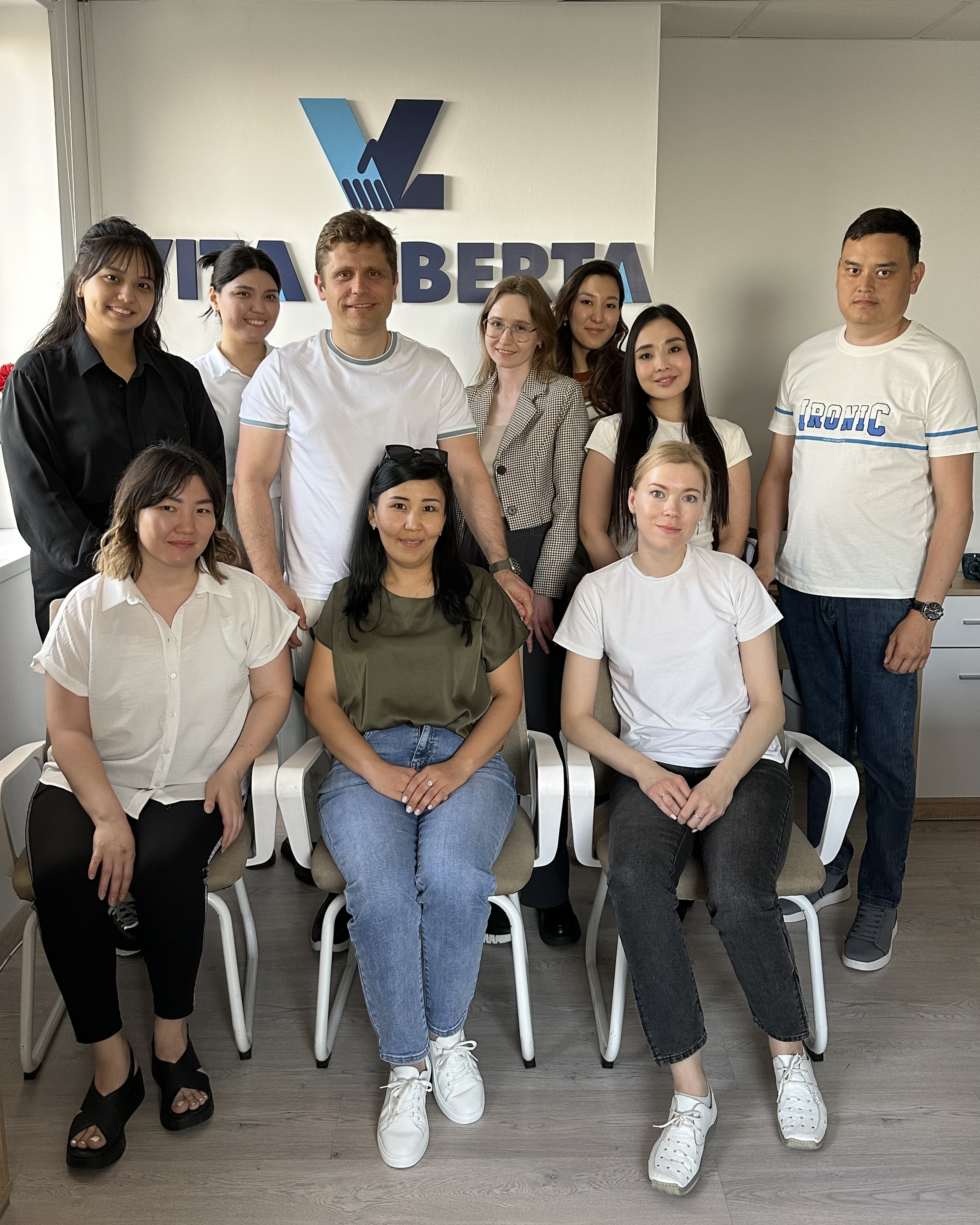
Accounting and Legal
Choose a registration package
Business Start
545 $
LLP registration — for those who already have a lease agreement, personal TIN, EDS, "C5" VISA
Preparation of a tailored document checklist and compliance review of submitted documents
Selecting the tax regime and advising on applicable tax obligations, including VAT
Verifying the proposed company name availability for LLP registration against the state register of legal entities
Preparation of the sole founder's resolution to establish the LLP
Selecting the appropriate model charter and entering the participants' details for filing with the registration authority
Selecting the OKED economic activity codes matching your business
Assistance with creating the director's personal account on the eGov.kz portal
Assistance with registering the director's phone number in the Mobile Citizens Database (BMG)
Identifying the business size category (small / medium / large) and the associated obligations
Determining the recommended amount of charter capital
Filing the LLP state registration application by power of attorney
Preparation of the order on the director's appointment / assumption of office
Business Start+
1150 $
FOCUS ON SECURING TIN, EDS, regisTERED address — C5 IS MISSING
Preparation of a tailored document checklist and compliance review of submitted documents
Selecting the tax regime and advising on applicable tax obligations, including VAT
Verifying the proposed company name availability for LLP registration against the state register of legal entities
Preparation of the sole founder's resolution to establish the LLP
Selecting the appropriate model charter and entering the participants' details for filing with the registration authority
Selecting the OKED economic activity codes matching your business
Assistance with creating the director's personal account on the eGov.kz portal
Assistance with registering the director's phone number in the Mobile Citizens Database (BMG)
Identifying the business size category (small / medium / large) and the associated obligations
Determining the recommended amount of charter capital
Filing the LLP state registration application by power of attorney
Preparation of the order on the director's appointment / assumption of office
Assistance at the Public Service Center (PSC) with applying for an Individual Identification Number (IIN)
Assistance at the Public Service Center (PSC): applying for and issuing an individual's digital signature (EDS) in a single visit
Finding an office space or registered address for LLP registration, tailored to your specific requirements»
Verifying the landlord's title documents for the office space
Assistance in obtaining the preliminary lease agreement or letter of guarantee and arranging its execution by the parties before LLP registration
Arranging the execution of the main lease agreement between the registered LLP and the landlord
Turnkey company seal production (design, manufacturing) with delivery to our office and handover to the director before the bank visit
Accompanying the director to the Public Service Center (PSC) to obtain the LLP's first executive digital signature (EDS)
Filing the notification on applying the simplified taxation regime (if applicable)
Business Standard
3190 $
NO MISSING POINTS
C5 is Subject to approval
C5 is Subject to approval
Preparation of a tailored document checklist and compliance review of submitted documents
Selecting the tax regime and advising on applicable tax obligations, including VAT
Verifying the proposed company name availability for LLP registration against the state register of legal entities
Preparation of the sole founder's resolution to establish the LLP
Selecting the appropriate model charter and entering the participants' details for filing with the registration authority
Selecting the OKED economic activity codes matching your business
Assistance with creating the director's personal account on the eGov.kz portal
Assistance with registering the director's phone number in the Mobile Citizens Database (BMG)
Identifying the business size category (small / medium / large) and the associated obligations
Determining the recommended amount of charter capital
Filing the LLP state registration application by power of attorney
Preparation of the order on the director's appointment / assumption of office
Assistance at the Public Service Center (PSC) with applying for an Individual Identification Number (IIN)
Assistance at the Public Service Center (PSC): applying for and issuing an individual's digital signature (EDS) in a single visit
Finding an office space or registered address for LLP registration, tailored to your specific requirements»
Verifying the landlord's title documents for the office space
Assistance in obtaining the preliminary lease agreement or letter of guarantee and arranging its execution by the parties before LLP registration
Arranging the execution of the main lease agreement between the registered LLP and the landlord
Turnkey company seal production (design, manufacturing) with delivery to our office and handover to the director before the bank visit
Accompanying the director to the Public Service Center (PSC) to obtain the LLP's first executive digital signature (EDS)
Filing the notification on applying the simplified taxation regime (if applicable)
Preparing the mandatory C5 visa invitation (due diligence of the applicant and drafting the invitation)
Arranging payment of the state duty for the C5 visa invitation (mandatory for filing)
Filing the C5 visa invitation with the Migration Service Division of the Police Department
Receiving the visa support code from the Migration Service Division (subject to approval by the national security authorities)
Notarised translation of the founder's identity documents into Russian and Kazakh
Assistance with creating the legal entity's personal account on the eGov.kz portal
Formalising the director's employment (contract, job description, staffing table), taking into account immigration status, work arrangement (remote or on-site), and tax implications
Registering the director's employment contract on the state labour portal enbek.kz (Unified System for Recording Employment Contracts)
Legal support for opening the LLP's bank accounts in different currencies with one bank of your choice
Assistance with opening the director's personal account at one bank (with a debit card) based on employment with the LLP
Assistance in registering the LLP in the Electronic Invoices Information System (IS ESF)
Setting up and configuring the "1C:Accounting" system for your LLP, including integration with the IS ESF (e-invoicing) portal and the Virtual Warehouse module
Full accounting support for the first month after LLP registration
Advantages of Doing Business in Kazakhstan
Member of the Eurasian Economic Union (EAEU)
As a member of the EAEU, a company registered in Kazakhstan gets tariff-free access to a combined market of over 180 million people, plus preferential access to Central Asian and Chinese markets.
Favourable tax regime
Kazakhstan has a competitive tax system — corporate income tax of 20%, VAT of 16% (2026), and a wide network of double-taxation treaties (with 50+ countries) that reduce withholding taxes on dividends, interest and royalties. Simplified tax regime is from 2% to 4% on revenue basis.
Investment incentives and protection
Foreign investors receive national treatment and legal guarantees against expropriation, with stability clauses protecting against adverse legislative changes. The government actively courts foreign capital through investment preferences.
Astana Hub and IT incentives
Kazakhstan's flagship tech park, Astana Hub, offers IT companies and startups sweeping tax exemptions (corporate income tax, VAT, social tax and individual income tax relief on qualifying activities), simplified visas for foreign IT specialists, and grants. For technology, fintech and digital businesses this is a major draw alongside the AIFC.
The C5 visa - legal basis for business setup and long stay
Unlike a tourist or a standard work visa, it is designed specifically for a foreigner who wants to establish and run their own company. It gives the holder the legal basis to enter Kazakhstan, register a legal entity (LLP/ТОО), and manage that business — without needing a separate work permit.
The Astana International Financial Centre (AIFC)
A special jurisdiction in Astana that operates under English common law with its own independent court and arbitration centre. AIFC-registered companies enjoy a corporate income tax exemption until 2066, exemptions on dividends and capital gains, free repatriation of profits, and the ability to operate in English.
Rich natural resources
Kazakhstan holds world-class reserves of oil, gas, uranium (the world's largest producer), and rare and base metals, making it especially attractive in energy, mining and, increasingly, critical minerals for the green transition.
Educated and cost-competitive workforce
Young, educated and cost-competitive workforce. A literate, multilingual labour force (Kazakh, Russian, increasingly English) at wage levels well below Europe, combined with relatively low operating and real-estate costs.
Macroeconomic and reform momentum
The largest and most diversified economy in Central Asia, with ongoing reforms to improve the business climate, digitalise government services (eGov), and reduce bureaucracy.
Strong double-tax-treaty network
With 50+ double-taxation treaties, investors can substantially reduce or eliminate withholding tax on dividends, interest and royalties flowing back to the home country, and avoid being taxed twice on the same income.
Visa-free and simplified entry
Citizens of many countries can enter Kazakhstan visa-free for short business/tourist stays (30 days for a large list of nations), and the country is steadily liberalising entry — making it easy to visit, explore opportunities, and negotiate before committing.
Advanced digital government
Kazakhstan is a regional leader in e-government (eGov), digital signatures, online company registration, and electronic tax/invoicing systems — cutting the time and paperwork to start and run a business.
Migration Aspects of Registering a Business in Kazakhstan
The C5 Business Immigrant Visa for Individual LLP Founders in Kazakhstan
Citizens of Visa-Regime Countries
For citizens of countries that have a visa regime with Kazakhstan, a category C5 business visa is required in order to open an LLP or become a founder of an existing company. This visa status is intended for foreign "business immigrants" — individuals whose purpose of entry into Kazakhstan is related to entrepreneurial activity.
Basic rule: the C5 visa must be obtained in advance, before any legal action is taken.
Difference between a C5 visa and visa-free or tourist entry
Some people mistakenly assume they can enter visa-free (for example, citizens of China or Türkiye for 30 days) and register an LLP during that period. This is incorrect. When an LLP with a foreign founder is registered in Kazakhstan, the registering authority checks the applicant's migration status, and the absence of a C5 visa (or a TRP for EAEU citizens) is grounds for canceling the registration.
Types of C5 visa
Documents required to obtain a C5 visa
Upon arrival on the visa, a foreign citizen has two months to:
If these steps are not completed within the deadline, the migration authorities may shorten the permitted period of stay and require departure from the country.
For citizens of countries that have a visa regime with Kazakhstan, a category C5 business visa is required in order to open an LLP or become a founder of an existing company. This visa status is intended for foreign "business immigrants" — individuals whose purpose of entry into Kazakhstan is related to entrepreneurial activity.
Basic rule: the C5 visa must be obtained in advance, before any legal action is taken.
- If you plan to register a new company, the visa must be obtained before the registration documents are submitted.
- If you are acquiring a stake in an existing LLP, it must be obtained before the notarised transaction is concluded.
Difference between a C5 visa and visa-free or tourist entry
Some people mistakenly assume they can enter visa-free (for example, citizens of China or Türkiye for 30 days) and register an LLP during that period. This is incorrect. When an LLP with a foreign founder is registered in Kazakhstan, the registering authority checks the applicant's migration status, and the absence of a C5 visa (or a TRP for EAEU citizens) is grounds for canceling the registration.
Types of C5 visa
- Single-entry — issued for up to 90 days, for the initial registration of a company. Issued only outside Kazakhstan, through a consulate or embassy.
- Multiple-entry — issued for up to 2 years after the company has been registered. To obtain it, you apply to the migration service in Kazakhstan, supported by a petition from the local akimat (municipal administration).
Documents required to obtain a C5 visa
- An invitation letter processed through the Ministry of Internal Affairs;
- A foreign passport valid for at least 6 months;
- Medical insurance;
- A certificate of no criminal record from the country of citizenship (apostilled or legalised);
- A medical certificate confirming fitness for work.
Upon arrival on the visa, a foreign citizen has two months to:
- Register the LLP or join it as a founder;
- Contribute the charter capital.
If these steps are not completed within the deadline, the migration authorities may shorten the permitted period of stay and require departure from the country.
Setting Up an LLP with a Corporate Founder in Kazakhstan — No Business Immigrant Visa Required
Foreign Legal Entities
The requirements are entirely different for a foreign legal entity wishing to open a subsidiary (LLP) or a branch in Kazakhstan. Where the founder is a foreign legal entity — regardless of its country of registration — neither a TRP nor a C5 visa is required.
Why? Because the founder is the company itself, not an individual, and migration requirements apply to foreign citizens, not to corporate structures. A founder-company therefore:
A representative (for example, the future director) acts on behalf of the company, while the founder remains the foreign legal entity. This route is often chosen in order to:
Documents required to register an LLP through a foreign legal entity:
The requirements are entirely different for a foreign legal entity wishing to open a subsidiary (LLP) or a branch in Kazakhstan. Where the founder is a foreign legal entity — regardless of its country of registration — neither a TRP nor a C5 visa is required.
Why? Because the founder is the company itself, not an individual, and migration requirements apply to foreign citizens, not to corporate structures. A founder-company therefore:
- Does not physically enter the country;
- Is not required to obtain an IIN;
- Does not undergo medical examinations or fingerprinting.
A representative (for example, the future director) acts on behalf of the company, while the founder remains the foreign legal entity. This route is often chosen in order to:
- Simplify migration procedures;
- Save the time otherwise spent obtaining a TRP or visa;
- Open a branch as a way of entering the Kazakhstani market.
Documents required to register an LLP through a foreign legal entity:
- A legalised extract from the commercial register of the country of incorporation;
- A notarised translation of the constituent documents;
- A resolution of the competent body of the foreign company to establish an LLP in Kazakhstan.
Setting Up a Branch of a Foreign Company in Kazakhstan — No Business Immigrant Visa Required
A branch is a separate subdivision of a foreign company, located in Kazakhstan and carrying out all or part of the parent company's functions. Crucially, a branch is not a separate legal entity — it has no independent legal personality and operates as an extension of the foreign parent, which bears full responsibility for the branch's obligations. This distinguishes a branch from a subsidiary LLP, which is a standalone Kazakhstan company.
Because the founder is the foreign company itself, no C5 visa or temporary residence permit is required to establish a branch — migration requirements apply only to individuals, not to corporate structures. A representative (typically the appointed director) acts on the branch's behalf under a power of attorney.
Registration procedure
Registration is carried out through the Public Service Centre (PSC) at the branch's intended location and, if the documents are in order, is completed within one business day, with a Certificate of Registration issued. The branch is assigned a BIN (Business Identification Number).
Documents required
Branch vs. representative office
A representative office may only carry out auxiliary and preparatory functions (marketing, liaison, market research) and cannot conduct commercial activity; if it earns no income, it is not subject to corporate income tax. A branch, by contrast, may conduct the full commercial activity of the parent company — and is taxed accordingly.
When a branch is the right choice
Opening a branch is often preferred when a foreign company wants to enter the Kazakhstani market quickly, keep operations under the parent entity, and avoid the migration procedures (visa/TRP) that individual founders face. A subsidiary LLP is usually preferred when the investor wants a ring-fenced, standalone Kazakhstan company with limited liability separate from the parent.
Because the founder is the foreign company itself, no C5 visa or temporary residence permit is required to establish a branch — migration requirements apply only to individuals, not to corporate structures. A representative (typically the appointed director) acts on the branch's behalf under a power of attorney.
Registration procedure
Registration is carried out through the Public Service Centre (PSC) at the branch's intended location and, if the documents are in order, is completed within one business day, with a Certificate of Registration issued. The branch is assigned a BIN (Business Identification Number).
Documents required
- Application for registration;
- Branch regulations (statute) — notarised, apostilled/legalised, in Kazakh and Russian;
- The foreign company's decision to establish the branch — notarised, apostilled and translated;
- A legalised extract from the commercial (trade) register of the country of incorporation, or an equivalent document;
- The parent company's constituent documents — notarised, apostilled and translated;
- A power of attorney for the branch director;
- Confirmation of payment of the registration fee.
Branch vs. representative office
A representative office may only carry out auxiliary and preparatory functions (marketing, liaison, market research) and cannot conduct commercial activity; if it earns no income, it is not subject to corporate income tax. A branch, by contrast, may conduct the full commercial activity of the parent company — and is taxed accordingly.
When a branch is the right choice
Opening a branch is often preferred when a foreign company wants to enter the Kazakhstani market quickly, keep operations under the parent entity, and avoid the migration procedures (visa/TRP) that individual founders face. A subsidiary LLP is usually preferred when the investor wants a ring-fenced, standalone Kazakhstan company with limited liability separate from the parent.
Registering a Company in the AIFC (Astana International Financial Centre) — No Business Immigrant Visa Required
Unlike an ordinary LLP (ТОО) — where a non-EAEU foreign individual must first obtain a C5 business visa before the company can be registered — an AIFC company can be incorporated fully remotely and online, through the AIFC's e-Residence portal, without the founder physically entering Kazakhstan and without a C5 visa or temporary residence permit. The AIFC Registrar (AFSA) does not require a visa or TRP to register a private company.
The reason is structural: the migration rule that blocks ordinary LLP registration applies to foreigners who enter and are physically present in Kazakhstan as business immigrants. Because AIFC incorporation is done remotely under the AIFC's own framework, that trigger doesn't arise — you can set up and own the company from abroad.
The visa question only becomes relevant later, if the founder or their staff want to physically live and work in Kazakhstan. Here the AIFC is again advantageous: AIFC participants and their foreign employees receive simplified visas of up to 5 years and are exempt from the usual foreign-labour (work-permit) requirement.
Here's the rewritten "Visa" subsection you can drop straight into the AIFC guide:
The Astana International Financial Centre (AIFC / МФЦА) is a special jurisdiction within Astana that operates under its own legal framework based on the principles of English common law, with an independent AIFC Court and International Arbitration Centre. For a foreign investor, it offers a familiar, English-language legal environment inside Kazakhstan — distinct from the ordinary Kazakhstan legal system that governs an LLP (ТОО).
Legal forms available
Key advantages
Important: the tax exemptions are not automatic. They depend on the type of activity, the participant's status, and meeting substance and compliance conditions — so each case needs individual analysis rather than assuming zero tax.
Who the AIFC suits
The AIFC is best suited to fintech and crypto projects, investment firms and holding companies, international B2B consulting, IT/SaaS businesses with foreign clients, and structures set up specifically for foreign investors. It is generally not the rational choice for a purely local, small-scale Kazakhstan business (a shop, café, or local services), where an ordinary LLP is simpler and cheaper.
The reason is structural: the migration rule that blocks ordinary LLP registration applies to foreigners who enter and are physically present in Kazakhstan as business immigrants. Because AIFC incorporation is done remotely under the AIFC's own framework, that trigger doesn't arise — you can set up and own the company from abroad.
The visa question only becomes relevant later, if the founder or their staff want to physically live and work in Kazakhstan. Here the AIFC is again advantageous: AIFC participants and their foreign employees receive simplified visas of up to 5 years and are exempt from the usual foreign-labour (work-permit) requirement.
Here's the rewritten "Visa" subsection you can drop straight into the AIFC guide:
The Astana International Financial Centre (AIFC / МФЦА) is a special jurisdiction within Astana that operates under its own legal framework based on the principles of English common law, with an independent AIFC Court and International Arbitration Centre. For a foreign investor, it offers a familiar, English-language legal environment inside Kazakhstan — distinct from the ordinary Kazakhstan legal system that governs an LLP (ТОО).
Legal forms available
- Private Company Limited by Shares — the most common choice;
- Public Company — for larger businesses raising capital;
- Limited Liability Partnership (LLP) — for partnerships and professional firms;
- Special Purpose Vehicle (SPV) — for holding specific assets or projects.
Key advantages
- English common law and an independent court/arbitration system;
- 100% foreign ownership, with foreign nationals allowed as founders and directors;
- A special tax regime — AIFC participants carrying out qualifying (mainly financial and related) activities can benefit from corporate income tax exemption through to 2066, and exemptions on dividends and capital gains from AIFC securities;
- Free repatriation of profits and an English-language, reputable environment attractive to international partners and investors;
- Simplified visa arrangements for the AIFC and its participants.
Important: the tax exemptions are not automatic. They depend on the type of activity, the participant's status, and meeting substance and compliance conditions — so each case needs individual analysis rather than assuming zero tax.
Who the AIFC suits
The AIFC is best suited to fintech and crypto projects, investment firms and holding companies, international B2B consulting, IT/SaaS businesses with foreign clients, and structures set up specifically for foreign investors. It is generally not the rational choice for a purely local, small-scale Kazakhstan business (a shop, café, or local services), where an ordinary LLP is simpler and cheaper.
Preparing the Package of Documents for Registering an LLP with Foreign Capital Participation
The procedure for establishing a legal entity with foreign investments in Kazakhstan requires careful document preparation. The package of documents varies depending on the founder's status – whether they are an individual or a legal entity.
Section 1. Documents for Founders who are Individuals
If the founder of an LLP is a foreign citizen, the required package of documents includes:
1.1. Identity Document
Depending on citizenship and the basis for presence in the country, one of the following documents is provided:
If registration actions are carried out not by the founder personally but through their representative, a notarized power of attorney is required. The document must clearly specify the scope of authority and the validity period of the actions.
1.4. Individual Identification Number (IIN)
A mandatory requisite for all LLP participants, including the future director. The IIN is issued by the state revenue authorities of Kazakhstan and serves to uniquely identify an individual when interacting with government bodies, tax services, and registration authorities.
Section 2. Documents for Founders who are Legal Entities
If the founder is a foreign company, the package of documents differs:
2.1. Business Identification Number (BIN)
A unique code assigned to a foreign legal entity upon registration with the tax authorities in Kazakhstan. A BIN is a mandatory condition for any registration actions and subsequent interaction with government bodies.
2.2. Power of Attorney on Behalf of the Legal Entity
The document confirms the authority of an individual to carry out registration actions on behalf of the company;
The power of attorney must:
A document confirming the legal capacity, registration status, and current details of the foreign legal entity. Document requirements:
Section 1. Documents for Founders who are Individuals
If the founder of an LLP is a foreign citizen, the required package of documents includes:
1.1. Identity Document
- A copy of the foreign passport or other official document identifying the founder;
- Mandatory requirement: a notarized translation of the document into Kazakh and Russian.
Depending on citizenship and the basis for presence in the country, one of the following documents is provided:
- TRP (temporary residence permit) with the status "business immigrant" – for citizens of EAEU member states;
- Business visa under category C5 – for citizens of non-EAEU countries;
- Other document confirming the right to legally carry out entrepreneurial activity in the Republic of Kazakhstan.
If registration actions are carried out not by the founder personally but through their representative, a notarized power of attorney is required. The document must clearly specify the scope of authority and the validity period of the actions.
1.4. Individual Identification Number (IIN)
A mandatory requisite for all LLP participants, including the future director. The IIN is issued by the state revenue authorities of Kazakhstan and serves to uniquely identify an individual when interacting with government bodies, tax services, and registration authorities.
Section 2. Documents for Founders who are Legal Entities
If the founder is a foreign company, the package of documents differs:
2.1. Business Identification Number (BIN)
A unique code assigned to a foreign legal entity upon registration with the tax authorities in Kazakhstan. A BIN is a mandatory condition for any registration actions and subsequent interaction with government bodies.
2.2. Power of Attorney on Behalf of the Legal Entity
The document confirms the authority of an individual to carry out registration actions on behalf of the company;
The power of attorney must:
- be executed in accordance with the legislation of the country of origin;
- be notarized and, if necessary, translated into Kazakh and Russian;
- be apostilled or certified by a consulate if required.
A document confirming the legal capacity, registration status, and current details of the foreign legal entity. Document requirements:
- Legalization: Consular legalization for countries not party to the Hague Convention, apostille for participating countries;
- Translation: Notarized translation into Kazakh and Russian;
- Validity period: Must be current at the time of submission (usually should not exceed 6 months, but it is recommended to clarify with the registering authority).
Legal and Migration Framework for Director Appointment in Kazakhstani Companies
Appointing a director who is a citizen of Kazakhstan
If a Kazakhstan citizen is appointed director, no additional permits, visas, or migration procedures are required at all. This is the simplest and fastest option. Such a director has full authority from the moment of appointment and may take office immediately in accordance with the company's charter — there is nothing to obtain, register, or wait for on the migration side. For many foreign investors this is why a local resident director is sometimes appointed at the start, while migration matters for a foreign director are arranged in parallel.
Legal Framework & Eligibility
The process is formal and must be properly documented:
Legal Framework & Eligibility
- Legal Basis: The role and responsibilities of a director are governed primarily by Kazakhstan's Civil Code, the Law on Limited and Additional Liability Partnerships, and the Labour Code.
- Director Requirements: The director must be a natural person (not a company).
The process is formal and must be properly documented:
- Decision of the Sole Participant or Meeting Minutes: The appointment is made by the sole founder or the general meeting of participants. If this decision is made outside Kazakhstan, it must be apostilled or legalized for recognition in Kazakhstan.
- Employment Contract: An employment contract must be concluded between the LLP and the appointed director.
- Hiring Order: Issue an official order for the appointment and hiring of the new director.
- Notify State Authorities: Inform the "Government for Citizens" State Corporation (through the eGov portal or offline) to update the state database with the new director's information.
Appointing an EAEU Director: Privileged Labour Rights
Citizens of the Eurasian Economic Union (EAEU)—namely Russia, Belarus, Armenia, and Kyrgyzstan—enjoy significant advantages when acting as a director of a Kazakhstani LLP. Under the Treaty on the Eurasian Economic Union, these individuals benefit from the freedom of labour movement, which grants them a preferential regime compared to other foreign nationals.
Specifically, this means:
The Residence Formality (Not a Work Barrier)
While the employment aspect is unrestricted, migration time limits do apply. EAEU citizens enter Kazakhstan visa-free; however, if the director intends to remain in the country continuously for more than 90 days, or for more than a cumulative 180 days within any 365-day period, they must obtain a Temporary Residence Permit (TRP).
The employment contract with the LLP serves as the legal basis for this TRP application. Critically, this is a registration formality—provided the full and correctly prepared set of documents is submitted, the TRP is issued swiftly.
In short: An EAEU director faces absolutely no work-permit barriers—only a simple residence-registration requirement if they plan to spend significant time physically present in Kazakhstan.
Specifically, this means:
- No Work Permit Required: An EAEU citizen does not require a work permit (permit to engage foreign labour) nor any prior approval from migration authorities to serve as a director.
- Unrestricted Managerial Authority: They may perform all managerial functions without any statutory restrictions based on their nationality.
The Residence Formality (Not a Work Barrier)
While the employment aspect is unrestricted, migration time limits do apply. EAEU citizens enter Kazakhstan visa-free; however, if the director intends to remain in the country continuously for more than 90 days, or for more than a cumulative 180 days within any 365-day period, they must obtain a Temporary Residence Permit (TRP).
The employment contract with the LLP serves as the legal basis for this TRP application. Critically, this is a registration formality—provided the full and correctly prepared set of documents is submitted, the TRP is issued swiftly.
In short: An EAEU director faces absolutely no work-permit barriers—only a simple residence-registration requirement if they plan to spend significant time physically present in Kazakhstan.
Appointing a Non‑EAEU Director (e.g., China, USA, Türkiye, India, EU States)
For citizens of non‑EAEU countries, the appointment of a director is a more complex, multi‑stage procedure. As a general rule, the pathway consists of three sequential steps: state quota allocation → employer’s work permit → C3 work visa for the individual. Each stage serves a distinct legal function, although the law provides several important exemptions that can significantly streamline the process.
The Initial Stage: Quota and Employer’s Work Permit
Before engaging a specialist from outside the EAEU, the Kazakhstani company must, as a general rule, complete the work‑permit procedure prescribed by law. The first step is for the employer to secure the right to hire a foreign worker within the annual quota for attracting foreign labour, which is approved by the Government of Kazakhstan. It is crucial to understand that this permit is issued to the employer (the company), not to the individual—it constitutes the company’s formal authorisation to fill a specific position with a foreign national.
Out‑of‑Quota Exemptions: When No Work Permit Is Required
The legislation provides several key cases in which the employer is entirely exempt from obtaining a work permit. This simplified, "out‑of‑quota" procedure applies to the following categories, which are particularly relevant to foreign‑owned businesses:
The Initial Stage: Quota and Employer’s Work Permit
Before engaging a specialist from outside the EAEU, the Kazakhstani company must, as a general rule, complete the work‑permit procedure prescribed by law. The first step is for the employer to secure the right to hire a foreign worker within the annual quota for attracting foreign labour, which is approved by the Government of Kazakhstan. It is crucial to understand that this permit is issued to the employer (the company), not to the individual—it constitutes the company’s formal authorisation to fill a specific position with a foreign national.
Out‑of‑Quota Exemptions: When No Work Permit Is Required
The legislation provides several key cases in which the employer is entirely exempt from obtaining a work permit. This simplified, "out‑of‑quota" procedure applies to the following categories, which are particularly relevant to foreign‑owned businesses:
- Heads of Branches and Representative Offices – A foreign national serving as the first head of an accredited branch or representative office of a foreign legal entity in Kazakhstan is automatically exempt. Crucially, top‑manager status itself serves as the legal ground for this exemption.
- Employees of AIFC Participants and Astana Hub – Residents of the Astana International Financial Centre (AIFC) and participants of the Astana Hub technopark operate under a special regulatory regime that permits them to engage foreign personnel outside the general state quota, following a simplified procedure.
- Top Management of Companies with 100% Foreign Ownership – Directors and their deputies of Kazakhstani legal entities wholly owned by foreign shareholders are exempt from the work‑permit requirement. The law recognises that the ultimate owner should have the freedom to choose who manages their own assets. This is a critical point: if your LLP is 100% foreign‑owned, its foreign director does not need a work permit.
- Specialists under Intra‑Corporate Transfer – This exemption covers foreign employees seconded to Kazakhstan as part of an intra‑corporate transfer (personnel rotation) within an international group of companies.
The C3 work visa — the individual's entry document
Whether the employer obtained a permit under the quota or relied on an out-of-quota exemption, the foreign national must personally obtain a category C3 work visa. This is not a mere formality — it is the fundamental condition for:
Procedure for obtaining the C3 visa:
In summary, for a non-EAEU director the company's ownership and status matter greatly: a 100% foreign-owned LLP, a branch, or an AIFC/Astana Hub structure removes the work-permit (quota) hurdle, but the individual director must still obtain a C3 work visa to enter and work lawfully.
- Legally crossing the state border of the Republic of Kazakhstan;
- Lawful presence in the country;
- Legally performing subsequent work activity.
Procedure for obtaining the C3 visa:
- The visa is issued at Kazakhstan consular offices abroad — in the country of citizenship or permanent residence;
- The basis for issuing it is a package of documents confirming the employment relationship, typically including: the work permit (where required), the employment contract or a guarantee letter from the employer, and any other documents requested by the consulate.
In summary, for a non-EAEU director the company's ownership and status matter greatly: a 100% foreign-owned LLP, a branch, or an AIFC/Astana Hub structure removes the work-permit (quota) hurdle, but the individual director must still obtain a C3 work visa to enter and work lawfully.
Director who does not enter Kazakhstan to work
The entire quota → work permit → C3 visa chain described above is triggered by one thing: a foreigner performing labour activity on the territory of Kazakhstan. If the director does not enter the country and carries out their management functions remotely from abroad, that trigger does not arise, and the analysis changes significantly.
1. Work permit (quota) — generally not required. The permit to engage foreign labour applies to foreign employees working on Kazakhstan territory. A director who works entirely from abroad is not "foreign labour engaged in Kazakhstan," so the employer's work-permit/quota obligation generally does not apply. (The out-of-quota exemptions become moot — there is simply nothing to permit.)
2. C3 work visa — not required. The C3 is, by its nature, an entry-and-work document: its purpose is to let a foreigner cross the border and work inside Kazakhstan. If the director never enters to work, there is no basis and no need for a C3. The same applies to a TRP — residence permits are for people residing in the country.
3. But someone must be able to act physically in Kazakhstan. A remote director can sign the vast majority of documents electronically using a Kazakhstan digital signature (EDS), and can manage the company's filings, banking and reporting online. However, certain acts still require a physical presence in Kazakhstan (some bank procedures, notarial actions, occasional government interactions). This is normally solved in one of two ways:
Tax — the key point that does NOT disappear. Even though no work permit or visa is needed, the director's remuneration is not tax-free. Under Kazakhstan tax law, fees paid by a Kazakhstan company to a director are treated as Kazakhstan-source income regardless of where the director physically performs the duties. This means a non-resident director's remuneration is generally subject to Kazakhstan individual income tax withholding at the non-resident rate (20%), even if they never set foot in the country. Social payments (ОПВ, ВОСМС, СО) generally do not apply to a non-resident working abroad, but the income-tax withholding does — this is a common and costly misunderstanding.
Corporate-substance / effective-management note. If the company is managed entirely from one foreign country, that country's tax authority could, in some cases, argue the company has a taxable presence there (place of effective management), or that the individual is tax-resident there. For a standard Kazakhstan LLP this is usually not a problem, but for larger or treaty-sensitive structures it is worth checking against the relevant double-tax treaty.
Bottom line
A non-EAEU director who never enters Kazakhstan to work does not need a work permit, a C3 visa, or a TRP — the migration burden effectively disappears. What remains is (a) a practical need for a Kazakhstan representative (power of attorney) and/or a digital signature for the director, and (b) the tax obligation: the director's fees are Kazakhstan-source income and subject to 20% non-resident income-tax withholding regardless of physical location.
1. Work permit (quota) — generally not required. The permit to engage foreign labour applies to foreign employees working on Kazakhstan territory. A director who works entirely from abroad is not "foreign labour engaged in Kazakhstan," so the employer's work-permit/quota obligation generally does not apply. (The out-of-quota exemptions become moot — there is simply nothing to permit.)
2. C3 work visa — not required. The C3 is, by its nature, an entry-and-work document: its purpose is to let a foreigner cross the border and work inside Kazakhstan. If the director never enters to work, there is no basis and no need for a C3. The same applies to a TRP — residence permits are for people residing in the country.
3. But someone must be able to act physically in Kazakhstan. A remote director can sign the vast majority of documents electronically using a Kazakhstan digital signature (EDS), and can manage the company's filings, banking and reporting online. However, certain acts still require a physical presence in Kazakhstan (some bank procedures, notarial actions, occasional government interactions). This is normally solved in one of two ways:
- a power of attorney is issued to a trusted representative in Kazakhstan who performs in-person actions on the company's behalf; or
- the director travels to Kazakhstan occasionally for specific one-off acts on a short-term/business visa, without taking up employment in the country.
Tax — the key point that does NOT disappear. Even though no work permit or visa is needed, the director's remuneration is not tax-free. Under Kazakhstan tax law, fees paid by a Kazakhstan company to a director are treated as Kazakhstan-source income regardless of where the director physically performs the duties. This means a non-resident director's remuneration is generally subject to Kazakhstan individual income tax withholding at the non-resident rate (20%), even if they never set foot in the country. Social payments (ОПВ, ВОСМС, СО) generally do not apply to a non-resident working abroad, but the income-tax withholding does — this is a common and costly misunderstanding.
Corporate-substance / effective-management note. If the company is managed entirely from one foreign country, that country's tax authority could, in some cases, argue the company has a taxable presence there (place of effective management), or that the individual is tax-resident there. For a standard Kazakhstan LLP this is usually not a problem, but for larger or treaty-sensitive structures it is worth checking against the relevant double-tax treaty.
Bottom line
A non-EAEU director who never enters Kazakhstan to work does not need a work permit, a C3 visa, or a TRP — the migration burden effectively disappears. What remains is (a) a practical need for a Kazakhstan representative (power of attorney) and/or a digital signature for the director, and (b) the tax obligation: the director's fees are Kazakhstan-source income and subject to 20% non-resident income-tax withholding regardless of physical location.
Formalizing the Director
The company is registered, EDS is obtained, accounts will soon be opened. But the inside of the firm is still empty – the main person who will manage the business is missing. Even if that person is you yourself.
Formalizing the general director is not just a formality. It's a matter of tax security, corporate discipline, and in some cases, personal freedom from fines. We will analyze how to properly hire a director in Kazakhstan, how much to pay them, and when you can pay nothing.
Director and Founder: Two Relationship Scenarios
From a legal standpoint, two situations are possible.
Mandatory Documents for Hiring a director
Regardless of whether the director is a founder or a hired employee, three documents must be formalized after the LLP is registered.
What Must Be in the Employment Contract with the Director
An employment contract with a head has its own peculiarities. Several key points must be included.
The place of work is the company's legal address.
The job function is the management of current activities. The start date of work must be written down. For a director, working hours and rest periods are usually irregular.
The amount and procedure for paying wages must be clearly defined.
The term of the contract can be indefinite or fixed-term, for example, for the period of the main director's maternity leave.
The rights and obligations of the parties, as well as the conditions for terminating the contract, must also be included in the text.
For a director who is also a founder, the contract is signed on behalf of the company as the employer and personally as the employee. Legally, this is permissible.
Director's Salary: When You Can Not Pay and When It's Better to Pay
This is the most sensitive issue. Many entrepreneurs think: if I am both the founder and the director, why pay myself a salary? I'll transfer money as dividends when profit appears.
Formally, such a position has a right to exist. But in practice, it creates risks.
If the Director and Founder are the Same Person
The law does not oblige such a director to accrue a salary to themselves. They can work for free, receiving income only from dividends. But there are hidden dangers here.
If the Director is a Hired Employee
Here there is no choice. The director should receive a market salary commensurate with their qualifications and scope of work. The amount is determined in the employment contract.
If a clearly reduced salary is paid, such as 10,000 tenge per month, the tax authority has the right to additionally assess taxes based on the market level of remuneration for heads of similar companies. Moreover, this is a direct violation of the employee's labor rights.
What Changed in 2025–2026
The Electronic Labor Contracts Portal Became Mandatory
Since 2024, all labor contracts in Kazakhstan must be registered on the enbek.kz portal. This also applies to directors. Without electronic registration, paper contracts are considered not concluded.
Increased Liability for Non-Formalization
Since 2025, fines for allowing an employee to work without formalization have increased. For small business entities – 50 MCI, which is 216,250 tenge. For medium businesses – 100 MCI, ie, 432,500 tenge.
Focus on Business Fragmentation
The tax authority has begun to more actively check schemes where the director and founder in different companies withdraw money through dividends rather than salaries. If dividends are paid monthly and there is no salary, this arouses suspicion and leads to additional assessments.
Taxes on the Director's Salary
When paying a salary to a director, the company is obliged to withhold and transfer several mandatory payments to the budget.
Can Positions Be Combined?
A director can work part-time externally in another company or combine positions within one company, for example, director and accountant. But this requires formalizing an additional agreement to the employment contract or a separate part-time contract.
If the director is the sole founder, they can assign the accounting duties to themselves without additional pay. If the director is hired, they must be paid extra for combination.
Vita Liberta: Properly formalizing a director means clean relations with the labor inspectorate and tax authorities.
Formalizing the general director is not just a formality. It's a matter of tax security, corporate discipline, and in some cases, personal freedom from fines. We will analyze how to properly hire a director in Kazakhstan, how much to pay them, and when you can pay nothing.
Director and Founder: Two Relationship Scenarios
From a legal standpoint, two situations are possible.
- Scenario 1. Director and Founder are the Same Person
A person established the company and manages it themselves. In this case, they are simultaneously both the employer (through the company) and the employee. The law allows this structure. - Scenario 2. Director is a Hired Manager
The founder or multiple founders hire an external person to manage the business. Here the relationship is strictly an employment one, with all the ensuing obligations.
Depending on the scenario, the formalization requirements, salary amount, and risks differ.
Mandatory Documents for Hiring a director
Regardless of whether the director is a founder or a hired employee, three documents must be formalized after the LLP is registered.
- First – an employment contract in written form.
- Second – an order for employment, by which the director officially assumes the position.
- Third – registration of the contract on the electronic labor contracts portal enbek.kz.
What Must Be in the Employment Contract with the Director
An employment contract with a head has its own peculiarities. Several key points must be included.
The place of work is the company's legal address.
The job function is the management of current activities. The start date of work must be written down. For a director, working hours and rest periods are usually irregular.
The amount and procedure for paying wages must be clearly defined.
The term of the contract can be indefinite or fixed-term, for example, for the period of the main director's maternity leave.
The rights and obligations of the parties, as well as the conditions for terminating the contract, must also be included in the text.
For a director who is also a founder, the contract is signed on behalf of the company as the employer and personally as the employee. Legally, this is permissible.
Director's Salary: When You Can Not Pay and When It's Better to Pay
This is the most sensitive issue. Many entrepreneurs think: if I am both the founder and the director, why pay myself a salary? I'll transfer money as dividends when profit appears.
Formally, such a position has a right to exist. But in practice, it creates risks.
If the Director and Founder are the Same Person
The law does not oblige such a director to accrue a salary to themselves. They can work for free, receiving income only from dividends. But there are hidden dangers here.
- The first risk is tax-related. If the company operates, earns income, but pays the director not a single tenge, the tax authority may become interested: isn't the business bypassing salary taxes? During an on-site audit, part of the income could be reclassified as hidden wages, and taxes, penalties, and fines would be assessed.
- The second risk is social. A director without a salary does not accumulate pension contributions, has no work experience, and there are no social payments in case of illness or job loss. If the director counts on a pension in the future, a zero salary is a bad strategy.
- The third risk is banking. Banks look at payroll turnover when opening accounts and issuing loans. The absence of a director's salary may raise questions and lower the company's credit rating.
Therefore, the safe option is to pay the director at least the minimum wage. In 2026, the minimum wage in Kazakhstan is 85,000 tenge.
If the Director is a Hired Employee
Here there is no choice. The director should receive a market salary commensurate with their qualifications and scope of work. The amount is determined in the employment contract.
If a clearly reduced salary is paid, such as 10,000 tenge per month, the tax authority has the right to additionally assess taxes based on the market level of remuneration for heads of similar companies. Moreover, this is a direct violation of the employee's labor rights.
What Changed in 2025–2026
The Electronic Labor Contracts Portal Became Mandatory
Since 2024, all labor contracts in Kazakhstan must be registered on the enbek.kz portal. This also applies to directors. Without electronic registration, paper contracts are considered not concluded.
Increased Liability for Non-Formalization
Since 2025, fines for allowing an employee to work without formalization have increased. For small business entities – 50 MCI, which is 216,250 tenge. For medium businesses – 100 MCI, ie, 432,500 tenge.
Focus on Business Fragmentation
The tax authority has begun to more actively check schemes where the director and founder in different companies withdraw money through dividends rather than salaries. If dividends are paid monthly and there is no salary, this arouses suspicion and leads to additional assessments.
Taxes on the Director's Salary
When paying a salary to a director, the company is obliged to withhold and transfer several mandatory payments to the budget.
- Individual Income Tax, or IIT, is 10% of the salary amount.
- Mandatory Pension Contributions, MPC, are another 10%, transferred to the Unified Accumulative Pension Fund.
- Contributions to Compulsory Social Medical Insurance are divided into two parts: 2% is withheld from the employee's salary, and 3% is paid by the company from its own funds.
- Social Contributions amount to 3.5% of the salary and are also paid by the employer.
Can Positions Be Combined?
A director can work part-time externally in another company or combine positions within one company, for example, director and accountant. But this requires formalizing an additional agreement to the employment contract or a separate part-time contract.
If the director is the sole founder, they can assign the accounting duties to themselves without additional pay. If the director is hired, they must be paid extra for combination.
Vita Liberta: Properly formalizing a director means clean relations with the labor inspectorate and tax authorities.
General business setup stages in Kazakhstan
1. Preparing the Package of Documents for Registering an LLP with Foreign Capital Participation
The procedure for establishing a legal entity with foreign investments in Kazakhstan requires careful document preparation. The package of documents varies depending on the founder's status – whether they are an individual or a legal entity.
Section 1. Documents for Founders who are Individuals
If the founder of an LLP is a foreign citizen, the required package of documents includes:
1.1. Identity Document
Depending on citizenship and the basis for presence in the country, one of the following documents is provided:
If registration actions are carried out not by the founder personally but through their representative, a notarized power of attorney is required. The document must clearly specify the scope of authority and the validity period of the actions.
1.4. Individual Identification Number (IIN)
A mandatory requisite for all LLP participants, including the future director. The IIN is issued by the state revenue authorities of Kazakhstan and serves to uniquely identify an individual when interacting with government bodies, tax services, and registration authorities.
Section 2. Documents for Founders who are Legal Entities
If the founder is a foreign company, the package of documents differs:
2.1. Business Identification Number (BIN)
A unique code assigned to a foreign legal entity upon registration with the tax authorities in Kazakhstan. A BIN is a mandatory condition for any registration actions and subsequent interaction with government bodies.
2.2. Power of Attorney on Behalf of the Legal Entity
The document confirms the authority of an individual to carry out registration actions on behalf of the company;
The power of attorney must:
A document confirming the legal capacity, registration status, and current details of the foreign legal entity. Document requirements:
Section 1. Documents for Founders who are Individuals
If the founder of an LLP is a foreign citizen, the required package of documents includes:
1.1. Identity Document
- A copy of the foreign passport or other official document identifying the founder;
- Mandatory requirement: a notarized translation of the document into Kazakh and Russian.
Depending on citizenship and the basis for presence in the country, one of the following documents is provided:
- TRP (temporary residence permit) with the status "business immigrant" – for citizens of EAEU member states;
- Business visa under category C5 – for citizens of non-EAEU countries;
- Other document confirming the right to legally carry out entrepreneurial activity in the Republic of Kazakhstan.
If registration actions are carried out not by the founder personally but through their representative, a notarized power of attorney is required. The document must clearly specify the scope of authority and the validity period of the actions.
1.4. Individual Identification Number (IIN)
A mandatory requisite for all LLP participants, including the future director. The IIN is issued by the state revenue authorities of Kazakhstan and serves to uniquely identify an individual when interacting with government bodies, tax services, and registration authorities.
Section 2. Documents for Founders who are Legal Entities
If the founder is a foreign company, the package of documents differs:
2.1. Business Identification Number (BIN)
A unique code assigned to a foreign legal entity upon registration with the tax authorities in Kazakhstan. A BIN is a mandatory condition for any registration actions and subsequent interaction with government bodies.
2.2. Power of Attorney on Behalf of the Legal Entity
The document confirms the authority of an individual to carry out registration actions on behalf of the company;
The power of attorney must:
- be executed in accordance with the legislation of the country of origin;
- be notarized and, if necessary, translated into Kazakh and Russian;
- be apostilled or certified by a consulate if required.
A document confirming the legal capacity, registration status, and current details of the foreign legal entity. Document requirements:
- Legalization: Consular legalization for countries not party to the Hague Convention, apostille for participating countries;
- Translation: Notarized translation into Kazakh and Russian;
- Validity period: Must be current at the time of submission (usually should not exceed 6 months, but it is recommended to clarify with the registering authority).
2. Obtaining Identification Numbers: IIN and BIN
During the business registration process with foreign participation in Kazakhstan, each applicant is assigned a unique identification code, the type of which is determined by their legal status — an individual or a legal entity. This stage is mandatory and precedes the full functioning of the company.
IIN - Individual Identification Number for Individuals
An IIN is issued to all individuals, regardless of their citizenship and residency status. This unique digital code serves as a universal key to accessing public services and systems of the Republic of Kazakhstan.
The presence of an Individual Identification Number grants a foreign citizen access to the following services and procedures:
The procedure for issuing an IIN to non-residents is as follows:
Section 2. BIN - Business Identification Number for Legal Entities
The Business Identification Number (BIN) is a unique digital code assigned to all subjects of entrepreneurial activity operating in the territory of the Republic of Kazakhstan. This identifier serves as the company's official digital passport when interacting with government bodies, financial institutions, and counterparties.
A BIN is assigned to subjects of entrepreneurial activity, including:
To obtain a BIN for a foreign legal entity, it is necessary to submit a set of documents confirming its legal capacity and the legality of its intentions:
Official documents originating from foreign jurisdictions must undergo one of the following procedures to confirm their authenticity:
Documents executed in a foreign language must be translated into Russian and Kazakh. The translation must be made by a professional translator and certified by a notary (the translator's signature is certified).
Documents must be issued no later than 6 months before the date of submission. Outdated extracts are grounds for refusal to issue a BIN.
IIN - Individual Identification Number for Individuals
An IIN is issued to all individuals, regardless of their citizenship and residency status. This unique digital code serves as a universal key to accessing public services and systems of the Republic of Kazakhstan.
The presence of an Individual Identification Number grants a foreign citizen access to the following services and procedures:
- Obtaining documents granting the right to temporary or permanent residence in the RK;
- Participating in the establishment of a legal entity as a founder or director;
- Opening accounts in Kazakhstani financial institutions;
- Formally registering employment relations with an employer;
- Accessing the "Mobile Citizens" portal and obtaining an electronic digital signature (EDS).
The procedure for issuing an IIN to non-residents is as follows:
- Personal Presence: The foreigner must personally visit a Public Service Center (PSC) of the "Government for Citizens" NJSC. Remote processing is not provided.
- Required Documents :
- A valid foreign passport (original);
- A notarized translation of the passport into Kazakh and Russian (if the passport was issued in another language).
- Timeframe and Cost:
- Processing time — from 1 to 2 working days;
- The service is provided free of charge.
- Result: After the IIN is issued, the foreign citizen gains access to the "Mobile Citizens" database and the opportunity to obtain an EDS for electronic interaction with government bodies.
The Business Identification Number (BIN) is a unique digital code assigned to all subjects of entrepreneurial activity operating in the territory of the Republic of Kazakhstan. This identifier serves as the company's official digital passport when interacting with government bodies, financial institutions, and counterparties.
A BIN is assigned to subjects of entrepreneurial activity, including:
- Kazakhstani companies registered in accordance with the established procedure;
- Foreign companies operating in the RK through permanent establishments;
- Foreign companies opening bank accounts with banks in Kazakhstan;
- Separate subdivisions of foreign companies accredited in Kazakhstan;
- Persons engaged in entrepreneurship within the framework of joint activities (simple partnership).
To obtain a BIN for a foreign legal entity, it is necessary to submit a set of documents confirming its legal capacity and the legality of its intentions:
- The charter, foundation agreement, or other document defining the legal status of the company in its country of origin;
- Registration certificate, extract from the register of legal entities, tax registration document (depending on the jurisdiction) — submitted in two copies. The validity period of the extract, as a rule, should not exceed 6 months from the date of issue;
- Copies of identity documents with a notarized translation into Kazakh;
- An Individual Identification Number (IIN) for the head, obtained in advance in accordance with the procedure established for individuals;
- A document confirming the authority of the person authorized to carry out registration actions on behalf of the company (power of attorney).
Official documents originating from foreign jurisdictions must undergo one of the following procedures to confirm their authenticity:
- Notarization. For EAEU member states.
- Apostille. For states party to the 1961 Hague Convention (affixed by the competent authority of the country where the document was issued).
- Consular legalization. For states not party to the Hague Convention (carried out through consular offices of the RK abroad).
Documents executed in a foreign language must be translated into Russian and Kazakh. The translation must be made by a professional translator and certified by a notary (the translator's signature is certified).
Documents must be issued no later than 6 months before the date of submission. Outdated extracts are grounds for refusal to issue a BIN.
3. Connecting to the Mobile Citizens Base: Digital Registration in Kazakhstan
After obtaining an Individual Identification Number, the foreigner faces the next mandatory stage — integration into the Mobile Citizens Base. Without this step, it is impossible to speak of a full presence in the country's digital space. The MCD system acts as a kind of digital concierge that accompanies any user every time, they access state information resources.
The Anatomy of the Mobile Citizens Base: How It Is Organized
The Mobile Citizens Base is a unified register that stores up-to-date information about the assignment of subscriber numbers to specific individuals. This is not just a state phone book, but a complex verification mechanism that guarantees that behind every online request there is a real person, not an automated script or an attacker.
The system's operating principle is based on simple logic: any significant request to state information systems requires double confirmation. The first factor is knowledge of the login and password, the second is possession of a specific mobile device that receives a one-time code. The MCB ensures this second level of security.
The system performs a number of tasks that the average user often doesn't think about. When a citizen logs into the e-government portal and enters an SMS code, a request to the Mobile Citizens Base lies behind this action. When the state automatically notifies about the possibility of applying for benefits or obtaining a certificate - this is also the work of the MCB. When several public services are combined into one package and provided in a proactive mode — this would be impossible without data from the Mobile Citizens Base.
What a Foreigner Needs for Registration
Unlike many bureaucratic procedures that require piles of paper and hours of waiting, registration in the MCD is as concise as possible in terms of requirements, but strict in terms of execution.
Geography of Operation: Where Does the SIM Card Work After Activation
There is a common misconception that a Kazakhstani SIM card turns into useless plastic outside the country. In practice, everything is different. After the number is initially activated within the republic, it retains the ability to receive SMS messages anywhere in the world where there is mobile coverage.
This means that by flying on a business trip to Europe, going on vacation to their homeland, or going on a business trip to Asia, a foreigner can still receive confirmation codes to access Kazakhstani state systems. The roaming function works normally, and the geographical location of the number owner does not affect the ability to authorize on the egov.kz portal or in the mobile applications of state bodies.
The Anatomy of the Mobile Citizens Base: How It Is Organized
The Mobile Citizens Base is a unified register that stores up-to-date information about the assignment of subscriber numbers to specific individuals. This is not just a state phone book, but a complex verification mechanism that guarantees that behind every online request there is a real person, not an automated script or an attacker.
The system's operating principle is based on simple logic: any significant request to state information systems requires double confirmation. The first factor is knowledge of the login and password, the second is possession of a specific mobile device that receives a one-time code. The MCB ensures this second level of security.
The system performs a number of tasks that the average user often doesn't think about. When a citizen logs into the e-government portal and enters an SMS code, a request to the Mobile Citizens Base lies behind this action. When the state automatically notifies about the possibility of applying for benefits or obtaining a certificate - this is also the work of the MCB. When several public services are combined into one package and provided in a proactive mode — this would be impossible without data from the Mobile Citizens Base.
What a Foreigner Needs for Registration
Unlike many bureaucratic procedures that require piles of paper and hours of waiting, registration in the MCD is as concise as possible in terms of requirements, but strict in terms of execution.
- First of all, a mobile phone is needed — any device capable of receiving text messages. The technical specifications of the device are not important: a new smartphone or a simple "feature phone" will do.
- The second component is a SIM card from one of the Kazakhstani operators. The republic's mobile communications market is represented by four players: Activ , Beeline, Tele2, and Altel, and any of them is suitable for registration purposes. However, this is where the most important nuance lies: the SIM card must be activated for the first time strictly within the territory of Kazakhstan. This condition is fundamentally important because the system records the moment of the number's initial registration on the network and links it to a specific subscriber. Cards purchased outside the country or previously activated in other states are not suitable for registration.
- The third necessary condition is the presence of a valid IIN. The Mobile Citizens Base works in conjunction with identification numbers, so attempting to register without first obtaining an IIN will fail.
Geography of Operation: Where Does the SIM Card Work After Activation
There is a common misconception that a Kazakhstani SIM card turns into useless plastic outside the country. In practice, everything is different. After the number is initially activated within the republic, it retains the ability to receive SMS messages anywhere in the world where there is mobile coverage.
This means that by flying on a business trip to Europe, going on vacation to their homeland, or going on a business trip to Asia, a foreigner can still receive confirmation codes to access Kazakhstani state systems. The roaming function works normally, and the geographical location of the number owner does not affect the ability to authorize on the egov.kz portal or in the mobile applications of state bodies.
3. Obtaining an Electronic Digital Signature: The Legal Analog of a Handwritten Signature in the Digital Space
An Electronic Digital Signature is a special cryptographic tool recognized in the legal framework of Kazakhstan as a full-fledged equivalent of a handwritten signature on a paper medium. For a foreign citizen carrying out entrepreneurial activities or labor functions in the republic, obtaining an EDS signifies a transition to a qualitatively new level of interaction with state institutions and business partners.
Legislative Basis for Using EDS
The regulatory framework for using an electronic digital signature is the Law of the Republic of Kazakhstan "On Electronic Document and Electronic Digital Signature." This legislative act establishes a fundamentally important norm: a document existing in electronic form and certified by an EDS has the same legal force as a document executed on paper and certified by a traditional signature.
Far-reaching practical consequences follow from this provision. A contract signed with an electronic signature via the egov.kz portal has the same evidentiary force in judicial instances as a multi-page paper contract with wet seals. A tax declaration sent in electronic form and certified by an EDS is considered submitted on time, with all formalities observed. An application submitted digitally to amend a company's registration data is processed by government bodies just as quickly as if the applicant had visited a PSC in person.
Internal Structure of EDS: The Cryptographic Nature of the Digital Key
Technically, an electronic digital signature consists of two interconnected files containing unique cryptographic sequences of characters. These files perform different functions but are inextricably linked.
The first component is the private key. It is known only to the owner and is used directly for signing electronic documents. This file cannot be transferred to third parties, as its possessor gains the ability to sign any documents on behalf of the legal owner.
The first component is the private key. It is known only to the owner and is used directly for signing electronic documents. This file cannot be transferred to third parties, as its possessor gains the ability to sign any documents on behalf of the legal owner.
Both components are ordinary computer files that have no physical form but can be stored on various media. The user can choose any convenient storage option depending on their preferences and technical capabilities:
Prerequisites for a Foreign Citizen to Obtain an EDS
The procedure for obtaining an electronic digital signature becomes available to a foreigner only after fulfilling two mandatory prerequisites.
Methods for Obtaining an Electronic Digital Signature
Processing at a Public Service Center
When visiting a PSC, you must have with you:
Practical Areas of EDS Application in a Foreigner's Activities
After obtaining an electronic digital signature, a foreign citizen gains access to a wide range of opportunities for interacting with government bodies and commercial structures.
Interaction with Government Bodies
EDS allows the following procedures to be completely transferred to a digital format:
In commercial activities, EDS is used for:
For entrepreneurs planning to participate in public procurement or commercial tenders, having an EDS is a mandatory condition. Without it, it is impossible to submit an application, sign protocols, or conclude a contract based on the auction results.
Opening and Managing Bank Accounts
Many banks in Kazakhstan allow remote opening and management of accounts by signing applications and orders using an EDS. This significantly simplifies banking services for foreigners, especially when they are outside the republic.
Registering Real Estate and Vehicles
Procedures for registering rights to real estate and vehicles are also available in electronic format when an EDS is available, allowing property transactions to be conducted without personally visiting registering authorities.
Legislative Basis for Using EDS
The regulatory framework for using an electronic digital signature is the Law of the Republic of Kazakhstan "On Electronic Document and Electronic Digital Signature." This legislative act establishes a fundamentally important norm: a document existing in electronic form and certified by an EDS has the same legal force as a document executed on paper and certified by a traditional signature.
Far-reaching practical consequences follow from this provision. A contract signed with an electronic signature via the egov.kz portal has the same evidentiary force in judicial instances as a multi-page paper contract with wet seals. A tax declaration sent in electronic form and certified by an EDS is considered submitted on time, with all formalities observed. An application submitted digitally to amend a company's registration data is processed by government bodies just as quickly as if the applicant had visited a PSC in person.
Internal Structure of EDS: The Cryptographic Nature of the Digital Key
Technically, an electronic digital signature consists of two interconnected files containing unique cryptographic sequences of characters. These files perform different functions but are inextricably linked.
The first component is the private key. It is known only to the owner and is used directly for signing electronic documents. This file cannot be transferred to third parties, as its possessor gains the ability to sign any documents on behalf of the legal owner.
The first component is the private key. It is known only to the owner and is used directly for signing electronic documents. This file cannot be transferred to third parties, as its possessor gains the ability to sign any documents on behalf of the legal owner.
Both components are ordinary computer files that have no physical form but can be stored on various media. The user can choose any convenient storage option depending on their preferences and technical capabilities:
- Stationary computer or laptop - a classic solution for office work, providing constant access to keys at the workplace;
- Mobile phone - a modern option for those who value mobility and the ability to sign documents anywhere in the world;
- Tablet computer — an intermediate solution combining functionality and portability;
- External USB drive — a traditional medium that can be carried around as a key fob and used on any computer;
- Secure cloud storage — an innovative storage method where keys are not tied to a specific device but are accessible through a personal account on the e-government portal.
Prerequisites for a Foreign Citizen to Obtain an EDS
The procedure for obtaining an electronic digital signature becomes available to a foreigner only after fulfilling two mandatory prerequisites.
- The first and main condition is the presence of an Individual Identification Number. The IIN acts as the digital foundation upon which all subsequent interaction of the foreigner with state information systems is built. Applying for an EDS without an assigned IIN is pointless — the system simply will not find the subject to whom the keys could be issued.
- The second condition is registration in the Mobile Citizens Base using a local subscriber number that has passed the biometric identification procedure. This requirement ensures two-factor authentication when working with state portals and the ability to confirm operations using an EDS.
Methods for Obtaining an Electronic Digital Signature
Processing at a Public Service Center
When visiting a PSC, you must have with you:
- An identity document (foreign passport);
- A document confirming the assignment of an IIN;
- A notarized translation of the passport (if it was issued in a language other than Russian and Kazakh).
Practical Areas of EDS Application in a Foreigner's Activities
After obtaining an electronic digital signature, a foreign citizen gains access to a wide range of opportunities for interacting with government bodies and commercial structures.
Interaction with Government Bodies
EDS allows the following procedures to be completely transferred to a digital format:
- Submitting tax and statistical reports;
- Sending applications for registration of legal entities and amendments to constituent documents;
- Obtaining official certificates and extracts from state registers;
- Monitoring the status of submitted documents;
- Sending official inquiries and receiving responses;
- Appealing the actions of officials through administrative procedures.
In commercial activities, EDS is used for:
- Concluding contracts with counterparties and partners;
- Signing additional agreements to existing contracts;
- Executing acts of completed work and rendered services;
- Issuing invoices for payment;
- Sending official offers and commercial inquiries;
- Conducting correspondence with legal significance.
For entrepreneurs planning to participate in public procurement or commercial tenders, having an EDS is a mandatory condition. Without it, it is impossible to submit an application, sign protocols, or conclude a contract based on the auction results.
Opening and Managing Bank Accounts
Many banks in Kazakhstan allow remote opening and management of accounts by signing applications and orders using an EDS. This significantly simplifies banking services for foreigners, especially when they are outside the republic.
Registering Real Estate and Vehicles
Procedures for registering rights to real estate and vehicles are also available in electronic format when an EDS is available, allowing property transactions to be conducted without personally visiting registering authorities.
4. Who We Are by Size: Small, Medium, or Large Business?
Before registering an LLP, it is advisable to understand in advance which category of entrepreneurship your company will fall into. This affects not only reporting and taxes but also the volume of administrative burden, capital requirements, and sometimes access to state support.
In Kazakhstan, businesses are divided into three categories - based on the number of employees and the volume of assets.
Small Business
This includes companies with:
Medium Business
A category for those who have outgrown the small format:
Large Business
This category includes companies with:
What Else Is Important to Know About the MCI
All calculations are tied to the Monthly Calculation Index (MCI). This is not just a number, but a universal coefficient that changes annually.
For 2026, the MCI amount is set at 4,235 tenge. This amount is used to calculate:
In Kazakhstan, businesses are divided into three categories - based on the number of employees and the volume of assets.
Small Business
This includes companies with:
- Number of employees up to 50 people;
- Assets not exceeding 60,000 MCI.
Medium Business
A category for those who have outgrown the small format:
- Staff - from 51 to 250 people;
- Assets — up to 325,000 MCI.
Large Business
This category includes companies with:
- Number of employees over 250 people;
- Assets over 325,000 MCI.
What Else Is Important to Know About the MCI
All calculations are tied to the Monthly Calculation Index (MCI). This is not just a number, but a universal coefficient that changes annually.
For 2026, the MCI amount is set at 4,235 tenge. This amount is used to calculate:
- Tax liabilities;
- Social contributions;
- Fines and state duties;
- Limit values for assets and income.
5. Forming the Charter Capital
Charter capital is not just a formality; it is the company's initial financial foundation. It is formed from the contributions of the founders and serves several purposes simultaneously:
«What the Law Requires
The legislation divides businesses by size and imposes different requirements:
What to Choose in Practice?
Zero tenge is a working option, but with caveats.
If the goal is to save at the start, you can contribute nothing. However, be prepared that a company with zero capital may sometimes seem less credible. Partners, banks, or tender participants may view a legal entity with no financial foundation cautiously.
It's better to link capital to initial expenses.
Calculate how much will be needed for the first month's rent, basic equipment, or registration fees. Contribute this amount - often it is 100,000 – 250,000 tenge. Then capital becomes not just a number, but a working tool.
If the business is immediately focused on large contracts, the capital should correspond to the scale of the transactions. Major clients and creditors look not only at promises but also at the balance sheet.
Three Important Rules
- Provides initial liquidity - something is needed to pay rent, purchase equipment, make advance payments;
- Shows counterparties that the business has substance;
- Creates a minimal "cushion" for creditors if things go wrong.
«What the Law Requires
The legislation divides businesses by size and imposes different requirements:
- Small businesses can operate without any charter capital at all. The minimum limit is 0 tenge.
- Medium and large companies are obliged to form capital of no less than 100 MCI. In 2026, this is 432,500 tenge.
What to Choose in Practice?
Zero tenge is a working option, but with caveats.
If the goal is to save at the start, you can contribute nothing. However, be prepared that a company with zero capital may sometimes seem less credible. Partners, banks, or tender participants may view a legal entity with no financial foundation cautiously.
It's better to link capital to initial expenses.
Calculate how much will be needed for the first month's rent, basic equipment, or registration fees. Contribute this amount - often it is 100,000 – 250,000 tenge. Then capital becomes not just a number, but a working tool.
If the business is immediately focused on large contracts, the capital should correspond to the scale of the transactions. Major clients and creditors look not only at promises but also at the balance sheet.
Three Important Rules
- Who contributes? Only the founders. If the director is hired externally, they are not involved in forming the capital.
- When to contribute. You have one year from the moment the LLP is registered to contribute the funds. Earlier is possible, delaying is not allowed.
- How to contribute if the founder is remote. There's no need to visit the bank in person. You can issue a power of attorney to a representative in advance or, if the bank allows, make a non-cash transfer. The main thing is to think this through before registration, not to urgently look for workarounds later.
6. Choosing and checking the LLP Name
The name of an LLP is not just a line in the charter. It is the face of your business. Acquaintance with clients, partners, and banks begins with it. A successful name is remembered, inspires confidence, and works for your reputation. An unsuccessful one creates problems, lawsuits, and extra costs.
Therefore, choosing a name should be approached not creatively, but strategically.
What the Law Says: Mandatory Requirements
According to Article 38 of the Civil Code of the RK and Article 4 of the Law "On Limited and Additional Liability Partnerships," the name of an LLP must consist of two parts:
Example: "Vita Liberta" LLP, Vita Liberta LLP
The name may additionally use:
Three Main Prohibitions: What Cannot Be Used
1. No duplication of existing companies
The company name must be unique. The law directly prohibits using a name that fully or substantially coincides with a previously registered legal entity.
If you are named like another player in the market, the registrar will refuse. If you are mistakenly registered, the owner of the previously established company can demand through court that you stop using the name and compensate for losses.
2. No infringement of trademark rights
Even if a name is free as a legal entity name, it may turn out to be someone else's registered trademark. The trademark owner has the exclusive right to use it. If you register an LLP with a name confusingly similar to another brand, the rights holder can:
3. No use of prohibited elements
It is forbidden to include in the name:
Checklist: How to Choose a Name That Won't Cause Problems
1. Check uniqueness among legal entities
This is the first and simplest filter. You can check for free on the egov.kz portal. Go to the "Business" section, then to "Business Registration and Development," select the item "Information about legal entities, branches, representative offices." Enter your desired name and check if it is available.
If the name is taken, you'll have to think of another one. Even minor differences, like one letter or a different word order, might allow the name to pass, but it's important not to create confusing similarity here.
2. Check trademarks
This is a deeper check, but it is this one that will protect you from future court cases. Checks can be carried out through the open registers of the National Institute of Intellectual Property (NIIP, Qazpatent). If the budget allows, you can use paid databases and services or consult a patent attorney.
What to check for: identical designations (full match) and confusingly similar designations (by sound, meaning, spelling). If your future brand coincides with a registered trademark in the same field of activity, it's better to abandon the idea immediately.
3. Consider the Kazakh language
If you plan to use a Kazakh-language name for operating in the domestic market, make sure it is spelled correctly, translated properly, does not lose meaning during transliteration, and does not create unexpected associations.
The use of the Kazakh language is mandatory for state organizations and encouraged for private ones.
4. Think about the future
If the business is aimed at the international market, the name should be easily readable and memorable in the Latin alphabet, have no negative or funny meanings in other languages, and be suitable for international registration trademark if you plan to expand.
For international trademark registration, you can use the Madrid System, but for this, you must first have a national registration in Kazakhstan.
5. Check domain and social media
Even if the name is legally free, check the availability of the domain in kz, com, ru, and other zones, as well as the availability of accounts on Instagram, Facebook, Telegram. It's good if the company name, domain, and social media match - it's convenient for clients and strengthens the brand.
What Happens If You Neglect the check?
1. Refusal of Registration
The registrar automatically checks the uniqueness of the name among operating legal entities through the PSC or eGov. If there's a match — refusal follows. You'll have to change the name and resubmit documents, losing time and state fees.
2. Lawsuit from the Trademark Owner
Imagine: you registered an LLP, opened an account, printed a signboard, launched advertising. Then you receive a letter from a lawyer demanding you stop using the name and pay compensation.
According to Article 1020 of the Civil Code of the RK, the exclusive right to a means of individualization has priority for the means whose right arose earlier. If the trademark was registered before your LLP, you are in the risk zone. Consequences may include a ban on using the name, changing the name and re-registering the LLP, compensating the rights holder for losses, and covering court costs.
3. Confusion in the Market
Even without court cases, if your name is similar to a well-known competitor, clients will get confused. Some of the audience will think you are them and go there, while another part will distrust you because of the dubious similarity. Reputational losses are hard to measure, but they are inevitable.
Can the Name Be Changed After Registration?
Yes, such a possibility exists. The procedure depends on the number of founders. With one founder, a decision of the sole participant is made; with several, a protocol of the general meeting is drawn up.
After the decision is made, you need to amend the charter or develop a new version of the charter, submit documents for re-registration to the PSC or via eGov, and then obtain new documents with the changed name.
It is important to understand: when changing the name, you will have to renegotiate contracts with counterparties, notify the bank, replace the seal, update the signboard and website. These are significant costs, which are better avoided by choosing the right name the first time.
Name and Brand: What's the Difference
It is important to understand that an LLP name and a trademark are different tools.
The LLP name is fixed in the charter and the register of legal entities. It protects the company's identification as a legal entity within Kazakhstan and is valid for as long as the company exists.
A trademark is registered in the NIIP register and protects the brand, product, or service. It can operate both in Kazakhstan and in other countries as desired and must be renewed every ten years.
Therefore, even if you register an LLP name, it does not protect you from competitors copying your brand. For full protection, you need to register a trademark separately.
Therefore, choosing a name should be approached not creatively, but strategically.
What the Law Says: Mandatory Requirements
According to Article 38 of the Civil Code of the RK and Article 4 of the Law "On Limited and Additional Liability Partnerships," the name of an LLP must consist of two parts:
- The name (what you come up with);
- A reference to the organizational and legal form is “limited liability partnership” or the abbreviation “LLP”.
Example: "Vita Liberta" LLP, Vita Liberta LLP
The name may additionally use:
- An abbreviated form;
- Equivalents in foreign languages;
- An indication of state affiliation if there are foreigners among the founders (eg, "Kazakhstan-Russian...").
Three Main Prohibitions: What Cannot Be Used
1. No duplication of existing companies
The company name must be unique. The law directly prohibits using a name that fully or substantially coincides with a previously registered legal entity.
If you are named like another player in the market, the registrar will refuse. If you are mistakenly registered, the owner of the previously established company can demand through court that you stop using the name and compensate for losses.
2. No infringement of trademark rights
Even if a name is free as a legal entity name, it may turn out to be someone else's registered trademark. The trademark owner has the exclusive right to use it. If you register an LLP with a name confusingly similar to another brand, the rights holder can:
- Prohibit the use of that name;
- Demand compensation for losses.
3. No use of prohibited elements
It is forbidden to include in the name:
- Words contrary to public morals;
- Official names of state bodies (if you are not a state body);
- Names of famous persons without permission (or permission from their heirs).
Checklist: How to Choose a Name That Won't Cause Problems
1. Check uniqueness among legal entities
This is the first and simplest filter. You can check for free on the egov.kz portal. Go to the "Business" section, then to "Business Registration and Development," select the item "Information about legal entities, branches, representative offices." Enter your desired name and check if it is available.
If the name is taken, you'll have to think of another one. Even minor differences, like one letter or a different word order, might allow the name to pass, but it's important not to create confusing similarity here.
2. Check trademarks
This is a deeper check, but it is this one that will protect you from future court cases. Checks can be carried out through the open registers of the National Institute of Intellectual Property (NIIP, Qazpatent). If the budget allows, you can use paid databases and services or consult a patent attorney.
What to check for: identical designations (full match) and confusingly similar designations (by sound, meaning, spelling). If your future brand coincides with a registered trademark in the same field of activity, it's better to abandon the idea immediately.
3. Consider the Kazakh language
If you plan to use a Kazakh-language name for operating in the domestic market, make sure it is spelled correctly, translated properly, does not lose meaning during transliteration, and does not create unexpected associations.
The use of the Kazakh language is mandatory for state organizations and encouraged for private ones.
4. Think about the future
If the business is aimed at the international market, the name should be easily readable and memorable in the Latin alphabet, have no negative or funny meanings in other languages, and be suitable for international registration trademark if you plan to expand.
For international trademark registration, you can use the Madrid System, but for this, you must first have a national registration in Kazakhstan.
5. Check domain and social media
Even if the name is legally free, check the availability of the domain in kz, com, ru, and other zones, as well as the availability of accounts on Instagram, Facebook, Telegram. It's good if the company name, domain, and social media match - it's convenient for clients and strengthens the brand.
What Happens If You Neglect the check?
1. Refusal of Registration
The registrar automatically checks the uniqueness of the name among operating legal entities through the PSC or eGov. If there's a match — refusal follows. You'll have to change the name and resubmit documents, losing time and state fees.
2. Lawsuit from the Trademark Owner
Imagine: you registered an LLP, opened an account, printed a signboard, launched advertising. Then you receive a letter from a lawyer demanding you stop using the name and pay compensation.
According to Article 1020 of the Civil Code of the RK, the exclusive right to a means of individualization has priority for the means whose right arose earlier. If the trademark was registered before your LLP, you are in the risk zone. Consequences may include a ban on using the name, changing the name and re-registering the LLP, compensating the rights holder for losses, and covering court costs.
3. Confusion in the Market
Even without court cases, if your name is similar to a well-known competitor, clients will get confused. Some of the audience will think you are them and go there, while another part will distrust you because of the dubious similarity. Reputational losses are hard to measure, but they are inevitable.
Can the Name Be Changed After Registration?
Yes, such a possibility exists. The procedure depends on the number of founders. With one founder, a decision of the sole participant is made; with several, a protocol of the general meeting is drawn up.
After the decision is made, you need to amend the charter or develop a new version of the charter, submit documents for re-registration to the PSC or via eGov, and then obtain new documents with the changed name.
It is important to understand: when changing the name, you will have to renegotiate contracts with counterparties, notify the bank, replace the seal, update the signboard and website. These are significant costs, which are better avoided by choosing the right name the first time.
Name and Brand: What's the Difference
It is important to understand that an LLP name and a trademark are different tools.
The LLP name is fixed in the charter and the register of legal entities. It protects the company's identification as a legal entity within Kazakhstan and is valid for as long as the company exists.
A trademark is registered in the NIIP register and protects the brand, product, or service. It can operate both in Kazakhstan and in other countries as desired and must be renewed every ten years.
Therefore, even if you register an LLP name, it does not protect you from competitors copying your brand. For full protection, you need to register a trademark separately.
7. Choosing Types of Activities (GC)
In Kazakhstan, entrepreneurs can indeed engage in any types of activities not prohibited by law. This is not just a phrase — it is a principle that gives businesses freedom to maneuver. You are not rigidly tied to one direction and can flexibly respond to market changes, add new services, or change your profile.
But freedom does not mean "just put anything down." The choice of GC codes should be approached consciously. Because not only the elegance of the charter depends on this, but also taxes, reporting, licenses, and sometimes the very ability to work legally.
What is General Classifier and Why is it Needed?
General Classifier stands for General Classifier of Types of Economic Activity. In essence, it is a digital code that shows the state what your company actually does. Whether you make furniture, sell flowers, consult startups, or rent out premises - everything has its own code.
These codes are not just for formality. They affect:
Main and Additional Codes: What's the Difference
When registering an LLP, you need to choose one main code and up to four additional codes. The main one is the type of activity that brings in the largest portion of revenue or defines the company's profile. The additional ones are everything else you plan to do.
The law does not prohibit adding codes as a reserve, even if it's not yet certain whether you will actually conduct this activity. But it's important to have a sense of proportion and understand the consequences. For example, if you add a code that requires a license, but you don't have one — that's a risk. Formally, you have declared that you can engage in this activity, but in reality, you have no right. It's better not to add such codes until you are actually ready to obtain the permit.
Where to Find Codes and How to Check Them
The current KVED classifier can be found on the website of the National Statistics Bureau (stat.gov.kz) or on specialized resources. Codes are detailed up to five characters - exactly what is needed for registration.
Before finalizing the list, it is useful to:
Licensed Types of Activities: When a Code is Not Enough, You Need a Permit
In Kazakhstan, some types of activities cannot be started simply by indicating the code during registration. They require a license. This includes, for example:
Notification Procedure: When You Just Need to Notify
For some types of activities, a license is not required, but it is necessary to send a notification to state bodies. This is easier than obtaining a license, but still mandatory. For example, notification is required for:
How Many Codes Can Be Added?
The maximum number of codes that can be specified during registration is 5 (one main and four additional). But this does not mean you are forever limited to five types of activities. After registration, you can add new codes through the same services — there are no restrictions on the total number. The main thing is that all added codes correspond to actual or planned activities.
Changes in 2026: What to Pay Attention To
From 2026, important amendments come into force in Kazakhstan for certain categories of business.
But freedom does not mean "just put anything down." The choice of GC codes should be approached consciously. Because not only the elegance of the charter depends on this, but also taxes, reporting, licenses, and sometimes the very ability to work legally.
What is General Classifier and Why is it Needed?
General Classifier stands for General Classifier of Types of Economic Activity. In essence, it is a digital code that shows the state what your company actually does. Whether you make furniture, sell flowers, consult startups, or rent out premises - everything has its own code.
These codes are not just for formality. They affect:
- The tax regime (whether you can work on a simplified basis or have to switch to the general regime);
- The need to obtain licenses or send notifications;
- The form of statistical reporting;
- Participation in public procurement and tenders;
- Interaction with banks and partners.
Main and Additional Codes: What's the Difference
When registering an LLP, you need to choose one main code and up to four additional codes. The main one is the type of activity that brings in the largest portion of revenue or defines the company's profile. The additional ones are everything else you plan to do.
The law does not prohibit adding codes as a reserve, even if it's not yet certain whether you will actually conduct this activity. But it's important to have a sense of proportion and understand the consequences. For example, if you add a code that requires a license, but you don't have one — that's a risk. Formally, you have declared that you can engage in this activity, but in reality, you have no right. It's better not to add such codes until you are actually ready to obtain the permit.
Where to Find Codes and How to Check Them
The current KVED classifier can be found on the website of the National Statistics Bureau (stat.gov.kz) or on specialized resources. Codes are detailed up to five characters - exactly what is needed for registration.
Before finalizing the list, it is useful to:
- Look at what codes competitors or companies in your industry use;
- Check that the selected code does not require a license or notification;
- Ensure that the code actually describes what you plan to do (sometimes the name sounds similar, but the meaning is different).
Licensed Types of Activities: When a Code is Not Enough, You Need a Permit
In Kazakhstan, some types of activities cannot be started simply by indicating the code during registration. They require a license. This includes, for example:
- Financial services (banks, insurance, microcredits);
- Medical and pharmaceutical activities;
- Production and circulation of alcohol;
- Educational services (schools, universities, training centers);
- Construction and installation works (under certain conditions);
- Transportation of passengers and dangerous goods;
- Private security services.
Notification Procedure: When You Just Need to Notify
For some types of activities, a license is not required, but it is necessary to send a notification to state bodies. This is easier than obtaining a license, but still mandatory. For example, notification is required for:
- Starting activities in the field of public catering;
- Providing personal services;
- Certain types of retail trade;
- Taxi services.
How Many Codes Can Be Added?
The maximum number of codes that can be specified during registration is 5 (one main and four additional). But this does not mean you are forever limited to five types of activities. After registration, you can add new codes through the same services — there are no restrictions on the total number. The main thing is that all added codes correspond to actual or planned activities.
Changes in 2026: What to Pay Attention To
From 2026, important amendments come into force in Kazakhstan for certain categories of business.
- For the self-employed, a specific list of activities (40 KVED codes) has been approved for which the special tax regime is allowed. If the type of activity is not included in this list, the regime for the self-employed cannot be applied. For LLPs, this is not a direct restriction, but a signal: the state is beginning to regulate more clearly which types of activities are allowed under which regimes.
- The possibility of retaining simplified taxes for the creative industry and IT is being discussed, but the final lists are still being formed. If your business is related to this area, it is advisable to monitor updates on the "Open NLA" portal and, if necessary, send inquiries to the authorized bodies.
8. Choosing an Address for the Company in Kazakhstan
When the question arises about the location of an LLP's registration, many entrepreneurs think: "Maybe I'll just indicate my home address or buy a 'legal' address? If I work remotely, why pay for an office?"
The logic is understandable. But the law and tax authorities think differently.
We will analyze the main points: the difference between a “physical office” and a “legal address,” what options exist, what has changed this year, and what risks someone takes who decides to save on an address.
Kazakhstan, the legislation does not contain the concept of "legal address." There is the concept of the "location of the legal entity." According to Article 39 of the Civil Code of the RK, this is the location of its permanent working body – usually, the executive body (director, board).
In simple terms: it is the address where the company's management actually works, where documents are stored, where you can come for an inspection, and where the tax authority has the right to find you.
This address is entered into:
The Main Change in 2026: Ban on Fake Addresses
If previously it was possible to register an LLP at a "rubber" address by buying a lease agreement from a dubious firm, the rules have become significantly stricter since November 2025.
Order No. 687 of the Ministry of Justice dated November 21, 2025, introduced:
What does this mean in practice:
LLP Address Options: What Works in 2026
1. Founder's Home Address
If the founder is the owner of an apartment, they can register the LLP at their home address.
Advantages:
2. Renting an Office in a Business Center or from an Individual
The most common option for small and medium businesses.
What is needed:
3. Coworking or Serviced Office
Many coworking spaces (for example, in business centers in Astana and Almaty) offer a "legal address" service with the right to register.
Advantages:
4. Buying a Legal Address from Providers
This was popular before. A provider company offers a "rubber" address where you never actually are.
Status in 2026: High risk. With automatic verification and integration with the address register, such addresses either fail during registration or end up on "blacklists."
Consequences:
What Happens if Legal and Actual Addresses Do Not Match?
Suppose you registered an LLP at a home address but work in a rented office in another district. Or you bought a "fake" address and sit in a coworking space yourself.
Risks:
How to Choose an Address Correctly: Step-by-Step
Step 1. Determine your work format
What the Law Says About Renting from Individuals
Renting an office from an individual (not a sole proprietor) is a separate topic. It is legal. An individual can lease commercial premises to an LLP without registering as a sole proprietor.
But: your company becomes a tax agent. You are obliged to:
The logic is understandable. But the law and tax authorities think differently.
We will analyze the main points: the difference between a “physical office” and a “legal address,” what options exist, what has changed this year, and what risks someone takes who decides to save on an address.
Kazakhstan, the legislation does not contain the concept of "legal address." There is the concept of the "location of the legal entity." According to Article 39 of the Civil Code of the RK, this is the location of its permanent working body – usually, the executive body (director, board).
In simple terms: it is the address where the company's management actually works, where documents are stored, where you can come for an inspection, and where the tax authority has the right to find you.
This address is entered into:
- The constituent documents (charter);
- The National Register of Business Identification Numbers;
- All official registers.
The Main Change in 2026: Ban on Fake Addresses
If previously it was possible to register an LLP at a "rubber" address by buying a lease agreement from a dubious firm, the rules have become significantly stricter since November 2025.
Order No. 687 of the Ministry of Justice dated November 21, 2025, introduced:
- Automatic address verification through integration with the state "Address Register." The system itself checks whether such premises exist and whether they are registered as "mass."
- Mandatory confirmation of the owner's consent during electronic registration. The property owner must give their consent through their personal account on the e-government portal.
- Personal presence of the founder in cases provided for by financial monitoring rules.
What does this mean in practice:
- Buying a "fake" address for 5000 tenge is no longer possible – the system won't allow it.
- If you register an LLP at a home address, the owner (even if it's your spouse/parent) must formally confirm their consent through government services.
- "Mass addresses" (where dozens of companies are registered) are now under special control – registration may be blocked, and banks will refuse to open accounts.
LLP Address Options: What Works in 2026
1. Founder's Home Address
If the founder is the owner of an apartment, they can register the LLP at their home address.
Advantages:
- Saving on rent.
- No need to conclude a lease agreement, hence no tax for using the premises.
- Suitable for micro-businesses, consultants, online services.
- Does the apartment need to be non-residential premises? No, it can be residential, but there are nuances.
- Problems may arise if neighbors complain about an "office" in a residential building.
- During expansion and hiring employees, the tax authority may consider this a discrepancy.
- Important: Notarized consent of the owner is required (if the founder is not the sole owner of the apartment).
2. Renting an Office in a Business Center or from an Individual
The most common option for small and medium businesses.
What is needed:
- Lease agreement (preferably registered if the term is more than one year).
- Premises acceptance certificate.
- Confirmation of the lessor's ownership.
- If you rent from an individual, your company becomes a tax agent – it is obliged to withhold PIT (10%) and SMC (2%) from the rent amount and transfer them to the budget.
- If you rent from a legal entity or sole proprietor – they pay the taxes themselves, the contract is enough for you.
- Clean in the eyes of the law and banks.
- You can receive clients, create a normal working atmosphere.
- The address is verifiable, not "mass."
- Additional expenses (rent + utilities + taxes when renting from an individual).
- You need to monitor the contract terms and re-register when moving.
3. Coworking or Serviced Office
Many coworking spaces (for example, in business centers in Astana and Almaty) offer a "legal address" service with the right to register.
Advantages:
- Cheaper than a full-fledged office.
- There are actual premises, the tax authority can come and verify.
- Additional services are often included (mail, meeting rooms).
- Need to check that the address is not “mass” (if 200 companies are registered at the coworking space – that’s a red flag).
- During an inspection, the tax authority will want to see your workplace. If you are not present there, questions may arise.
4. Buying a Legal Address from Providers
This was popular before. A provider company offers a "rubber" address where you never actually are.
Status in 2026: High risk. With automatic verification and integration with the address register, such addresses either fail during registration or end up on "blacklists."
Consequences:
- Refusal of registration.
- Account blocking during inspections.
- De- registration for VAT.
What Happens if Legal and Actual Addresses Do Not Match?
Suppose you registered an LLP at a home address but work in a rented office in another district. Or you bought a "fake" address and sit in a coworking space yourself.
Risks:
- Tax audit (investigation). Tax authorities have the right to visit the registration address and check if you are there. If you are not present – a report is drawn up.
- Notification and 20 days. You will be sent a notification. You have 20 working days to appear before the tax authority with explanations and documents confirming your actual location.
- Account blocking. If you take no action or fail to rectify the situation – debit transactions on accounts will be suspended.
- De-registration for VAT. This is critical for VAT payers.
- Fines:
- For failure to timely notify about a change of address: 5 MCI for small business, 10 for medium, 30 for large.
- For conducting activities without re-registering the address: 10 MCI for small business, 20 for medium, 40 for large.
- Company liquidation. In case of systematic violations, the tax authority may initiate the forced closure of the legal entity.
How to Choose an Address Correctly: Step-by-Step
Step 1. Determine your work format
- Do you work online and not receive clients? A home address is suitable (if you are the owner or have the owner's consent).
- Do you plan to hire employees, meet with partners? It's better to rent a small office or a place in a coworking space.
- Ensure the premises exist (according to the address register).
- Check that the address is not registered as "mass" (via Ministry of Justice services or paid databases).
- If the address is rented – get the contract and ensure the lessor is the actual owner or has the right to sublease.
- For a home address – notarized consent of all property owners.
- For rent – the lease agreement and, if necessary, consent for registration at this address.
- From 2026 onwards – during electronic registration, the owner must confirm consent via their personal account on the e-government portal.
- When submitting documents (via eGov, PSC, or notary), indicate the chosen address.
- The system will automatically check it against the register.
- If you move, you have one month to amend the constituent documents and notify the Ministry of Justice.
- If you change your actual workplace but the legal address remains the same – that's a risk. It's better to align them.
What the Law Says About Renting from Individuals
Renting an office from an individual (not a sole proprietor) is a separate topic. It is legal. An individual can lease commercial premises to an LLP without registering as a sole proprietor.
But: your company becomes a tax agent. You are obliged to:
- Conclude a civil law contract (or lease agreement).
- Withhold monthly PIT (10%) and SMC (2%) from the rent amount.
- Transfer them to the budget and report on them.
9. Preparing the Constituent Documents
Constituent documents are not just a pile of papers for registration. They are the constitution of your business. How competently they are drafted determines not only the speed of opening an LLP, but also how you will resolve disputes, appoint a director, bring in new partners, or exit the business.
The set of documents directly depends on how many founders the company has. Let's consider both scenarios.
Scenario 1. Single Founder
If you are the sole owner of the business, you don't need to hold meetings or persuade partners to sign protocols. Two documents are sufficient:
1. Decision of the Sole Participant on the Establishment of the LLP
This is the main document by which the founder formalizes them will. The decision must necessarily indicate:
Based on the founder's decision, an order is issued for the director to officially assume the position. The order specifies:
Scenario 2. Multiple Founders
When a company has two or more owners, documents are needed that formalize the collective will and agreements between the partners.
1. Minutes of the General Meeting of Founders
This is an analogue of the decision, but for a collective. The minutes record that the meeting took place, who attended, what issues were discussed, and what decisions were made.
Mandatory elements of the minutes:
This is an agreement between the LLP participants regulating their relationships. The agreement stipulates:
3.Order on the Appointment of the General Director
Similar to the single-founder scenario, but the basis for the order is the minutes of the general meeting, not the decision of the sole participant.
LLP Charter: Standard or Individual?
The charter is the main internal document of the company, always required regardless of the number of founders.
Standard Charter (approved by the Ministry of Justice of the RK):
Important Notes
Is notarization required?
In most cases, for the initial registration of an LLP using a standard charter, a notary is not required. However, if individual charters are used or complex corporate actions arise, a notary may be needed.
Seal: Mandatory or Not?
As of 2026, a seal is not mandatory for an LLP. But counterparties may request it in contracts – then you'll have to get one. Decide based on the situation.
Identity and Address Confirmation (2026 Changes)
From April 2026:
All documents must be correctly drawn up and submitted. An error in a signature, incorrect passport details, or a missing clause in the decision/protocol can delay registration for weeks. If an application for the simplified regime is not submitted within 5 working days after registration, the company automatically remains on the generally established regime.
Typical Mistakes at This Stage
Quick Checklist Before Submission
The set of documents directly depends on how many founders the company has. Let's consider both scenarios.
Scenario 1. Single Founder
If you are the sole owner of the business, you don't need to hold meetings or persuade partners to sign protocols. Two documents are sufficient:
1. Decision of the Sole Participant on the Establishment of the LLP
This is the main document by which the founder formalizes them will. The decision must necessarily indicate:
- The full name of the LLP being established (in Kazakh, Russian, and optionally English);
- The company's legal address;
- The amount of charter capital and the procedure for its formation (contribution term, form of contribution – money, property, etc.);
- Approval of the LLP Charter;
- Appointment of the executive body – usually the General Director (indicating the term of office, but not exceeding five years);
- The person responsible for state registration (usually the founders themselves or the director).
Based on the founder's decision, an order is issued for the director to officially assume the position. The order specifies:
- The date of assumption of office;
- The director's passport details;
- Working conditions, salary (if applicable), possibility of concurrently performing the functions of chief accountant.
Scenario 2. Multiple Founders
When a company has two or more owners, documents are needed that formalize the collective will and agreements between the partners.
1. Minutes of the General Meeting of Founders
This is an analogue of the decision, but for a collective. The minutes record that the meeting took place, who attended, what issues were discussed, and what decisions were made.
Mandatory elements of the minutes:
- Date and place of the meeting;
- List of founders, indicating their details and participation shares;
- Election of the chairman and secretary of the meeting;
- Agenda (establishment of the LLP, approval of the charter, appointment of the director, amount and procedure for contributing charter capital, etc.);
- Voting results on each issue (it's advisable to count votes);
- Signatures of the chairman and secretary (preferably – of all founders).
This is an agreement between the LLP participants regulating their relationships. The agreement stipulates:
- The share size of each founder;
- The procedure for making contributions to the charter capital;
- The rights and obligations of the participants;
- The procedure for withdrawal from the LLP and alienation of a share;
- The procedure for profit distribution.
3.Order on the Appointment of the General Director
Similar to the single-founder scenario, but the basis for the order is the minutes of the general meeting, not the decision of the sole participant.
LLP Charter: Standard or Individual?
The charter is the main internal document of the company, always required regardless of the number of founders.
Standard Charter (approved by the Ministry of Justice of the RK):
- Advantages: no need to develop from scratch, saves time, suitable for most standard situations.
- Disadvantages: cannot be modified to suit the specifics of the business. If you need non-standard rules (e.g., a special procedure for calling meetings, additional powers for the director, restrictions on share alienation), the standard charter won't work.
- Advantages: you can write any management mechanisms that suit your business.
- Disadvantages: requires development (by yourself or with a lawyer), takes longer to check during registration.
Important Notes
Is notarization required?
In most cases, for the initial registration of an LLP using a standard charter, a notary is not required. However, if individual charters are used or complex corporate actions arise, a notary may be needed.
Seal: Mandatory or Not?
As of 2026, a seal is not mandatory for an LLP. But counterparties may request it in contracts – then you'll have to get one. Decide based on the situation.
Identity and Address Confirmation (2026 Changes)
From April 2026:
- The tax authority may request the personal presence of the founder during registration.
- The legal address is automatically compared with the state register, and the property owner must confirm consent via their personal account. Fake addresses will no longer accepted
All documents must be correctly drawn up and submitted. An error in a signature, incorrect passport details, or a missing clause in the decision/protocol can delay registration for weeks. If an application for the simplified regime is not submitted within 5 working days after registration, the company automatically remains on the generally established regime.
Typical Mistakes at This Stage
- Confusion in dates. Dates in the decision and order must follow a logical sequence: first the decision/protocol, then the order.
- Missing mandatory clauses. For example, the deadline for contributing the charter capital is not specified, or the director is not appointed.
- Errors in passport details. Any typo is a reason for refusal.
- Forgetting about EDS. For online registration, EDS is required for each founder and the future director.
- Not choosing a tax regime on time. Remember the 5 working days after registration.
Quick Checklist Before Submission
- The decision of the sole participant (or meeting minutes) is signed, all clauses are in place.
- The order appointing the director is issued and signed (by the director).
- The charter (standard or individual) is approved.
- The foundation agreement (if multiple founders) is signed by everyone.
- EDS for all founders and the director is ready and working.
- The legal address is confirmed by the property owner (if required).
- We plan to apply for the required tax regime within 5 working days after registration.
10. Submitting Documents for Registration
All documents are collected, signatures are affixed, the founders are satisfied – the final, most pleasant step remains: formally submitting the package to the registrar and setting in motion the mechanism for creating the company.
How competently you go through this stage determines the speed of entry into the register and what documents you will walk away with. Let's analyze all the options, deadlines, hidden pitfalls, and what happens after the registrar says "done."
An LLP can be registered in Kazakhstan in three main ways. Each has its own specifics, deadlines, and requirements.
Option 1. Via the E-Government Portal (egov.kz / elicense.kz). The most popular and fastest method, especially if all founders have EDS.
What is needed:
Advantages: no need to go anywhere, you can track the status online.
Disadvantages: if there are errors in the documents, you'll have to resubmit.
Option 2. Via a PSC (Public Service Center). The classic method for those used to direct contact or who do not have EDS.
What is needed:
Advantages: the operator will roughly check the documents and point out errors immediately.
Disadvantages: you need to go there, wait in line, spend time on travel.
What are the Registrar Checks?
Don't think the registrar just stamps and sends to the archive. They check:
Registration Deadlines: What They Depend On
The average registration time for an LLP in Kazakhstan is 1 to 3 working days. The speed is affected by:
Important Changes in 2026 During Registration
After Registration: What Happens Next
Registering an LLP is not the finish line, but the start. Immediately after receiving the documents, you need to:
How competently you go through this stage determines the speed of entry into the register and what documents you will walk away with. Let's analyze all the options, deadlines, hidden pitfalls, and what happens after the registrar says "done."
An LLP can be registered in Kazakhstan in three main ways. Each has its own specifics, deadlines, and requirements.
Option 1. Via the E-Government Portal (egov.kz / elicense.kz). The most popular and fastest method, especially if all founders have EDS.
What is needed:
- EDS of each founder and the future director (if the director is not a founder);
- Scans or electronic versions of all constituent documents (decision/protocol, order, charter, foundation agreement);
- A completed application form.
Advantages: no need to go anywhere, you can track the status online.
Disadvantages: if there are errors in the documents, you'll have to resubmit.
Option 2. Via a PSC (Public Service Center). The classic method for those used to direct contact or who do not have EDS.
What is needed:
- Originals of constituent documents (in two copies);
- Identity documents (passports) of all founders;
- Document confirming the legal address (if required – lease agreement, guarantee letter);
- Receipt for payment of the state fee (if applicable).
- Make an appointment at a PSC (via the portal or by phone) or come on a live queue basis.
- Submit documents to the operator.
- The operator checks the completeness, makes copies, and gives a receipt of acceptance.
- Wait for notification of readiness (via SMS, phone, or personal account).
Advantages: the operator will roughly check the documents and point out errors immediately.
Disadvantages: you need to go there, wait in line, spend time on travel.
What are the Registrar Checks?
Don't think the registrar just stamps and sends to the archive. They check:
- Name uniqueness – whether your name is already registered by another company;
- Correctness of document execution – are all signatures in place, are there any contradictions;
- Compliance of the charter with the law – does it violate the norms of the Civil Code and the Law on LLPs;
- Legal address – whether such premises exist, whether they are registered as fake (from April 2026 – automatic comparison with the state register);
- Authority of the applicant – does the person have the right to submit documents (founder or authorized representative).
Registration Deadlines: What They Depend On
The average registration time for an LLP in Kazakhstan is 1 to 3 working days. The speed is affected by:
- Submission method (electronically is faster);
- Workload of the registering authority;
- Presence of errors in the documents;
- Need for additional checks (e.g., if the founder is a non-resident);
- Time of year (queues are longer in December-January).
Important Changes in 2026 During Registration
- Mandatory address confirmation – the property owner must give consent via their personal account on the e-government portal. Fake addresses are automatically blocked.
- Enhanced verification of founder-non-residents – legalized documents confirming identity and authority may be requested.
- Electronic documents are valid – if you register online, paper copies are not mandatory.
- Seal is not mandatory – but if counterparties require it, you'll have to get one separately.
- Deadline for choosing a tax regime – 5 working days after registration. If you don't choose, you automatically fall under the general regime.
After Registration: What Happens Next
Registering an LLP is not the finish line, but the start. Immediately after receiving the documents, you need to:
- Register with the authority tax (usually this happens automatically, but it's worth checking).
- Choose a tax regime (if you didn't do it during registration) – within 5 working days.
- Open a current account with a bank (to conduct business).
- Order a seal (if you decide it's needed).
- Notify about the start of an activity (if your industry requires notification – e.g., public catering, personal services).
- Conclude contracts with employees (if any).
- Prepare primary documents (invoices, contracts, forms).
- Start accounting and tax records.
11. Obtaining an EDS for the Head
After the company is registered and placed on record, a moment comes without which it is impossible to report to tax authorities, sign a contract with a counterparty, or even enter the taxpayer's cabinet. This is about the electronic digital signature.
For a legal entity, EDS is not just a file. It is simultaneously a digital analogue of the director's personal signature and the company's seal. With its help, you sign tax reports, electronic invoices, contracts, participate in public procurement, open bank accounts, and interact with government bodies.
Who Needs to Get an EDS and Why?
By law, the owner of the EDS registration certificate for a legal entity is the first head – the general director. The main key is issued in their name.
Important Change in 2025: Prohibition on Transferring EDS
Since March 2025, new fines have been introduced in Kazakhstan for illegally transferring EDS and using someone else's EDS:
How to Legally Organize Work So That Someone Else Signs Documents, Not the Director
There are two legal ways to allow an accountant or other employee to work with documents without using the head's EDS.
Method 1. Delegation of Rights via the NCA's Personal Account (only for legal entities)
The head can formally delegate the right to sign to an employee. Here's how it works:
Important: this mechanism is only available to legal entities. Sole proprietors do not yet have this option.
Method 2. Personal Signing of Documents by the Director
The most reliable and formally correct option. The head personally signs everything that requires a signature: tax reports, EIVs, contracts.
Yes, this takes time. Yes, you have to delve into things. But from a legal standpoint, it's completely safe. The process can be organized remotely: the accountant prepares the documents, explains via video link what and where to sign, the director logs into the system and signs with their EDS.
Where and How to Get an EDS
The main certification center in Kazakhstan is "NCA JSC" (National Certification Authority). You can obtain an EDS in several ways.
Option 1. Obtaining at a PSC
The traditional method. You will need:
Option 2. Obtaining via the egov.kz portal (online)
If the head has an EDS (if still valid), they can renew it or get a new one online. The procedure is described on the portal. However, for the initial issue, personal presence will most likely be required.
Validity Period and Renewal
Technical Nuances: Media and Software
EDS can be stored on:
What's New in 2026: Cloud EDS for Legal Entities
At the end of 2025, the launch of cloud EDS for legal entities was announced in Kazakhstan. The project is being implemented by the National Payment Corporation.
What this provides:
Cloud EDS will make life easier for businesses, but for now, the main method of obtaining and using it is the traditional one with tokens and NCALayer.
Vita Liberta: Digital discipline means secure business.
For a legal entity, EDS is not just a file. It is simultaneously a digital analogue of the director's personal signature and the company's seal. With its help, you sign tax reports, electronic invoices, contracts, participate in public procurement, open bank accounts, and interact with government bodies.
Who Needs to Get an EDS and Why?
By law, the owner of the EDS registration certificate for a legal entity is the first head – the general director. The main key is issued in their name.
Important Change in 2025: Prohibition on Transferring EDS
Since March 2025, new fines have been introduced in Kazakhstan for illegally transferring EDS and using someone else's EDS:
- For transferring your EDS to another person: small business – 15 MCI (64,875 tenge in 2026);
- For using another person's EDS (eg, an accountant signing with the director's key): small business – 100 MCI (432,500 tenge in 2026).
How to Legally Organize Work So That Someone Else Signs Documents, Not the Director
There are two legal ways to allow an accountant or other employee to work with documents without using the head's EDS.
Method 1. Delegation of Rights via the NCA's Personal Account (only for legal entities)
The head can formally delegate the right to sign to an employee. Here's how it works:
- The employee obtains their own personal EDS (in their own name, as an individual);
- The director logs into the personal account on the website of the National Certification Authority (pki.gov.kz);
- In the "Delegation of Rights" section, they appoint the employee, specifying their IIN and the scope of authority;
- After this, the employee can sign documents on behalf of the company using their own personal EDS.
Important: this mechanism is only available to legal entities. Sole proprietors do not yet have this option.
Method 2. Personal Signing of Documents by the Director
The most reliable and formally correct option. The head personally signs everything that requires a signature: tax reports, EIVs, contracts.
Yes, this takes time. Yes, you have to delve into things. But from a legal standpoint, it's completely safe. The process can be organized remotely: the accountant prepares the documents, explains via video link what and where to sign, the director logs into the system and signs with their EDS.
Where and How to Get an EDS
The main certification center in Kazakhstan is "NCA JSC" (National Certification Authority). You can obtain an EDS in several ways.
Option 1. Obtaining at a PSC
The traditional method. You will need:
- Identity document of the head;
- Documents confirming the company's registration (BIN confirmation);
- Order appointing the head.
Option 2. Obtaining via the egov.kz portal (online)
If the head has an EDS (if still valid), they can renew it or get a new one online. The procedure is described on the portal. However, for the initial issue, personal presence will most likely be required.
Validity Period and Renewal
- For keys written to a computer (file system) – validity period is 1 year;
- For keys on secure media (Kaztoken, eToken, JaCarta, AKey) – validity period is 3 years.
Technical Nuances: Media and Software
EDS can be stored on:
- Computer (file form) – less secure;
- Secure token (Kaztoken, eToken, JaCarta, AKey) – recommended.
- NCALayer – a special application that ensures key operation on web portals;
- Drivers for the token (usually included in the kit or downloaded from the manufacturer's website).
What's New in 2026: Cloud EDS for Legal Entities
At the end of 2025, the launch of cloud EDS for legal entities was announced in Kazakhstan. The project is being implemented by the National Payment Corporation.
What this provides:
- No need for a physical medium with a key;
- You can sign documents online via a secure channel;
- Two-factor authentication is used (biometrics + password).
Cloud EDS will make life easier for businesses, but for now, the main method of obtaining and using it is the traditional one with tokens and NCALayer.
Vita Liberta: Digital discipline means secure business.
Professional Liability Insurance
Our professional liability is insured by JSC IC "NOMAD Insurance"
(Contract No. 207-25-14142055/811884DS).
Insurance coverage includes:
The insurance applies during the provision of professional services requiring special knowledge and qualifications.
(Contract No. 207-25-14142055/811884DS).
Insurance coverage includes:
- Compensation for harm caused to life and/or health
- Compensation for damage caused to the property of third parties
The insurance applies during the provision of professional services requiring special knowledge and qualifications.
Insurance Policy
The Moment When Paying Taxes Brings Joy
Usually, the words "taxes," "State Revenue Committee," and "payment" give an entrepreneur a slight headache. But this document is one of those rare exceptions. When you see it, you want to take a screenshot and send it to the chat with the caption: "Just something pleasant!"
The 3,320,552 tenge our company paid to the budget for 2025 is not just a number.
This is 52% going to the social sector. This is pensions and benefits.
This is 22% going to the regions, 8% to housing and communal services, 6% to roads and communications.
Even 3% goes to agriculture — perhaps somewhere a new tractor is being purchased or a water pipe is being repaired.
Of course, we understand: taxes are not charity, it's an obligation.
But when you see the fruit of your labor become someone's paycheck, someone's asphalt, someone's home, you feel a sense of pride.
Thank you for your attention! It's gratifying to be among those who don't hide but contribute to the common cause.
The 3,320,552 tenge our company paid to the budget for 2025 is not just a number.
This is 52% going to the social sector. This is pensions and benefits.
This is 22% going to the regions, 8% to housing and communal services, 6% to roads and communications.
Even 3% goes to agriculture — perhaps somewhere a new tractor is being purchased or a water pipe is being repaired.
Of course, we understand: taxes are not charity, it's an obligation.
But when you see the fruit of your labor become someone's paycheck, someone's asphalt, someone's home, you feel a sense of pride.
Thank you for your attention! It's gratifying to be among those who don't hide but contribute to the common cause.
The Accounting Department Gets Down to Work

Timely and Accurate Accounting – The Basis and Foundation of Business
Reflection of All Financial and Economic Operations of Your LLP
We ensure the complete reflection of all financial and economic operations of your LLP in accordance with the requirements of the legislation of the Republic of Kazakhstan and the principles of IFRS:
Main Components of the Service:
— Settlements with buyers and suppliers;
— Bank and cash transactions;
— Calculation of taxes, wages, depreciation, etc.
— Certificates of completed works / rendered services;
— Waybills, receipt/expenditure orders, and other documents.
— Reminders of overdue payments;
— Formation of receivable registers.
— Generating payment orders in the format accepted by your bank;
— Support during approval and sending (when integrated with internet banking).
Main Components of the Service:
- Daily/monthly reflection of transactions in accounting:
— Settlements with buyers and suppliers;
— Bank and cash transactions;
— Calculation of taxes, wages, depreciation, etc.
- Formation of electronic primary documents:
— Certificates of completed works / rendered services;
— Waybills, receipt/expenditure orders, and other documents.
- Accounts receivable monitoring:
— Reminders of overdue payments;
— Formation of receivable registers.
- Preparation and approval of payment orders:
— Generating payment orders in the format accepted by your bank;
— Support during approval and sending (when integrated with internet banking).
Accounting and HR Records: Calculation and Accrual of Payments, Taxes, and Mandatory Contributions
We ensure full maintenance of HR and accounting records related to the payment of wages and other payments to employees and contractors of your LLP:
Main Areas of Service:
Main Areas of Service:
- Payroll calculation in accordance with employment contracts, staffing schedule, and RK legislation;
- Calculation of vacation pay - considering average earnings, length of service, and vacation schedule;
- Processing and calculation of business trips - including daily allowances, travel, accommodation, and accountable amounts (including for the director);
- Calculation of all mandatory payments: IIT, SC (social contributions), MPC (mandatory pension contributions), CSMI (compulsory social medical insurance), CIT (corporate income tax - for payments to individuals under civil law contracts / service contracts);
- Calculation of taxes and contributions for contractors (under CLAs): IIT, CIT, MPC, CSMI - considering the contractor's status (resident/non-resident, sole proprietor/individual).
Tax Support for the LLP: Reporting Without Fines and Unnecessary Questions
Tax reporting in Kazakhstan is not just an annual obligation; it is an ongoing process that requires discipline, accuracy, and an understanding of all the intricacies of the legislation. An error in a form, a missed deadline, or an incorrect code can lead to fines, account blocking, and damaged relations with government bodies.
We take upon ourselves all the work related to the reporting of your LLP, so that you can focus on your business without delving into the labyrinths of the Tax Code and tax forms.
What We Do for You
We meet deadlines. Each form is submitted on time, considering carryovers due to weekends and holidays. You will never miss a report, even if you forget about it yourself.
We prepare and submit all mandatory forms. Depending on the tax regime, the presence of employees, property, and VAT, we ensure the preparation and submission of:
All reporting is submitted via approved state channels:
We help with corrections. If an error occurs or the tax authority sends a notice of discrepancies, we support the correction process: we revised prepare declarations, explanations, and interact with inspectors.
What Taxes and Payments We Account For?
Depending on the specifics of your business, we monitor the calculation and payment of:
What You Get as a Result
Your LLP always submits reports on time and correctly. This means:
We take upon ourselves all the work related to the reporting of your LLP, so that you can focus on your business without delving into the labyrinths of the Tax Code and tax forms.
What We Do for You
We meet deadlines. Each form is submitted on time, considering carryovers due to weekends and holidays. You will never miss a report, even if you forget about it yourself.
We prepare and submit all mandatory forms. Depending on the tax regime, the presence of employees, property, and VAT, we ensure the preparation and submission of:
- Form 100.00 — declaration for taxpayers on the generally established regime. Submitted quarterly.
- Form 200.00 — for those working on a simplified declaration. Monthly reporting for small businesses.
- Forms 300.00 and 301.00 — if your LLP is a VAT payer, these forms are needed to reflect turnover and tax amounts.
- Form 700.00 - when the company has vehicles, land plots, or other taxable property.
- Reporting on employees — all social payments, including mandatory pension contributions, social contributions, contributions to compulsory social medical insurance.
- Declarations for individual income tax, corporate income tax, and other levies - if they apply to your business.
All reporting is submitted via approved state channels:
- Taxpayer's cabinet on the egov.kz portal;
- The Kazakhstani state information system;
- Electronic document management operators if necessary.
We help with corrections. If an error occurs or the tax authority sends a notice of discrepancies, we support the correction process: we revised prepare declarations, explanations, and interact with inspectors.
What Taxes and Payments We Account For?
Depending on the specifics of your business, we monitor the calculation and payment of:
- Individual income tax withheld at source;
- Corporate income tax;
- Value added tax;
- Social tax;
- Mandatory pension contributions;
- Mandatory professional pension contributions (if the activity involves harmful conditions);
- Social contributions;
- Contributions to compulsory social medical insurance;
- Vehicle, land, property taxes.
What You Get as a Result
Your LLP always submits reports on time and correctly. This means:
- No fines for delays or errors;
- No penalties or account blocking;
- No unexpected claims from tax authorities;
- Peace of mind and confidence that the tax part of the business is under control.
Submitting Statistical Reports on Time
We ensure the timely preparation and submission of all mandatory statistical reports required by the Statistics Committee of the Ministry of National Economy of the RK.
What the service includes:
— Form 1-IP (industry), 1-TR (transport), 1-AG (agriculture), etc. (according to the activity profile);
— Form P1-LL (on number and wages);
— Specialized forms as requested by the Statistics Committee;
What the service includes:
- Determining the list of mandatory statistical forms for your LLP (depending on the type of activity, number of employees, turnover, and other criteria);
- Preparation and verification of reports, including:
— Form 1-IP (industry), 1-TR (transport), 1-AG (agriculture), etc. (according to the activity profile);
— Form P1-LL (on number and wages);
— Specialized forms as requested by the Statistics Committee;
- Submitting reports via the official statistics portal - stat.gov.kz - using EDS;
- Monitoring established submission deadlines (monthly, quarterly, or annually);
- Making clarifications and adjustments if necessary.
Processing Exports and Imports (Including Complex Declarations with Many Product Items)
We provide comprehensive support in customs processing of foreign trade operations for your LLP - both during import and export, including cases with a large number of names, HS codes, and various cargoes.
What the service includes:
Special attention - complex deliveries:
What the service includes:
- Classification of goods according to the EAEU HS, selecting correct codes for each item;
- Calculation of VAT, excise taxes (if applicable), recycling fees;
- Preparation of all necessary accounting documents;
- Formation and submission of an electronic customs declaration (ECD) through the "Astana-1" AS;
Special attention - complex deliveries:
- Cargoes with 50+ product items (eg, equipment with components, batches of goods for retail, IT equipment);
- Mixed deliveries (raw materials + finished products);
- Deliveries under multiple contracts or deliveries under leasing/leaseback schemes.
Webinar: A Comprehensive Guide to Legal Aspects, Taxation, and Banking Operations in Kazakhstan
Join our webinar "Legal Aspects, Taxation, and Banking Operations in Kazakhstan" and get comprehensive information from experts at Vita Liberta and Jusan Bank. Learn all the important nuances of successfully doing business in Kazakhstan and ask your questions live! Don't miss the opportunity to increase your competence and confidence in your affairs.
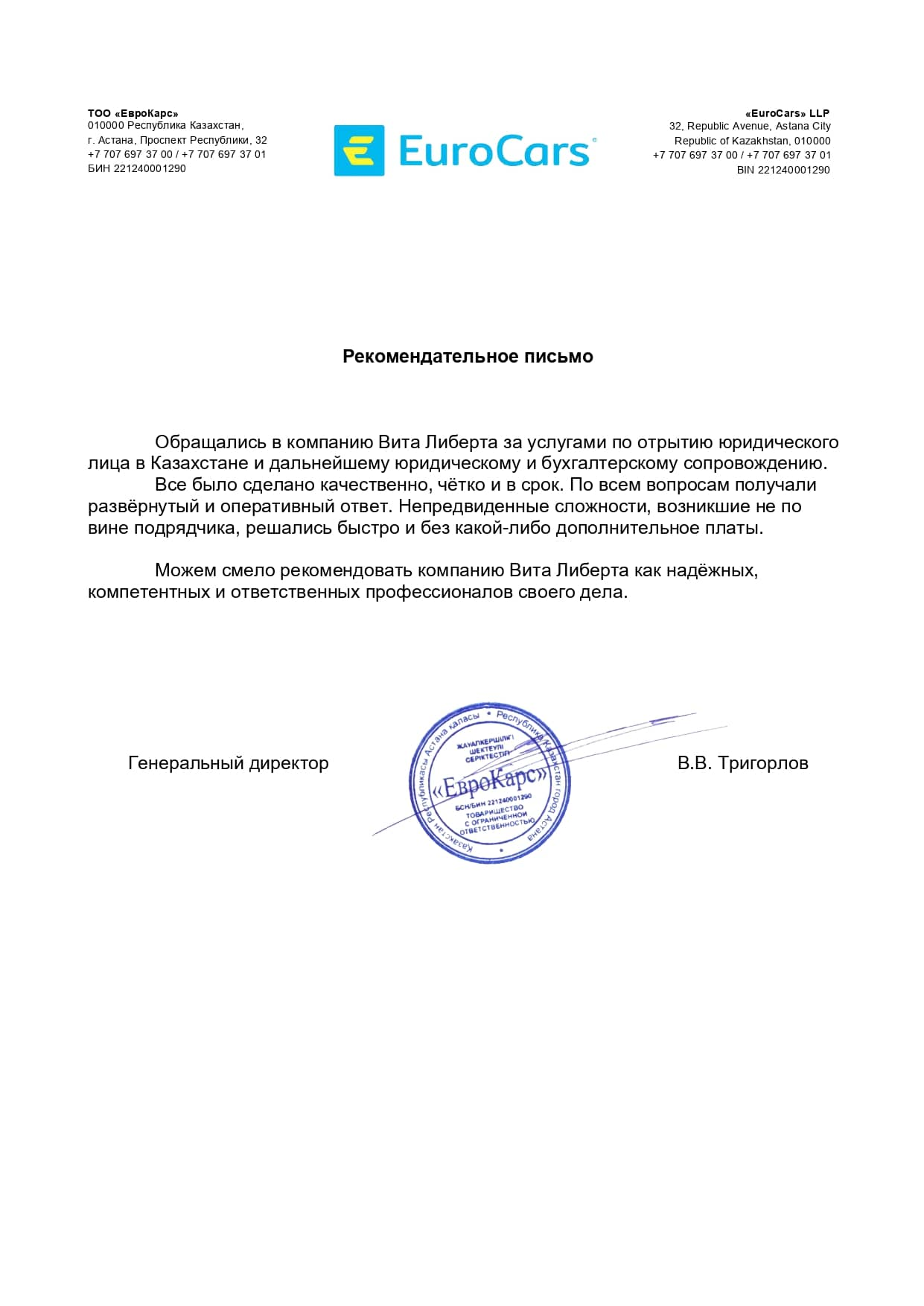
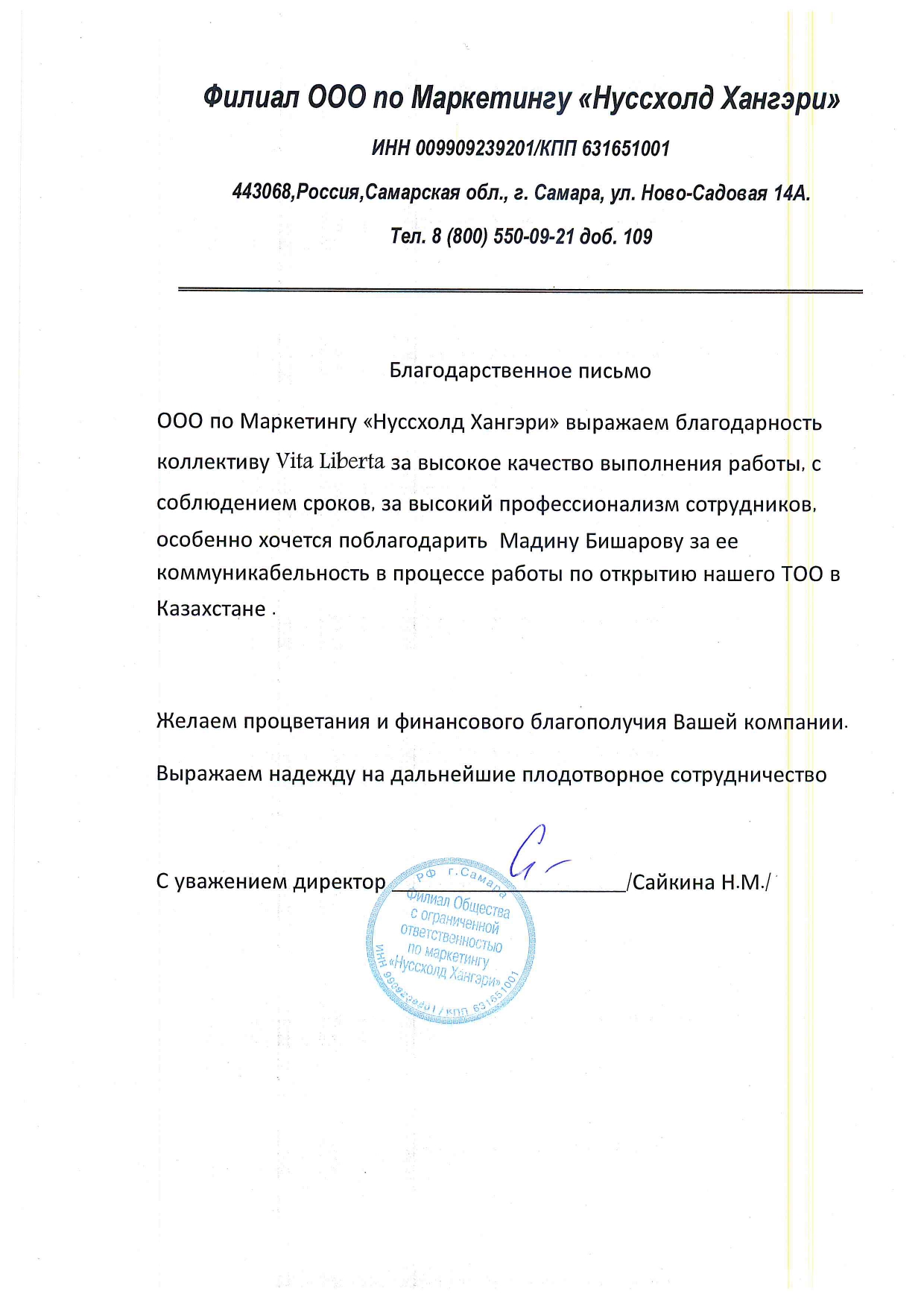
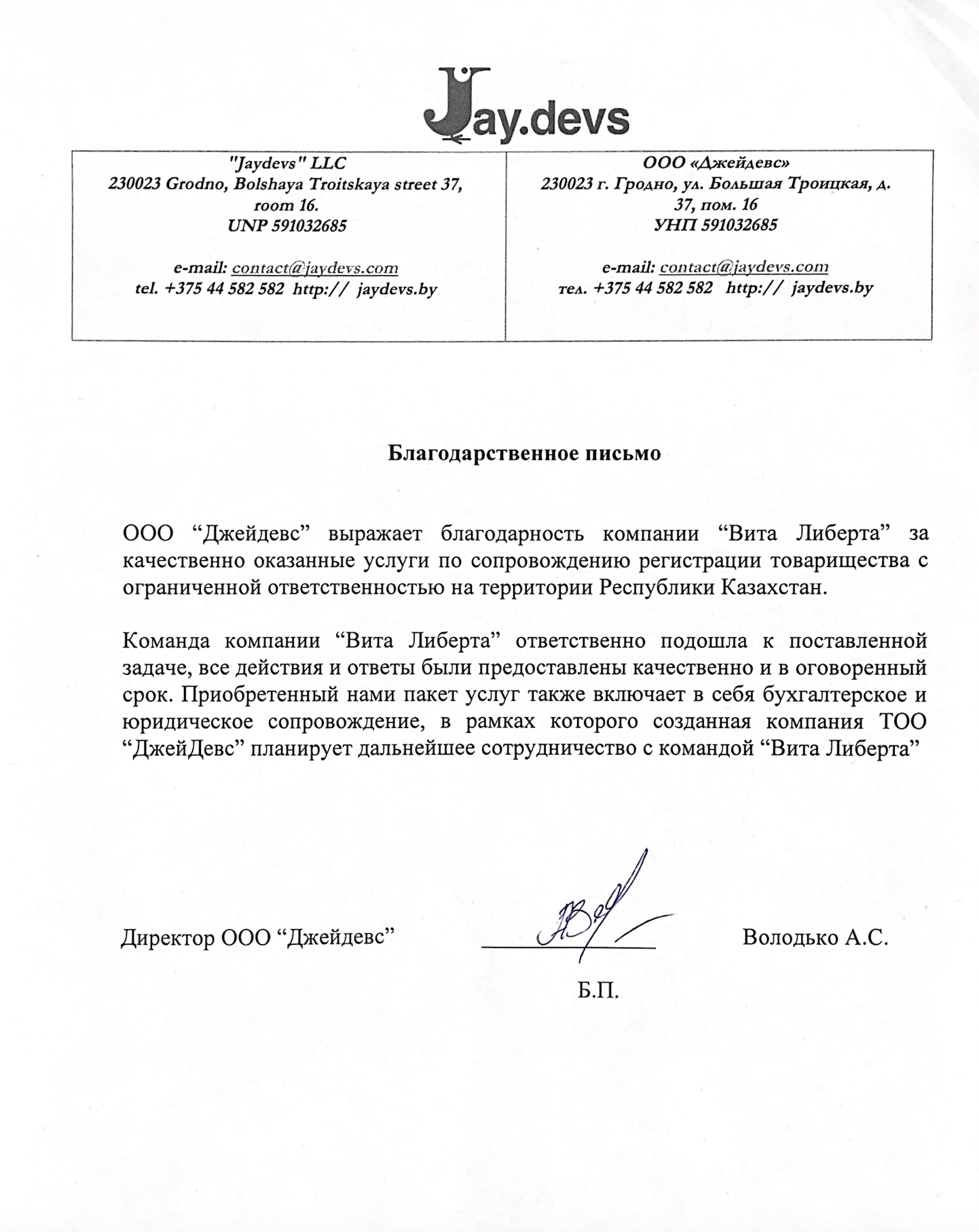
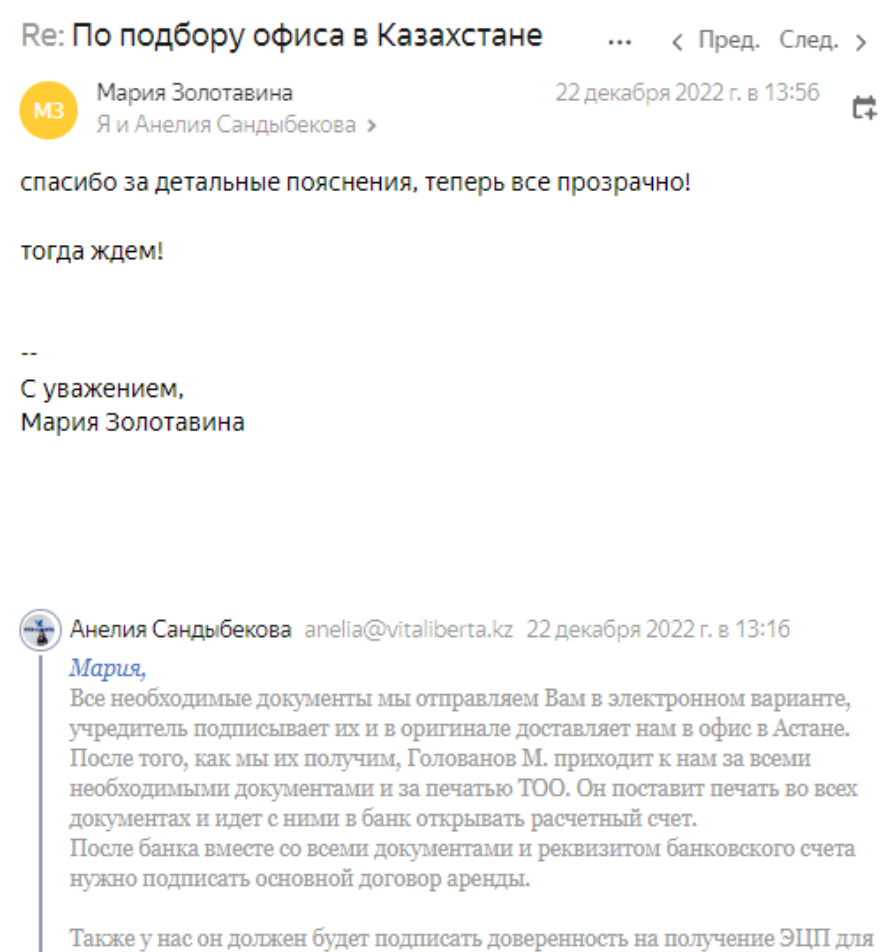
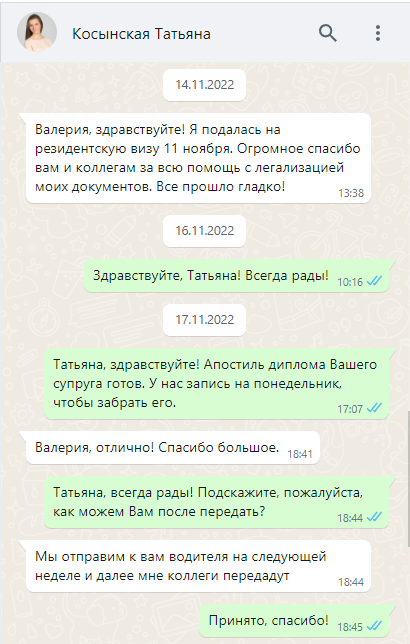
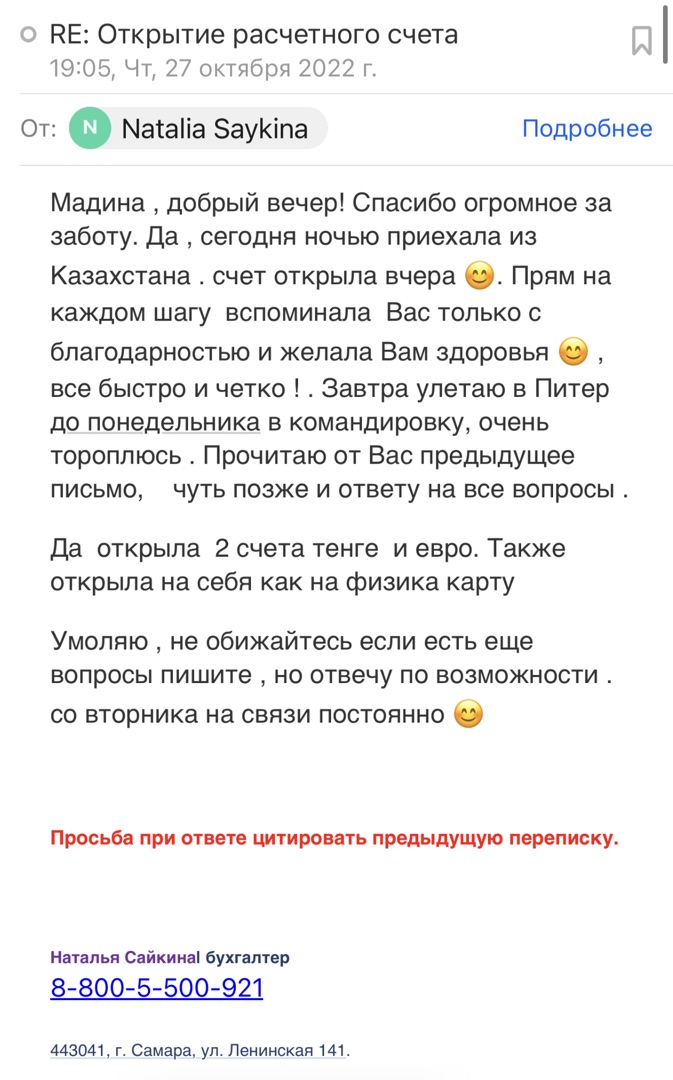


Answers to Frequently Asked Questions
What is the most common organizational and legal form of a legal entity in Kazakhstan?
If you are thinking about entrepreneurial activity in Kazakhstan, you will inevitably come across the abbreviation LLP. This is not just another legal formality; it is the foundation upon which the vast majority of commercial projects in the country are built.
Understanding its nature and advantages is the first step towards a confident start.
What is hidden behind the abbreviation LLP? A Limited Liability Partnership (LLP) in the Kazakhstani legal reality occupies the same niche as an LLC in Russia or a Ltd in the UK. It's a classic structure for those who do not want to risk their personal property. The company exists as an independent entity, and its owners are liable for debts only within the limits of their contributions.
Five Pillars of LLP Popularity
Statistics are inexorable: nine out of ten new businesses choose this particular form. Such a consensus in the business community did not arise out of nowhere. Let's analyze the key factors that make an LLP an undisputed leader.
1. Property Inviolability of Founders
The main fear of any businessman is losing not only the business but also property accumulated over the years. In an LLP, this risk is minimized. The law draws a clear line: the founder's personal assets (apartment, car, dacha) and the company's assets exist in different planes. Creditors can only claim what belongs to the partnership itself. This "armor" is the main reason for choosing this form.
2. Minimum Entry Threshold
The state does not seek to complicate the lives of entrepreneurs at the start. The LLP registration procedure is as simplified as possible. There are standard forms of constituent documents, which eliminates the need to order complex legal texts. The entire process from submitting an application to obtaining a certificate takes a few days, sometimes even hours. The bureaucratic machine here works not against business, but for business.
3. Freedom of Management Decisions
An LLP does not impose a rigid management scheme. You are free to choose a configuration that is convenient for you. You can be the sole director and personally control every process. You can attract a professional manager. You can distribute powers among several directors, dividing areas of responsibility. This flexibility allows you to adapt the management system to the scale and specifics of the project.
4. Tax Pluralism
The ability to choose a tax regime is not a privilege, but an important planning tool. An LLP can operate under the classic (general) regime, suitable for large companies with high turnover and significant expenses. Or it can switch to a special tax regime (for example, a simplified declaration), which significantly reduces the burden for small and medium businesses and simplifies reporting. The choice is yours, based on specific indicators.
5. Scalability of Composition
An LLP feels comfortable in any company. The law allows its establishment both by one person (a single participant) and by any number of partners. There is no upper limit. At the same time, the rights of each participant, the size of their share, and the procedure for profit distribution are clearly fixed, which minimizes intra-team conflicts.
International Context: Finding Analogues
To better understand the essence of an LLP, it is useful to look at it through the prism of familiar foreign forms.
Choosing an organizational and legal form is a strategic decision. The LLP in Kazakhstan wins due to its balanced approach: it provides reliable protection, does not burden with bureaucracy, and leaves room for maneuver in management and taxes. This very balance of interests of the state and business has made the LLP a universal tool for realizing commercial ideas in Kazakhstan.
Understanding its nature and advantages is the first step towards a confident start.
What is hidden behind the abbreviation LLP? A Limited Liability Partnership (LLP) in the Kazakhstani legal reality occupies the same niche as an LLC in Russia or a Ltd in the UK. It's a classic structure for those who do not want to risk their personal property. The company exists as an independent entity, and its owners are liable for debts only within the limits of their contributions.
Five Pillars of LLP Popularity
Statistics are inexorable: nine out of ten new businesses choose this particular form. Such a consensus in the business community did not arise out of nowhere. Let's analyze the key factors that make an LLP an undisputed leader.
1. Property Inviolability of Founders
The main fear of any businessman is losing not only the business but also property accumulated over the years. In an LLP, this risk is minimized. The law draws a clear line: the founder's personal assets (apartment, car, dacha) and the company's assets exist in different planes. Creditors can only claim what belongs to the partnership itself. This "armor" is the main reason for choosing this form.
2. Minimum Entry Threshold
The state does not seek to complicate the lives of entrepreneurs at the start. The LLP registration procedure is as simplified as possible. There are standard forms of constituent documents, which eliminates the need to order complex legal texts. The entire process from submitting an application to obtaining a certificate takes a few days, sometimes even hours. The bureaucratic machine here works not against business, but for business.
3. Freedom of Management Decisions
An LLP does not impose a rigid management scheme. You are free to choose a configuration that is convenient for you. You can be the sole director and personally control every process. You can attract a professional manager. You can distribute powers among several directors, dividing areas of responsibility. This flexibility allows you to adapt the management system to the scale and specifics of the project.
4. Tax Pluralism
The ability to choose a tax regime is not a privilege, but an important planning tool. An LLP can operate under the classic (general) regime, suitable for large companies with high turnover and significant expenses. Or it can switch to a special tax regime (for example, a simplified declaration), which significantly reduces the burden for small and medium businesses and simplifies reporting. The choice is yours, based on specific indicators.
5. Scalability of Composition
An LLP feels comfortable in any company. The law allows its establishment both by one person (a single participant) and by any number of partners. There is no upper limit. At the same time, the rights of each participant, the size of their share, and the procedure for profit distribution are clearly fixed, which minimizes intra-team conflicts.
International Context: Finding Analogues
To better understand the essence of an LLP, it is useful to look at it through the prism of familiar foreign forms.
- Russian Federation. The direct and virtually complete analogue is the LLP (Limited Liability Company). The operating mechanisms, participants' liability, and even document flow have many common features.
- Countries of Anglo-Saxon law (USA, UK). The closest relative of an LLP is the Private Limited Company (LTD). The same philosophy: protection of owners' personal assets and flexibility in taxation and management.
Choosing an organizational and legal form is a strategic decision. The LLP in Kazakhstan wins due to its balanced approach: it provides reliable protection, does not burden with bureaucracy, and leaves room for maneuver in management and taxes. This very balance of interests of the state and business has made the LLP a universal tool for realizing commercial ideas in Kazakhstan.
Peculiarities of the Legal Status of a Limited Liability Partnership (LLP) in the Republic of Kazakhstan
A Limited Liability Partnership (LLP) in Kazakhstan is not just an organizational and legal form; it is a whole legal institution with unique characteristics. For a foreign investor, understanding these nuances is crucial: here there are both norms standard for world practice and specific Kazakhstani restrictions. Let's analyze four fundamental features that shape the legal landscape of an LLP.
1. The Principle of Property Separation: What Does the Founder Risk?
The key feature embedded in the very term "limited liability" works classically and strictly in Kazakhstan. LLP founders are separated by a financial wall that their idea cannot penetrate. Their liability is strictly limited and is calculated only by the size of the contribution made to the charter capital.
This means that in scenarios of bankruptcy, lawsuits, or creditors' claims, claimants have the right to direct recovery only at the assets belonging to the partnership itself. The participants' personal property - apartments, cars, land plots, bank deposits - is inviolable. Exceptions are possible only in rare, proven cases of deliberate driving to bankruptcy, but in everyday business practice, this principle works as a reliable shield.
2. Numerical Flexibility: From a Single Person to a Consortium
Kazakhstani legislation demonstrates rare liberality in terms of the number of participants. There is no lower limit — an LLP can be established by one person. There is also no upper limit — the number of co-owners can be dozens or hundreds.
Such amplitude creates unique opportunities:
3. Specific Prohibition: The "Sole Person Chain" Rule
Here lies a significant restriction that often surprises foreigners accustomed to unlimited corporate chains. Kazakhstani law prohibits a situation where the sole founder of an LLP is itself another legal entity established by one person.
In simple terms: you cannot build a pyramid of the type "Person → Company A → LLP," where Company A is also owned by one person. This is considered an unacceptable simplification of the structure, leading to a lack of transparency.
Why is this necessary? The legislator's logic is simple: to prevent the creation of "corporate nesting dolls" that complicate tax control and allow blurring responsibility. The regulator wants to see the ultimate beneficiary, not endless layers. If you are planning a holding structure, you must take this restriction into account and include at least two different participants at one of the levels in the scheme, or use an individual as a direct founder.
4. National Regime for Foreigners: No Quotas or Restrictions
Kazakhstan applies the principle of national regime for foreign investors. This means that foreign citizens and companies have the same rights as local residents when establishing and managing an LLP.
The law does not establish:
4. National Regime in Corporate Law: No Restrictions on Ownership Rights
From the perspective of civil and business legislation, Kazakhstan pursues an open-door policy for foreign capital. The principle of national regime indeed works here. This means that the laws regulating the establishment and operation of an LLP do not differentiate between local and foreign founders.
What does this mean in practice?
However, it is important to understand: this principle works precisely in the plane of corporate law — that is, in matters of "who can own the company." It does not cancel the requirements of migration law, which regulate the basis on which a person is in the country and on what basis they establish a business.
The legal status of an LLP in Kazakhstan offers investors a predictable and protected environment. The main advantages are limited liability, flexibility of composition, and equal rights for residents and non-residents. The key restrictions to remember are the ban on sole person corporate chains and the need to comply with the migration regime when registering the LLP, subsequently managing the company, and staying in Kazakhstan. Understanding these five features allows you to build a transparent, effective, and legally impeccable business structure in Kazakhstan.
1. The Principle of Property Separation: What Does the Founder Risk?
The key feature embedded in the very term "limited liability" works classically and strictly in Kazakhstan. LLP founders are separated by a financial wall that their idea cannot penetrate. Their liability is strictly limited and is calculated only by the size of the contribution made to the charter capital.
This means that in scenarios of bankruptcy, lawsuits, or creditors' claims, claimants have the right to direct recovery only at the assets belonging to the partnership itself. The participants' personal property - apartments, cars, land plots, bank deposits - is inviolable. Exceptions are possible only in rare, proven cases of deliberate driving to bankruptcy, but in everyday business practice, this principle works as a reliable shield.
2. Numerical Flexibility: From a Single Person to a Consortium
Kazakhstani legislation demonstrates rare liberality in terms of the number of participants. There is no lower limit — an LLP can be established by one person. There is also no upper limit — the number of co-owners can be dozens or hundreds.
Such amplitude creates unique opportunities:
- For Sole Proprietors and startups - the ability to formalize without seeking partners.
- For large investment projects - the ability to pool the capital of many investors within one structure, clearly fixing shares.
- For joint ventures - flexibility in sharing control and profits between different groups of participants.
3. Specific Prohibition: The "Sole Person Chain" Rule
Here lies a significant restriction that often surprises foreigners accustomed to unlimited corporate chains. Kazakhstani law prohibits a situation where the sole founder of an LLP is itself another legal entity established by one person.
In simple terms: you cannot build a pyramid of the type "Person → Company A → LLP," where Company A is also owned by one person. This is considered an unacceptable simplification of the structure, leading to a lack of transparency.
Why is this necessary? The legislator's logic is simple: to prevent the creation of "corporate nesting dolls" that complicate tax control and allow blurring responsibility. The regulator wants to see the ultimate beneficiary, not endless layers. If you are planning a holding structure, you must take this restriction into account and include at least two different participants at one of the levels in the scheme, or use an individual as a direct founder.
4. National Regime for Foreigners: No Quotas or Restrictions
Kazakhstan applies the principle of national regime for foreign investors. This means that foreign citizens and companies have the same rights as local residents when establishing and managing an LLP.
The law does not establish:
- Maximum limits of foreign participation in the charter capital;
- Prohibitions on certain types of activities for companies with foreign founders (except for strategic sectors regulated by special laws);
- Additional approvals or permits based solely on the origin of capital.
4. National Regime in Corporate Law: No Restrictions on Ownership Rights
From the perspective of civil and business legislation, Kazakhstan pursues an open-door policy for foreign capital. The principle of national regime indeed works here. This means that the laws regulating the establishment and operation of an LLP do not differentiate between local and foreign founders.
What does this mean in practice?
- No share limits. The law does not set a maximum threshold for foreign participation in the charter capital. You can own 100% of the company - there is no mandatory 49/51 split here.
- No closed sectors (almost). There are no general bans on doing business for foreigners. Exceptions concern only a narrow list of strategic sectors regulated by special laws (for example, the defense industry or subsoil use on special sites).
- No discrimination in management. A foreigner has the same corporate rights: to vote at meetings, receive dividends, sell a share, withdraw from the membership, initiate reorganization.
However, it is important to understand: this principle works precisely in the plane of corporate law — that is, in matters of "who can own the company." It does not cancel the requirements of migration law, which regulate the basis on which a person is in the country and on what basis they establish a business.
The legal status of an LLP in Kazakhstan offers investors a predictable and protected environment. The main advantages are limited liability, flexibility of composition, and equal rights for residents and non-residents. The key restrictions to remember are the ban on sole person corporate chains and the need to comply with the migration regime when registering the LLP, subsequently managing the company, and staying in Kazakhstan. Understanding these five features allows you to build a transparent, effective, and legally impeccable business structure in Kazakhstan.
Which Body Carries Out State Registration of Legal Entities in Kazakhstan?
The procedure for formally registering a business in Kazakhstan has a clearly defined executor. The functions of registering legal entities, including such a popular form as the LLP, are assigned to a specialized structure — the State Corporation "Government for Citizens." It is this body that serves as the single window for entrepreneurs wishing to legalize their business.
The Corporation's activities in the registration part are regulated by the relevant law, which determines the procedure for entering new companies into the unified state register, as well as the rules for accounting for their separate subdivisions - branches and representative offices.
What is Entered into the National Register After Registration?
After the successful completion of the registration procedure, the newly created legal entity receives its unique identifier — the Business Identification Number. But the matter is not limited to obtaining a BIN. An entire block of data is entered into the National Register, forming the company's official profile.
Among the key information that becomes part of the Register, several categories can be distinguished.
Identification Information
First of all, the full company name of the partnership is fixed. It is under this name that the company enters civil circulation, enters into contracts, and issues invoices. It is important that the uniqueness of the name is checked already at the stage of submitting documents to avoid confusion with already existing market players.
Financial Parameter
Information on the amount of the charter capital is entered into the Register. This indicator is of interest not only to tax authorities but also to potential partners, creditors, and investors. Although the legislation does not establish a minimum charter capital for many small companies, its amount is fixed in the state register and can only be changed through the official procedure of amending the constituent documents.
Personal Composition of Owners and Management
The Register contains data on the founders of the partnership. If these are individuals, their personal data and participation shares are fixed. If another company acts as the founder - its details. In parallel, information about the executive bodies is entered: who the director is, whether they have the right to act on behalf of the company without a power of attorney, and what their powers are. This is an important point for counterparties who check exactly who they are signing a contract with.
Address Data
The location of the legal entity is another mandatory item. The specific address where the activity is carried out and to which official correspondence can be sent is fixed. A change of location also requires making an appropriate entry in the register.
Why is an Open Register Needed?
The concentration of all this information in a single database serves practical purposes. The data from the National Register becomes the starting point for any official interaction.
Tax authorities use this information to register the company and assign reporting forms. Banks compare the data provided by the client with the entries in the register when opening an account. Counterparties can check, before including a transaction, whether the company really exists, who manages it, and whether it is in the process of liquidation.
Moreover, the data in the register is the basis for maintaining accounting and tax records. Without a properly fixed name, address, and management, it is impossible to issue invoices, submit declarations, or participate in tenders. Essentially, entering data into the National Register of Business Identification Numbers is the moment of the official birth of a company as a subject of economic activity, after which it gains the opportunity to fully operate in the market.
The Corporation's activities in the registration part are regulated by the relevant law, which determines the procedure for entering new companies into the unified state register, as well as the rules for accounting for their separate subdivisions - branches and representative offices.
What is Entered into the National Register After Registration?
After the successful completion of the registration procedure, the newly created legal entity receives its unique identifier — the Business Identification Number. But the matter is not limited to obtaining a BIN. An entire block of data is entered into the National Register, forming the company's official profile.
Among the key information that becomes part of the Register, several categories can be distinguished.
Identification Information
First of all, the full company name of the partnership is fixed. It is under this name that the company enters civil circulation, enters into contracts, and issues invoices. It is important that the uniqueness of the name is checked already at the stage of submitting documents to avoid confusion with already existing market players.
Financial Parameter
Information on the amount of the charter capital is entered into the Register. This indicator is of interest not only to tax authorities but also to potential partners, creditors, and investors. Although the legislation does not establish a minimum charter capital for many small companies, its amount is fixed in the state register and can only be changed through the official procedure of amending the constituent documents.
Personal Composition of Owners and Management
The Register contains data on the founders of the partnership. If these are individuals, their personal data and participation shares are fixed. If another company acts as the founder - its details. In parallel, information about the executive bodies is entered: who the director is, whether they have the right to act on behalf of the company without a power of attorney, and what their powers are. This is an important point for counterparties who check exactly who they are signing a contract with.
Address Data
The location of the legal entity is another mandatory item. The specific address where the activity is carried out and to which official correspondence can be sent is fixed. A change of location also requires making an appropriate entry in the register.
Why is an Open Register Needed?
The concentration of all this information in a single database serves practical purposes. The data from the National Register becomes the starting point for any official interaction.
Tax authorities use this information to register the company and assign reporting forms. Banks compare the data provided by the client with the entries in the register when opening an account. Counterparties can check, before including a transaction, whether the company really exists, who manages it, and whether it is in the process of liquidation.
Moreover, the data in the register is the basis for maintaining accounting and tax records. Without a properly fixed name, address, and management, it is impossible to issue invoices, submit declarations, or participate in tenders. Essentially, entering data into the National Register of Business Identification Numbers is the moment of the official birth of a company as a subject of economic activity, after which it gains the opportunity to fully operate in the market.
What Requirements Are Imposed on the Company Name in Kazakhstan?
Choosing a name for a future business is not only a creative task but also a legal procedure. In Kazakhstan, the legislation sets clear requirements for what a company's official name should look like. Let's analyze the basic rules to avoid unexpected difficulties during registration.
Mandatory Indication of the Ownership Form
The first and main rule: the name of any commercial organization must include a designation of its organizational and legal form. This is not a whim of the legislator, but a way to identify the company for counterparties, tax authorities, and ordinary citizens.
For a limited liability partnership, the name must necessarily contain either the full phrase "limited liability partnership" or its generally accepted abbreviation - LLP. It is in this form that the name is entered into the state register, fixed in the constituent documents, and used in all official papers: contracts, invoices, tax declarations.
If you are registering a partnership with additional liability, a similar rule applies. The name must include either the full phrase "partnership with additional liability" or the abbreviation PAL.
Is it Possible to Use Foreign Languages and Abbreviations?
The law does not prohibit companies from having not only an official name in the state or Russian language but also additional options. Entrepreneurs can use an abbreviated form of their name, as well as its translation or analogue in foreign languages.
However, there is an important limitation here: any additional options must not contradict the legislation and, most importantly, must not mislead counterparties or consumers. It is forbidden to use an abbreviation that could be perceived as a reference to another organizational and legal form, or a translation that distorts the meaning of the original name.
In practice, this means that in advertising, on signs, or in international contracts, a company can use the English version of its name, but in documents intended for Kazakhstani state bodies, only the officially registered version with the mandatory indication of LLP or PAL will appear.
How to Check the Uniqueness of a Name?
Although the law "On Limited and Additional Liability Partnerships" does not directly state a requirement for absolute uniqueness of the name, in practice, the registration system is designed so that it is impossible to register two identical names in one region or field of activity. When submitting documents through a PSC or the egov.kz portal, an automatic check against the database of existing legal entities is performed.
Before applying, it is recommended to think of two or three name options in advance. This will save time if the first option turns out to be taken. It is also advisable to avoid names that may be considered contrary to public order or contain elements of unfair competition (for example, deliberate similarity to a well-known brand).
In conclusion, three simple rules for choosing a company name in Kazakhstan can be highlighted:
Mandatory Indication of the Ownership Form
The first and main rule: the name of any commercial organization must include a designation of its organizational and legal form. This is not a whim of the legislator, but a way to identify the company for counterparties, tax authorities, and ordinary citizens.
For a limited liability partnership, the name must necessarily contain either the full phrase "limited liability partnership" or its generally accepted abbreviation - LLP. It is in this form that the name is entered into the state register, fixed in the constituent documents, and used in all official papers: contracts, invoices, tax declarations.
If you are registering a partnership with additional liability, a similar rule applies. The name must include either the full phrase "partnership with additional liability" or the abbreviation PAL.
Is it Possible to Use Foreign Languages and Abbreviations?
The law does not prohibit companies from having not only an official name in the state or Russian language but also additional options. Entrepreneurs can use an abbreviated form of their name, as well as its translation or analogue in foreign languages.
However, there is an important limitation here: any additional options must not contradict the legislation and, most importantly, must not mislead counterparties or consumers. It is forbidden to use an abbreviation that could be perceived as a reference to another organizational and legal form, or a translation that distorts the meaning of the original name.
In practice, this means that in advertising, on signs, or in international contracts, a company can use the English version of its name, but in documents intended for Kazakhstani state bodies, only the officially registered version with the mandatory indication of LLP or PAL will appear.
How to Check the Uniqueness of a Name?
Although the law "On Limited and Additional Liability Partnerships" does not directly state a requirement for absolute uniqueness of the name, in practice, the registration system is designed so that it is impossible to register two identical names in one region or field of activity. When submitting documents through a PSC or the egov.kz portal, an automatic check against the database of existing legal entities is performed.
Before applying, it is recommended to think of two or three name options in advance. This will save time if the first option turns out to be taken. It is also advisable to avoid names that may be considered contrary to public order or contain elements of unfair competition (for example, deliberate similarity to a well-known brand).
In conclusion, three simple rules for choosing a company name in Kazakhstan can be highlighted:
- The name must necessarily contain LLP or PAL - this is an integral part of the company name.
- It is possible to use abbreviated versions and translations into foreign languages, but they must not distort the meaning or mislead.
- Before registration, it is advisable to check the chosen name for uniqueness, which will help avoid refusal.
What Requirements Are Imposed on the Amount of the Charter Capital of an LLP in Kazakhstan?
When several people or even a single owner decide to register a limited liability partnership in Kazakhstan, the first financial question that arises is: how much should be contributed to the company's "treasury" at its birth? The legislation is very flexible on this issue, but in some places, it gives a strict answer. It all depends on how large-scale a business you are planning.
Zero Tenge — It's Legal, but Not Always Convenient
For those opening a small business, the state has established a pleasant rule: there is no minimum amount of initial capital.
In simple terms, you can write zero in the documents, and this will not be a reason for refusal of registration. This is because the minimum charter capital is not provided for small business entities. This approach is designed to facilitate market entry for micro-businesses and start-up entrepreneurs.
However, indicating zero capital means that the company starts its life with not a single tenge in its account. And money is needed at the opening stage: paying for a lawyer's consultation, notarizing documents, ordering a seal, buying a few folders for documents, a printer, paying office rent, purchasing office supplies, and much more depending on the business area and plans.
Therefore, a reasonable minimum that founders are recommended to contribute is about 100-300 thousand tenge. This will not burden the pocket, but will allow you to calmly cover initial needs and not have to urgently look for money in your pocket. Also, from a reputational standpoint for banks and partners, it is a different level than a bare 0.
Small Business Criteria:
To understand whether you can breathe easy and write zero in the charter, you need to assess the future scale. The law classifies companies as "small" if they simultaneously satisfy two conditions:
For Medium and Large Businesses: 100 MCI
For organizations belonging to medium and large businesses, the initial amount of charter capital is determined as the sum of the founders' contributions and must be no less than an amount equivalent to 100 (one hundred) times the monthly calculation index (MCI) established by the law on the republican budget for the relevant financial year on the date of submitting documents for state registration.
Here it is important to monitor the calendar, as the MCI changes annually. From January 1, 2026, this indicator is set at 4,325 tenge. Multiplying this number by one hundred gives the required amount — 432,500 tenge. The founders must contribute exactly this amount to their idea for it to comply with the requirements for medium or large businesses.
How Much Time is Given to Contribute the Money?
The law does not require that the charter capital be in the account at the time of submitting documents. Founders have one year to contribute their shares. The specific date by which everything must be paid is set by the business owners at the general meeting. The main thing is that this date does not exceed 12 months from the moment the company receives the registration certificate.
If one of the participants misses this deadline, the others can raise the issue of revising their share, even transferring part of the assets in favor of those who fulfilled their obligations on time.
What Can Be Paid for a Share?
Money is the simplest and most understandable way to replenish the charter capital, but not the only one. In lieu of a contribution, you can give the company:
Zero Tenge — It's Legal, but Not Always Convenient
For those opening a small business, the state has established a pleasant rule: there is no minimum amount of initial capital.
In simple terms, you can write zero in the documents, and this will not be a reason for refusal of registration. This is because the minimum charter capital is not provided for small business entities. This approach is designed to facilitate market entry for micro-businesses and start-up entrepreneurs.
However, indicating zero capital means that the company starts its life with not a single tenge in its account. And money is needed at the opening stage: paying for a lawyer's consultation, notarizing documents, ordering a seal, buying a few folders for documents, a printer, paying office rent, purchasing office supplies, and much more depending on the business area and plans.
Therefore, a reasonable minimum that founders are recommended to contribute is about 100-300 thousand tenge. This will not burden the pocket, but will allow you to calmly cover initial needs and not have to urgently look for money in your pocket. Also, from a reputational standpoint for banks and partners, it is a different level than a bare 0.
Small Business Criteria:
To understand whether you can breathe easy and write zero in the charter, you need to assess the future scale. The law classifies companies as "small" if they simultaneously satisfy two conditions:
- The staff does not exceed one hundred people. That is, it's either a small workshop, a retail outlet, or a simple office.
- Annual revenue stays within the limit of 300,000 MCI. In real money, at the 2026 rate, this is slightly less than 1.3 billion tenge. If your plans fit within these limits, you can set any capital – both zero and million.
For Medium and Large Businesses: 100 MCI
For organizations belonging to medium and large businesses, the initial amount of charter capital is determined as the sum of the founders' contributions and must be no less than an amount equivalent to 100 (one hundred) times the monthly calculation index (MCI) established by the law on the republican budget for the relevant financial year on the date of submitting documents for state registration.
Here it is important to monitor the calendar, as the MCI changes annually. From January 1, 2026, this indicator is set at 4,325 tenge. Multiplying this number by one hundred gives the required amount — 432,500 tenge. The founders must contribute exactly this amount to their idea for it to comply with the requirements for medium or large businesses.
How Much Time is Given to Contribute the Money?
The law does not require that the charter capital be in the account at the time of submitting documents. Founders have one year to contribute their shares. The specific date by which everything must be paid is set by the business owners at the general meeting. The main thing is that this date does not exceed 12 months from the moment the company receives the registration certificate.
If one of the participants misses this deadline, the others can raise the issue of revising their share, even transferring part of the assets in favor of those who fulfilled their obligations on time.
What Can Be Paid for a Share?
Money is the simplest and most understandable way to replenish the charter capital, but not the only one. In lieu of a contribution, you can give the company:
- some valuable property - a machine, a car, a batch of goods;
- securities, if any;
- rights to something, for example, the right to lease premises or the right to use an invention.
List of Documents Required for Registering an LLP Whose Founder is a Foreign Legal Entity
When the owner of a Kazakhstani business is a foreign company, the registration procedure is supplemented by a number of mandatory requirements. In addition to standard documents, it is necessary to go through several stages of legalization with tax authorities and state systems.
What Documents Need to Be Prepared in Advance?
The main document received from the foreign founder is a legalized extract from the trade register of the country of incorporation. It confirms that the company actually exists and operates legally. Instead of an extract, any official document with similar content may be valid.
The extract must be translated into Kazakh and Russian, and then the translation must be certified by a notary. The same applies to the passport of the company representative handling the registration.
Here it is important to consider international agreements. For companies from Russia, Armenia, Belarus, Kyrgyzstan, Moldova, Tajikistan, Turkmenistan, and Uzbekistan, simple notarization is sufficient — an apostille or additional legalization is not required. This rule operates within the framework of the Minsk Convention on legal assistance.
What Needs to Be Done in Kazakhstan
The law itself does not impose special requirements on foreign founders, but the actual operation of the company is impossible without fulfilling several mandatory procedures. They can be divided into two groups: for the founder-company itself and for its head.
For the Foreign Founder-Company:
For the Company Director:
The foreign head goes through their own path of legalization.
How Long Does the Entire Procedure Take?
In practice, opening an LLP with a foreign founder takes at least one and a half to two weeks. Obtaining an IIN for the director — one day, processing a BIN for the company — five working days (excluding days of preparation and submission), obtaining an EDS for both — at least another day with a visit to the PSC. Add to this opening a bank account, which also requires the personal presence of the head.
What Documents Need to Be Prepared in Advance?
The main document received from the foreign founder is a legalized extract from the trade register of the country of incorporation. It confirms that the company actually exists and operates legally. Instead of an extract, any official document with similar content may be valid.
The extract must be translated into Kazakh and Russian, and then the translation must be certified by a notary. The same applies to the passport of the company representative handling the registration.
Here it is important to consider international agreements. For companies from Russia, Armenia, Belarus, Kyrgyzstan, Moldova, Tajikistan, Turkmenistan, and Uzbekistan, simple notarization is sufficient — an apostille or additional legalization is not required. This rule operates within the framework of the Minsk Convention on legal assistance.
What Needs to Be Done in Kazakhstan
The law itself does not impose special requirements on foreign founders, but the actual operation of the company is impossible without fulfilling several mandatory procedures. They can be divided into two groups: for the founder-company itself and for its head.
For the Foreign Founder-Company:
- First of all, the organization must be registered for tax purposes and obtain a Business Identification Number. A BIN is necessary for opening accounts, including contracts, and any financial transactions. This usually takes up to three to five working days.
- After obtaining the BIN, an electronic digital signature is issued for the company itself (for its first head). Since June 2025, this cannot be done by proxy — the personal presence of the head or an authorized person at a PSC is required. Without an EDS, it is impossible to submit reports and use the government services portal.
- Then the company is registered on the egov.kz portal, which opens access to a personal account and all state services.
For the Company Director:
The foreign head goes through their own path of legalization.
- It all starts with obtaining an Individual Identification Number. Without an IIN, you cannot become a founder, enter into contracts, or open an account. Since February 2024, it is impossible to obtain an IIN remotely — only through a personal visit to a PSC or, in exceptional cases, to a Kazakhstani consulate abroad.
- Next, the director obtains a personal EDS. The rules are the same: only personal presence and biometric identification.
- After this, the head registers in the Mobile Citizens Base. This is a system that links a phone number to a person's identification data. Without registration in the MCD, it is impossible to remotely receive many government services, including identity confirmation during online operations.
- The stage ends with the director's registration on the egov.kz portal.
How Long Does the Entire Procedure Take?
In practice, opening an LLP with a foreign founder takes at least one and a half to two weeks. Obtaining an IIN for the director — one day, processing a BIN for the company — five working days (excluding days of preparation and submission), obtaining an EDS for both — at least another day with a visit to the PSC. Add to this opening a bank account, which also requires the personal presence of the head.
Is It Possible to Register a Business Remotely in Kazakhstan?
This topic arouses the interest of foreign entrepreneurs considering Kazakhstan as a platform to start or expand their business. In the recent past, the algorithm of actions was as simple as possible: a foreign founder issued a power of attorney to a local specialist, and after a short time, the company began operating. But in the last two years, the regulatory framework has undergone significant changes, and today the method of opening a business remotely requires detailed analysis.
Where, within the framework of the LLP registration process, can powers be delegated, and where is personal presence indispensable?
Let's consider each stage separately.
Stage 1. Creation of a Legal Entity: Remote Format is Available
It's worth starting with the positive: the direct registration of a company, say, in the form of an LLP, can still be carried out without the personal presence of the founders. They do not need to visit a PSC or other state institutions. The main tool here is a notarized power of attorney issued in the name of a resident of Kazakhstan, who is usually a professional consultant or an employee of a law firm.
An important condition is the correct execution of the document. If the power of attorney is drawn up outside the republic, the requirements of international law must be considered:
Stage 2. Obtaining an IIN: The First Obstacle on the Way
The next step is obtaining an Individual Identification Number. This is where remote methods do not work. A foreigner must undergo this procedure in person.
However, the geography of personal appearance can vary. There are two entry points:
Stage 3. EDS: Linking to Biometrics Eliminates Intermediaries
Since mid-2025, the rules for obtaining an electronic digital signature have become as strict as possible. Now, it is impossible to obtain an EDS in the name of a company director by proxy. The key is created specifically for a specific person and requires confirmation of their biometric data.
The process goes as follows:
Stage 4. Fingerprinting: Only Offline
For foreign entrepreneurs planning to establish a company in Kazakhstan, obtaining migration permission is necessary — a TRP for a business immigrant (for EAEU citizens) or a C5 visa (for citizens of non-EAEU countries). Here, too, there is a mandatory stage that brooks no exception - fingerprint registration.
For foreigners applying for a TRP, fingerprinting has been mandatory since 2024. This procedure is carried out only upon personal application to the migration service departments. It is impossible to submit "fingerprints" through an authorized representative or a consular officer.
An exception here is the case where the participant of the LLP is not an individual, but a legal entity. In this case, obtaining migration permission is not required.
Stage 5. Opening a Bank Account: Meeting with Compliance
The final and often most labor-intensive stage is opening a current account for the established company. Kazakhstani banks operate under strict compliance and KYC (Know Your Client) procedures. From the perspective of a credit institution's security service, personal identification of the first head is a mandatory condition.
The company director must come to the bank branch with a passport, sign a standard package of contracts, and answer a number of questions about the origin of capital and the business structure. Today, even with a processed IIN and EDS, it is practically impossible to open an account completely remotely.
Final Scenario: Combining Remote Work and Personal Presence
Bringing all the stages into a single picture, the conclusion is this: preparing to register a company in Kazakhstan requires the personal presence of the foreign participant in Kazakhstan and the presence of the director to open a bank account. The registration itself can be carried out remotely based on a properly executed power of attorney.
Where, within the framework of the LLP registration process, can powers be delegated, and where is personal presence indispensable?
Let's consider each stage separately.
Stage 1. Creation of a Legal Entity: Remote Format is Available
It's worth starting with the positive: the direct registration of a company, say, in the form of an LLP, can still be carried out without the personal presence of the founders. They do not need to visit a PSC or other state institutions. The main tool here is a notarized power of attorney issued in the name of a resident of Kazakhstan, who is usually a professional consultant or an employee of a law firm.
An important condition is the correct execution of the document. If the power of attorney is drawn up outside the republic, the requirements of international law must be considered:
- For countries within the EAEU, standard notarization is sufficient.
- For states that do not participate in the relevant international agreements, an apostille or full-fledged legalization will be required.
Stage 2. Obtaining an IIN: The First Obstacle on the Way
The next step is obtaining an Individual Identification Number. This is where remote methods do not work. A foreigner must undergo this procedure in person.
However, the geography of personal appearance can vary. There are two entry points:
- Directly on the territory of Kazakhstan, by applying to the nearest PSC.
- At the republic's diplomatic missions abroad - embassies or consulates.
Stage 3. EDS: Linking to Biometrics Eliminates Intermediaries
Since mid-2025, the rules for obtaining an electronic digital signature have become as strict as possible. Now, it is impossible to obtain an EDS in the name of a company director by proxy. The key is created specifically for a specific person and requires confirmation of their biometric data.
The process goes as follows:
- The application is initiated online.
- Final activation is possible only after a physical visit to a PSC or consulate, where a face scan is performed and compared with the passport data.
Stage 4. Fingerprinting: Only Offline
For foreign entrepreneurs planning to establish a company in Kazakhstan, obtaining migration permission is necessary — a TRP for a business immigrant (for EAEU citizens) or a C5 visa (for citizens of non-EAEU countries). Here, too, there is a mandatory stage that brooks no exception - fingerprint registration.
For foreigners applying for a TRP, fingerprinting has been mandatory since 2024. This procedure is carried out only upon personal application to the migration service departments. It is impossible to submit "fingerprints" through an authorized representative or a consular officer.
An exception here is the case where the participant of the LLP is not an individual, but a legal entity. In this case, obtaining migration permission is not required.
Stage 5. Opening a Bank Account: Meeting with Compliance
The final and often most labor-intensive stage is opening a current account for the established company. Kazakhstani banks operate under strict compliance and KYC (Know Your Client) procedures. From the perspective of a credit institution's security service, personal identification of the first head is a mandatory condition.
The company director must come to the bank branch with a passport, sign a standard package of contracts, and answer a number of questions about the origin of capital and the business structure. Today, even with a processed IIN and EDS, it is practically impossible to open an account completely remotely.
Final Scenario: Combining Remote Work and Personal Presence
Bringing all the stages into a single picture, the conclusion is this: preparing to register a company in Kazakhstan requires the personal presence of the foreign participant in Kazakhstan and the presence of the director to open a bank account. The registration itself can be carried out remotely based on a properly executed power of attorney.
How Long Does It Actually Take to Open an LLP in Kazakhstan in 2026?
The issue of business registration deadlines is one of the key issues for any entrepreneur. When it comes to an LLP in Kazakhstan, the answer directly depends on who the founder is: a local resident or a foreign citizen. The difference here, in calendar days, is significant, and understanding this helps in properly planning resources and trips.
If the founder is a citizen of Kazakhstan: a few hours
For residents, the process is as optimized as possible and moved to a digital environment. With an electronic digital signature, you can register a company without leaving your home or office. The e-government portal allows you to go through the entire procedure with just a few clicks.
In terms of time expenditure, the registration itself takes about an hour from the moment the application is submitted. After filling in all the fields and undergoing video identification, the system processes the data automatically, and within an hour the founder has a ready registration certificate in PDF format.
If we add the preparation stage—choosing a name in three languages, defining CEA codes, preparing the sole participant's decision or the minutes of the meeting—then the total time spent ranges from one to two days. Many future business owners prefer to use a standard charter, which completely eliminates the need to develop an individual document.
If the founder is a foreigner: be prepared for ten working days
For citizens of other states, including EAEU countries, the procedure looks different. Although the registration of the LLP itself technically takes a few hours, just like for Kazakhstanis, the preceding stage requires personal presence and takes time. As legal practice shows, the actual period from the moment of entering the country to receiving a fully formed company is 8–10 working days.
Why does it take this long? Because a foreigner must sequentially go through several mandatory procedures, many of which require a physical visit to government institutions.
The route looks like this:
What Affects the Timelines: Hidden Pitfalls
Even with perfect planning, some factors can shift the schedule. For example, the workload of a specific PSC or migration department, queues for medical examinations, technical glitches in the operation of portals. Additionally, foreign founders from countries outside the EAEU need to obtain a business immigrant visa (category C5) in advance, which is a separate procedure that takes time before entering the republic.
Another nuance concerns the charter capital. For small business entities, its amount is not established by law, but in practice, information systems require specifying a non-zero value—usually founders contribute a symbolic 10 or 100 tenge. However, for business immigrants, since May 2024, an additional requirement applies: within two months after company registration, it is necessary to deposit an amount equal to the charter capital into a bank account, and only in monetary form. Failure to meet this deadline may lead to a reduction in the period of stay in the country.
In conclusion, two main scenarios can be highlighted. For residents of Kazakhstan, opening an LLP is a matter of one day and a few hours spent at a computer with an EDS. For foreigners, even from EAEU countries, it is a full-fledged business trip lasting at least one and a half weeks (or several trips of a few days each), involving the sequential completion of all stages.
If the founder is a citizen of Kazakhstan: a few hours
For residents, the process is as optimized as possible and moved to a digital environment. With an electronic digital signature, you can register a company without leaving your home or office. The e-government portal allows you to go through the entire procedure with just a few clicks.
In terms of time expenditure, the registration itself takes about an hour from the moment the application is submitted. After filling in all the fields and undergoing video identification, the system processes the data automatically, and within an hour the founder has a ready registration certificate in PDF format.
If we add the preparation stage—choosing a name in three languages, defining CEA codes, preparing the sole participant's decision or the minutes of the meeting—then the total time spent ranges from one to two days. Many future business owners prefer to use a standard charter, which completely eliminates the need to develop an individual document.
If the founder is a foreigner: be prepared for ten working days
For citizens of other states, including EAEU countries, the procedure looks different. Although the registration of the LLP itself technically takes a few hours, just like for Kazakhstanis, the preceding stage requires personal presence and takes time. As legal practice shows, the actual period from the moment of entering the country to receiving a fully formed company is 8–10 working days.
Why does it take this long? Because a foreigner must sequentially go through several mandatory procedures, many of which require a physical visit to government institutions.
The route looks like this:
- The first thing to do upon arrival is to obtain an Individual Identification Number (IIN). This procedure takes one working day, but without it, further progress is impossible. The IIN is the basis for all subsequent steps, from obtaining an electronic signature to opening a bank account. It's important to understand: since February 2024, it is impossible to obtain an IIN remotely through a consulate or by proxy; it can only be obtained by personal visit to a Public Service Center (PSC) within the territory of the republic.
- Next is a medical examination and fingerprinting. This requirement applies to all foreigners planning to obtain a temporary residence permit as a business immigrant. In practice, undergoing a medical examination at accredited centers and submitting fingerprints to the migration service can be fit into one day if you know the addresses and working hours in advance.
- Only after obtaining all the certificates and undergoing biometrics can a foreign citizen submit documents for registering the LLP itself. Here, unlike citizens of Kazakhstan, they cannot limit themselves to just an online application—the constituent documents will need to be signed and notarized. State registration of the company takes up to three working days.
- In parallel or immediately after receiving the registration certificate, you need to obtain an electronic digital signature (EDS). Since June 2025, this also requires personal presence with biometric identification—it is no longer possible to obtain an EDS by proxy.
- The final stage is opening a settlement account with a bank. Even with an IIN, EDS, and a registered LLP in hand, it is impossible to open an account remotely. The compliance service of any Kazakhstani bank requires a personal meeting with the head of the company, verification of the passport, and signing of contracts. This takes another working day.
What Affects the Timelines: Hidden Pitfalls
Even with perfect planning, some factors can shift the schedule. For example, the workload of a specific PSC or migration department, queues for medical examinations, technical glitches in the operation of portals. Additionally, foreign founders from countries outside the EAEU need to obtain a business immigrant visa (category C5) in advance, which is a separate procedure that takes time before entering the republic.
Another nuance concerns the charter capital. For small business entities, its amount is not established by law, but in practice, information systems require specifying a non-zero value—usually founders contribute a symbolic 10 or 100 tenge. However, for business immigrants, since May 2024, an additional requirement applies: within two months after company registration, it is necessary to deposit an amount equal to the charter capital into a bank account, and only in monetary form. Failure to meet this deadline may lead to a reduction in the period of stay in the country.
In conclusion, two main scenarios can be highlighted. For residents of Kazakhstan, opening an LLP is a matter of one day and a few hours spent at a computer with an EDS. For foreigners, even from EAEU countries, it is a full-fledged business trip lasting at least one and a half weeks (or several trips of a few days each), involving the sequential completion of all stages.
Business Registration for Non-Residents in Kazakhstan: Current Rules for 2026
Legal Basis: Property Rights and Migration Status
The Kazakhstani legal system does not create barriers for foreign capital—a citizen of any state can be the owner of a local company. Moreover, the country's official policy is aimed at attracting foreign investment. However, the main condition for exercising this right is impeccable compliance with migration legislation. Having a foreign passport and a financial "cushion" is not enough: a legal residence status that grants the right to engage in entrepreneurial activity is required.
The Point of No Return: What Fundamentally Changed Since May 28, 2024
This date marked the tightening of rules for foreign investors. Amendments to the Law "On Population Migration" affected Article 40, establishing a clear prohibition. In the updated version, the norm reads as follows:
Foreigners are prohibited from establishing legal entities and joining the composition of participants in commercial organizations if they:
The Investor's Path: Two Scenarios Depending on Citizenship
The updated rules differentiate the approach to citizens depending on their origin. Let's consider both options.
Vector 1. For EAEU Residents (Russian Federation, Republic of Belarus, other member states)
Citizens of the Union enjoy preferences in the form of visa-free travel and a simplified stay regime. But these bonuses are not enough to register a company. To legally establish an LLP, a TRP is required, and it must be strictly formalized under the "business immigration" category.
It's important to understand: staying in the status of a tourist or a business traveler does not provide a legal basis for establishing a firm. A temporary residence permit is an official confirmation that a foreigner is a full-fledged participant in economic activity aimed at long-term stay in the republic, not a transit passenger.
Vector 2. For citizens of third countries (states from far abroad)
Entrepreneurs from the USA, European Union countries, China, and other states not part of the EAEU follow a different path, although the ultimate goal is the same—legalization of stay.
They need to apply for a business visa of category C5. This type of visa is intended exclusively for business purposes and investment activity. It is C5 that serves as the legal basis for including a foreigner in the composition of founders or participants of a Kazakhstani LLP.
Vector 3: When the Founder is a Foreign Company.
We have considered options where a business in Kazakhstan is opened by a foreign individual. But there is another, equally common scenario: a foreign legal entity acts as the founder. Subsidiary structures, holdings, corporate branches—this is the norm in international business.
Briefly, the main point: A C5 visa or TRP is truly not needed.
Let's dot the i's right away. A foreign legal entity indeed does not need to obtain a C5 visa or TRP. The issue is not that it is "cunning" or trying to "circumvent" anything. The issue is that a legal entity, by definition, has no passport, no fact of crossing the border, and no residence status. It does not enter the country and does not reside there. It simply exists as a record in the register of another country.
Therefore, when we say "a company establishes an LLP," we are talking about a corporate, not a migratory, action. There is no circumvention of the law here—it's just that the law is designed to regulate the behavior of people, not abstract legal constructs.
So, what's the point?
In actual management, not in the formal founder
The main question that concerns regulators and law enforcement agencies is not "who is written down as the founder?", but "who actually manages the business here?"
If a foreign company registers an LLP, but all the affairs are managed by a real person (for example, the owner of that same foreign company), then the migration rules do not disappear anywhere for this person.
Economic Expediency: Why is a founder-legal entity needed?
If we set aside the migration issue, the main thing remains: why complicate the structure and own the company not directly, but through another legal entity? There are at least three reasonable reasons for this, and none of them are related to an attempt to circumvent the visa regime.
Reason 1. Asset protection (holding structuring)
In international business, it is customary to separate risks. If you have a trading company, a real estate holding company, and an investment fund, keeping them in one basket is foolish. Each has its own separate "shell" in the form of a distinct foreign legal entity, so that problems with one asset do not drag down the others.
Reason 2. Tax optimization and profit repatriation
Many countries have double taxation avoidance agreements with Kazakhstan. Paying dividends from an LLP to a Dutch or Cypriot company may be more beneficial than paying directly to a Russian individual. This is not an avoidance of migration control, but a matter of corporate efficiency.
Reason 3. Institutional investors
If funds or large partners enter the business, they never enter as individuals. They enter as corporations. This is a requirement of their internal security and reporting.
Conclusion: Rules of the game for a corporate founder
For a structure with a foreign legal entity to work cleanly and transparently, two things must be remembered:
The Kazakhstani legal system does not create barriers for foreign capital—a citizen of any state can be the owner of a local company. Moreover, the country's official policy is aimed at attracting foreign investment. However, the main condition for exercising this right is impeccable compliance with migration legislation. Having a foreign passport and a financial "cushion" is not enough: a legal residence status that grants the right to engage in entrepreneurial activity is required.
The Point of No Return: What Fundamentally Changed Since May 28, 2024
This date marked the tightening of rules for foreign investors. Amendments to the Law "On Population Migration" affected Article 40, establishing a clear prohibition. In the updated version, the norm reads as follows:
Foreigners are prohibited from establishing legal entities and joining the composition of participants in commercial organizations if they:
- do not have an entry visa of the appropriate category;
- have not obtained a temporary residence permit (TRP) with the status of a business immigrant.
The Investor's Path: Two Scenarios Depending on Citizenship
The updated rules differentiate the approach to citizens depending on their origin. Let's consider both options.
Vector 1. For EAEU Residents (Russian Federation, Republic of Belarus, other member states)
Citizens of the Union enjoy preferences in the form of visa-free travel and a simplified stay regime. But these bonuses are not enough to register a company. To legally establish an LLP, a TRP is required, and it must be strictly formalized under the "business immigration" category.
It's important to understand: staying in the status of a tourist or a business traveler does not provide a legal basis for establishing a firm. A temporary residence permit is an official confirmation that a foreigner is a full-fledged participant in economic activity aimed at long-term stay in the republic, not a transit passenger.
Vector 2. For citizens of third countries (states from far abroad)
Entrepreneurs from the USA, European Union countries, China, and other states not part of the EAEU follow a different path, although the ultimate goal is the same—legalization of stay.
They need to apply for a business visa of category C5. This type of visa is intended exclusively for business purposes and investment activity. It is C5 that serves as the legal basis for including a foreigner in the composition of founders or participants of a Kazakhstani LLP.
Vector 3: When the Founder is a Foreign Company.
We have considered options where a business in Kazakhstan is opened by a foreign individual. But there is another, equally common scenario: a foreign legal entity acts as the founder. Subsidiary structures, holdings, corporate branches—this is the norm in international business.
Briefly, the main point: A C5 visa or TRP is truly not needed.
Let's dot the i's right away. A foreign legal entity indeed does not need to obtain a C5 visa or TRP. The issue is not that it is "cunning" or trying to "circumvent" anything. The issue is that a legal entity, by definition, has no passport, no fact of crossing the border, and no residence status. It does not enter the country and does not reside there. It simply exists as a record in the register of another country.
Therefore, when we say "a company establishes an LLP," we are talking about a corporate, not a migratory, action. There is no circumvention of the law here—it's just that the law is designed to regulate the behavior of people, not abstract legal constructs.
So, what's the point?
In actual management, not in the formal founder
The main question that concerns regulators and law enforcement agencies is not "who is written down as the founder?", but "who actually manages the business here?"
If a foreign company registers an LLP, but all the affairs are managed by a real person (for example, the owner of that same foreign company), then the migration rules do not disappear anywhere for this person.
- Does he come to Kazakhstan and sit in the office? Therefore, he must have a legal status.
- Does he move around the country and sign contracts on behalf of the LLP? Therefore, he is conducting activities.
- Does he stand behind the director in Almaty and give him instructions? This also falls into the area of attention.
Economic Expediency: Why is a founder-legal entity needed?
If we set aside the migration issue, the main thing remains: why complicate the structure and own the company not directly, but through another legal entity? There are at least three reasonable reasons for this, and none of them are related to an attempt to circumvent the visa regime.
Reason 1. Asset protection (holding structuring)
In international business, it is customary to separate risks. If you have a trading company, a real estate holding company, and an investment fund, keeping them in one basket is foolish. Each has its own separate "shell" in the form of a distinct foreign legal entity, so that problems with one asset do not drag down the others.
Reason 2. Tax optimization and profit repatriation
Many countries have double taxation avoidance agreements with Kazakhstan. Paying dividends from an LLP to a Dutch or Cypriot company may be more beneficial than paying directly to a Russian individual. This is not an avoidance of migration control, but a matter of corporate efficiency.
Reason 3. Institutional investors
If funds or large partners enter the business, they never enter as individuals. They enter as corporations. This is a requirement of their internal security and reporting.
Conclusion: Rules of the game for a corporate founder
For a structure with a foreign legal entity to work cleanly and transparently, two things must be remembered:
- The legal entity itself does not need a visa. The law does not require this, because it's impossible. Feel free to register the LLP.
- The people who manage this LLP must have status. If the director is a foreigner, then he must have a TRP or a C5 visa (by the way, if this director is a citizen of an EAEU country, then he needs neither a TRP nor a visa). If the beneficiary personally handles affairs in Kazakhstan, he must have legal status.
How to Obtain a Business Immigrant TRP for a Founder from the EAEU?
In accordance with the "Rules for Granting Temporary Residence Permits in the Republic of Kazakhstan to Foreigners and Stateless Persons," approved by Order of the Ministry of Internal Affairs of the Republic of Kazakhstan No. 992 dated December 4, 2015, the acceptance of documents and the issue of the result of the state service for all subtypes are carried out through the State Corporation "Government for Citizens" or the web portal of the "electronic government."
A temporary residence permit (hereinafter – TRP) is issued to business immigrants arriving from states with which the Republic of Kazakhstan has ratified international treaties on a visa-free entry and stay regime (Azerbaijan, Armenia, Belarus, Kyrgyzstan, Russia, Tajikistan, and Uzbekistan).
To obtain an initial TRP for the purpose of "business immigrant," a foreign citizen must be of legal age and provide the following package of documents:
When obtaining an initial TRP for the "business immigrant" purpose, the service recipient is the individual who provided the business immigrant with a place of residence. The period for providing the state service is 1 (one) working day. The TRP is issued for a period of up to one year, with the possibility of annual extension for up to 3 years.
A temporary residence permit (hereinafter – TRP) is issued to business immigrants arriving from states with which the Republic of Kazakhstan has ratified international treaties on a visa-free entry and stay regime (Azerbaijan, Armenia, Belarus, Kyrgyzstan, Russia, Tajikistan, and Uzbekistan).
To obtain an initial TRP for the purpose of "business immigrant," a foreign citizen must be of legal age and provide the following package of documents:
- Application form.
- Identity document of the foreigner or stateless person from a country with which visa-free stay agreements have been ratified.
- Medical insurance - insurance covering emergency primary health care and specialized medical care in inpatient settings, subject to the conditions stipulated in the parties' agreement and meeting the minimum requirements established by the legislation of the Republic of Kazakhstan. Except for citizens of the Eurasian Economic Union countries.
- Certificate of undergoing fingerprint registration.
- Medical certificate confirming the absence (or presence) of diseases that hinder employment activity (medical form 028/u).
- A document issued by the competent authority of the country of citizenship and/or permanent residence regarding the presence or absence of a criminal record and whether there is a court-imposed prohibition on engaging in entrepreneurial activity.
When obtaining an initial TRP for the "business immigrant" purpose, the service recipient is the individual who provided the business immigrant with a place of residence. The period for providing the state service is 1 (one) working day. The TRP is issued for a period of up to one year, with the possibility of annual extension for up to 3 years.
How to Obtain a C5 Visa for a Foreign Citizen?
For citizens of states not belonging to the Eurasian Economic Union, the path to their own business in Kazakhstan begins not with company registration, but with obtaining a special permit document. This document is a category C5 visa. Without it, it is legally impossible to become a founder of a Kazakhstani LLP.
It is important to understand: a C5 visa is not a simple business visa that can be obtained quickly at the airport. It is a migration status that requires preliminary preparation, a collection of documents, and a clear understanding of a two-stage procedure.
Legal Nature of the C5 Visa
The C5 visa belongs to the category of immigration visas. It is issued to foreigners for one sole purpose—to give them the opportunity, as business owners, to become full-fledged participants in Kazakhstan's economic life. In very simple terms, C5 allows a foreigner to do three things:
Who does NOT need a C5 Visa
It is important to immediately identify the categories of people to whom the C5 rules do not apply:
Two-Stage System: How the C5 Visa Works
The system for obtaining a C5 visa is structured so that the investor has a clear path: from intention to a legally operating business. This path consists of two mandatory stages.
Stage 1. Initial (single-entry) visa — the "entry ticket visa"
This is your entry document. Validity period: up to 90 calendar days.
What's the point: At this stage, you are not yet a founder. The state gives you a temporary status to do the following:
Stage 2. Subsequent (multiple-entry) visa — the "resident visa"
After your participation in the LLP is recorded in the state registers, you gain the right to extend your status.
Validity period: up to 2 years.
What changes:
Geography of Obtaining: Where and When
International investors often get confused about exactly where to go through the procedure. The rule is simple: the initial visa is obtained abroad, the subsequent one—inside the country.
Where to get the initial C5 visa?
The initial visa is not issued at Kazakhstani airports and is not processed at the local migration service. To obtain it, you need to contact the diplomatic missions of the Republic of Kazakhstan abroad:
Mechanism for obtaining the initial visa
The procedure looks like a chain consisting of three links:
Where to extend the visa (obtain the 2-year one)?
The extension procedure takes place within Kazakhstan. The initiator is the local executive bodies - akimats of cities of republican significance (Astana, Almaty, Shymkent) or regions. The foreigner submits a written application to the akimat , confirms his founder status, and on this basis, the extension mechanism is activated.
Documentary Portrait of the Applicant: Current Requirements for 2026
The package of documents for obtaining a C5 visa is not a static list. It can change. At the beginning of 2026, one set of requirements is in effect, but amendments are expected by the middle of the year. Let's consider both options.
Current list (first half of 2026)
To apply for an initial C5 visa at a consulate, you will need:
Planned changes (forecast for mid-2026)
Currently, a draft amendment to the joint order of the Ministry of Foreign Affairs and the Ministry of Internal Affairs is under consideration. It is expected that the list may be expanded with the following positions:
Myths and Misconceptions about the C5 Visa
Several persistent myths have formed around business immigration to Kazakhstan. Let's analyze the most common ones.
Myth 1. "You can enter on a tourist visa, open a company, and then change your status."
Reality: This is a direct violation of migration legislation. Business immigrant status must be obtained before registering the company, not after. Attempting to establish an LLP while on a tourist regime risks refusal of registration and deportation.
Myth 2. "To open an LLP, you must come in person."
Reality: No. After obtaining the initial C5 visa (or even before, if a power of attorney is issued), your representative in Kazakhstan can register the company. Personal presence is only required for applying for the visa and, possibly, for opening a bank account if the bank requires a physical visit.
Myth 3. "If I open a company, my visa is automatically extended."
Reality: There is no automatism. Extension is a separate procedure that requires applying to the akimat and confirming the company's existence and your participation in it.
Myth 4. "With a C5 visa, I can work in any company."
Reality: The C5 visa is tied to the status of a founder. It grants the right to manage your own company but does not permit working for another employer. For hired employment, a separate permit or a different visa category is required.
Step-by-Step Action Algorithm (Check-list)
To avoid confusion in the procedure, use this checklist:
It is important to understand: a C5 visa is not a simple business visa that can be obtained quickly at the airport. It is a migration status that requires preliminary preparation, a collection of documents, and a clear understanding of a two-stage procedure.
Legal Nature of the C5 Visa
The C5 visa belongs to the category of immigration visas. It is issued to foreigners for one sole purpose—to give them the opportunity, as business owners, to become full-fledged participants in Kazakhstan's economic life. In very simple terms, C5 allows a foreigner to do three things:
- Enter the country with the intention of establishing or purchasing a company.
- Undergo the registration procedure as a founder (participant) of an LLP.
- Legally reside in Kazakhstan while managing their own enterprise.
Who does NOT need a C5 Visa
It is important to immediately identify the categories of people to whom the C5 rules do not apply:
- Citizens of EAEU countries (Russia, Belarus, etc.). For them, there is a similar mechanism, but it is called a "temporary residence permit (TRP) with the status of a business immigrant."
- Foreign legal entities. A company cannot obtain a visa. If the founder of an LLP is a foreign corporation, it is assigned a BIN (Business Identification Number), and visa issues are handled separately for its managers.
- Persons opening a branch or representative office. Here, a different procedure of accreditation applies.
Two-Stage System: How the C5 Visa Works
The system for obtaining a C5 visa is structured so that the investor has a clear path: from intention to a legally operating business. This path consists of two mandatory stages.
Stage 1. Initial (single-entry) visa — the "entry ticket visa"
This is your entry document. Validity period: up to 90 calendar days.
What's the point: At this stage, you are not yet a founder. The state gives you a temporary status to do the following:
- Come to Kazakhstan in person;
- Gather the missing documents;
- Submit an application for LLP registration;
- Open a bank account (optional).
Stage 2. Subsequent (multiple-entry) visa — the "resident visa"
After your participation in the LLP is recorded in the state registers, you gain the right to extend your status.
Validity period: up to 2 years.
What changes:
- The visa becomes multiple-entry. You can freely enter and leave the country.
- You gain the right to permanently reside in Kazakhstan for the entire duration of the visa (with the possibility of subsequent extension).
- Your status is now tied not to an intention, but to a real asset—the company you own.
Geography of Obtaining: Where and When
International investors often get confused about exactly where to go through the procedure. The rule is simple: the initial visa is obtained abroad, the subsequent one—inside the country.
Where to get the initial C5 visa?
The initial visa is not issued at Kazakhstani airports and is not processed at the local migration service. To obtain it, you need to contact the diplomatic missions of the Republic of Kazakhstan abroad:
- Embassies of the Republic of Kazakhstan;
- Consulates (Consulates General) of the Republic of Kazakhstan.
Mechanism for obtaining the initial visa
The procedure looks like a chain consisting of three links:
- Link 1 (Kazakhstan). The host party—this could be a law firm, a future partner, or the investment object itself—sends documents to the territorial divisions of the Ministry of Internal Affairs of the Republic of Kazakhstan to approve the invitation.
- Link 2 (Kazakhstan → abroad). The approved invitation is sent to the consulate or embassy of the Republic of Kazakhstan abroad, at the investor's place of residence.
- Link 3 (abroad). The investor applies to this consulate with a package of documents, receives the visa, and enters Kazakhstan.
Where to extend the visa (obtain the 2-year one)?
The extension procedure takes place within Kazakhstan. The initiator is the local executive bodies - akimats of cities of republican significance (Astana, Almaty, Shymkent) or regions. The foreigner submits a written application to the akimat , confirms his founder status, and on this basis, the extension mechanism is activated.
Documentary Portrait of the Applicant: Current Requirements for 2026
The package of documents for obtaining a C5 visa is not a static list. It can change. At the beginning of 2026, one set of requirements is in effect, but amendments are expected by the middle of the year. Let's consider both options.
Current list (first half of 2026)
To apply for an initial C5 visa at a consulate, you will need:
- Foreign passport. The validity period must cover the requested visa period (a margin of at least 6 months is recommended).
- Medical insurance. A policy valid throughout Kazakhstan and covering the entire period of stay.
- Certificate of no criminal record. The most complex document from a bureaucratic standpoint. Issued by the authorized body of the country of citizenship or permanent residence.
- Certificate of absence of administrative prohibitions on conducting entrepreneurial activity.
- Extremely important nuance: If the issuing country is a party to the Hague Convention, the document must be apostilled. If the country is not a party to the convention, a consular legalization procedure will be required. A certificate without an apostille or legalization is considered invalid.
Planned changes (forecast for mid-2026)
Currently, a draft amendment to the joint order of the Ministry of Foreign Affairs and the Ministry of Internal Affairs is under consideration. It is expected that the list may be expanded with the following positions:
- Medical certificate on health status. Confirming the absence of diseases included in the list of socially dangerous diseases and diseases that hinder the implementation of labor/entrepreneurial activities. Essentially , an analogue of a medical commission .
- Extended information on criminal record. It may be necessary to confirm not only the presence/absence of a criminal record but also the absence of a court prohibition on engaging in entrepreneurial activity.
Myths and Misconceptions about the C5 Visa
Several persistent myths have formed around business immigration to Kazakhstan. Let's analyze the most common ones.
Myth 1. "You can enter on a tourist visa, open a company, and then change your status."
Reality: This is a direct violation of migration legislation. Business immigrant status must be obtained before registering the company, not after. Attempting to establish an LLP while on a tourist regime risks refusal of registration and deportation.
Myth 2. "To open an LLP, you must come in person."
Reality: No. After obtaining the initial C5 visa (or even before, if a power of attorney is issued), your representative in Kazakhstan can register the company. Personal presence is only required for applying for the visa and, possibly, for opening a bank account if the bank requires a physical visit.
Myth 3. "If I open a company, my visa is automatically extended."
Reality: There is no automatism. Extension is a separate procedure that requires applying to the akimat and confirming the company's existence and your participation in it.
Myth 4. "With a C5 visa, I can work in any company."
Reality: The C5 visa is tied to the status of a founder. It grants the right to manage your own company but does not permit working for another employer. For hired employment, a separate permit or a different visa category is required.
Step-by-Step Action Algorithm (Check-list)
To avoid confusion in the procedure, use this checklist:
- Choose a host party. Find a law firm or partner in Kazakhstan that will act as the host party and approve the invitation.
- Approve the invitation. The host party submits documents to the Ministry of Internal Affairs of the Republic of Kazakhstan. Waits for approval .
- Prepare personal documents. Obtain a foreign passport, a certificate of no criminal record, order an apostille (if necessary), and arrange medical insurance.
- Apply to the consulate. Go to the embassy or consulate of the Republic of Kazakhstan in your country with the approved invitation and personal documents.
- Obtain the initial visa. You will be issued a single-entry visa for 90 days.
- Enter Kazakhstan and register. Within 90 days (in person or through a representative), register the LLP or join the participants.
- Apply for extension. After receiving the registration documents, apply to the akimat to obtain a 2-year multiple-entry visa.
- Obtain the 2-year visa. From this moment on, you are a legal business resident of Kazakhstan.
What are the rules for employment in Kazakhstan for citizens of non-EAEU countries (eg, China, Greece, India, etc.)?
For citizens of states that are not members of the Eurasian Economic Union, the mechanism for legalizing labor activity in Kazakhstan looks fundamentally different.
Here, the classic scheme works in full: quota + permit for the employer + C3 visa for the employee.
1. Quota and Permit for the Employer: The First Stage
Before inviting a specialist from outside the EAEU, a Kazakhstani company is obliged to go through a permitting procedure.
The employer must "reserve" the right to hire a foreigner within the quota for attracting foreign labor, approved by the Government. Essentially, this is a state filter that:
Exceptions Outside the Quota: Cases Where a Permit is Not Required
However, there are exceptions to every rule. In a number of cases, the employer is exempt from the obligation to obtain a permit to attract foreign labor and may ignore the quota. This is called the "outside quota" regime. It applies to the following categories of specialists:
3. C3 Visa: The Individual Key for the Foreigner
Now for the most important thing – the entry document. Regardless of whether the employer has received a permit within the quota or used the right to an exception, the foreigner themselves is obliged to obtain a work visa of category C3.This is not just a formality, but the main condition for legal border crossing and subsequent employment. A C3 visa is issued by Kazakhstan's consular offices abroad based on a package of documents confirming labor relations (permit to attract foreign labor, employment contract, or employer's guarantee letter).
Here, the classic scheme works in full: quota + permit for the employer + C3 visa for the employee.
1. Quota and Permit for the Employer: The First Stage
Before inviting a specialist from outside the EAEU, a Kazakhstani company is obliged to go through a permitting procedure.
The employer must "reserve" the right to hire a foreigner within the quota for attracting foreign labor, approved by the Government. Essentially, this is a state filter that:
- limits the mass influx of foreign labor;
- protects the interests of local candidates;
- forces the employer to justify why a Kazakhstani was not found for the vacancy.
Exceptions Outside the Quota: Cases Where a Permit is Not Required
However, there are exceptions to every rule. In a number of cases, the employer is exempt from the obligation to obtain a permit to attract foreign labor and may ignore the quota. This is called the "outside quota" regime. It applies to the following categories of specialists:
- First heads of branches and representative offices. If a foreigner manages a branch or representative office of a foreign legal entity accredited in Kazakhstan, hiring them does not require permitting procedures. Here, the status of top manager acts as an automatic permit.
- Employees of the AIFC (Astana International Financial Center) and Astana Hub. Residents of the Astana International Financial Center and participants of the Astana Hub technopark operate in a special legal environment. Attracting foreign personnel to these structures is carried out under simplified rules, regardless of general state quotas.
- Heads of companies with 100% foreign participation and their deputies. If a Kazakhstani legal entity is wholly owned by foreign proprietors, its director and deputy directors also fall into the "outside quota" category. The legislator's logic is simple: a business owner has the right to determine who manages their assets.
- Categories of foreign citizens and stateless persons who carry out their labor function on the territory of the Republic of Kazakhstan through an intra-corporate transfer (personnel rotation) within the international structure of the employer.
- Employees of companies participating in the FEZ with projects exceeding 1 million MCI, and employees of contractors, subcontractors, and service providers engaged by such participants to carry out construction and installation works on the FEZ territory (the benefit applies during the period of work and up to 1 year after the facility is commissioned). The categories and number of such specialists are approved in the manner determined by a joint decision of an interdepartmental commission (authorized employment body + interested state bodies) together with the body regulating the sphere of SEZs and industrial zones.
- In investor companies that have concluded investment contracts for the implementation of priority projects with the Republic of Kazakhstan; in organizations that such investors (or their contractors) engage as a general contractor, contractor, subcontractor, or service provider in the field of architecture, urban planning, construction, design, exploration, and engineering. The benefit applies until one year after the facility is commissioned and applies to managers, specialists with higher education, and qualified workers. The specific list of professions and the number of such employees are determined directly in the investment contract.
- Foreigners who entered the Republic of Kazakhstan for the purpose of independent job seeking and subsequent employment in professions included in the list of most demanded professions in priority sectors of the economy or specific types of activities.
- Persons with the status of permanent residents on the territory of the Republic of Kazakhstan in accordance with the legislation on population migration.
3. C3 Visa: The Individual Key for the Foreigner
Now for the most important thing – the entry document. Regardless of whether the employer has received a permit within the quota or used the right to an exception, the foreigner themselves is obliged to obtain a work visa of category C3.This is not just a formality, but the main condition for legal border crossing and subsequent employment. A C3 visa is issued by Kazakhstan's consular offices abroad based on a package of documents confirming labor relations (permit to attract foreign labor, employment contract, or employer's guarantee letter).
Can an LLP Director Work Remotely from Abroad?
Many entrepreneurs ask: can the head of a company manage the business while located outside Kazakhstan? The answer is yes – the legislation of the Republic of Kazakhstan allows for this form of employment. However, the successful implementation of this format requires not only formalizing labor relations but also understanding the legal nuances related to the location of the legal entity. Let's consider a comprehensive approach to organizing a director's remote work, taking into account current norms and upcoming changes in 2026.
Legislative Framework: When is a Director a "Remote Employee"?
The basis for a manager's legal work from abroad is Article 138 of the Labor Code of the Republic of Kazakhstan, which regulates remote employment. According to the Code, this is the performance of labor functions outside a stationary office using information and communication technologies. This regime imposes certain obligations on both parties :
Key Clauses of the Employment Contract with a "Remote" Director
To minimize questions from regulatory authorities, the contract must detail the following:
Hidden Risk: Conflict with the Legal Entity's Location
At first glance, everything is simple. However, a significant contradiction arises here. According to paragraph 1 of Article 39 of the Civil Code of the Republic of Kazakhstan, the location of a company is determined by the location of its permanently functioning executive body – ie, the director. If the head permanently resides abroad, there is a risk of recognizing the LLP's legal address as fictitious. The consequences range from a warning to forced liquidation or removal from the VAT register.
How to Legally Reconcile the Requirements of the Two Codes?
Step 1. Delegation of Authority Within the Country (The Key Element of Protection)
The most reliable way to comply with the requirements of the Civil Code is to ensure the physical presence of an authorized representative of the management at the legal address. This can be done in two ways:
Step 2. Formalization as Long-Term Business Trips
The legislation does not limit the duration of business trips. The director's presence abroad can be legalized as an indefinite or long-term business trip with a clearly stated business purpose (eg, developing an export direction). In this case, the manager's absence from the legal address will be documented and justified.
Step 3. Ensuring Communication and Access to Documentation
To pass inspections smoothly, it is important to organize the company's "digital presence":
Step 4. Trips to Kazakhstan and Tax Accounting
Periodic visits of the director to the Republic of Kazakhstan should be formalized as business trips (return from one trip or start of a new one, within the country). Expenses for such trips (flights, accommodation, transfers) can be attributed to deductions in accordance with paragraph 1 of Article 100 of the Tax Code of the Republic of Kazakhstan, if they are directly related to activities aimed at generating income.
New Realities of 2026: Tightening Requirements for Legal Address
From April 2026, significant changes come into force that will make a "paper" address impossible:
Final Action Algorithm
It is impossible to completely eliminate the risk by leaving the director abroad without any support inside the country. But creating a legal alternative minimizes this risk as much as possible:
Legislative Framework: When is a Director a "Remote Employee"?
The basis for a manager's legal work from abroad is Article 138 of the Labor Code of the Republic of Kazakhstan, which regulates remote employment. According to the Code, this is the performance of labor functions outside a stationary office using information and communication technologies. This regime imposes certain obligations on both parties :
- For the employer-company: providing the employees with the necessary means of communication and reimbursing the costs of their use.
- For the director: when using personal equipment and communication channels, the issue of compensation is resolved individually and fixed in an additional agreement.
- Working time recording: a fixed regime is established for the remote employee, and the mechanism for monitoring its compliance is mandatory recorded in the text of the employment contract.
Key Clauses of the Employment Contract with a "Remote" Director
To minimize questions from regulatory authorities, the contract must detail the following:
- Specific location: The exact locality and country where the director is physically present.
- Residence address (permanent).
- Registration address (if it does not coincide with the actual residence).
Hidden Risk: Conflict with the Legal Entity's Location
At first glance, everything is simple. However, a significant contradiction arises here. According to paragraph 1 of Article 39 of the Civil Code of the Republic of Kazakhstan, the location of a company is determined by the location of its permanently functioning executive body – ie, the director. If the head permanently resides abroad, there is a risk of recognizing the LLP's legal address as fictitious. The consequences range from a warning to forced liquidation or removal from the VAT register.
How to Legally Reconcile the Requirements of the Two Codes?
Step 1. Delegation of Authority Within the Country (The Key Element of Protection)
The most reliable way to comply with the requirements of the Civil Code is to ensure the physical presence of an authorized representative of the management at the legal address. This can be done in two ways:
- Appoint an acting director for the period of the main head's long absence, with mandatory notification to state authorities.
- Issue a notarized power of attorney to a deputy or other employee permanently present in Kazakhstan. It is important to include in the power of the attorney the right to sign financial documents and represent the company's interests in all instances. Formally, the management body (director) is abroad, but the functions of its permanently functioning representative are carried out through an authorized person in the Republic of Kazakhstan.
Step 2. Formalization as Long-Term Business Trips
The legislation does not limit the duration of business trips. The director's presence abroad can be legalized as an indefinite or long-term business trip with a clearly stated business purpose (eg, developing an export direction). In this case, the manager's absence from the legal address will be documented and justified.
Step 3. Ensuring Communication and Access to Documentation
To pass inspections smoothly, it is important to organize the company's "digital presence":
- Correspondence: The person appointed in Step 1 must physically receive all incoming mail at the legal address. Judicial practice is based on the fact that a letter sent to a registered address is considered received regardless of whether the addressee is present there.
- Communication: During an inspection, it can be demonstrated that the director is always in contact (via video conferencing), and the originals of documents and the seal are stored in the office with the trusted person.
Step 4. Trips to Kazakhstan and Tax Accounting
Periodic visits of the director to the Republic of Kazakhstan should be formalized as business trips (return from one trip or start of a new one, within the country). Expenses for such trips (flights, accommodation, transfers) can be attributed to deductions in accordance with paragraph 1 of Article 100 of the Tax Code of the Republic of Kazakhstan, if they are directly related to activities aimed at generating income.
New Realities of 2026: Tightening Requirements for Legal Address
From April 2026, significant changes come into force that will make a "paper" address impossible:
- Address verification: When registering and re-registering legal entities, the address must be confirmed by the consent of the premises owner and undergo automatic verification through integration with the address register.
- Personal presence: In a number of cases, registration actions will require the personal presence of the founder.
Final Action Algorithm
It is impossible to completely eliminate the risk by leaving the director abroad without any support inside the country. But creating a legal alternative minimizes this risk as much as possible:
- Appoint a responsible person in Kazakhstan and issue them a power of attorney with broad authority.
- Formalize the director's presence abroad as a long-term business trip with a justified purpose.
- Specify the remote nature of the work in the employment contract, including the place of duty performance and a special work regime.
- Organize the physical presence of the office: Ensure that there is a person responsible for correspondence at the legal address and that the address itself is documented (especially on the eve of 2026).
Corporate Income Tax (CIT) in the Republic of Kazakhstan
Corporate Income Tax (CIT) is one of the main tax obligations for businesses in Kazakhstan levied on legal entities.
Tax Rate
For most taxpayers, a single CIT rate of 20% is established.
Object of Taxation
The objects for calculating CIT are the following types of income:
Who is Obliged to Pay
Taxpayers are recognized as:
Expansion of the Tax Base
Current tax legislation has expanded the list of incomes taken into account when calculating CIT. Now it also includes:
Tax Rate
For most taxpayers, a single CIT rate of 20% is established.
Object of Taxation
The objects for calculating CIT are the following types of income:
- Aggregate taxable income: Represents the difference between all income received and the amount of expenses allowed for deduction in accordance with the Tax Code (essentially, net profit).
- Income at the source of payment: Certain types of receipts such as dividends, interest, and royalties, if they are accrued by a resident of Kazakhstan.
- Profit of permanent establishments: Income received by branches or representative offices of foreign companies (non-residents) from activities in Kazakhstan.
Who is Obliged to Pay
Taxpayers are recognized as:
- Domestic companies: All legal entities-residents of the Republic of Kazakhstan. Exceptions are made only for government institutions and state secondary education organizations.
- Foreign business: Legal entities-non-residents that either carry out activities in the country through a permanent establishment (branch) or receive income from Kazakhstani sources.
Expansion of the Tax Base
Current tax legislation has expanded the list of incomes taken into account when calculating CIT. Now it also includes:
- The aggregate profit of controlled foreign companies (CFCs);
- The financial result (profit) of permanent establishments of such CFCs, calculated according to Kazakhstani tax accounting rules.
Does the Simplified Tax Regime Work in Kazakhstan in 2026?
With the beginning of 2026, Kazakhstan's tax system transitioned to updated rules. The new Code reduced the number of special regimes, leaving only three options for different categories of taxpayers:
Let's take a closer look at each of the three available options.
- A separate procedure was introduced for self-employed citizens , replacing the previously existing patents and mobile services.
- For entrepreneurs and companies, the simplified reporting format (" simplified declaration ") was retained, absorbing the features of the former simplified system, fixed deduction, and retail tax.
- A special regime is provided for agricultural workers and farm owners, which replaced the single land tax.
Let's take a closer look at each of the three available options.
"Simplified Declaration" Tax Regime: For Small and Medium Businesses (B2C)
The tax regime based on a simplified declaration is aimed at entrepreneurs and companies who want to spend less time on reporting but at the same time maintain freedom in managing their finances. In 2026, this mechanism absorbed the best features of three previous systems: the standard simplified system, fixed deduction, and retail tax.
Who can work under this regime
Unlike the format for self-employed individuals, the simplified declaration is accessible to a wide range of people. It can be used by both Sole Proprietors and companies registered in Kazakhstan.
The law imposes only two main requirements on applicants:
Additionally, the simplified system is closed to the following organizations:
Tax Rates and Calculation Procedure
The main financial parameter of the regime is a single rate of 4% of all revenue received.
At the same time, local maslikhats have been given the right to vary this indicator within half of the base value. Depending on the region and field of activity, the rate can range from 2% to 6%.
Reporting to the tax authorities is submitted twice a year — for each half-year.
Important features to consider:
Additional Benefits
The law provides several pleasant bonuses for those working under the simplified system. For example, with annual income up to 135,000 MCI (about 550 million tenge), a business is exempt from the obligation to maintain full-fledged accounting. This significantly simplifies the life of small companies.
Furthermore, as mentioned above, upon exceeding a certain income threshold, the taxable base can be adjusted using the wage fund. This makes the regime especially convenient for enterprises with a large staff.
What exactly is included in taxable income
Income calculated on an accrual basis is subject to taxation. These include:
The Main Restriction to Know
Starting from 2026, a rule applies that can significantly affect the choice of regime for businesses working with large partners. Companies on a simplified declaration cannot issue electronic invoices with VAT.
Because of this, their counterparties, especially those operating under the general regime, lose the ability to include such expenses in deductions when calculating income tax. For large businesses and companies focused on B2B, cooperation with those on the simplified system becomes ineffective. Therefore, this regime is ideal for those working directly with end consumers or other benefits.
Moreover, the law directly prohibits payers under the general regime from deducting expenses for the purchase of goods or services from firms under the simplified system. This is done to prevent artificial inflation of expenses.
How the Transition Period Went
For those who used the simplified system, fixed deduction, or retail tax in 2025, a special period was set for making a choice. It lasted from January 1 to February 28, 2026.
To retain the preferential status, it was necessary to submit a notification to the tax authority. Those who failed to do so by March 1 were automatically transferred to the general regime, with the transition date retroactively considered January 1, 2026.
Conclusion: Who Suits This Regime
In 2026, the simplified declaration is a convenient tool for small and medium businesses, allowing them to save time on reporting and reduce tax payments. The 4% rate (with possible adjustment by regions), the absence of social tax and VAT, as well as the ability to reduce the base by the amount of salaries, make the regime attractive for many industries.
However, the restriction on working with VAT requires careful consideration when choosing clients and partners. If your business is focused on large companies under the general regime, the simplified system may cause problems. For everyone else, this is one of the most convenient and effective ways of doing business in Kazakhstan.
Who can work under this regime
Unlike the format for self-employed individuals, the simplified declaration is accessible to a wide range of people. It can be used by both Sole Proprietors and companies registered in Kazakhstan.
The law imposes only two main requirements on applicants:
- Annual income must not exceed 600,000 monthly calculation indices (MCI). Considering the value of the MCI in 2026 (4,325 tenge), the upper limit is approximately 2.6 billion tenge.
- The type of activity must not be included in the list prohibited by the Government.
Additionally, the simplified system is closed to the following organizations:
- companies where more than a quarter of the charter capital belongs to other legal entities;
- organizations whose founder simultaneously holds a share in another firm under the special regime;
- legal entities whose founders themselves are under the special regime;
- individuals and Sole Proprietors who are subsidiary founders of a company under the special regime;
- non-commercial structures;
- residents of special economic zones and participants of "Astana Hub";
- taxpayers operating under joint activity agreements.
Tax Rates and Calculation Procedure
The main financial parameter of the regime is a single rate of 4% of all revenue received.
At the same time, local maslikhats have been given the right to vary this indicator within half of the base value. Depending on the region and field of activity, the rate can range from 2% to 6%.
Reporting to the tax authorities is submitted twice a year — for each half-year.
Important features to consider:
- Payment of social tax is not required.
- Companies under this regime are not recognized as VAT payers. An exception is made only for two cases: when importing goods from abroad and when purchasing services from foreign firms.
- If annual income exceeds 24,000 MCI (approximately 104 million tenge), the taxable base can be reduced by the amount of actual expenses for employee salaries.
Additional Benefits
The law provides several pleasant bonuses for those working under the simplified system. For example, with annual income up to 135,000 MCI (about 550 million tenge), a business is exempt from the obligation to maintain full-fledged accounting. This significantly simplifies the life of small companies.
Furthermore, as mentioned above, upon exceeding a certain income threshold, the taxable base can be adjusted using the wage fund. This makes the regime especially convenient for enterprises with a large staff.
What exactly is included in taxable income
Income calculated on an accrual basis is subject to taxation. These include:
- money from the sale of goods, performance of works, and provision of services (including rental payments and royalties);
- amounts of written-off debt;
- funds received during the assignment of the right of claim;
- fines, penalties, and other sanctions recognized by the debtor;
- proceeds from the state budget intended to cover expenses;
- surplus valuables discovered during inventory;
- property received free of charge;
- reimbursement of expenses from tenants.
The Main Restriction to Know
Starting from 2026, a rule applies that can significantly affect the choice of regime for businesses working with large partners. Companies on a simplified declaration cannot issue electronic invoices with VAT.
Because of this, their counterparties, especially those operating under the general regime, lose the ability to include such expenses in deductions when calculating income tax. For large businesses and companies focused on B2B, cooperation with those on the simplified system becomes ineffective. Therefore, this regime is ideal for those working directly with end consumers or other benefits.
Moreover, the law directly prohibits payers under the general regime from deducting expenses for the purchase of goods or services from firms under the simplified system. This is done to prevent artificial inflation of expenses.
How the Transition Period Went
For those who used the simplified system, fixed deduction, or retail tax in 2025, a special period was set for making a choice. It lasted from January 1 to February 28, 2026.
To retain the preferential status, it was necessary to submit a notification to the tax authority. Those who failed to do so by March 1 were automatically transferred to the general regime, with the transition date retroactively considered January 1, 2026.
Conclusion: Who Suits This Regime
In 2026, the simplified declaration is a convenient tool for small and medium businesses, allowing them to save time on reporting and reduce tax payments. The 4% rate (with possible adjustment by regions), the absence of social tax and VAT, as well as the ability to reduce the base by the amount of salaries, make the regime attractive for many industries.
However, the restriction on working with VAT requires careful consideration when choosing clients and partners. If your business is focused on large companies under the general regime, the simplified system may cause problems. For everyone else, this is one of the most convenient and effective ways of doing business in Kazakhstan.
VAT in Kazakhstan from 2026: Key Changes
From January 1, 2026, an updated Tax Code comes into force in the Republic of Kazakhstan, introducing fundamental amendments to the value-added tax system.
The previously existing 12% rate will be replaced by 16% (Article 503 of the Tax Code of the Republic of Kazakhstan). This decision is aimed at diversifying republican budget revenues and reducing dependence on oil and gas revenues. According to the Ministry of Finance's estimates, annual additional tax revenues could amount to 4–5 trillion tenge.
Differentiated reduced rates are introduced
For socially significant sectors, reduced VAT rates are established:
The reduced rate applies to turnover for:
Exemption from VAT: What Changes?
From 2026, the sale and import of medicines, as well as the provision of medical services within the framework of the Guaranteed Volume of Free Medical Care (GMFMC), Compulsory Social Medical Insurance (CSMI), and during the treatment of rare and socially significant diseases (according to the list approved by the Government of the Republic of Kazakhstan), are exempt from VAT.
Important Nuance:
From January 1, 2026, the benefit for exemption from VAT when selling or leasing residential premises is canceled. Such operations will now be subject to taxation at a rate of 16%.
Who is Obliged to be a VAT Payer?
The following are subject to mandatory registration:
The following are not subject to registration:
Changes in Reporting
Expansion of the List of Non-Taxable Turnovers
From 2026, the following have been added to non-taxable turnovers (Article 450 of the Tax Code):
New Operations Exempt from VAT
The following have been included in the list of exemptions:
The Transitional Period Issue: Balances as of January 1, 2026
The situation with goods remaining in the warehouse on January 1, 2026 requires special attention:
The previously existing 12% rate will be replaced by 16% (Article 503 of the Tax Code of the Republic of Kazakhstan). This decision is aimed at diversifying republican budget revenues and reducing dependence on oil and gas revenues. According to the Ministry of Finance's estimates, annual additional tax revenues could amount to 4–5 trillion tenge.
Differentiated reduced rates are introduced
For socially significant sectors, reduced VAT rates are established:
- 5% — from January 1, 2026,
- 10% — from January 1, 2027.
The reduced rate applies to turnover for:
- the sale and import of:
- medicinal products (except for positions specified in Articles 474 and 479 of the Tax Code);
- medical devices and their components;
- technical auxiliary (compensatory) means for disabled people;
- the provision of medical services, including comprehensive services, provided there is a license for medical activity.
- Also, a 10% rate applies to turnover from the sale of domestic periodical printed publications.
Exemption from VAT: What Changes?
From 2026, the sale and import of medicines, as well as the provision of medical services within the framework of the Guaranteed Volume of Free Medical Care (GMFMC), Compulsory Social Medical Insurance (CSMI), and during the treatment of rare and socially significant diseases (according to the list approved by the Government of the Republic of Kazakhstan), are exempt from VAT.
Important Nuance:
From January 1, 2026, the benefit for exemption from VAT when selling or leasing residential premises is canceled. Such operations will now be subject to taxation at a rate of 16%.
Who is Obliged to be a VAT Payer?
The following are subject to mandatory registration:
- Legal entities and individuals with an annual turnover from sales ≥ 10,000 MCI (as of January 1, 2026 — 43.25 million tenge);
- All importers of goods into the territory of the Republic of Kazakhstan;
- Conditionally registered persons (eg, by decision of the tax authority).
The following are not subject to registration:
- government institutions;
- structural divisions of legal entities;
- persons engaged in private practice;
- taxpayers under special regimes (including the simplified declaration);
- individuals not registered as Sole Proprietors.
Changes in Reporting
- Form 300.00 can now only be submitted between the 15th of the first month and the 15th of the second month following the reporting period. Submission before the 15th is prohibited.
- The requirement to submit registers of issued and received invoices has been abolished.
Expansion of the List of Non-Taxable Turnovers
From 2026, the following have been added to non-taxable turnovers (Article 450 of the Tax Code):
- activities in the field of gambling business;
- operations within the framework of special tax regimes;
- lottery activities.
New Operations Exempt from VAT
The following have been included in the list of exemptions:
- operation and management of concession facilities of exceptional importance using the "availability payment";
- receipt of funds for waste disposal by operators of extended producer responsibility;
- financing of enterprises producing environmentally friendly cars (including electric vehicles) and their components;
- sale of books in domestic publishing and services for their publication;
- conducting archaeological work.
- veterinary goods and services;
- sanitary-epidemiological services of state bodies;
- IT services for data processing on maps and electronic money;
- sale of goods in the SEZ "Astana – new city" (previously exempt under certain conditions);
- and a number of other operations previously considered preferential.
The Transitional Period Issue: Balances as of January 1, 2026
The situation with goods remaining in the warehouse on January 1, 2026 requires special attention:
- Input VAT on them was accounted for at the old rate — 12%;
- But when selling them in 2026, VAT will be calculated at the new rate — 16%.
Main Reports Submitted by an LLP under the General Established Tax Regime (GETR)
Where Does the Tax Life of a GETR Company Begin?
Before delving into deadlines, it's worth recalling the main tax parameters.
The Main Annual Report of the Company
The most important document for any legal entity is the Corporate Income Tax declaration, known in the tax environment as Form 100.00. This is a comprehensive report where all business revenues and expenses for the past year are recorded, net profit is derived, and the amount of tax due to the state is calculated.
The law establishes a specific deadline: March 31 of the year following the reporting year. That is, companies summarized the results for 2025 by March 31, 2026, and reports for 2026 must be submitted no later than March 31, 2027. The tax itself is transferred to the budget a little later — by April 10.
For large businesses with a turnover exceeding 600,000 MCI (approximately 2.6 billion tenge in current money), the rule on advance payments applies. They are forced to transfer part of the future tax monthly, by the 25th.
Payroll Taxes: Quarterly History
Every operating LLP pays income to people — whether it's the salaries of staff employees or remuneration to attracted specialists. In this case, the company becomes a tax agent and is obliged to report under Form 200.00, which combines individual income tax and social tax.
Reporting for these taxes is quarterly. The deadline for submission is the 15th of the second month following the end of the quarter. On the 2026 calendar, this looks like this:
VAT: New Rules and Old Deadlines
For companies registered as value-added tax payers, a declaration under Form 300.00 is mandatory. The submission deadlines coincide with the previous report: May 15, August 15, November 15, and February 15. But there is one nuance — from 2026, the declaration can be submitted no earlier than the 15th of the month following the quarter, but no later than the 15th of the second month.
The tax itself must be paid by the 25th of the second month following the reporting quarter. For example, VAT for the first quarter of 2026 is transferred by May 25.
Technically, the process has also become more complicated. Before sending the declaration, the payer must log into the information system for electronic invoices and mark the VAT amounts they wish to account for. At the same time, a new version of Form 300.00 is being developed, which should simplify the refund of overpaid tax under Article 127 of the Code.
A Single Declaration Instead of Three: A Revolution in Property Taxes
One of the most noticeable simplifications in 2026 is the consolidation of three taxes into one form. Previously, companies reported separately for property tax, separately for land tax, and separately for vehicle tax, also submitting interim calculations for current payments. Now all this is gone.
Instead of scattered papers, a single form 700.00 is introduced. It must be submitted once a year, by March 31. Taxes must be paid by April 10 of the following year.
But there is an important detail regarding the actual property tax here. If its annual amount is less than 300 MCI (about 1.3 million tenge), you can relax and pay the entire amount at once in the spring. If the tax is higher, you will have to pay advances quarterly: by February 25, May 25, August 25, and November 25.
There are no advances for vehicle and land tax — only the annual report as part of the single declaration.
Reports for Special Cases
There are situations where a regular LLP under the GETR may need additional reporting.
How Not to Miss Deadlines
For 2026 to pass without fines and blocked accounts, it is enough for the LLP head to remember a few key dates.
Before delving into deadlines, it's worth recalling the main tax parameters.
- Corporate Income Tax (CIT) is 20% of profit for most companies. Exceptions are made for banks and gambling businesses — they pay 25%, and organizations working in the social sphere can count on a preferential rate of 5%.
- Value Added Tax (VAT) in Kazakhstan is traditionally maintained at 16%.
The Main Annual Report of the Company
The most important document for any legal entity is the Corporate Income Tax declaration, known in the tax environment as Form 100.00. This is a comprehensive report where all business revenues and expenses for the past year are recorded, net profit is derived, and the amount of tax due to the state is calculated.
The law establishes a specific deadline: March 31 of the year following the reporting year. That is, companies summarized the results for 2025 by March 31, 2026, and reports for 2026 must be submitted no later than March 31, 2027. The tax itself is transferred to the budget a little later — by April 10.
For large businesses with a turnover exceeding 600,000 MCI (approximately 2.6 billion tenge in current money), the rule on advance payments applies. They are forced to transfer part of the future tax monthly, by the 25th.
Payroll Taxes: Quarterly History
Every operating LLP pays income to people — whether it's the salaries of staff employees or remuneration to attracted specialists. In this case, the company becomes a tax agent and is obliged to report under Form 200.00, which combines individual income tax and social tax.
Reporting for these taxes is quarterly. The deadline for submission is the 15th of the second month following the end of the quarter. On the 2026 calendar, this looks like this:
- for January–March, you must report by May 15;
- for April–June — by August 15;
- for July–September — by November 15;
- for October–December — by February 15 of the following year.
VAT: New Rules and Old Deadlines
For companies registered as value-added tax payers, a declaration under Form 300.00 is mandatory. The submission deadlines coincide with the previous report: May 15, August 15, November 15, and February 15. But there is one nuance — from 2026, the declaration can be submitted no earlier than the 15th of the month following the quarter, but no later than the 15th of the second month.
The tax itself must be paid by the 25th of the second month following the reporting quarter. For example, VAT for the first quarter of 2026 is transferred by May 25.
Technically, the process has also become more complicated. Before sending the declaration, the payer must log into the information system for electronic invoices and mark the VAT amounts they wish to account for. At the same time, a new version of Form 300.00 is being developed, which should simplify the refund of overpaid tax under Article 127 of the Code.
A Single Declaration Instead of Three: A Revolution in Property Taxes
One of the most noticeable simplifications in 2026 is the consolidation of three taxes into one form. Previously, companies reported separately for property tax, separately for land tax, and separately for vehicle tax, also submitting interim calculations for current payments. Now all this is gone.
Instead of scattered papers, a single form 700.00 is introduced. It must be submitted once a year, by March 31. Taxes must be paid by April 10 of the following year.
But there is an important detail regarding the actual property tax here. If its annual amount is less than 300 MCI (about 1.3 million tenge), you can relax and pay the entire amount at once in the spring. If the tax is higher, you will have to pay advances quarterly: by February 25, May 25, August 25, and November 25.
There are no advances for vehicle and land tax — only the annual report as part of the single declaration.
Reports for Special Cases
There are situations where a regular LLP under the GETR may need additional reporting.
- If a company imports goods from EAEU countries, for example from Russia or Belarus, it is obliged to submit an application for import and payment of indirect taxes under Form 328.00. This must be done monthly, by the 20th.
- For those who produce or sell alcohol, tobacco, or other excisable goods, a monthly excise declaration (Form 400.00) must be submitted by the 15th.
How Not to Miss Deadlines
For 2026 to pass without fines and blocked accounts, it is enough for the LLP head to remember a few key dates.
- By May 15, August 15, November 15, and February 15, you need to submit quarterly declarations for payroll taxes and VAT (if the company pays it).
- By May 25, August 25, November 25, and February 25 — transfer advances for VAT and large property tax.
- By March 31 of the following year — the annual finish line: profit declarations and the single property form.
- And finally, by April 10 — final payment of all annual taxes.
Legal Address of an LLP in Kazakhstan: What the Law Says and What Risks Exist
One of the key questions when registering a business is where the company will actually be located. In Kazakhstan, specific requirements are imposed on the address specified in the constituent documents. How consistently the founders approach the choice of registration address affects not only the successful opening of the firm but also its subsequent existence without claims from regulatory authorities.
What is Considered the Official Location of a Company?
The law defines the location of a limited liability partnership as the address where its permanently functioning management body is located. In simple terms, this should be a real office, premises, or other space where the organization is managed daily, where the director or accountant can be found, and where documents can be delivered or official letters sent.
By registering a company, the founders assume the obligation to ensure the existence of such an address and the possibility of contacting the organization at that address. This is not a formality; it is a basic condition for the normal functioning of a business within the legal field.
What is the Risk of Specifying an Incorrect Address?
The most severe consequence that can occur if the address turns out to be "fictitious" is the recognition of the company's registration as invalid. The law treats quite strictly cases where knowingly false information about the location is provided during the creation or re-registration of an LLP.
Why is this so important?
The state must have the ability to interact with the business: conduct tax audits, issue instructions, send notifications. If the organization cannot be found at the specified address, the entire control system fails. Therefore, the legislation provides mechanisms for detecting and suppressing such violations.
By What Signs is an Address Determined to be "Rubber" or Fictitious?
Regulatory authorities have specific criteria that allow them to suspect that something is wrong. Common signs of an incorrect address are as follows:
How to Avoid Problems?
The conclusion from all that has been said is simple: you need to approach the choice of a legal address with the utmost seriousness. You should not agree to dubious offers to "register" a company anywhere for the sake of savings or speed.
The best option is to conclude a formal lease or sublease agreement with the owner of the premises. If the company is just starting out and a full-fledged office is not yet needed, you can consider options for coworking spaces or specialized services that provide legal addresses for registration.
It is important to have real documents confirming the right to use the premises and that, if necessary, a company representative can actually be found at this address.By ensuring purity and transparency at this stage, you lay the foundation for long and peaceful work without the risk of sudden removal from the register or court proceedings over invalidating the registration.
What is Considered the Official Location of a Company?
The law defines the location of a limited liability partnership as the address where its permanently functioning management body is located. In simple terms, this should be a real office, premises, or other space where the organization is managed daily, where the director or accountant can be found, and where documents can be delivered or official letters sent.
By registering a company, the founders assume the obligation to ensure the existence of such an address and the possibility of contacting the organization at that address. This is not a formality; it is a basic condition for the normal functioning of a business within the legal field.
What is the Risk of Specifying an Incorrect Address?
The most severe consequence that can occur if the address turns out to be "fictitious" is the recognition of the company's registration as invalid. The law treats quite strictly cases where knowingly false information about the location is provided during the creation or re-registration of an LLP.
Why is this so important?
The state must have the ability to interact with the business: conduct tax audits, issue instructions, send notifications. If the organization cannot be found at the specified address, the entire control system fails. Therefore, the legislation provides mechanisms for detecting and suppressing such violations.
By What Signs is an Address Determined to be "Rubber" or Fictitious?
Regulatory authorities have specific criteria that allow them to suspect that something is wrong. Common signs of an incorrect address are as follows:
- The first and most obvious signal is mass registration. If dozens or even hundreds of companies are registered at the same address, and the actual location of most of them cannot be determined, such an address automatically falls into a risk zone. No office, no employees, mail is returned, inspections cannot be conducted due to the absence of company representatives — all this indicates that the address is used only for "registration," not for actual work.
- The second sign is forged documents for the premises. Sometimes founders provide fake lease agreements or guarantee letters without a real basis. When it turns out that the owner of the premises never leased it, or that the premises do not exist at all, the consequences for the company can be very severe.
- And finally, the simplest but occurring case is specifying a non-existent address. This could be a typo, a mistake, or deliberate distortion, but the result is the same: the address cannot be physically confirmed, meaning the company has no actual location.
How to Avoid Problems?
The conclusion from all that has been said is simple: you need to approach the choice of a legal address with the utmost seriousness. You should not agree to dubious offers to "register" a company anywhere for the sake of savings or speed.
The best option is to conclude a formal lease or sublease agreement with the owner of the premises. If the company is just starting out and a full-fledged office is not yet needed, you can consider options for coworking spaces or specialized services that provide legal addresses for registration.
It is important to have real documents confirming the right to use the premises and that, if necessary, a company representative can actually be found at this address.By ensuring purity and transparency at this stage, you lay the foundation for long and peaceful work without the risk of sudden removal from the register or court proceedings over invalidating the registration.
Can State Revenue Authorities Visit an LLP's Address to Conduct Tax Control?
Having an official address is not just a formal requirement when registering a business. Kazakhstan's legislation grants tax authorities the right to personally verify that a company actually exists at its declared location. And if an enterprise cannot be found during such a visit, the consequences can develop like a chain reaction — from a warning to complete liquidation.
Why Do Tax Authorities Look for Companies?
Tax authorities do not check the actual location of taxpayers out of idle curiosity. They have a specific list of grounds that oblige them to verify whether a company exists at the address specified in its documents.
What Happens After the Visit?
The inspection result is formalized in an act. And if it is established that the company is not at its address, a consequences mechanism is triggered.
What is the Risk of Ignoring?
When Does it Lead to Liquidation?
How to Protect Yourself?
The conclusion is simple: the address specified during registration must be operational. Mail must arrive there, and there must be people who can receive notifications or let an inspector in. If the office is temporarily empty, you need to organize mail forwarding or at least hang a sign with contact information.In case of relocation, it is necessary to make timely changes to the constituent documents. Ignoring this rule may one day lead to the company simply not opening the door for a tax inspector, and the consequences will snowball — from a fine to complete liquidation.
Why Do Tax Authorities Look for Companies?
Tax authorities do not check the actual location of taxpayers out of idle curiosity. They have a specific list of grounds that oblige them to verify whether a company exists at the address specified in its documents.
- The first and most common reason is the inability to deliver important documents. If a tax notification, instruction, audit report, or decision to restrict property disposal does not reach the recipient, this is a serious signal. The same happens when postal services return letters registered marked "addressee not found." This concerns notifications about audit results, demands for debt repayment, or calculations during the liquidation period.
- A separate category is VAT payers. If a company works with value-added tax, the tax authority may visit it simply to confirm its existence. An exception is made only for those who have officially ceased activities or are in the bankruptcy stage.
- Another reason is failure to comply with instructions. If a taxpayer ignores a notification to eliminate violations identified during a desk audit, the next step may be inspectors visiting the scene.
- And finally, companies considered inactive also fall into the zone of attention. The tax authority must ensure that the sign of inactivity is confirmed by the organization's physical absence.
What Happens After the Visit?
The inspection result is formalized in an act. And if it is established that the company is not at its address, a consequences mechanism is triggered.
- The day after the act is drawn up, the tax authority enters the organization into a special list - the register of those not located at their legal address. This is a negative signal visible to banks, counterparties, and potential partners.
- For VAT payers, the procedure is more complex. They are sent an official notification requiring them to confirm their location. They are given 20 working days from the moment the notification is sent to do so. The company must personally visit the tax authority, provide a written explanation of why it was not present during the inspection, and attach supporting documents. Originals must be presented for comparison, and copies left with the inspector.
What is the Risk of Ignoring?
- If the company ignores the summons and fails to provide explanations, strict sanctions are applied. The tax authority gains the right to suspend all expenditure transactions on bank accounts. Simply put, the accounts are blocked, and the organization cannot spend money. If the company has no accounts, it is simply removed from the VAT register, which for many businesses is tantamount to ceasing operations.
- But that's not all. Besides blockages, the taxpayer may be held administratively liable. Article 466 of the Code of Administrative Offenses provides for a warning or a fine for absence at the legal address. The fine amount varies: for officials - from 5 to 30 MCI; for small business entities - from 10 to 30 MCI; for medium businesses - from 20 to 50 MCI; for large businesses - from 30 to 100 MCI. At the 2026 rate (4,325 tenge per MCI), these are significant amounts.
When Does it Lead to Liquidation?
- The most severe consequence is the forced closure of the company through court. The Civil Code grants this right if several conditions are met simultaneously. The organization is absent from its legal or actual address. There are no founders or officials with whom it is possible to work. And this situation has lasted for at least one year.
- If this set of signs is not present, the court is likely to refuse liquidation. The tax authority may apply other measures - fines, blockages, removal from registers. But when a company is abandoned, empty, and unwanted by anyone for over a year, the risk of losing registration becomes real.
How to Protect Yourself?
The conclusion is simple: the address specified during registration must be operational. Mail must arrive there, and there must be people who can receive notifications or let an inspector in. If the office is temporarily empty, you need to organize mail forwarding or at least hang a sign with contact information.In case of relocation, it is necessary to make timely changes to the constituent documents. Ignoring this rule may one day lead to the company simply not opening the door for a tax inspector, and the consequences will snowball — from a fine to complete liquidation.
Licensing in Kazakhstan: Which Industries Require Permits and Why
In Kazakhstan, as in most countries with developed legal systems, the state establishes special control over certain areas of entrepreneurial activity. These are areas where private initiative directly intersects with issues of public safety, public health, the country's strategic interests, or the circulation of potentially dangerous goods.
The mechanism for such control is licensing. Obtaining official permission becomes a mandatory condition for operating in dozens of areas - from the quite familiar, like education or medicine, to highly specific ones related to arms trafficking or the use of atomic energy.
Groups of Licensed Activities
All types of activities are subject to licensing can be conditionally divided into several large blocks according to their sphere of influence and object of regulation.
Socially Significant and Humanitarian Spheres
This includes everything that directly affects the quality of life, health, and intellectual development of citizens. The state requires permits for the operation of educational institutions at any level - from kindergartens to universities. Medical and pharmaceutical practice is also impossible without a license: opening a clinic, pharmacy, or even a private doctor's office requires confirmation of qualifications and compliance with strict standards.
This group includes veterinary activities, the circulation of narcotic and psychotropic substances (strictly for permitted medical purposes), as well as work with toxic components. Forensic work, including psychiatric and narcological examinations, holds a special place - here, accuracy and adherence to procedures are crucial for fair justice.
Infrastructure, Construction, and Communications
Any intervention in physical space, whether building structures or laying networks, requires state control. Architectural activities, design, construction works, and urban planning are subject to licensing. Without appropriate permits, one cannot legally engage in engineering surveys or act as a general contractor.
Informatization, telecommunications, and communications are allocated to a separate block. Mobile operators, internet providers, television and radio broadcasters — all operate based on licenses. Close to this is the field of information security, including the development of data protection tools and encryption systems.
Raw Materials Sector and Industry
The Kazakhstani economy is traditionally strong in its raw materials orientation, and licensing plays a key role here. Mandatory permits are required for all stages of working with hydrocarbons: their extraction, processing, and transportation. This also applies to certain types of industrial production where technologies or materials that could impact the environment or safety are used.
A special regime is established for nuclear energy. Any operations related to fissile materials, from research reactors to waste disposal, are under the strict control of authorized bodies.
Special Technical Means and Weapons
This is perhaps the most closed block. The circulation of weapons, military equipment, explosives, and products based on them is subject to licensing. This also includes the development and production of special means for operational investigative activities. A separate direction is working with toxic components that can be used both in industry and for other purposes.
Circulation of Excisable Goods and Gambling Business
The production and sale of alcohol, tobacco products, and ethyl alcohol are impossible without a license. These industries are traditionally under the focus of fiscal authorities and require not only permits but also strict accounting of every unit of product.
Gambling business is also subject to licensing. Casinos, betting shops, and gaming machine halls can only operate with a special permit and in strictly defined territories.
Transport, Logistics, and Foreign Trade
Transportation is another broad area for licensing. Permits are required for freight and passenger transportation (especially international), and the activities of logistics operators and freight forwarders. Additionally, in certain regulated industries - for example, when exporting strategic raw materials or importing products are subject to special control - there are licensed export-import operations.
Unique Directions
The list also includes specific types of activities characteristic of Kazakhstan. For example, the use of outer space is licensed — this is due to the presence of the Baikonur Cosmodrome and the development of its own space program. Also, a permit is required for the production of state symbols: the coat of arms, flag, and anthem. This is done to prevent counterfeiting and ensure reference quality.
The activities of commodity exchanges are another licensed area. Organizers of trade where raw materials circulate must confirm their transparency and compliance with the strict requirements of the regulator.
Why Is All This Necessary?
If we try to formulate the single goal of all these requirements, it sounds like this: protection of public interests. Licensing allows the state to filter out unscrupulous or insufficiently qualified players in markets where mistakes or negligence can be too costly.
In areas related to life and health (medicine, education), a license confirms that specialists have the necessary training, and that premises and equipment meet standards. In industry and energy, the permitting procedure reduces the risks of man-made disasters. In the circulation of weapons and toxic substances, it prevents dangerous items from entering criminal circulation. And in the financial sector and exchanges, it protects depositors' and investors' money from fraudulent schemes.
for an entrepreneur, having a license is not just a bureaucratic formality, but an official recognition by the state of the right to operate in an area of high responsibility.
The mechanism for such control is licensing. Obtaining official permission becomes a mandatory condition for operating in dozens of areas - from the quite familiar, like education or medicine, to highly specific ones related to arms trafficking or the use of atomic energy.
Groups of Licensed Activities
All types of activities are subject to licensing can be conditionally divided into several large blocks according to their sphere of influence and object of regulation.
Socially Significant and Humanitarian Spheres
This includes everything that directly affects the quality of life, health, and intellectual development of citizens. The state requires permits for the operation of educational institutions at any level - from kindergartens to universities. Medical and pharmaceutical practice is also impossible without a license: opening a clinic, pharmacy, or even a private doctor's office requires confirmation of qualifications and compliance with strict standards.
This group includes veterinary activities, the circulation of narcotic and psychotropic substances (strictly for permitted medical purposes), as well as work with toxic components. Forensic work, including psychiatric and narcological examinations, holds a special place - here, accuracy and adherence to procedures are crucial for fair justice.
Infrastructure, Construction, and Communications
Any intervention in physical space, whether building structures or laying networks, requires state control. Architectural activities, design, construction works, and urban planning are subject to licensing. Without appropriate permits, one cannot legally engage in engineering surveys or act as a general contractor.
Informatization, telecommunications, and communications are allocated to a separate block. Mobile operators, internet providers, television and radio broadcasters — all operate based on licenses. Close to this is the field of information security, including the development of data protection tools and encryption systems.
Raw Materials Sector and Industry
The Kazakhstani economy is traditionally strong in its raw materials orientation, and licensing plays a key role here. Mandatory permits are required for all stages of working with hydrocarbons: their extraction, processing, and transportation. This also applies to certain types of industrial production where technologies or materials that could impact the environment or safety are used.
A special regime is established for nuclear energy. Any operations related to fissile materials, from research reactors to waste disposal, are under the strict control of authorized bodies.
Special Technical Means and Weapons
This is perhaps the most closed block. The circulation of weapons, military equipment, explosives, and products based on them is subject to licensing. This also includes the development and production of special means for operational investigative activities. A separate direction is working with toxic components that can be used both in industry and for other purposes.
Circulation of Excisable Goods and Gambling Business
The production and sale of alcohol, tobacco products, and ethyl alcohol are impossible without a license. These industries are traditionally under the focus of fiscal authorities and require not only permits but also strict accounting of every unit of product.
Gambling business is also subject to licensing. Casinos, betting shops, and gaming machine halls can only operate with a special permit and in strictly defined territories.
Transport, Logistics, and Foreign Trade
Transportation is another broad area for licensing. Permits are required for freight and passenger transportation (especially international), and the activities of logistics operators and freight forwarders. Additionally, in certain regulated industries - for example, when exporting strategic raw materials or importing products are subject to special control - there are licensed export-import operations.
Unique Directions
The list also includes specific types of activities characteristic of Kazakhstan. For example, the use of outer space is licensed — this is due to the presence of the Baikonur Cosmodrome and the development of its own space program. Also, a permit is required for the production of state symbols: the coat of arms, flag, and anthem. This is done to prevent counterfeiting and ensure reference quality.
The activities of commodity exchanges are another licensed area. Organizers of trade where raw materials circulate must confirm their transparency and compliance with the strict requirements of the regulator.
Why Is All This Necessary?
If we try to formulate the single goal of all these requirements, it sounds like this: protection of public interests. Licensing allows the state to filter out unscrupulous or insufficiently qualified players in markets where mistakes or negligence can be too costly.
In areas related to life and health (medicine, education), a license confirms that specialists have the necessary training, and that premises and equipment meet standards. In industry and energy, the permitting procedure reduces the risks of man-made disasters. In the circulation of weapons and toxic substances, it prevents dangerous items from entering criminal circulation. And in the financial sector and exchanges, it protects depositors' and investors' money from fraudulent schemes.
for an entrepreneur, having a license is not just a bureaucratic formality, but an official recognition by the state of the right to operate in an area of high responsibility.
Payment of Dividends in Kazakhstan
For a business operating as a limited liability partnership (LLP), the correct distribution of profits is not just a way to please the founders, but also a procedure that requires strict adherence to the legislative framework. Mistakes at this stage can lead to additional tax assessments and disputes over payments.
Basis for Payments: Reporting Period and Net Profit
The starting point for distributing dividends is the presence of net income. The legislation of the Republic of Kazakhstan allows for the distribution of profit found at the end of a quarter, half-year, or year. The main condition is that the financial results must be confirmed by official reporting approved by the company's owners.
Who Makes the Final Decision?
The function of profit distribution is assigned to the supreme management body - the general meeting of participants. This means that the director or hired management does not have the right to unilaterally dispose of the money intended for dividends.
Principle of Calculating Amounts
By default, income is distributed according to the rule of proportionality. The payment amount is directly related to the participant's share in the charter capital. If one of the co-owners owns 40% of the company, they will receive exactly 40% of the amount the meeting decided to allocate for dividends.
Deadlines for Transferring Money
After the minutes (or decision) are signed, the company has a clearly established period to fulfill its obligations to the participants. Transferring dividends to accounts or providing them in another permitted manner must be carried out within 30 calendar days. Prolonging this process can lead to conflicts within the business and additional financial sanctions.
When Dividends Cannot Be Paid: The Main Prohibition
The law contains a strict restriction that cannot be circumvented. It is strictly forbidden to proceed with profit distribution if the partnership's charter capital has not been fully formed. In simple terms, until the founders have contributed 100% of their contributions, the company has no right to spend money on dividends. Violating this rule automatically makes the payment illegal, with all ensuing legal consequences.
Action Algorithm for Safe Dividend Payment
For the procedure to go smoothly and without claims from regulatory authorities, it is enough to follow a simple scheme:
Basis for Payments: Reporting Period and Net Profit
The starting point for distributing dividends is the presence of net income. The legislation of the Republic of Kazakhstan allows for the distribution of profit found at the end of a quarter, half-year, or year. The main condition is that the financial results must be confirmed by official reporting approved by the company's owners.
Who Makes the Final Decision?
The function of profit distribution is assigned to the supreme management body - the general meeting of participants. This means that the director or hired management does not have the right to unilaterally dispose of the money intended for dividends.
- Collective Ownership: If the business has several co-owners, a meeting is held, and based on its results, minutes are drawn up. The document records agreement with the figures in the report and approves the amount to be paid.
- Sole Ownership: When the LLP has only one owner, the procedure is as simple as possible. It is sufficient for them to formalize a written decision of the sole participant. The law does not require holding a meeting "with oneself."
Principle of Calculating Amounts
By default, income is distributed according to the rule of proportionality. The payment amount is directly related to the participant's share in the charter capital. If one of the co-owners owns 40% of the company, they will receive exactly 40% of the amount the meeting decided to allocate for dividends.
Deadlines for Transferring Money
After the minutes (or decision) are signed, the company has a clearly established period to fulfill its obligations to the participants. Transferring dividends to accounts or providing them in another permitted manner must be carried out within 30 calendar days. Prolonging this process can lead to conflicts within the business and additional financial sanctions.
When Dividends Cannot Be Paid: The Main Prohibition
The law contains a strict restriction that cannot be circumvented. It is strictly forbidden to proceed with profit distribution if the partnership's charter capital has not been fully formed. In simple terms, until the founders have contributed 100% of their contributions, the company has no right to spend money on dividends. Violating this rule automatically makes the payment illegal, with all ensuing legal consequences.
Action Algorithm for Safe Dividend Payment
For the procedure to go smoothly and without claims from regulatory authorities, it is enough to follow a simple scheme:
- Ensure the presence of net profit for the reporting period.
- Check the status of the charter capital — it must be fully paid.
- Hold a meeting to approve the reports and the amount of dividends (or formalize a sole decision).
- Calculate the shares based on the percentage of ownership in the company.
- Transfer the money to the participants within the next 30 days.
Taxation of Dividends for Non-Residents in Kazakhstan
Individuals – Non-Residents:
For foreigners with a share in a Kazakhstani LLP, progression applies from 2026. But only under one condition: if the participation share constitutes at least 25% of the charter capital. In this case, the exact same scale applies as for residents: dividends up to 230,000 MCI are taxed at a rate of 5%, and the excess amount at a rate of 15%.
If a non-resident's share is less than 25% , there is no progression. A single rate of 15% applies to all income, without any limits.
Important Change: Previously, there was an exemption from tax when owning a share for more than three years. Now this benefit is gone. Even if a foreign company has been owned for ten years, tax must be paid. The only opportunity to reduce the rate is to apply the provisions of an international treaty for the avoidance of double taxation, if one has been concluded with the non-resident's country.
Legal Entities – Non-Residents: Three Rates Depending on Status
For foreign companies receiving dividends from Kazakhstan, a gradation consisting of three options applies from 2026.
If an international treaty for the avoidance of double taxation has been concluded with the non-resident, its provisions take precedence. However, to apply the reduced rate under the treaty, the non-resident is obliged to provide the tax agent with confirmation of their residency.
The Tax Code of Kazakhstan does not use the word "offshore" in a domestic sense. Instead, there is a clear criterion: a country or territory is included in the list if the tax rate there is below 10% or if a regime operates that exempts certain types of income from taxation.
List of States with Preferential Taxation
Principality of Andorra, Antigua and Barbuda, Commonwealth of the Bahamas, Barbados, Kingdom of Bahrain, Belize, Brunei Darussalam, Republic of Vanuatu, Cooperative Republic of Guyana, Republic of Guatemala, Grenada, Republic of Djibouti, Dominican Republic, Commonwealth of Dominica, Kingdom of Spain (only in the part of the territory of the Canary Islands), People's Republic of China (only in the part of the territory of the special administrative regions of Aomen (Macao) and Xianggang (Hong Kong)), Republic of Colombia, Union of the Comoros, Republic of Costa Rica, Malaysia (only in the part of the territory of the Labuan enclave), Republic of Liberia, Republic of Lebanon, Republic of Mauritius, Islamic Republic of Mauritania, Portuguese Republic (only in the part of the territory of the Madeira Islands), Republic of Maldives, Republic of the Marshall Islands, Principality of Monaco, Malta, Commonwealth of the Northern Mariana Islands, Kingdom of Morocco (only in the part of the territory of the city of Tangier), Republic of the Union of Myanmar, Republic of Nauru, Kingdom of the Netherlands (only in the part of the island of Aruba and the dependent territories of the Antilles), Federal Republic of Nigeria, New Zealand (only in the part of the territory of the Cook Islands and Niue Islands), Republic of Palau, Republic of Panama, Independent State of Samoa, Republic of San Marino, Republic of Seychelles, Saint Vincent and the Grenadines, Federation of Saint Kitts and Nevis, Saint Lucia, United Kingdom of Great Britain and Northern Ireland (only in the part of the following territories: Anguilla Islands, Bermuda Islands, British Virgin Islands, Gibraltar, Cayman Islands, Montserrat Island, Turks and Caicos Islands, Isle of Man, Channel Islands (Guernsey, Jersey, Sark, Alderney Islands), South Georgia Island, South Sandwich Islands, Chagos Archipelago), United States of America (only in the part of the following territories: Virgin Islands of the United States, Guam Island, Commonwealth of Puerto Rico, Wyoming), Republic of Suriname, United Republic of Tanzania, Kingdom of Tonga, Republic of Trinidad and Tobago, Republic of Fiji, Republic of the Philippines, French Republic (only in the part of the following territories: Kerguelen Islands, French Polynesia, French Guiana), Montenegro, Democratic Socialist Republic of Sri Lanka, Jamaica.
Other Income of Non-Residents: Briefly for Context
Article 682 regulates not only dividends. To understand the overall picture, here are a few key rates for other types of income:
For foreigners with a share in a Kazakhstani LLP, progression applies from 2026. But only under one condition: if the participation share constitutes at least 25% of the charter capital. In this case, the exact same scale applies as for residents: dividends up to 230,000 MCI are taxed at a rate of 5%, and the excess amount at a rate of 15%.
If a non-resident's share is less than 25% , there is no progression. A single rate of 15% applies to all income, without any limits.
Important Change: Previously, there was an exemption from tax when owning a share for more than three years. Now this benefit is gone. Even if a foreign company has been owned for ten years, tax must be paid. The only opportunity to reduce the rate is to apply the provisions of an international treaty for the avoidance of double taxation, if one has been concluded with the non-resident's country.
Legal Entities – Non-Residents: Three Rates Depending on Status
For foreign companies receiving dividends from Kazakhstan, a gradation consisting of three options applies from 2026.
- The first option is the base rate of 15%. It applies to all non-residents who do not fall under special conditions.
- The second option is the reduced rate of 5%. This rate is available if the foreign company owns at least 25% of the charter capital of the Kazakhstani LLP.
- The third option is the increased rate of 20%. It applies to companies registered in states with preferential taxation - offshore jurisdictions. The list of such countries is approved by the Ministry of Finance and is regularly updated.
If an international treaty for the avoidance of double taxation has been concluded with the non-resident, its provisions take precedence. However, to apply the reduced rate under the treaty, the non-resident is obliged to provide the tax agent with confirmation of their residency.
The Tax Code of Kazakhstan does not use the word "offshore" in a domestic sense. Instead, there is a clear criterion: a country or territory is included in the list if the tax rate there is below 10% or if a regime operates that exempts certain types of income from taxation.
List of States with Preferential Taxation
Principality of Andorra, Antigua and Barbuda, Commonwealth of the Bahamas, Barbados, Kingdom of Bahrain, Belize, Brunei Darussalam, Republic of Vanuatu, Cooperative Republic of Guyana, Republic of Guatemala, Grenada, Republic of Djibouti, Dominican Republic, Commonwealth of Dominica, Kingdom of Spain (only in the part of the territory of the Canary Islands), People's Republic of China (only in the part of the territory of the special administrative regions of Aomen (Macao) and Xianggang (Hong Kong)), Republic of Colombia, Union of the Comoros, Republic of Costa Rica, Malaysia (only in the part of the territory of the Labuan enclave), Republic of Liberia, Republic of Lebanon, Republic of Mauritius, Islamic Republic of Mauritania, Portuguese Republic (only in the part of the territory of the Madeira Islands), Republic of Maldives, Republic of the Marshall Islands, Principality of Monaco, Malta, Commonwealth of the Northern Mariana Islands, Kingdom of Morocco (only in the part of the territory of the city of Tangier), Republic of the Union of Myanmar, Republic of Nauru, Kingdom of the Netherlands (only in the part of the island of Aruba and the dependent territories of the Antilles), Federal Republic of Nigeria, New Zealand (only in the part of the territory of the Cook Islands and Niue Islands), Republic of Palau, Republic of Panama, Independent State of Samoa, Republic of San Marino, Republic of Seychelles, Saint Vincent and the Grenadines, Federation of Saint Kitts and Nevis, Saint Lucia, United Kingdom of Great Britain and Northern Ireland (only in the part of the following territories: Anguilla Islands, Bermuda Islands, British Virgin Islands, Gibraltar, Cayman Islands, Montserrat Island, Turks and Caicos Islands, Isle of Man, Channel Islands (Guernsey, Jersey, Sark, Alderney Islands), South Georgia Island, South Sandwich Islands, Chagos Archipelago), United States of America (only in the part of the following territories: Virgin Islands of the United States, Guam Island, Commonwealth of Puerto Rico, Wyoming), Republic of Suriname, United Republic of Tanzania, Kingdom of Tonga, Republic of Trinidad and Tobago, Republic of Fiji, Republic of the Philippines, French Republic (only in the part of the following territories: Kerguelen Islands, French Polynesia, French Guiana), Montenegro, Democratic Socialist Republic of Sri Lanka, Jamaica.
Other Income of Non-Residents: Briefly for Context
Article 682 regulates not only dividends. To understand the overall picture, here are a few key rates for other types of income:
- International transport - 5%. This applies to income from services for transporting goods or passengers between countries.
- Insurance premiums - 15% for direct insurance of risks, 5% for reinsurance.
- Royalties and interest (for owners with a share less than 25%) - 15%. Royalties are payments for the use of intellectual property, software, trademarks.
- Capital gains from the sale of property - also 15% (if the share is less than 25%).
- For all other income of non-residents not included in the special list, a base rate of 20% applies.
Currency Contracts in Kazakhstan: Conditions for Registration with a Bank
Foreign economic activity (FEA) is a complex of financial relations between business entities from different states. Any company that imports goods (for example, clothing from abroad) or exports products faces the need to formalize international transactions. This process consists of several mandatory stages, the main one being the conclusion and registration of a currency contract. Let's consider how to competently structure this work, avoid fines, and optimize costs.
What is a Currency Contract and Why is it Needed?
A currency (or foreign trade) contract is the main document regulating cooperation with a foreign partner. It establishes all the essential terms of the transaction:
Contract Registration: Action Algorithm
Even after the contract is signed and a currency account is opened, it is impossible to make a cross-border payment without complying with currency control requirements. The first and main step is to register the contract with an authorized financial institution.
Assignment of a unique number: After checking the documents, the bank assigns a unique number (UN) to the contract.
Important nuance: When changing banking services, this number is retained by the company and does not require re-issuance.
Categories of Contracts Subject to Registration
Not all foreign economic contracts require mandatory registration. The main criteria are the transaction amount and its type. Registration is required for:
3. Operations with capital and securities: Transfer of ownership of property or securities for currency funds (for example, purchasing shares of a foreign company).
Currency Control Mechanism: How It Works
After contract registration, the period of direct control by the bank begins. Currency control is a system of measures guaranteeing that the operations being carried out comply with the legislation. It includes three main stages:
What is a Currency Contract and Why is it Needed?
A currency (or foreign trade) contract is the main document regulating cooperation with a foreign partner. It establishes all the essential terms of the transaction:
- Subject of the contract: Name of the goods, works, or services.
- Quantitative and qualitative characteristics: Batch volume, unit price, grade (for example, considering seasonality when purchasing clothing).
- Financial terms: Settlement currency, payment procedure and terms. For example, if a Turkish supplier only works in dollars, this mandatory condition must be written in the contract, which in turn requires the company to open an appropriate currency account.
- Delivery terms: Specifically defined dates or shipment periods.
Contract Registration: Action Algorithm
Even after the contract is signed and a currency account is opened, it is impossible to make a cross-border payment without complying with currency control requirements. The first and main step is to register the contract with an authorized financial institution.
- For registration, you need to contact a bank accredited by the National Bank to carry out currency control functions. The procedure is as follows:
- The client submits an application to their servicing bank.
- They provide a package of documents: a copy of the currency contract, as well as accompanying papers justifying the transaction (invoices, transport documents, specifications).
Assignment of a unique number: After checking the documents, the bank assigns a unique number (UN) to the contract.
Important nuance: When changing banking services, this number is retained by the company and does not require re-issuance.
Categories of Contracts Subject to Registration
Not all foreign economic contracts require mandatory registration. The main criteria are the transaction amount and its type. Registration is required for:
- Trade contracts (export/import): Any transactions between a resident and a non-resident for the purchase and sale of goods, provision of services, or performance of works, if settlements are made in foreign currency.
- Threshold values: Contracts with amounts exceeding USD 10,000 are subject to registration with second-tier banks. If the transaction amount exceeds USD 50,000, the bank assigns the UN independently. When the contract amount exceeds USD 500,000, the registration number is assigned by the National Bank.
3. Operations with capital and securities: Transfer of ownership of property or securities for currency funds (for example, purchasing shares of a foreign company).
Currency Control Mechanism: How It Works
After contract registration, the period of direct control by the bank begins. Currency control is a system of measures guaranteeing that the operations being carried out comply with the legislation. It includes three main stages:
- Verification of registration: The bank ensures that the UN assignment procedure for this contract has been carried out and that it is included in the appropriate register.
- Ongoing monitoring of transactions: The financial institution monitors all movements in the account, tracks the compliance of payment amounts with the contract terms, as well as the timing of currency receipt or goods arrival.
- Supervision and reporting: Banks are agents of currency control and are obliged to transfer data on the movement of funds under registered contracts to the National Bank.
How Much Does an Employee Actually Cost a Company, and How Much Will They Receive in Cash in 2026?
When an employer indicates an amount of 300,000 tenge in a job advertisement, it's important to understand the mechanics of how this figure transforms into the actual money on the card. In reality, this amount is only the starting point of a complex formula that includes taxes, pension contributions, and transfers to insurance funds. The final amount you see on your payslip as "payable" will be significantly less.
In 2026, for companies under the general established tax regime (which applies to most LLPs and Sole Proprietors), a system of specific rates operates. Let's use a concrete example to see how "cash in hand" money is derived from the promised 300,000 tenge and how much your labor actually costs the company.
What's Left After All Deductions?
How Much "Extra" Does the Company Pay for You?
But the most interesting part begins when you look at the situation from the employer's perspective. The promised 300,000 tenge is not the maximum amount the company is willing to spend on you. The law obliges the employer to make additional payments from their own pocket, and these are not deducted directly from your salary.
Conclusion: The Real Cost of an Employee
If we add up all the additional payments made by the company (employer's pension contributions, medical contributions, social contributions, and the remainder of the social tax), we get 35,340 tenge.
And now for the main figure, rarely mentioned in job advertisements: for you to receive 250,000 tenge in cash, the company must contribute 335,340 tenge to the budget. This is the real cost of your job for the employer.
Thus, the 300,000 tenge in the advertisement is only the base for calculations. Approximately 85,000 tenge each month is distributed between the pension system, the medical insurance fund, and the budget, forming your future pension savings, social guarantees, and current tax payments. And if you want to get the maximum amount in cash today, your task is not to forget the application for the tax deduction.
Summary Table of Employee Costs
Below is a summary calculation of all payments for an employee with a salary (gross) of 300,000 tenge in 2026 for a company under the general regime.
When an employer indicates an amount of 300,000 tenge in a job advertisement, it's important to understand the mechanics of how this figure transforms into the actual money on the card. In reality, this amount is only the starting point of a complex formula that includes taxes, pension contributions, and transfers to insurance funds. The final amount you see on your payslip as "payable" will be significantly less.
In 2026, for companies under the general established tax regime (which applies to most LLPs and Sole Proprietors), a system of specific rates operates. Let's use a concrete example to see how "cash in hand" money is derived from the promised 300,000 tenge and how much your labor actually costs the company.
What's Left After All Deductions?
How Much "Extra" Does the Company Pay for You?
But the most interesting part begins when you look at the situation from the employer's perspective. The promised 300,000 tenge is not the maximum amount the company is willing to spend on you. The law obliges the employer to make additional payments from their own pocket, and these are not deducted directly from your salary.
First of all, these are the employer's pension contributions - an innovation in recent years, amounting to 3.5% of your salary. In our case, the company pays an additional 10,500 tenge to your pension fund.
Additionally, the employer makes contributions to your medical insurance (another 3%, or 9,000 tenge) and social contributions (5%, or 15,000 tenge).
The latter goes to the State Social Insurance Fund and ensure payments for sick leave, maternity leave, and in case of job loss.
And finally, social tax comes into play. This is a complex calculation, but the essence is this: the company must pay tax to the state, but it can deduct the previously paid social contributions from it. In our example, after all deductions, the amount of social tax payable is only 840 tenge.
Conclusion: The Real Cost of an Employee
If we add up all the additional payments made by the company (employer's pension contributions, medical contributions, social contributions, and the remainder of the social tax), we get 35,340 tenge.
And now for the main figure, rarely mentioned in job advertisements: for you to receive 250,000 tenge in cash, the company must contribute 335,340 tenge to the budget. This is the real cost of your job for the employer.
Thus, the 300,000 tenge in the advertisement is only the base for calculations. Approximately 85,000 tenge each month is distributed between the pension system, the medical insurance fund, and the budget, forming your future pension savings, social guarantees, and current tax payments. And if you want to get the maximum amount in cash today, your task is not to forget the application for the tax deduction.
Summary Table of Employee Costs
Below is a summary calculation of all payments for an employee with a salary (gross) of 300,000 tenge in 2026 for a company under the general regime.
"I Need 300,000 Tenge in Cash, and All Taxes and Contributions Are on You."
Now let's model a situation where a candidate states in an interview: "I need 300,000 tenge in cash, and all taxes and contributions are on you." Unfortunately, this is a common practice.
This means the employer must calculate a salary ("gross" amount) such that after all mandatory deductions (MPC, CSMIC, IIT), the employee receives exactly 300,000 tenge.
What happens in this case?
If the employee names the amount as "net," the employer understands this as a requirement to find a salary level that will result in exactly 300,000 tenge being credited to the card after taxes are deducted. This automatically increases the tax base and, consequently, all contributions, as they are now calculated from a higher amount.
Let's look step by step at how to find this salary and how much it will cost the company.
How to Calculate the "Gross" Salary if the "In Hand" Amount is Known?
We have the final formula:
In Hand = Salary – MPC (10%) – CSMIC (2%) – IIT (10% considering deduction)
But there's a nuance here: IIT is calculated not directly from the salary, but from a base reduced by the amount of MPC, CSMIC, and the tax deduction (30 MCI = 129,750 tenge). It's easier to solve this equation by selection or reverse calculation. Accountants usually use special calculators or formulas, but to understand the logic, we can try the following.
Step 1: Let the salary be X
We need to find X such that the equality holds:
300,000 = X – 0.1X (MPC) – 0.02X (CSMIC) – 0.1 × (X – 0.1X – 0.02X – 129,750)
Step 2. Simplify the expression
First, let's calculate that after deducting MPC and CSMIC, 88% of the salary remains (100% – 10% – 2% = 88%).
But tax is calculated not on this 88%, but after subtracting the deduction from this amount.
Taxable base = X – 0.1X – 0.02X – 129,750 = 0.88X – 129,750.
Then IIT = 0.1 × (0.88X – 129.750) = 0.088X – 12.975.
Step 3. Form the equation for the "in hand" amount
In Hand = X – 0.1X – 0.02X – (0.088X – 12.975) = 0.88X – 0.088X + 12.975 = 0.792X + 12.975.
Now equal it to the required amount:
0.792X + 12.975 = 300,000
0.792X = 300,000 – 12,975
0.792X = 287.025
X = 287.025 / 0.792
X ≈ 362,405 tenge .
For an employee to receive 300,000 tenge in cash, their official salary ("gros Thuss") must be approximately 362,400 tenge (with slight rounding for calculation convenience).
Detailed Calculation for a Salary of 362,400 Tenge
Now let's check how this number breaks down into components.
Accrued (gross): 362,400 tenge.
MPC (10%): 36,240 tenge.
CSMIC (2%): 7,248 tenge.
Taxable base for IITs:
IIT (10%): 18,916 tenge.
"In Hand" amount: 362,400 – 36,240 – 7,248 – 18,916 = 299,996 tenge (practically exactly 300,000; an accountant would adjust it to the penny).
How Much Extra the Company Pays (Employer's Taxes)
Now for the most important part for the business: the taxes and contributions the company pays from its own pocket on top of this salary. They are calculated from the amount of 362,400 tenge.
Then subtract the SC: 19,135 – 18,120 = 1,015 tenge (payable to the budget).
Total employer expenses (taxes outside salary):
12.684 + 10.872 + 18.120 + 1.015 = 42.691 tenge.
Summary Table: The Real Cost of an Employee with the "300,000 In Hand" Request
Below is the full calculation for the case where the employee asks for 300,000 "net" and the employer takes on all taxes.
Conclusion
When an employee says: "I need 300,000 in cash, the taxes are on you," this means:
In 2026, for companies under the general established tax regime (which applies to most LLPs and Sole Proprietors), a system of specific rates operates. Let's use a concrete example to see how "cash in hand" money is derived from the promised 300,000 tenge and how much your labor actually costs the company.
What's Left After All Deductions?
- The first thing to know: three mandatory payments are deducted from your official salary.
- First, 10% goes to the pension fund - this is your future income, accumulating in your personal account. With a salary of 300,000 tenge, this amount is 30,000 tenge.
- Then, another 2% goes to medical insurance - this guarantees that you can receive free care under the Compulsory Social Medical Insurance (CSMI) system in clinics and hospitals. From the same amount, this is 6,000 tenge.
- Individual income tax is levied on the remaining part. But there's an important nuance here that many miss. If you write an application to apply the basic tax deduction (which is 30 MCI, or 129,750 tenge per month), the tax is calculated not on all the remaining money, but on a reduced base. In our example, the taxable income after all deductions is 134,250 tenge. Income tax at a rate of 10% on this amount is 13,425 tenge
How Much "Extra" Does the Company Pay for You?
But the most interesting part begins when you look at the situation from the employer's perspective. The promised 300,000 tenge is not the maximum amount the company is willing to spend on you. The law obliges the employer to make additional payments from their own pocket, and these are not deducted directly from your salary.
- First of all, these are the employer's pension contributions - an innovation in recent years, amounting to 3.5% of your salary. In our case, the company pays an additional 10,500 tenge to your pension fund.
- Additionally, the employer makes contributions to your medical insurance (another 3%, or 9,000 tenge) and social contributions (5%, or 15,000 tenge).
- The latter goes to the State Social Insurance Fund and ensure payments for sick leave, maternity leave, and in case of job loss.
- And finally, social tax comes into play. This is a complex calculation, but the essence is this: the company must pay tax to the state, but it can deduct the previously paid social contributions from it. In our example, after all deductions, the amount of social tax payable is only 840 tenge.
Conclusion: The Real Cost of an Employee
If we add up all the additional payments made by the company (employer's pension contributions, medical contributions, social contributions, and the remainder of the social tax), we get 35,340 tenge.
And now for the main figure, rarely mentioned in job advertisements: for you to receive 250,000 tenge in cash, the company must contribute 335,340 tenge to the budget. This is the real cost of your job for the employer.
Thus, the 300,000 tenge in the advertisement is only the base for calculations. Approximately 85,000 tenge each month is distributed between the pension system, the medical insurance fund, and the budget, forming your future pension savings, social guarantees, and current tax payments. And if you want to get the maximum amount in cash today, your task is not to forget the application for the tax deduction.
Summary Table of Employee Costs
Below is a summary calculation of all payments for an employee with a salary (gross) of 300,000 tenge in 2026 for a company under the general regime.
When an employer indicates an amount of 300,000 tenge in a job advertisement, it's important to understand the mechanics of how this figure transforms into the actual money on the card. In reality, this amount is only the starting point of a complex formula that includes taxes, pension contributions, and transfers to insurance funds. The final amount you see on your payslip as "payable" will be significantly less.
In 2026, for companies under the general established tax regime (which applies to most LLPs and Sole Proprietors), a system of specific rates operates. Let's use a concrete example to see how "cash in hand" money is derived from the promised 300,000 tenge and how much your labor actually costs the company.
What's Left After All Deductions?
- The first thing to know: three mandatory payments are deducted from your official salary.
- First, 10% goes to the pension fund - this is your future income, accumulating in your personal account. With a salary of 300,000 tenge, this amount is 30,000 tenge.
- Then, another 2% goes to medical insurance - this guarantees that you can receive free care under the Compulsory Social Medical Insurance (CSMI) system in clinics and hospitals. From the same amount, this is 6,000 tenge.
- Individual income tax is levied on the remaining part. But there's an important nuance here that many miss. If you write an application to apply the basic tax deduction (which is 30 MCI, or 129,750 tenge per month), the tax is calculated not on all the remaining money, but on a reduced base. In our example, the taxable income after all deductions is 134,250 tenge. Income tax at a rate of 10% on this amount is 13,425 tenge.
How Much "Extra" Does the Company Pay for You?
But the most interesting part begins when you look at the situation from the employer's perspective. The promised 300,000 tenge is not the maximum amount the company is willing to spend on you. The law obliges the employer to make additional payments from their own pocket, and these are not deducted directly from your salary.
First of all, these are the employer's pension contributions - an innovation in recent years, amounting to 3.5% of your salary. In our case, the company pays an additional 10,500 tenge to your pension fund.
Additionally, the employer makes contributions to your medical insurance (another 3%, or 9,000 tenge) and social contributions (5%, or 15,000 tenge).
The latter goes to the State Social Insurance Fund and ensure payments for sick leave, maternity leave, and in case of job loss.
And finally, social tax comes into play. This is a complex calculation, but the essence is this: the company must pay tax to the state, but it can deduct the previously paid social contributions from it. In our example, after all deductions, the amount of social tax payable is only 840 tenge.
Conclusion: The Real Cost of an Employee
If we add up all the additional payments made by the company (employer's pension contributions, medical contributions, social contributions, and the remainder of the social tax), we get 35,340 tenge.
And now for the main figure, rarely mentioned in job advertisements: for you to receive 250,000 tenge in cash, the company must contribute 335,340 tenge to the budget. This is the real cost of your job for the employer.
Thus, the 300,000 tenge in the advertisement is only the base for calculations. Approximately 85,000 tenge each month is distributed between the pension system, the medical insurance fund, and the budget, forming your future pension savings, social guarantees, and current tax payments. And if you want to get the maximum amount in cash today, your task is not to forget the application for the tax deduction.
Summary Table of Employee Costs
Below is a summary calculation of all payments for an employee with a salary (gross) of 300,000 tenge in 2026 for a company under the general regime.
| Indicator | Amount, tenge | Note |
|---|---|---|
| Accrued to employee (gross) | 300 000 | Salary according to staffing table |
Deductions from salary | ||
| MZh (10%) MPC (10%) | 30 000 | Contribution to the Unified Accumulative Pension Fund |
| CSMIC (2%) | 6 000 | Contribution to the CSMI Fund |
| IIT (10%) | 13 425 | Individual Income Tax (considering 30 MCI deduction) |
| TOTAL DEDUCTED | 49 425 | |
| Amount paid in cash to employee | 250 575 | Employee's actual income |
Employer's taxes (outside salary) | Paid by the company from its own pocket | |
| EPC (3.5%) | 10 500 | Employer's pension contribution |
| CSMIC (3%) | 9 000 | Contributions to the CSMI Fund |
| SC (5%) | 15 000 | Social contributions to the SSIF |
| ST (6% - SC) | 840 | Social tax paid to the budget |
| TOTAL employer expenses | 35 340 | Total of all company payments outside salary |
| TOTAL BURDEN ON THE COMPANY | 335 340 | Actual cost of the employee for the business |
"I Need 300,000 Tenge in Cash, and All Taxes and Contributions Are on You."
Now let's model a situation where a candidate states in an interview: "I need 300,000 tenge in cash, and all taxes and contributions are on you." Unfortunately, this is a common practice.
This means the employer must calculate a salary ("gross" amount) such that after all mandatory deductions (MPC, CSMIC, IIT), the employee receives exactly 300,000 tenge.
What happens in this case?
If the employee names the amount as "net," the employer understands this as a requirement to find a salary level that will result in exactly 300,000 tenge being credited to the card after taxes are deducted. This automatically increases the tax base and, consequently, all contributions, as they are now calculated from a higher amount.
Let's look step by step at how to find this salary and how much it will cost the company.
How to Calculate the "Gross" Salary if the "In Hand" Amount is Known?
We have the final formula:
In Hand = Salary – MPC (10%) – CSMIC (2%) – IIT (10% considering deduction)
But there's a nuance here: IIT is calculated not directly from the salary, but from a base reduced by the amount of MPC, CSMIC, and the tax deduction (30 MCI = 129,750 tenge). It's easier to solve this equation by selection or reverse calculation. Accountants usually use special calculators or formulas, but to understand the logic, we can try the following.
Step 1: Let the salary be X
We need to find X such that the equality holds:
300,000 = X – 0.1X (MPC) – 0.02X (CSMIC) – 0.1 × (X – 0.1X – 0.02X – 129,750)
Step 2. Simplify the expression
First, let's calculate that after deducting MPC and CSMIC, 88% of the salary remains (100% – 10% – 2% = 88%).
But tax is calculated not on this 88%, but after subtracting the deduction from this amount.
Taxable base = X – 0.1X – 0.02X – 129,750 = 0.88X – 129,750.
Then IIT = 0.1 × (0.88X – 129.750) = 0.088X – 12.975.
Step 3. Form the equation for the "in hand" amount
In Hand = X – 0.1X – 0.02X – (0.088X – 12.975) = 0.88X – 0.088X + 12.975 = 0.792X + 12.975.
Now equal it to the required amount:
0.792X + 12.975 = 300,000
0.792X = 300,000 – 12,975
0.792X = 287.025
X = 287.025 / 0.792
X ≈ 362,405 tenge .
For an employee to receive 300,000 tenge in cash, their official salary ("gros Thuss") must be approximately 362,400 tenge (with slight rounding for calculation convenience).
Detailed Calculation for a Salary of 362,400 Tenge
Now let's check how this number breaks down into components.
Accrued (gross): 362,400 tenge.
MPC (10%): 36,240 tenge.
CSMIC (2%): 7,248 tenge.
Taxable base for IITs:
- 362,400 – 36,240 – 7,248 – 129,750 = 189,162 tenge.
IIT (10%): 18,916 tenge.
"In Hand" amount: 362,400 – 36,240 – 7,248 – 18,916 = 299,996 tenge (practically exactly 300,000; an accountant would adjust it to the penny).
How Much Extra the Company Pays (Employer's Taxes)
Now for the most important part for the business: the taxes and contributions the company pays from its own pocket on top of this salary. They are calculated from the amount of 362,400 tenge.
- EPC (Employer's Pension Contributions, 3.5%): 362,400 × 3.5% = 12,684 tenge.
- CSMIC (Contributions to CSMI, 3%): 362,400 × 3% = 10,872 tenge.
- SC (Social Contributions, 5%): 362,400 × 5% = 18,120 tenge (within the limit).
- ST (Social Tax):
Then subtract the SC: 19,135 – 18,120 = 1,015 tenge (payable to the budget).
Total employer expenses (taxes outside salary):
12.684 + 10.872 + 18.120 + 1.015 = 42.691 tenge.
Summary Table: The Real Cost of an Employee with the "300,000 In Hand" Request
Below is the full calculation for the case where the employee asks for 300,000 "net" and the employer takes on all taxes.
| Indicator | Amount, tenge | Note |
|---|---|---|
| Employee's salary (gross) | 362 400 | Amount specified in the employment contract |
Deductions from salary | Deducted from salary | |
| MPC (10%) | 36 240 | To the Unified Accumulative Pension Fund |
| CSMIC (2%) | 7 248 | Contribution to the Medical Insurance Fund |
| IIT (10%) | 18 916 | Individual Income Tax (with 30 MCI deduction) |
| TOTAL DEDUCTED | 62 404 | |
| Cash to employee | 300 000 | Employee's actual income received |
Employer's taxes (outside salary) | Paid by the company from its own pocket | |
| EPC (3.5%) | 12 684 | Employer's pension contribution |
| CSMIC (3%) | 10 872 | Employer's medical contributions |
| SC (5%) | 18 120 | Social contributions |
| ST (6% minus SC) | 1 015 | Social tax to the budget |
| TOTAL employer expenses | 42 691 | Total of all company payments outside salary |
TOTAL BURDEN ON THE COMPANY | 405 091 | Actual cost of the employee for the business |
Conclusion
When an employee says: "I need 300,000 in cash, the taxes are on you," this means:
- The official salary must be set at approximately 362,400 tenge.
- The total monthly burden on the company (salary + employer's taxes) will be 405,000 tenge.
- The difference between the desired "in hand" amount and the business's actual cost is over 105,000 tenge per month. This money goes to the pension fund, the medical insurance fund, and the budget in the form of taxes.
Updated Regulations for Registering Companies, Branches, and Representative Offices Come into Effect from February 10, 2026
From February 10, 2026, updated regulations for registering companies, branches, and representative offices on the territory of the Republic of Kazakhstan come into force. The document, approved by the Ministry of Justice on January 23, introduces amendments to the list of information that entrepreneurs must provide when opening or re-registering a business. Let's understand the nuances to avoid technical rejections and delays.
What Fundamentally Changes in Registration Methods?
While previously the main focus was on the formal side of the issue, now the emphasis shifts towards identifying the actual owners of the business. The main innovation is the ability to indicate the identification number issued in the country of tax residency of a foreign participant. Previously, such a field simply did not exist in applications, which created a certain degree of freedom for foreign partners.
Additionally, applications will now require specifying:
Which Specific Forms Will Need to Be Filled Out in a New Way?
The Ministry of Justice has relaunched an entire pool of registration forms. The list includes:
A separate point: optionality has appeared in combined applications that integrate registration with banking services and insurance. If the founder does not plan to hire workers, sections on insurance contributions and occupational injuries can be skipped. This is logical but requires careful attention when filling out.
What Lies Behind the Technical Adjustments?
At first glance, it might seem like a simple replacement of one form with another. But the depth of the changes is more serious. The ability to enter foreign identifiers is a step towards integration with international databases and complications life for those accustomed to hiding the ultimate benefit behind offshore structures.
For an ordinary entrepreneur operating a transparent business, this means only one thing: starting from February 10, only new versions of forms must be used when submitting documents. Registrars are obligated to reject old forms without consideration - this is a direct consequence of the order coming into force.
Practical Recommendations
To ensure smooth registration, it is advisable to take care of a few things in advance:
Where to Find the Reference Versions of Documents?
The updated forms are publicly available on the departmental resources of the Ministry of Justice. In the coming days, they will appear in all front offices of the state corporation and be integrated into digital services. Given the exact date the order comes into force, documents submitted on and after February 10 will only be checked according to the new requirements.
Thus, from February 10, 2026, Kazakhstan transitions to a more detailed format of interaction with businesses during registration. The emphasis on disclosing information about foreign benefits and expanding the list of mandatory details is part of the global trend towards transparency. For entrepreneurs, this is a signal to carefully prepare paperwork and not to postpone registration actions if old forms are still valid — there is little time left.
What Fundamentally Changes in Registration Methods?
While previously the main focus was on the formal side of the issue, now the emphasis shifts towards identifying the actual owners of the business. The main innovation is the ability to indicate the identification number issued in the country of tax residency of a foreign participant. Previously, such a field simply did not exist in applications, which created a certain degree of freedom for foreign partners.
Additionally, applications will now require specifying:
- the full date of birth of each beneficiary;
- address details in their country of residence;
- the exact size of the share (as a percentage or quantitative value).
Which Specific Forms Will Need to Be Filled Out in a New Way?
The Ministry of Justice has relaunched an entire pool of registration forms. The list includes:
- a set of documents for small and medium businesses (including an extended version with options for opening an account and insuring personnel);
- a basic application for creating a legal entity, branch, or representative office;
- special forms for partnerships, JSCs, and cooperatives that have chosen to operate under a standard charter;
- forms for re-registering existing structures.
A separate point: optionality has appeared in combined applications that integrate registration with banking services and insurance. If the founder does not plan to hire workers, sections on insurance contributions and occupational injuries can be skipped. This is logical but requires careful attention when filling out.
What Lies Behind the Technical Adjustments?
At first glance, it might seem like a simple replacement of one form with another. But the depth of the changes is more serious. The ability to enter foreign identifiers is a step towards integration with international databases and complications life for those accustomed to hiding the ultimate benefit behind offshore structures.
For an ordinary entrepreneur operating a transparent business, this means only one thing: starting from February 10, only new versions of forms must be used when submitting documents. Registrars are obligated to reject old forms without consideration - this is a direct consequence of the order coming into force.
Practical Recommendations
To ensure smooth registration, it is advisable to take care of a few things in advance:
- Download the current versions of applications from official sources — preferably from the Ministry of Justice website or the "electronic government" portal, as there may be queues at PSCs.
- Prepare complete data on each beneficiary, including foreign participants. Now, the absence of an identification number in the country of residence may be grounds for refusal.
- If the founder is sole and operates without personnel, carefully check the completion of sections on insurance — they can be left blank, but it's better to clarify this point with the PSC operator.
- Consider that the changes apply not only to initial registration but also to any re-registration actions — changing the composition of participants, amending the charter, increasing capital.
Where to Find the Reference Versions of Documents?
The updated forms are publicly available on the departmental resources of the Ministry of Justice. In the coming days, they will appear in all front offices of the state corporation and be integrated into digital services. Given the exact date the order comes into force, documents submitted on and after February 10 will only be checked according to the new requirements.
Thus, from February 10, 2026, Kazakhstan transitions to a more detailed format of interaction with businesses during registration. The emphasis on disclosing information about foreign benefits and expanding the list of mandatory details is part of the global trend towards transparency. For entrepreneurs, this is a signal to carefully prepare paperwork and not to postpone registration actions if old forms are still valid — there is little time left.
Special Tax Regime for Kazakhstani Agricultural Producers
What's Left in the Past: Goodbye, ULT! In 2025, agricultural producers live according to the usual scheme: they pay the Unified Land Tax (ULT) . The preferential rate of 0.5% is pleasing, and land is perceived as the main object of taxation.
From January 1, 2026, the concept of "unified land tax" disappears from taxpayers' usage. It is replaced by Individual Income Tax (IIT) . But don't be afraid — this is not adding a new payment, but replacing one with another. Imagine that the store where you buy bread simply changed its name, but the bread itself remained the same.
The essence remains the same:
The VAT Trap: When Does Side Income Become a Problem?
The most important point requiring attention is business expansion. The law still permits only the production of agricultural products, processing of one's own raw materials, and their sale. But what if the farm decides to earn additional income?
Suppose you decide to rent out a tractor to a neighboring field or open a small store selling goods not from your own production. Formally, this is no longer a preferential type of activity.
The New Rule in 2026:
If within this "side" activity you have an obligation to register for VAT (for example, the turnover exceeds the limit), then a penalty awaits — automatic transfer to the general established regime (GER) for all types of activities.
How to Avoid This?
The new Code provides a loophole: side income can be moved to the "simplified system" (simplified declaration). The main thing is to maintain separate accounting and not mix the flows.
Declaration-2026: Fewer Lines, More Order
In 2025, Form 920.00 (for ULT payers) was somewhat comprehensive. It is crammed in the land tax itself, income tax for employees, social contributions, and even payments for water use.
The new form becomes simpler
From 2026, the agricultural producer's declaration will contain only two mandatory elements:
And where do payroll taxes go?
They go into separate reporting. Taxes on payments to employees (withholding IIT, MPC, SC, CSMIC) will now need to be submitted in the standard manner, separately from the farm declaration. This simplifies the main form but requires careful attention to the reporting calendar.
Detailed Comparison: Table of Changes
To understand the difference between the old and new approaches, it's enough to look at the key parameters.
What to Do Now?
From January 1, 2026, the concept of "unified land tax" disappears from taxpayers' usage. It is replaced by Individual Income Tax (IIT) . But don't be afraid — this is not adding a new payment, but replacing one with another. Imagine that the store where you buy bread simply changed its name, but the bread itself remained the same.
The essence remains the same:
- The rate remains the same at 0.5%.
- The payment still needs to be made once a year.
- Exemption from other taxes is maintained.
The VAT Trap: When Does Side Income Become a Problem?
The most important point requiring attention is business expansion. The law still permits only the production of agricultural products, processing of one's own raw materials, and their sale. But what if the farm decides to earn additional income?
Suppose you decide to rent out a tractor to a neighboring field or open a small store selling goods not from your own production. Formally, this is no longer a preferential type of activity.
The New Rule in 2026:
If within this "side" activity you have an obligation to register for VAT (for example, the turnover exceeds the limit), then a penalty awaits — automatic transfer to the general established regime (GER) for all types of activities.
How to Avoid This?
The new Code provides a loophole: side income can be moved to the "simplified system" (simplified declaration). The main thing is to maintain separate accounting and not mix the flows.
Declaration-2026: Fewer Lines, More Order
In 2025, Form 920.00 (for ULT payers) was somewhat comprehensive. It is crammed in the land tax itself, income tax for employees, social contributions, and even payments for water use.
The new form becomes simpler
From 2026, the agricultural producer's declaration will contain only two mandatory elements:
- Calculated IIT (preferential, at a rate of 0.5%).
- Payment for water intake from surface sources (rivers, lakes).
And where do payroll taxes go?
They go into separate reporting. Taxes on payments to employees (withholding IIT, MPC, SC, CSMIC) will now need to be submitted in the standard manner, separately from the farm declaration. This simplifies the main form but requires careful attention to the reporting calendar.
Detailed Comparison: Table of Changes
To understand the difference between the old and new approaches, it's enough to look at the key parameters.
| Comparison Parameter | Situation in 2025 | Situation from 2026 |
|---|---|---|
| Base payment | ULT (essentially, payment for land) | IIT (tax on income) |
| Tax rate | 0.5% of the appraisal value | 0.5% of the taxable object |
| Payroll taxes | Included in the same agricultural declaration | Submitted separately (under general procedure) |
| Combining regimes | Formally allowed, but procedure unclear | Clearly written: can be combined with the "simplified system" |
| VAT risks | Vague formulations | Strict rule: VAT from side activity = loss of preferential regime |
What to Do Now?
- Conduct an audit of income. Check if the farm has receipts not related to the sale of its own agricultural products. If there are, assess their volume.
- Separate employees. Clearly understand what contributions you make for your workers. From 2026, you will have to report for them separately.
- Don't be afraid of the new name. The actual burden does not increase, only the bureaucratic procedure changes.
- Plan side activities. If you want to expand into related areas, study in advance the possibility of using a second regime (simplified declaration) for this income.
Disclaimer
All service pricing and information provided on vitaliberta.kz are for informational purposes only and do not constitute a public offer under Article 395 of the Civil Code of the Republic of Kazakhstan.
While the website has been prepared with due regard to current legislation and relevant case law, LLP “Vita Liberta” does not guarantee the absolute accuracy, completeness, or timeliness of the content. For definitive guidance, please consult with our team directly.
All service pricing and information provided on vitaliberta.kz are for informational purposes only and do not constitute a public offer under Article 395 of the Civil Code of the Republic of Kazakhstan.
While the website has been prepared with due regard to current legislation and relevant case law, LLP “Vita Liberta” does not guarantee the absolute accuracy, completeness, or timeliness of the content. For definitive guidance, please consult with our team directly.