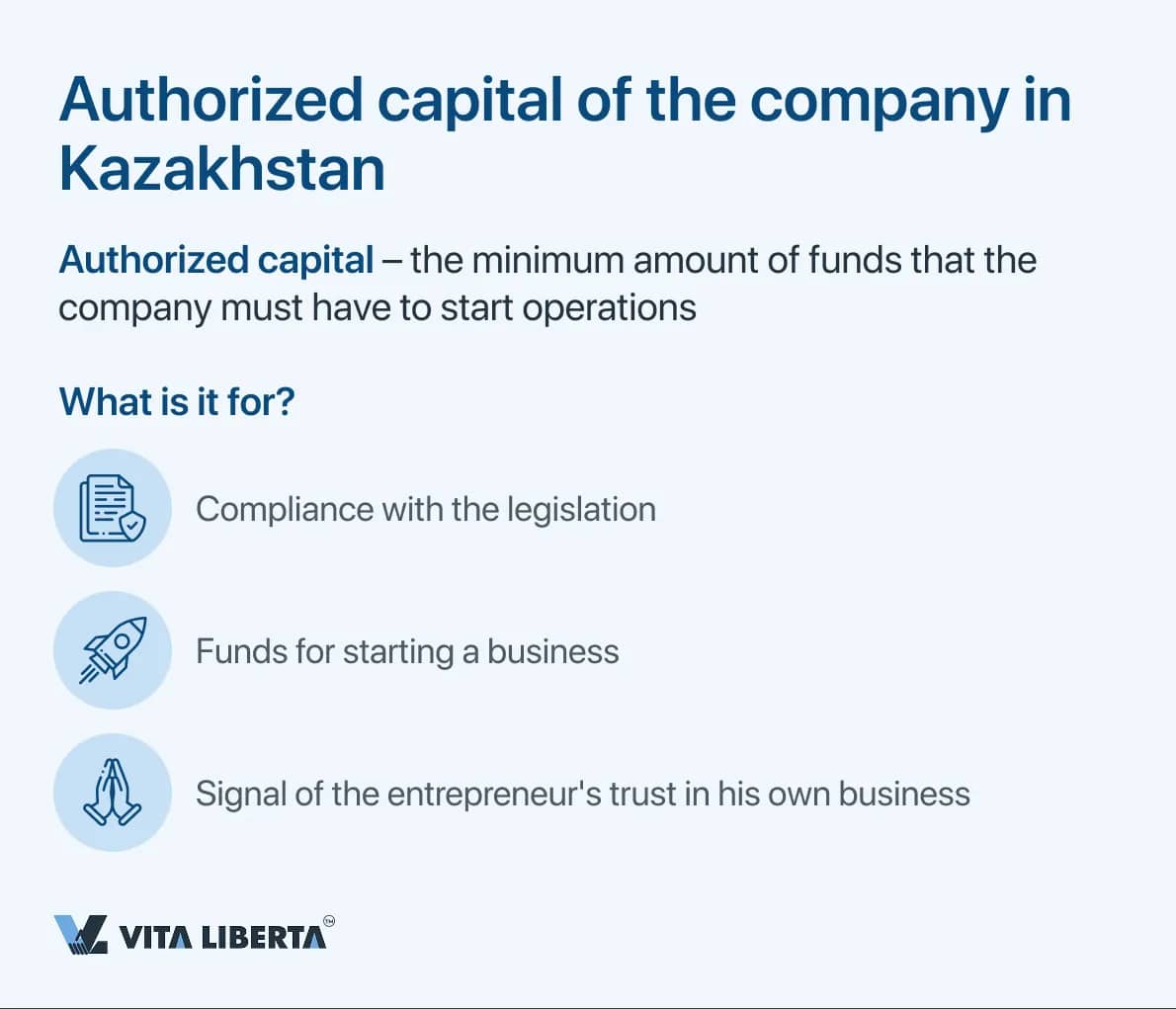
Authorized capital as the first tank of fuelBy law, the authorized capital is the amount of contributions of the founders, which helps the company to start its activities. It serves as a guarantee that you have the means to pay your bills, purchase equipment and not “hang” at the start.
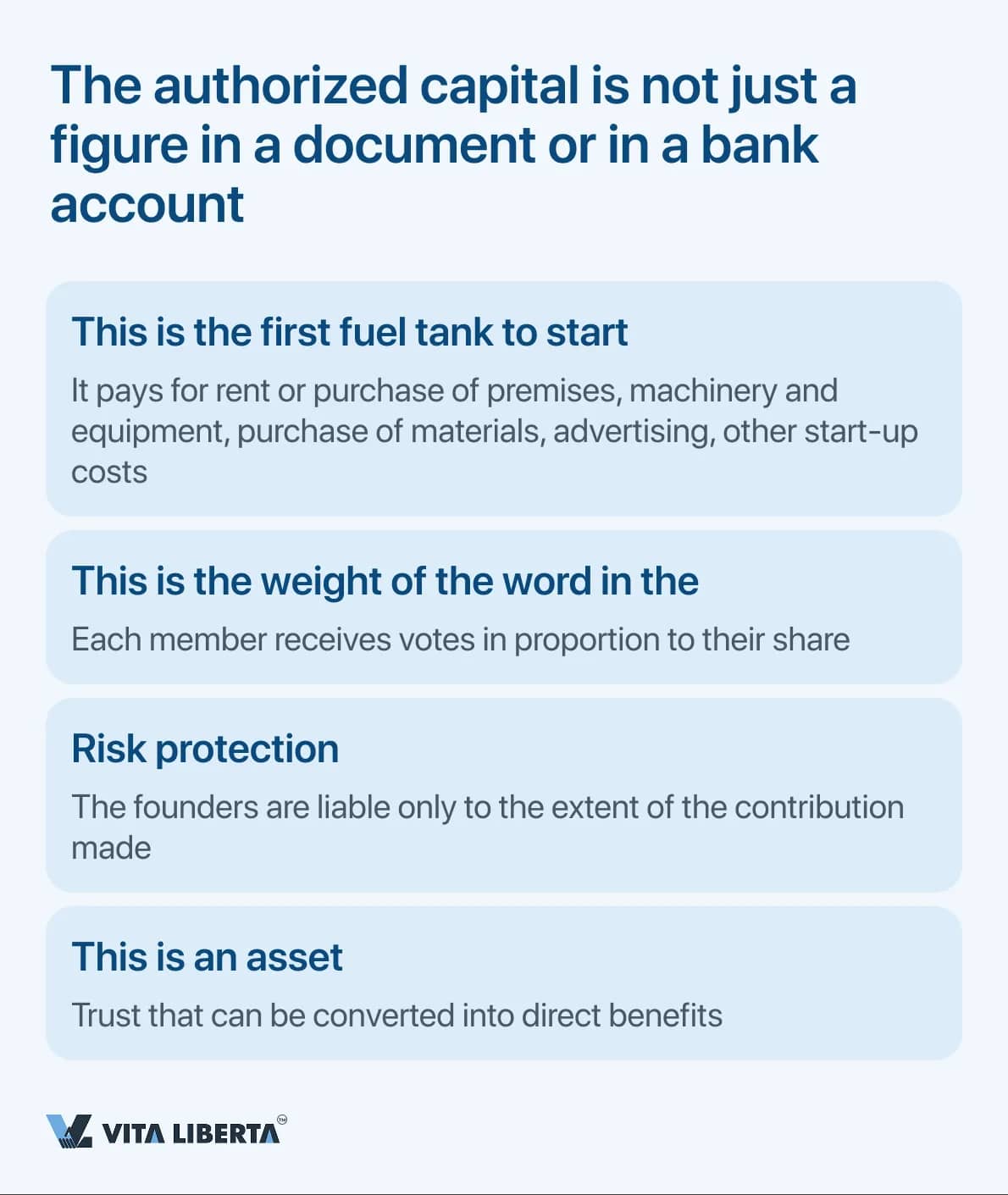
When you're just starting out, equity is your starting pillow. It pays for:
- Renting or purchasing of premises.
- Purchase of machinery and equipment.
- Purchase of materials
- First advertising expenses.
- Other start-up costs.
If you have nothing, it's like trying to start the engine without gasoline — like everything is ready, and does not start.
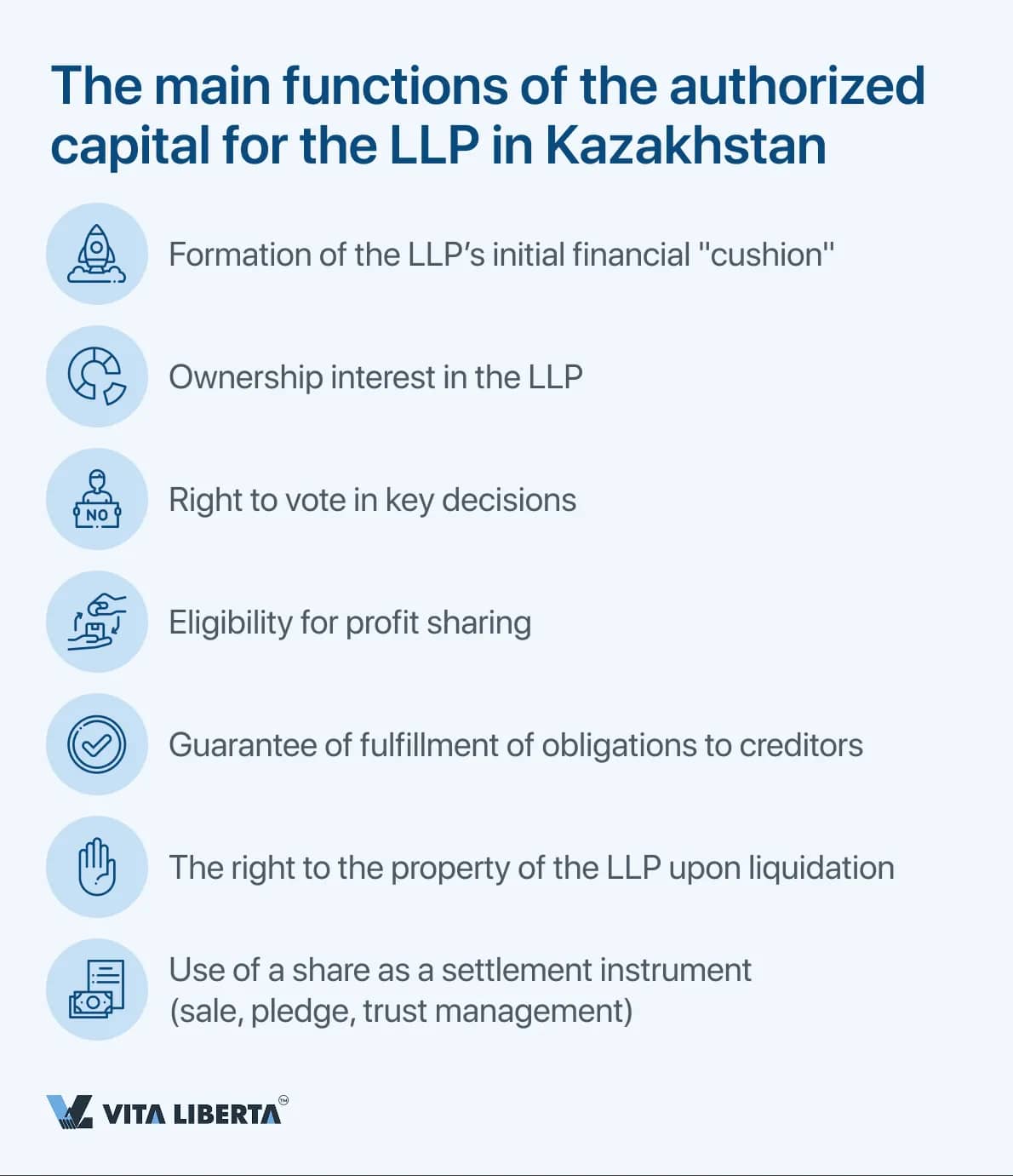
The authorized capital is not only money, but also votes When you contribute money to the authorized capital, you do not just perform a legal formality and fill the first can of gasoline — you also become a participant and get the right to vote in the management of the company. This is not a family life where all investments and votes are distributed, in the end, equally. Although, this is the upper class to turn the business into a kind of strong family.
By default, each participant receives votes in proportion to their share (Article 42 of the Law of the Republic of Kazakhstan "On Limited and Additional Liability Partnerships"). That is, if you invested 50%, you get 50% of the votes. It's like in a democracy: whoever has invested more has more influence.
But! If you want the distribution to be different — for example, one participant votes more than his share — you can enshrine this in the constituent documents. The main thing is to agree in advance on such a democracy and fix it in the charter, and possibly additionally in the founding agreement.
It is possible to sell or pledge a share only in the part in which the contribution has already been paid. That is, if you have contributed 50%, you can only sell 50%. A member may assign, sell or transfer his or her interest to one or more members. The consent of other participants or the LLP is not required, unless other conditions are established in the constituent documents. The share transfer agreement is subject to notarization if one of the parties is an individual. It's like a contract for the sale of an apartment — you can't do without a notary.
The Participant of the LLP may sell or pledge the share to third parties, if the constituent documents do not establish restrictions.
Restrictions do not apply to cases of sale of shares owned by the state or state-owned companies, if the sale takes place at auction and complies with the Law of the Republic of Kazakhstan "On State Property".
Authorized capital — as debt protection If the participants have not fully contributed to the authorized capital, the law provides for joint and several liability for them (clause 4 of Article 2 of the Law "On Limited and Additional Liability Partnerships"). This means that creditors can demand repayment of debts both from the LLP itself and from individual participants – but only within the amount that they have not paid extra. If, for example, you fictitiously overestimated the capital (for example, you wrote 100,000,000 tenge, but in fact you contributed 100 tenge), you can incur subsidiary liability for 99,000,000 tenge. That is, your personal property can be seized to pay debts.
In addition, if a business suffers losses, the founders lose only what they invested. We have invested 100,000 tenge in the authorized capital, and you are responsible within this amount. Your personal property is not at risk. It's like insurance: you pay a premium — and get protection.
However, it is important to keep in mind that if the LLP becomes bankrupt due to deliberate actions of the founders or management (for example, the withdrawal of assets or fictitious transactions), they may be brought to subsidiary liability (paragraph 1 of Article 5 of the Law of the Republic of Kazakhstan "On Bankruptcy"). However, creditors should first try to collect debts from the partnership itself – and only if this is not enough, turn to the personal property of the perpetrators.